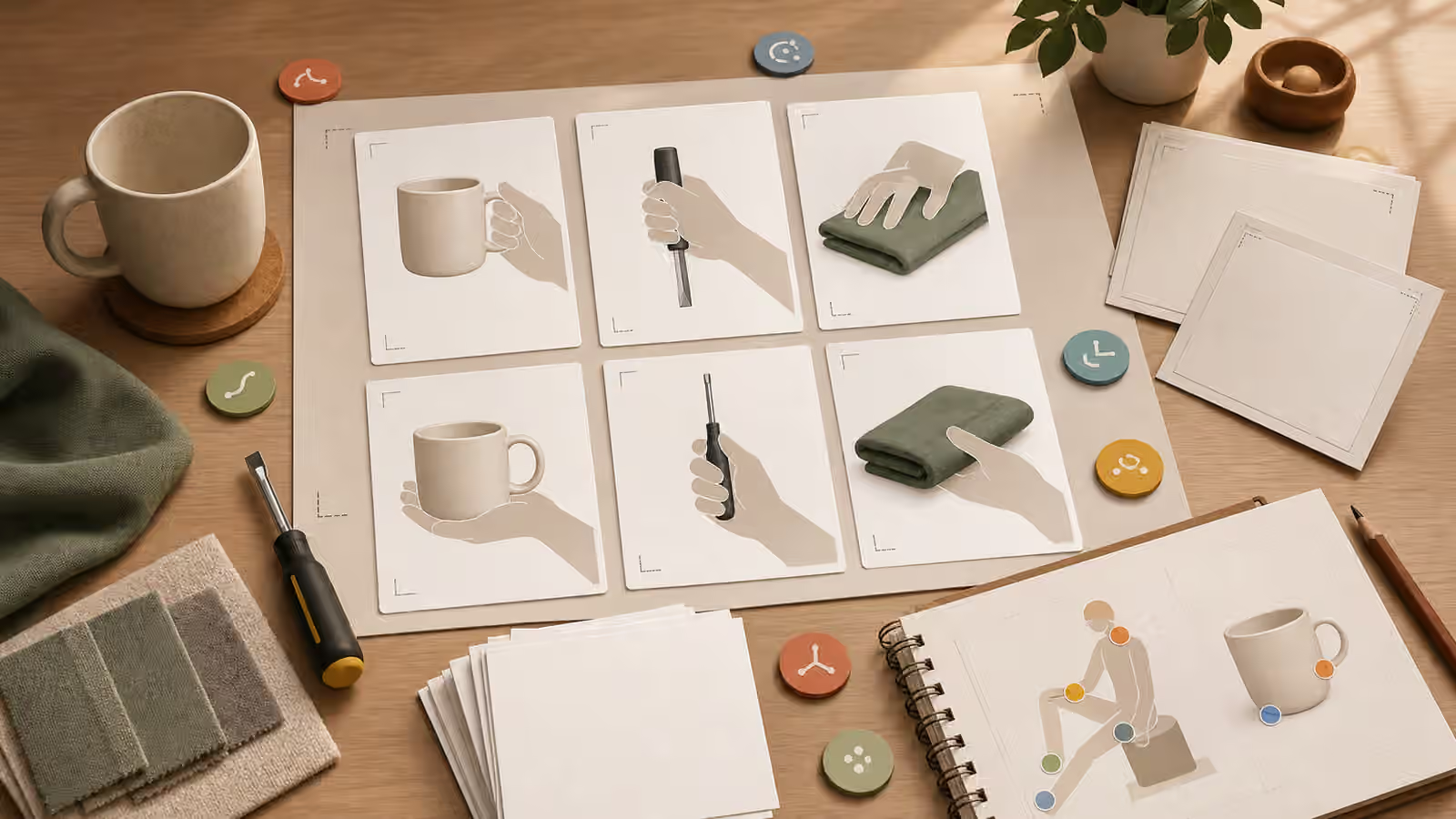
An object sitting alone is usually easy to prompt. An object being used is harder because the image has to explain a physical relationship. A mug is held by a handle, placed on a coaster, lifted from a table, or set beside a notebook. A tool is gripped, pointed, resting, or stored. A folded cloth is pinched, draped, stacked, or tucked under another object. Each version tells a different story, and each one creates places where generated images can fail.
Visual Prompt Lab already covers people and gesture prompts and scale props . Object-in-use prompting sits between them. It asks what the object is doing, what touches it, what supports it, and how the viewer should understand size and use without needing a fake label or a dramatic scene.
Contact Points Make the Scene Believable
The contact point is the exact place where the image has to obey physics. A cup meets a table at its base. A hand wraps around a handle. A screwdriver rests against a surface or is held by a grip. A folded cloth presses against a shelf, not through it. These details sound small, but they decide whether the image feels usable. If the object floats, clips through a hand, casts the wrong shadow, or rests at an impossible angle, the viewer notices even when the style is polished.
The prompt should name the contact point before it names decorative qualities. “A ceramic mug resting flat on a cork coaster” is more useful than “a cozy realistic mug scene.” “A hand holding a small unbranded tool by the black handle, tool tip pointed down and separated from the table” gives the model a physical arrangement to solve. “A folded green cloth supported by a palm from below” is clearer than “a hand with fabric.” The best contact language is plain because it has to survive review.
Contact points also help with editing. If a generated image is strong except for a bad hand or floating prop, the next brief can preserve the crop, material, lighting, and object placement while changing only the contact point. That habit matches the approach in Edit Briefs : protect what works, then name the one physical relationship that needs repair.
Keep the Action Small
Object-in-use scenes become fragile when they ask for too much action at once. A person pouring, stirring, reaching, turning, and reading a label in the same frame gives the image too many chances to break. A tool scene with both hands, a reflective surface, small screws, and a detailed product package may look impressive in the prompt and messy in the result. The safer move is to choose one action the viewer can understand quickly.
Small actions can still be specific. A hand placing a blank card beside a mug. A palm supporting folded fabric. A tool resting beside an unbranded repair part. A spoon laid across the rim of a bowl without showing a brand or recipe claim. These scenes are quiet, but they teach use. They also leave room for the rest of the page. If the guide is about prompting, the image should not need a complex narrative to justify itself.
This is especially important for guidebook heroes and cards. At small sizes, the viewer sees silhouette, contrast, and one clear relationship. They do not read tiny object detail. An object-in-use hero should say “held,” “placed,” “supported,” or “compared” before it says “premium,” “authentic,” or “beautiful.” The first set of words can be reviewed. The second set mostly creates mood.
Hands Are Optional, Not Mandatory
Hands are useful because they show scale and action. They are also one of the most common failure points in generated images. Extra fingers, fused grips, impossible wrists, and strange contact shadows can turn a practical image into a quality problem. Before asking for a hand, decide whether the hand is doing work that a simpler prop could do. A ruler-shaped scale card, a coaster, a shelf edge, a folded towel, or a nearby blank note can show context without introducing anatomy.
When a hand is necessary, reduce the difficulty. Ask for one hand rather than several. Use a simple grip rather than interlaced fingers or complex gestures. Keep the hand partially visible if the object is the subject. Avoid tiny detailed tasks such as threading a needle, tying a knot, or pressing many small controls unless the page truly needs that action. The AI Image Quality Checks guide should be part of the review whenever hands appear.
It also helps to make the hand non-identifying. A cropped hand, faceless figure card, or simplified illustrated hand can show use without turning the image into a portrait. If identity is irrelevant, keep it out of the image. A prompt about a tool does not need a recognizable worker. A prompt about a mug does not need a lifestyle portrait. The object can remain the subject while the human element simply explains scale and action.
Props Should Clarify, Not Claim
Props are not decoration when they are chosen well. They tell the viewer how big the object is, where it belongs, and what kind of use is implied. A coaster makes a mug feel tabletop-sized. A cloth swatch makes texture visible. A blank card can suggest planning without pretending to be a document. A neutral surface can make a product-style image feel designed without inventing a brand. These props are useful because they carry context without making claims.
Risky props do the opposite. Fake labels, certification marks, official-looking tags, small forms, dashboard panels, sealed packages, medical-looking equipment, and brand-like color blocking can imply evidence, endorsement, or product performance. If the image is for a product-neutral mockup , the prompt should say that labels are blank, packaging is unbranded, and no claims appear. If the object is only an illustration of use, the surrounding props should support that purpose rather than compete with it.
Scale cues are strongest when they are ordinary. A table edge, chair, notebook, blank card, hand silhouette, cup, or folded cloth can tell the viewer enough. Too many props create a rummage-drawer effect. The viewer stops understanding the main object and starts scanning for hidden meaning. If a prop does not clarify use, support, scale, or safe context, it probably does not belong.
Review the Physical Story
The final review should follow the physical story from one object to the next. Where does the weight sit? Which object touches which surface? Does the shadow match the contact? Does the grip make sense? Is the object actually inside the hand or only near it? Are there extra handles, doubled tools, missing edges, or impossible reflections? These checks are practical, not aesthetic. They decide whether the image can do its job without distracting the reader.
Review should also ask what the scene implies. A tool pointed toward a hand can look unsafe. A mug with a fake label can look like a real product. A package beside a form can imply purchase, approval, or testing. A highly realistic object-in-use image may suggest that a real demonstration happened. If that implication is not supported by the page, step down the realism, remove the claim-like prop, or make the image clearly conceptual.
Good object-in-use prompts are modest in the right way. They do not try to make every object heroic. They explain how a thing is held, placed, supported, compared, or reviewed. They protect blank space from fake text. They make scale visible without clutter. Most of all, they treat contact points as part of the message, because a believable use scene begins where two surfaces meet.