Museum-like imagery carries borrowed authority. A glass case, plinth, label, accession card, gallery wall, specimen drawer, conservation table, or archive tray can make an object feel collected, verified, and interpreted by an institution. That is valuable when the institution and object are real. It is misleading when a generated image invents artifacts, labels, provenance, ownership, or scholarly certainty.
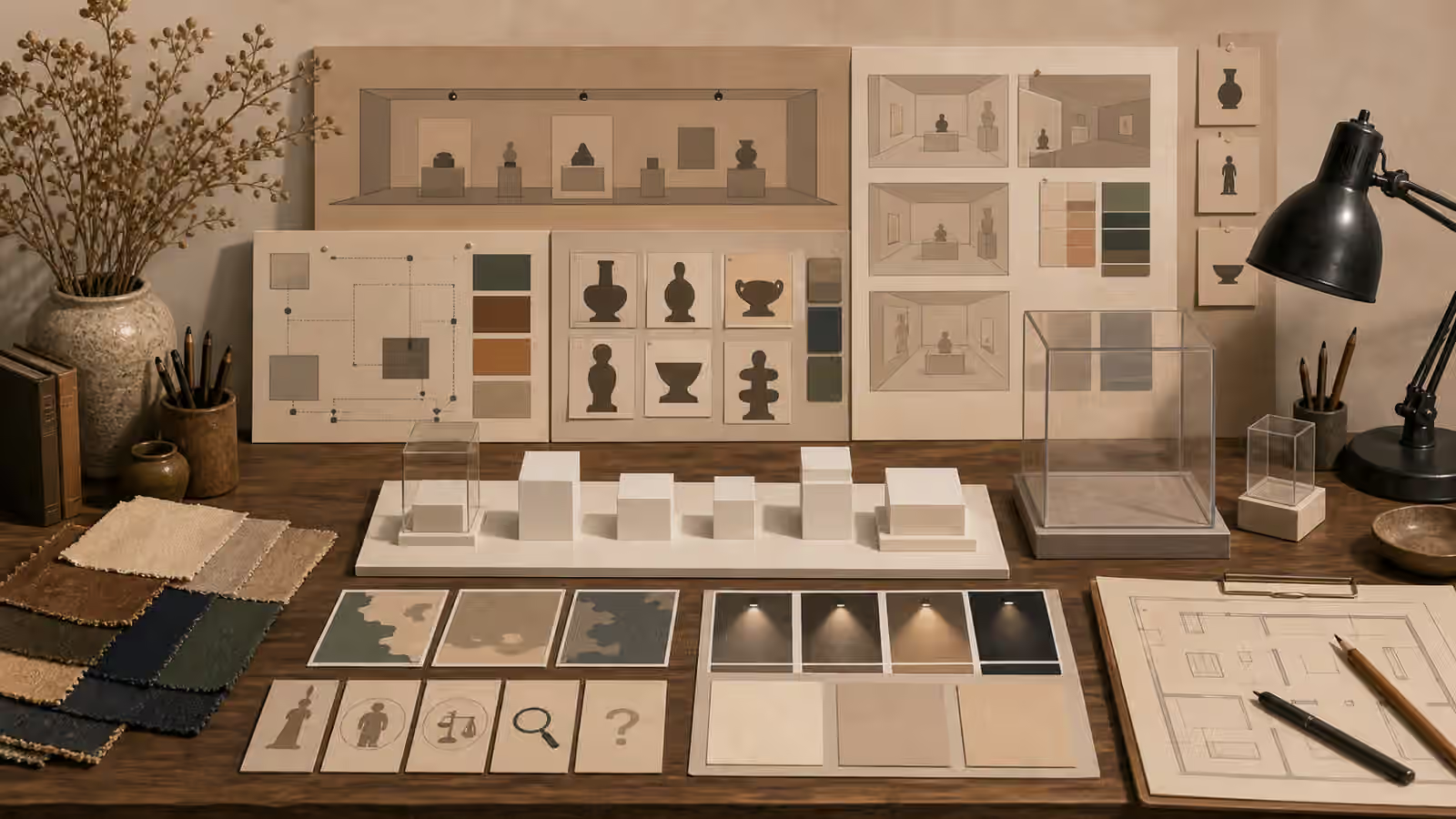
A safer exhibit prompt focuses on display design rather than fake holdings. It can show blank plinths, transparent case shapes, lighting swatches, visitor circulation, scale models, crop frames, and fictional object silhouettes. It should not invent a named museum, real artifact, sacred object, archaeological discovery, accession number, label text, conservation record, donor credit, or cultural claim. The image should read as planning, not proof.
Prompt Exhibit Design First
Exhibits are more than objects. They involve light, distance, circulation, height, sightlines, accessibility, conservation needs, sequencing, and reader attention. Those are safer and often more useful to visualize. A prompt can ask for a fictional exhibit-design table with blank plinth models, neutral case studies, track-light swatches, pathway cards, and empty label blocks. That supports an article about curation or visual planning without manufacturing heritage.
When the object itself is not the verified subject, keep it abstract. Use simple forms, fictional silhouettes, material swatches, or generic teaching objects. A page about display lighting can show case geometry. A page about object spacing can show plinths and floor flow. A page about visitor attention can show crop frames and sightline arrows as plain shapes. The reader gets the visual idea without being asked to believe in an invented artifact.
This approach connects to Historical Scene Prompts Without Fake Archives . Both tasks require a visible distinction between interpretation and evidence. A museum frame can make fiction look sourced, so the prompt has to keep the illustrative status clear.
Treat Labels As Claims
Museum labels are small but heavy. They can contain dates, places, makers, cultures, materials, donors, accession numbers, collection names, excavation details, and interpretive claims. Generated labels are unreliable and can create false knowledge. Even unreadable label-like blocks can imply institutional backing. For most AI-generated exhibit visuals, ask for blank labels, no text, no numbers, no accession marks, no seals, and no museum names.
If the image needs real label copy, add it later as reviewed text or use approved source material. Do not ask the image model to invent it. A blank label can still communicate that interpretation belongs near the object. It simply avoids pretending that the interpretation already exists.
Alt Text and Captions for Generated Images matters here. If an image contains a fake artifact, the alt text may accidentally describe it as real. A safer image with blank plinths and fictional silhouettes is easier to describe honestly.
Avoid Cultural And Sacred Object Shortcuts
Artifacts are not neutral decorations. A mask, vessel, textile, sculpture, manuscript, tool, ritual item, garment, funerary object, weapon, or religious object may carry cultural, spiritual, legal, and historical meaning. A generated approximation can be disrespectful even when it is not an exact copy. It may also imply ownership, excavation, collection, or display rights that the page cannot support.
If cultural context is essential, use sourced images, expert-reviewed materials, or a more abstract visual. If the page is about exhibit design generally, avoid specific cultural objects. Use blank plinths, paper maquettes, lighting rigs, case forms, and visitor-flow models. Cultural Context Without Stereotype Shortcuts gives the underlying rule: do not use symbols as easy shorthand for people and histories.
Sacred objects deserve particular restraint. Do not use them as generic museum props. Do not invent ritual context, damage, excavation, ownership, or display. If the article cannot explain the object with care, the image should not manufacture it.
Be Careful With Science And Specimens
Museum visuals can also involve natural history, fossils, specimens, minerals, lab trays, and conservation tools. These images can imply discovery, classification, rarity, or research results. A generated fossil with a label can look like evidence. A specimen drawer can imply a collection. A conservation scene can imply an institution has examined an object. Keep these claims out unless they are real and sourced.
For educational scenes, use abstract teaching forms. A fictional specimen silhouette, blank tray, magnifier, and lighting card can support the topic without inventing a species or collection record. If exact anatomy or taxonomy matters, use reviewed diagrams or trusted sources. Educational Infographics explains why labels and scientific relationships need special review.
This also helps with image quality. Models often create impossible fossils, mixed anatomical features, and pseudo-labels. A concept image does not need that precision. It needs to be honest about being a concept.
Captioning is part of that honesty. A museum-like image should not be captioned as if it shows a collection object. Use language such as exhibit-design table, fictional object silhouette, blank display case, or conceptual gallery layout. Those phrases keep the reader oriented without adding provenance. They also make the image easier to reuse on cards and thumbnails because the surrounding text will not accidentally promote a fictional object into evidence.
Review For Institutional Proof
Before publishing, ask what institution the image seems to invoke. Does it look like a named museum, archive, school, lab, excavation team, government collection, or official exhibition? Does it imply a real artifact, donor, provenance chain, archaeological find, conservation result, or cultural ownership claim? If the answer is yes and the page does not support it, revise.
Then inspect the small details. Labels, seals, wall text, accession-like numbers, flags, map fragments, gloves, crates, and case reflections can all add unintended authority. If they are not needed, remove them. A quiet planning-board composition is often safer than a gallery photo-like scene because it signals design process instead of institutional proof.
Exhibit prompts can be beautiful without inventing artifacts. They can show how objects are framed, protected, lit, sequenced, and understood. The craft is to keep that visual usefulness separate from claims about what a real museum holds.
That separation is useful even for small editorial images. A card thumbnail with blank cases and lighting studies can orient the reader without compressing a culture, collection, or research finding into a decorative prop. It leaves the real interpretive work to sourced text.