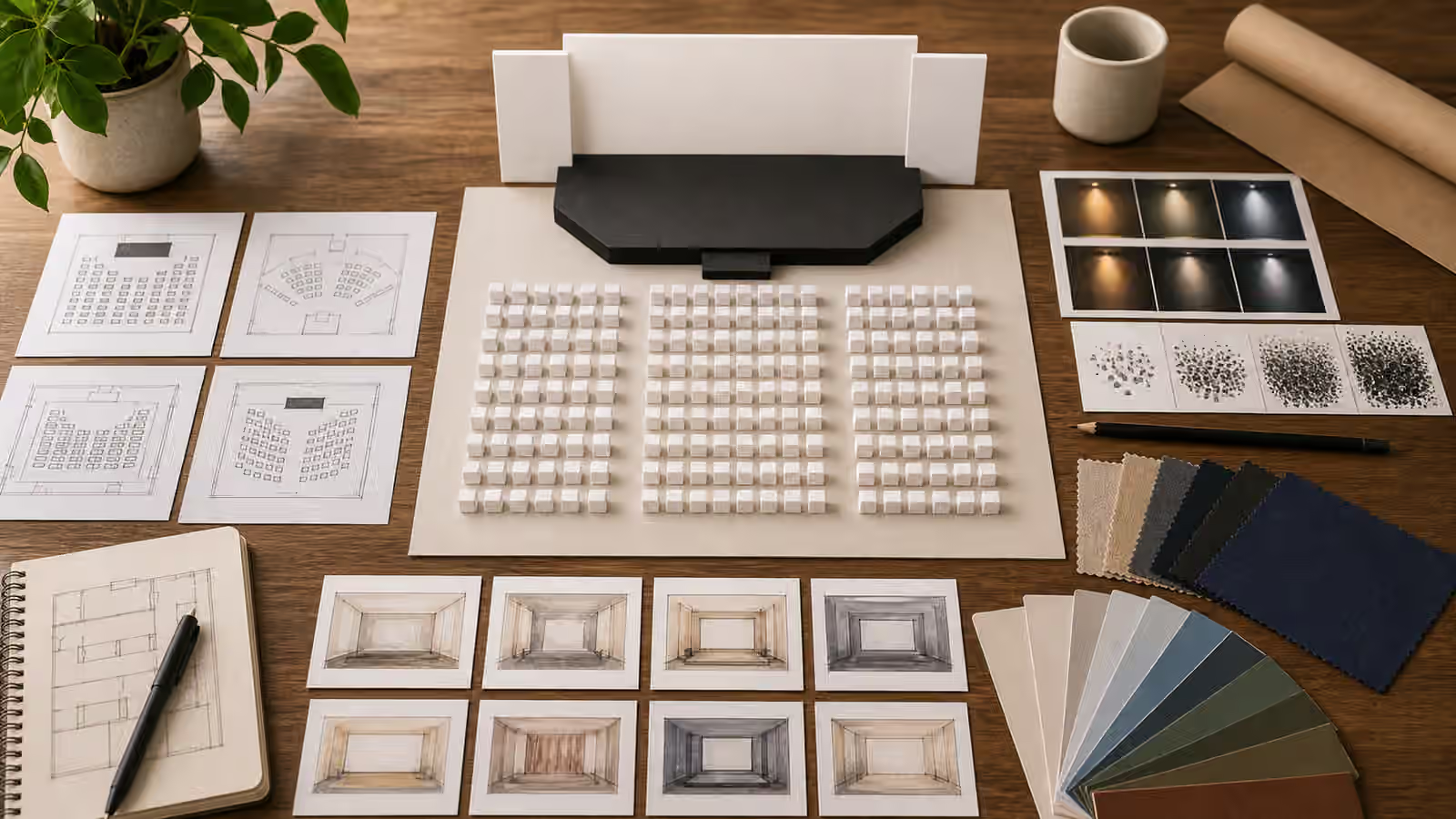
Science-themed visuals borrow authority quickly. A microscope, chart, glass vial, lab coat, specimen tray, or clinical-looking diagram can make a page feel researched even when the image is only decorative. That authority can be useful when the image is carefully framed as illustration. It becomes misleading when the image seems to show findings, diagnoses, formulas, trial results, official records, or working procedures that do not exist.
A responsible research prompt separates inquiry from proof. It can show observation, curiosity, careful setup, blank sample cards, concept diagrams, or educational metaphors. It should not fabricate data, labels, hazard instructions, lab reports, institutional approval, or clinical evidence.
Choose Conceptual Science Or Verified Evidence
Before prompting, decide what role the image plays. A conceptual science visual can support a page about learning, methods, research habits, biology basics, materials, or observation. It does not need to prove anything. A verified evidence visual is different. It may include exact charts, microscopy, medical imaging, lab labels, published figures, or study results. Those should come from real sources with appropriate permissions and context.
Generated imagery belongs more comfortably on the conceptual side. A desk with blank cards, glassware silhouettes, magnified abstract shapes, and a review board can suggest inquiry without making a claim. A fake chart showing improvement, a pseudo-microscope image, or a labeled specimen slide can imply research findings. The Charts and Data Visuals Without Fake Numbers guide applies whenever a visual starts to look measured.
This distinction protects the reader. It also protects the page from accidental overstatement. A science article can be rigorous while using an illustrative hero image, as long as the real claims live in authored text, cited figures, or verified visuals.
Keep Exact Labels Out Of Generated Lab Images
Lab scenes are full of labels: sample IDs, reagent names, chart axes, dosages, dates, safety markings, instrument screens, institutional seals, and report headers. Generated models often create convincing-looking nonsense in those spaces. At thumbnail size, it may seem official. At full size, it may be wrong, unreadable, or dangerously suggestive.
Prompt blank labels, unlabeled glassware, abstract panels, and no readable text. If exact labels are necessary, add them later in a design tool and review them carefully. This is the same practical split used in Educational Infographics : a generated visual can provide structure or illustration, but factual labels deserve authored control.
Formulas deserve extra caution. A fake chemical formula can be meaningless, misleading, or accidentally resemble something real. A procedural diagram can imply that a reader should mix, culture, heat, ingest, or test something. If the image is not a verified educational diagram, keep it abstract. Use shapes, light, and arrangement rather than pseudo-technical detail.
Avoid Clinical Authority Unless The Context Earns It
Medical and wellness imagery carries a higher burden. A lab coat, clinic room, scan, blood vial, prescription bottle, patient chart, or diagnostic screen can imply professional review. A generated image should not stand in for medical evidence, treatment advice, test results, or clinical outcomes. The Health and Wellness Visuals guide covers this boundary in patient-facing scenes, and research visuals need the same restraint.
For a general health education page, use calm conceptual imagery: abstract cells, blank observation cards, a neutral desk, or a simplified diagram without diagnosis labels. Avoid patient faces, doctor-patient interactions, official-looking reports, before-and-after treatment evidence, and clinical settings that imply a specific service was provided. If a page needs real clinical authority, that authority should come from qualified content, citations, and appropriate imagery, not generated atmosphere.
Research institutions also need care. Do not invent university seals, lab logos, government marks, ethics board approvals, journal names, or study badges. These are not visual flourishes. They are claims about endorsement and process. A generated image should remain unbranded and fictional unless the organization has provided approved assets.
Show Process Without Instructions
A research image can suggest process without teaching a procedure. This distinction matters for safety. Showing a person carefully observing a tray is different from showing exact steps, measurements, chemical names, heat settings, incubation conditions, or assembly instructions. If the page is not meant to provide a verified protocol, the visual should not accidentally become one.
Use broad process language such as observation, comparison, review, recording, sorting, or concept mapping. Avoid detailed methods language unless the surrounding content is safe, verified, and appropriate for the audience. A generated image of a lab bench should not include hazardous materials, syringes, cultures, flames, or unlabeled liquids arranged like a recipe. If a tool or instrument appears, keep it generic and secondary.
The same idea appears in Cutaway and Exploded View Prompts . A conceptual visual can explain relationships without becoming a buildable technical plan. Research imagery can show inquiry without becoming a protocol.
Use Visual Restraint To Build Trust
Science visuals do not become more trustworthy by becoming more dramatic. Glowing liquids, floating DNA, red hazard lights, frantic researchers, and extreme close-ups can make a page feel sensational. Sometimes a quiet image does more work. A clean observation desk, a simple microscope silhouette, a set of blank sample cards, and measured lighting can signal care without pretending to reveal a result.
Color should serve clarity. Blue and green can read as science-coded, but an image dominated by glowing lab colors can feel generic. Use neutral surfaces, one or two accent colors, and enough negative space for page layout. If the image is a hero, the subject needs to read at card size. If it is inline, it should support the paragraph around it rather than compete with factual diagrams.
Review the image for authority cues. Does it look like a real study result? Does it include readable or semi-readable technical text? Does it imply a diagnosis, approval, safety test, or institutional endorsement? Does the equipment suggest a procedure the page does not teach? Does the image look like proof when it should be illustration? If so, simplify it.
Keep Claims In Text And Sources
Generated research visuals can make a page more approachable, but they cannot carry the factual burden. If the page says a material behaves a certain way, show the source. If it discusses a medical condition, use appropriate editorial standards. If it presents data, chart the real data. If it teaches a method, make sure the method is safe, sourced, and within the page’s scope.
The image prompt should support that discipline. Ask for concept cards, abstract observation tiles, neutral instruments, blank labels, and no fake results. Then place any necessary claims in real text where they can be revised, cited, and translated. That separation keeps the visual useful and prevents the model from inventing authority on the page’s behalf.