Historical imagery is powerful because it borrows authority from memory. A sepia portrait, battlefield street, old storefront, royal room, classroom, ship deck, factory floor, or family table can feel as if it was found in a box of records. That feeling is useful when the image is truly sourced. It becomes misleading when a generated image looks like evidence from a time, place, or event that the model never witnessed.
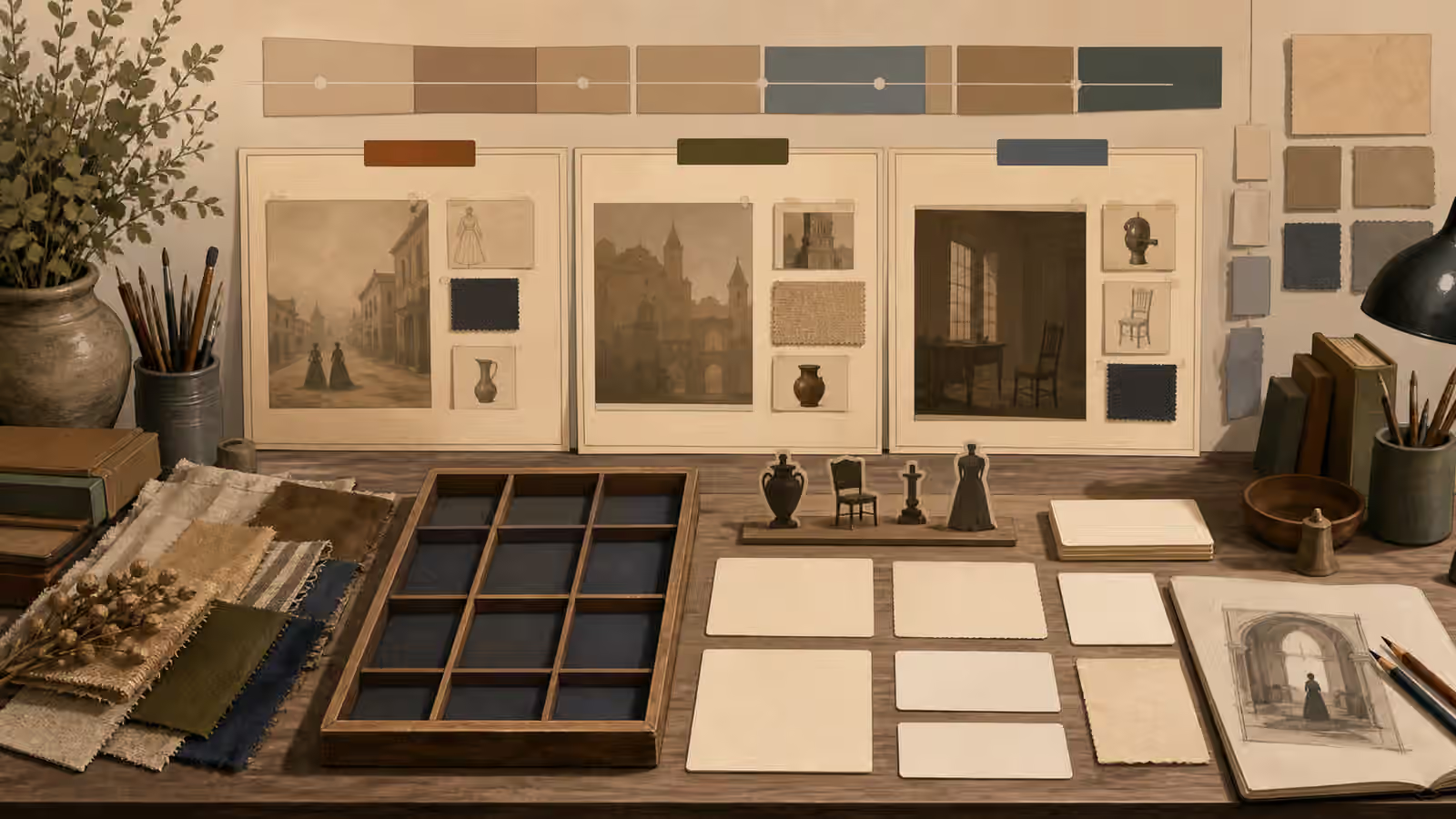
A safer historical prompt begins by deciding what kind of image the page needs. Many articles need a period-inspired illustration, not a fake archive. A guide about nineteenth-century printing can show paper texture, type cases, ink rollers, shelves, and lamplight without pretending to document a named printer. A page about old kitchens can show materials, tools, hearth geometry, storage jars, and work surfaces without claiming that a specific family used them. The prompt should make that status visible.
Start With Image Status
The first useful phrase is not a period label. It is the status of the picture. Ask for a clearly illustrative scene, a conceptual reconstruction, a period-inspired editorial image, a classroom visual, or a visual research board. Those words tell the model and the reviewer that the image is not evidence. They also make room for restraint. An illustration can be useful without pretending to contain exact faces, documents, uniforms, dates, or locations.
Photoreal camera language needs extra care. Phrases such as candid photograph, archival image, news photo, documentary capture, surveillance still, and recovered print all imply evidence. If the page cannot support that claim with real sourcing, use non-documentary language. A warm editorial illustration, paper-cut scene, museum-table reconstruction, or material study can carry the teaching purpose with less risk.
This boundary is close to Place and Landmark Prompts . A generated old street scene can imply a real city and date just as easily as a modern travel image can imply a current visit. The question is not whether the scene looks pleasing. The question is what the viewer might think it proves.
Use Concrete Period Cues
Weak historical prompts often depend on shortcuts: old-timey, medieval, Victorian, ancient, wartime, colonial, traditional, exotic, or sepia. Those words are too broad. They push the model toward costumes, monuments, flags, weapons, and stereotypes. A better prompt names visible details that matter to the article: fabric weight, sleeve shape, work surface, window size, street width, tool material, light source, storage method, floor texture, chair construction, or cooking setup.
Concrete cues do not need to be perfect scholarship to be more honest. They simply keep the image grounded in inspectable objects. Instead of asking for a dramatic ancient marketplace, ask for a fictional outdoor trading scene with woven baskets, plain pottery, shaded awnings, packed-earth ground, unbranded cloth, and no readable signs. Instead of asking for a heroic explorer portrait, ask for a non-identifiable figure seen from behind at a work table with maps kept blank and equipment treated as props, not proof.
When cultural details matter, read Cultural Context Without Stereotype Shortcuts first. Historical prompts can flatten entire communities into costume. The safer move is to describe the scene purpose and local material context while avoiding public-figure likeness, sacred objects, ceremonial simplification, and decorative borrowing that the article cannot explain.
Keep Documents And Labels Blank
Generated documents are especially risky in historical scenes. A letter, treaty, newspaper, map, census page, diary, museum label, military order, passport, ticket, or classroom chart can look official even when the writing is nonsense. It can also imply a source that does not exist. Unless the document is real and separately reproduced with permission and context, keep paper surfaces blank, turned away, abstract, or out of focus.
Blankness is not a weakness here. It tells the reader that the image is illustrative. A stack of blank archive sleeves can communicate research without inventing records. An unlabeled map can suggest navigation without inventing borders. A neutral museum card can show curatorial context without naming a culture, date, or provenance that has not been verified.
This is the same discipline behind Charts and Data Visuals Without Fake Numbers . If a pixel looks like a fact, someone may treat it like a fact. Put facts in reviewed text. Let the generated image carry atmosphere, composition, and visual orientation.
Avoid Public Figures And Exact Events
A generated image of a famous leader, artist, inventor, soldier, activist, monarch, or religious figure is not just a historical scene. It is a likeness claim. A generated image of a battle, trial, disaster, ceremony, protest, or signing can also become fake evidence. Even stylized versions may be misunderstood when the surrounding article is serious.
If a page discusses a real person, use sourced images, public-domain material where appropriate, or a non-portrait visual such as a desk, object group, landscape, empty room, or timeline abstraction. If a page discusses an event, consider showing the tools, setting, map-like abstraction, or aftermath as a clearly illustrative concept rather than inventing faces and decisive moments. People, Likeness, and Consent explains the broader likeness boundary, and it applies to historical people as well.
Exact events also invite false precision. Smoke, uniforms, banners, emergency scenes, weapons, crowds, and damaged buildings can all imply facts. If the article needs to teach about the period without proving the event, keep the image quieter. A research desk, object study, fictional interior, or broad material scene often serves the reader better.
Review The Result As A Claim
Before publishing, ask what the image seems to know. Does it seem to know who was present, what a real document said, what a street looked like, what an artifact looked like, which group wore which clothing, or what happened at a named event? If the page does not have that evidence, revise the image. Move away from photorealism, remove documents, soften identity cues, blank the labels, or choose a planning-board composition.
Also inspect for accidental symbols. Flags, seals, badges, crests, religious objects, military insignia, and museum labels can appear without being requested. A crop may remove a small artifact, but it cannot fix a scene whose whole purpose has drifted into fake evidence. The safer prompt starts with the image’s status and keeps that status visible all the way to publication.
Historical prompts work best when they respect the distance between imagination and record. They can help readers picture materials, rooms, tools, light, and daily-life context. They should not ask a model to impersonate an archive.