Health and wellness visuals can become misleading faster than ordinary editorial images. A clean room, a white coat, a chart line, a glowing body outline, or a before-and-after pairing can imply evidence the page does not have. Even when the article is gentle and non-clinical, the image may borrow clinical authority and make the claim feel stronger than it is.
A responsible prompt starts by deciding what the image is allowed to show. Many pages need a calm visual about routine, environment, comfort, or preparation. They do not need diagnosis scenes, treatment props, lab results, prescription bottles, official-looking charts, or people presented as patients. This guide sits beside sensitive topic images without shock because restraint is often the most useful editorial choice.
Separate Wellness Context From Clinical Claims
Wellness is a broad visual territory. It can include sleep setup, hydration habits, meal planning, movement, room comfort, journaling, air quality, posture, or a calm workspace. Clinical claims are different. They involve diagnosis, treatment, outcomes, medical authority, regulated products, or evidence about health effects. A generated image should not blur those categories just because medical-looking props are visually familiar.
If the page is about a bedroom setup, show the room, light, bedding, and quiet devices rather than a patient scene. If the page is about a habit, show neutral tools for planning or practice rather than a body transformation. If the page is about a high-stakes medical topic, a generated decorative image may be the wrong asset entirely. Use verified diagrams, expert-reviewed materials, or no image if a generated visual would overstate certainty.
Prompt language should state the boundary plainly. Ask for neutral wellness props, no diagnosis, no treatment claim, no prescription products, no official clinic branding, and no fake chart. The image can still feel calm and useful. It simply should not borrow authority from medical settings unless that authority is accurate and justified outside the model.
Avoid Fake Evidence Cues
Charts, lab sheets, body scans, measuring tapes, progress photos, and before-and-after layouts are evidence-shaped visuals. In generated images, they often invent data while looking persuasive. A chart without real numbers can still suggest a result. A glowing outline can suggest a diagnosis. A before-and-after pair can imply a transformation that never happened. The guide on before-and-after comparisons without fake evidence is especially important here.
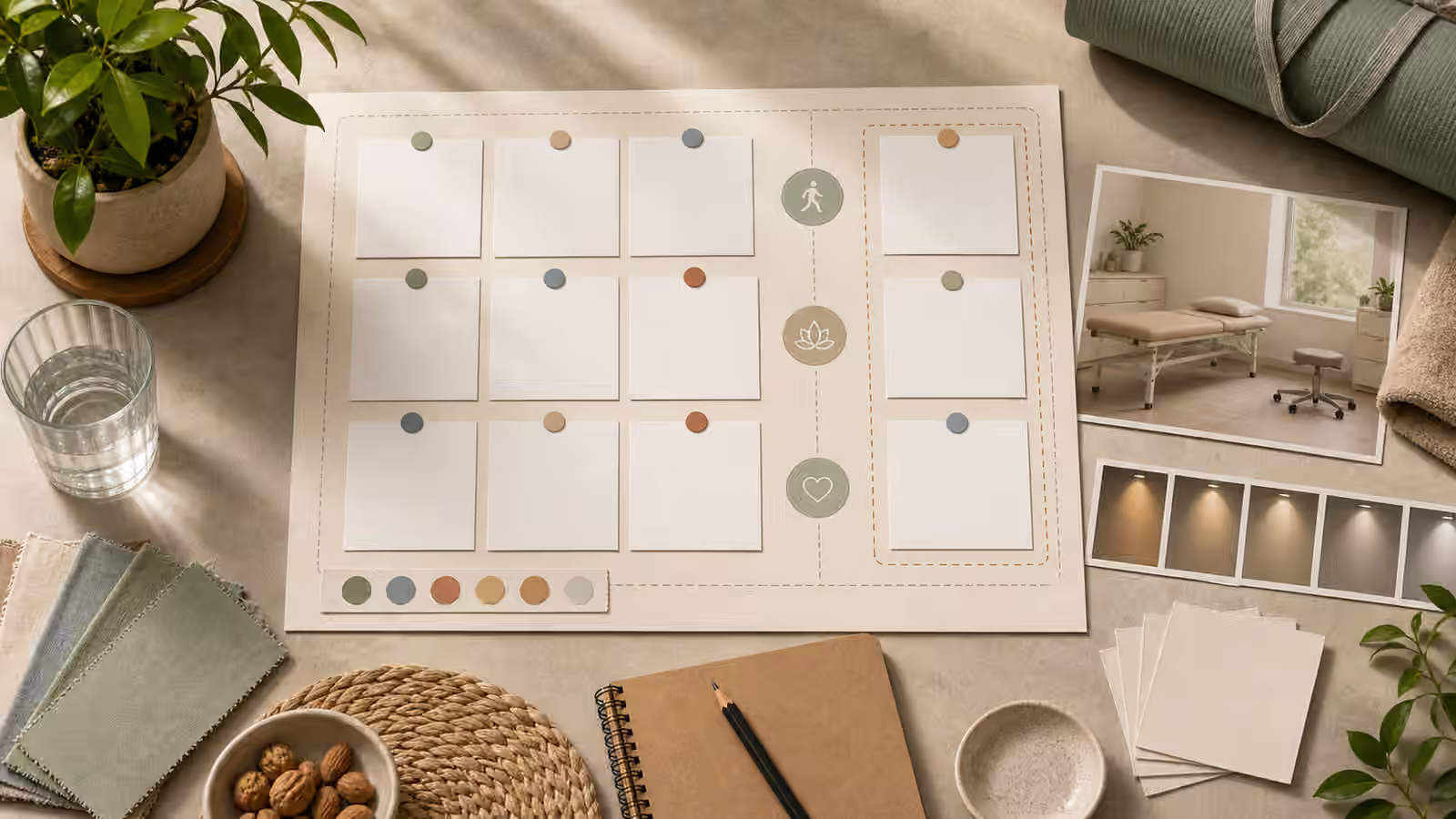
If the article needs to discuss change over time, use conceptual imagery that does not pretend to document a person. A sequence of blank calendar cards, a neutral routine board, or a set of environment adjustments can suggest process without claiming outcome. If the article needs data, build the chart from real data and label it outside the image-generation step. Charts and data visuals without fake numbers covers that separation in more detail.
Also watch for accidental evidence. Generated images may add fake app screens, check marks, test tubes, pills, scan-like panels, or official stamps. These details can appear even when the prompt asks for a simple desk. Review the whole frame. If a prop would make a reader believe the image represents a real result, remove it.
Use People Carefully
People can make health-adjacent images more relatable, but they also raise stakes. A person shown in pain, distress, clinical examination, body comparison, or private routine can feel exploitative or identity-like. If people are not needed, use objects, rooms, or hands-only scenes. If people are needed, keep them fictional, generic, non-identifying, and focused on ordinary context rather than diagnosis.
Do not ask for a real person’s likeness, a public figure’s health scene, a patient photo style, or a specific body transformation. Do not use generated people to imply that a product, exercise, habit, or environment produced a result. A calm illustration of someone stretching in a generic room is different from a photo-like claim that a visible condition improved. The first can support a wellness topic. The second begins to look like evidence.
The same caution applies to demographics. Avoid using age, body size, disability, culture, or visible condition as a shortcut for a topic unless the page genuinely addresses that context and the image is handled respectfully. When representation matters, write the scene in practical terms and avoid caricature. The image should support the reader, not turn a health category into decoration.
Prefer Neutral Props And Environments
Neutral props help health-adjacent pages stay honest. A water glass, plant, notebook, folded blanket, timer, open window, walking shoes, meal-prep containers, or simple chair can be enough. These objects suggest routine and environment without claiming medical proof. They are also easier to review for fake text and brand marks.
Clinical props should be used only when the page truly needs them and the risk has been considered. Stethoscopes, pills, syringes, hospital beds, scan images, medical crosses, masks, and lab equipment all carry strong meaning. They may be appropriate in expert-reviewed educational material, but they are poor default decoration. When used casually, they can make an ordinary article feel like medical advice.
This is where article hero images that match the search promise matters. If a page promises practical sleep setup guidance, the hero should show sleep setup cues, not a doctor-like scene. If a page promises a general habit reflection, the hero should show the habit context, not a clinical result. Match the visual authority to the actual promise.
Review The Claim The Image Makes
Before publishing, ask what claim the image makes without the article. Does it imply a diagnosis, treatment, cure, comparison, certification, official endorsement, or measured result? Does it make a fictional person look like a patient? Does it add charts or forms that the page cannot support? Does it use symbols that make the content feel more clinical than it is?
Then compare the answer to the page copy. If the image claims more than the writing, revise the image. If the writing is careful but the visual is dramatic, the reader may believe the visual. If the visual is generic but the topic is sensitive, consider whether disclosure or a more restrained asset is needed. Generated images do not become low-stakes simply because they are fictional.
Health and wellness imagery works best when it is modest. It can show environment, habit, comfort, preparation, and review without pretending to be proof. The prompt should remove fake evidence cues, keep people non-identifying, avoid clinical authority unless justified, and make the final image easy to describe honestly. That restraint protects both trust and usefulness.