Portraits are persuasive because people read identity into them. A face can suggest expertise, trust, age, culture, profession, emotion, and testimony before the article says a word. That makes portrait prompts useful for editorial illustration, but it also makes them risky. A generated portrait should not quietly borrow a private person’s appearance or create a public figure lookalike. It should not imply that a fictional person gave an endorsement, received a diagnosis, won a credential, or represents a real client.
The safer path is to prompt an editorial portrait as a role-based scene. The image can show posture, lighting, setting, crop, expression, clothing type, and activity. It does not need a real identity. If a page needs a genuine interview subject, expert, client, student, patient, employee, founder, or community member, use sourced photography or approved portrait material. If the page needs an illustrative person, keep that person fictional and non-identifiable.
Prompt Role, Not Identity
Start with the person’s role in the image, not their identity. A role can be adult learner, repair technician, neighborhood organizer, reader, designer, caregiver, workshop facilitator, analyst, cook, gardener, or shop owner. A role tells the model what the person is doing for the page. It does not require a name, nationality, public-figure cue, or copied face.
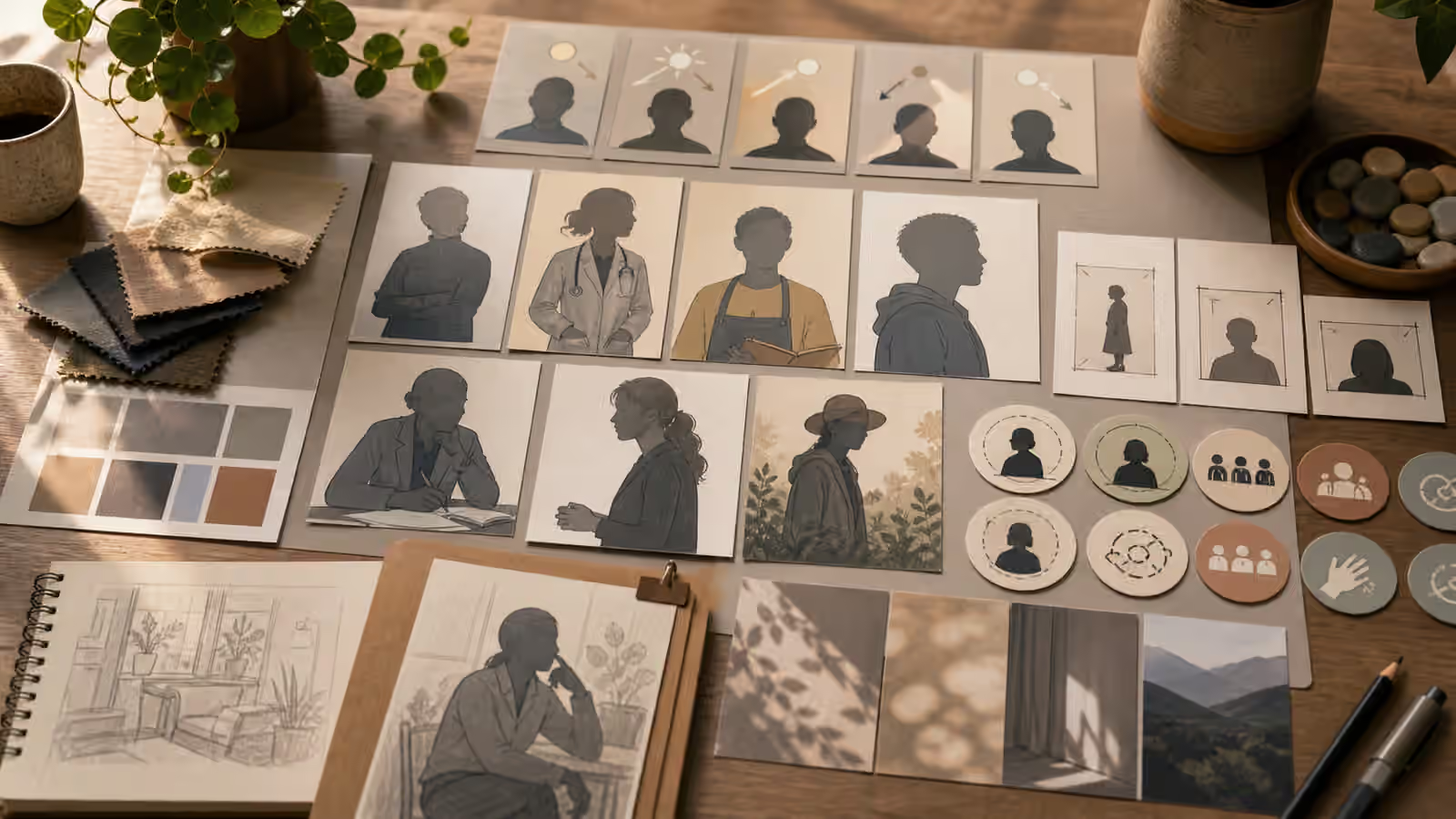
Then add posture and setting. A fictional repair technician can be seen from the side at a clean workbench, looking at an unbranded object with tools set aside. A fictional designer can be shown arranging blank color cards near a window. A fictional adult learner can sit at a table with open blank notes, warm side light, and a calm posture. These details make the portrait editorial rather than identity-driven.
This approach extends People, Likeness, and Consent . That guide names the broad boundary. Editorial portrait prompting adds craft: how to keep a human presence while removing the pressure to imitate someone real.
Use Crop And Angle To Reduce Recognition
Not every portrait needs a full face. Over-the-shoulder views, side profiles with softened features, hands arranging materials, back-of-head compositions, silhouette treatments, and partial-body environmental portraits can all carry human context. If the page does not need facial expression, do not ask for one. A looser crop can feel more honest than a highly detailed face that invites recognition.
Crop also affects implied intimacy. A close headshot can feel like a real profile. A medium environmental portrait can read as fictional editorial illustration. A distant figure in context can show scale and activity without turning the person into the subject. Choose the crop based on the page promise. A guide about pose and gesture may need body language. A guide about desk setup may need hands and posture. A guide about a sensitive topic may be better served by objects, space, or silhouettes.
The People, Pose, and Gesture Prompts guide is helpful here. Gesture can communicate action without overloading the prompt with identity. Crossed arms, looking down at materials, reaching for a tool, pausing beside a window, or turning toward a work surface are all visible, reviewable choices.
Avoid Credential Theater
Portraits often become misleading when they borrow professional signals. A lab coat, stethoscope, judge-like robe, police-style uniform, military-like rank mark, school badge, press pass, office nameplate, diploma, certificate, podium, or microphone can imply authority. Sometimes those cues are appropriate and sourced. In generated editorial portraits, they can create false credential theater.
If the article does not need a credential claim, prompt the role through context instead. A health-wellness article can use calm unbranded objects, neutral clothing, and a non-clinical setting rather than a doctor-like portrait. A legal-adjacent article can use paperwork abstraction and a desk without robes, seals, or courthouse cues. A training article can show a facilitator arranging blank materials rather than a certificate ceremony.
This is related to Health and Wellness Visuals and What Not to Generate . A portrait that appears to diagnose, endorse, certify, or represent a real authority carries more claim weight than a neutral editorial scene.
Keep References Ethical
Reference images can help with lighting, wardrobe texture, or composition, but they should not become a route to copying a private person. Avoid uploading private photos or asking for a face that resembles someone unless rights, consent, and policy are clear. If a reference is only meant for pose, say that the output must be a new fictional person with different face, body, hair, and identifying details. If a reference is a public figure, do not use it to build a lookalike for unrelated content.
The same goes for artist and photographer cues. Prompt broad visual traits such as soft window light, editorial magazine crop, shallow background, muted wardrobe, textured paper illustration, or documentary-inspired composition. Do not ask for a living artist’s style or a photographer’s exact look. Style Without Stealing gives the underlying pattern: use genre and craft language instead of imitation.
When you need a recurring fictional character, write a character bible that avoids real people. Character Consistency for Beginners is the better guide for that task. A portrait prompt can introduce a person; a character system handles continuity.
Review For Implied Story
After generation, look past the face. Ask what story the image tells. Does the person look like a real public figure? Do they appear to endorse a product, school, clinic, political position, legal service, or financial promise? Does the setting imply a testimonial from a client or patient? Do badges, uniforms, certificates, or branded props turn a fictional portrait into a false claim?
If the answer is yes, revise the image. Remove official cues, change the crop, soften identity, use a back view, replace badges with blank shapes, or switch to an object-based visual. Disclosure can help when viewers may mistake the person for a real subject, but disclosure does not make a misleading testimonial image appropriate.
Good editorial portraits show a human role without taking identity that does not belong to the project. They let the reader understand posture, attention, context, and mood while keeping real people out of the model’s reach.