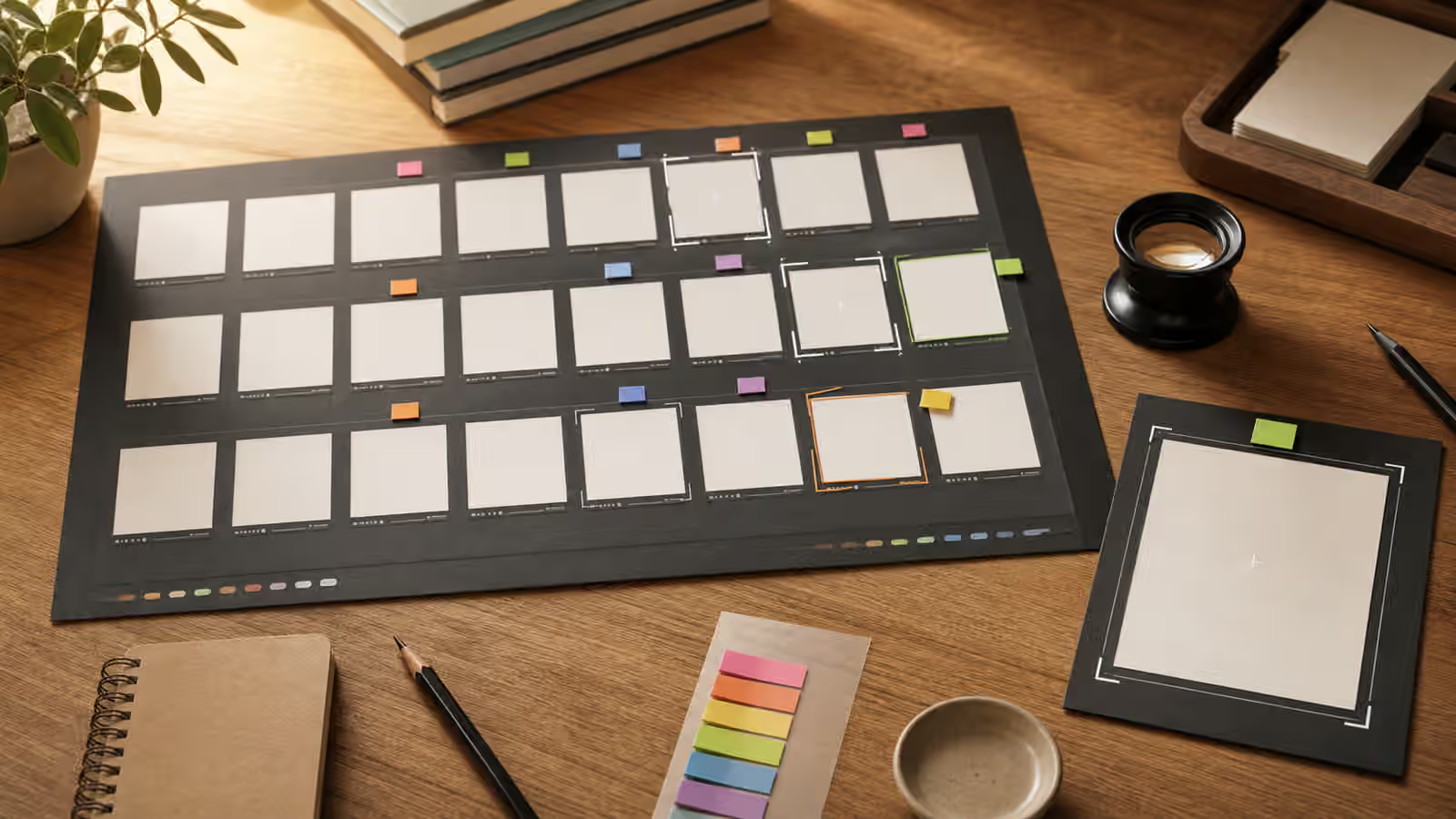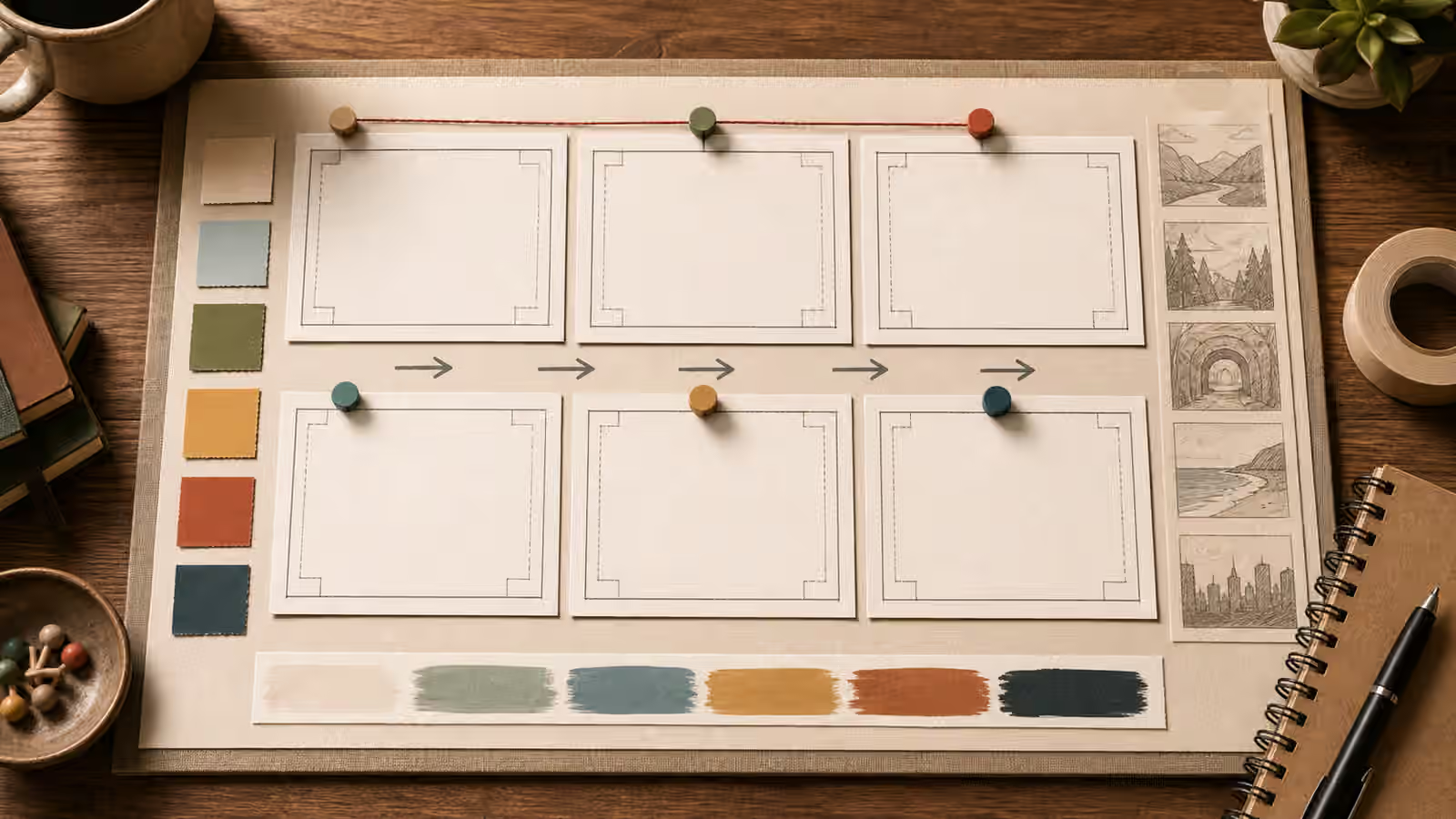
Cultural context is often where weak visual prompts reveal themselves. A prompt asks for a place, community, era, or tradition, but the actual instructions contain only a broad identity label and a handful of familiar symbols. The model fills the gap with whatever visual shorthand is easiest to assemble. The result may look detailed while still being shallow, inaccurate, or disrespectful.
Better prompts do not treat culture as a decoration layer. They describe environments, materials, uses, light, architecture, objects, weather, foodways, tools, public spaces, domestic spaces, and time context with care. They also know when not to generate people, clothing, rituals, sacred symbols, or documentary-looking scenes. The goal is not to make every image encyclopedic. The goal is to avoid asking a model to substitute stereotype for knowledge.
Replace Identity Labels With Visible Details
An identity label is not a visual brief. It may tell the model what broad category you have in mind, but it does not say what should appear in the frame. If the prompt says only that a scene should feel Mediterranean, West African, Nordic, South Asian, rural, urban, traditional, modern, or indigenous, the model must invent the details. That invention may lean on the most common image associations in its training data, not on the particular scene you meant.
Visible details are easier to review. A shaded courtyard with limestone walls, ceramic vessels, woven seating, potted herbs, and late-afternoon light is a scene. A community workshop with unfinished wood tables, hand tools, fabric samples, and open windows is a scene. A market stall with stacked produce, simple awnings, worn crates, and warm side light is a scene. These details still need care, but they give the image a concrete job. They also make it easier for a human editor to notice when something looks invented, mismatched, or too generic.
The describe the shot, not the vibe habit is especially useful here. Vibe words often hide weak research. If a prompt says “authentic cultural scene,” pause. Authentic to whom, where, when, and for what purpose? If you cannot answer with visible nouns and scene constraints, the image may not be ready to generate.
Do Not Make Costume Carry the Whole Image
Clothing can be meaningful, but it is also one of the easiest places for prompts to become careless. A costume cue may flatten a community into a prop, mix unrelated traditions, or make a fictional scene look like an staged performance. If clothing is not central to the educational purpose of the image, it is often safer to focus on environment, materials, tools, or objects instead. If people are not necessary, leave them out and build the scene through place and use.
When people are necessary, the people, likeness, and consent boundary still applies. Avoid public-figure resemblance, private-person lookalikes, and prompts that imply documentary proof. Use fictional, consent-safe descriptions when appropriate, and avoid turning identity into costume inventory. A prompt for a person reading in a community library can describe age range, posture, activity, lighting, and setting without loading the image with exaggerated cultural markers.
This restraint can make the image stronger. A room, table, garden, studio, workshop, storefront, or street corner can communicate context without asking a model to invent faces and clothing. It also reduces the risk of caricature. Many guidebook images do not need people at all. A careful reference board, material study, or object arrangement can teach the visual lesson more clearly.
References Should Clarify, Not Copy
Reference images can help when cultural context matters, but they should be used with discipline. The reference images and mood boards guide explains the broader pattern: use references to identify materials, lighting, layout, and constraints, not to copy a specific photograph or private artifact. With cultural context, this distinction becomes even more important. A reference might teach you that a surface is plaster rather than polished marble, that a roofline has a certain rhythm, or that a vessel shape is tied to a practical use. It should not become a request for a near-duplicate scene.
A good prompt separates observed details from assumptions. If a reference shows woven texture, ask for woven texture. If it shows a shaded passage, ask for a shaded passage. If it shows a ceremonial object, do not use that object as decoration unless the purpose is legitimate, respectful, and reviewed by someone with appropriate knowledge. Some symbols and practices are not generic visual resources. When in doubt, choose ordinary material and environmental details over sacred, national, or identity-defining signs.
The same applies to style. Style without stealing is not only about artists and studios. It is also about resisting the urge to borrow a visual identity wholesale. Broad terms such as editorial illustration, documentary-inspired still life, warm natural light, hand-built ceramic texture, or simple architectural study can guide the image without asking for a copied cultural package.
Specificity Includes Time and Use
Culture is not frozen. A prompt that asks for a timeless traditional scene may accidentally push the image toward museum display, tourist performance, or costume drama. Many useful visuals need ordinary present-day context: a kitchen table after preparation, a workshop shelf, a school courtyard, a transit stop, a family business counter, a community noticeboard without readable text, or a set of tools ready for use. Even if the image is fictional, time and use make it less likely to collapse into generic heritage imagery.
Ask what the scene is doing. Is it teaching material contrast, showing a design reference board, illustrating a food texture, representing a room layout, or supporting a historical article? The answer should shape the prompt. A guidebook about visual research might use blank reference cards and material samples. A guidebook about food prompting might focus on texture, tableware, steam, and scale without inventing labels or claiming origin. A guidebook about interiors might describe light, furniture placement, and surface wear rather than relying on a single decorative object to signal place.
Specificity also means knowing when the prompt has reached the edge of your knowledge. Generated images can look plausible even when the details are wrong. That is why cultural-context images need a review pass, and sometimes they need a subject-matter review before use. A quality check can catch obvious artifacts, but it cannot guarantee respectful accuracy.
Review for Shortcut Signals
Before publishing, ask what carries the image. If the scene depends on a flag, costume, sacred symbol, exaggerated facial feature, exoticized object, or familiar tourist landmark, the prompt may be leaning on shortcuts. If the image would still communicate its purpose through materials, environment, light, use, and composition after those symbols were removed, it is probably stronger. The review should also catch mixed details that belong to unrelated places or time periods, especially when the model has filled gaps without guidance.
This is not a call to make all images bland. Specific material, architecture, plants, tools, weather, light, and daily-use objects can create rich visuals. The difference is that they are chosen because they serve the scene, not because they act as a quick label for a group of people. If the image needs disclosure as AI-generated or AI-assisted, handle that plainly. If it might be mistaken for documentary evidence, official representation, or a real person’s likeness, step back and rewrite the brief.
Responsible visual prompting does not make cultural representation effortless. It slows the prompt down enough for a human to make better choices. Replace labels with visible details, use references to clarify rather than copy, avoid people when they are not needed, and review the result for shortcut signals. The image will usually be quieter, more specific, and more useful because of that restraint.