
Fondsites Tools
Salt Works
Brine Salt Calculator
Turn a recipe's salt percentage into grams for your batch, and into spoons of the salt in your cupboard.
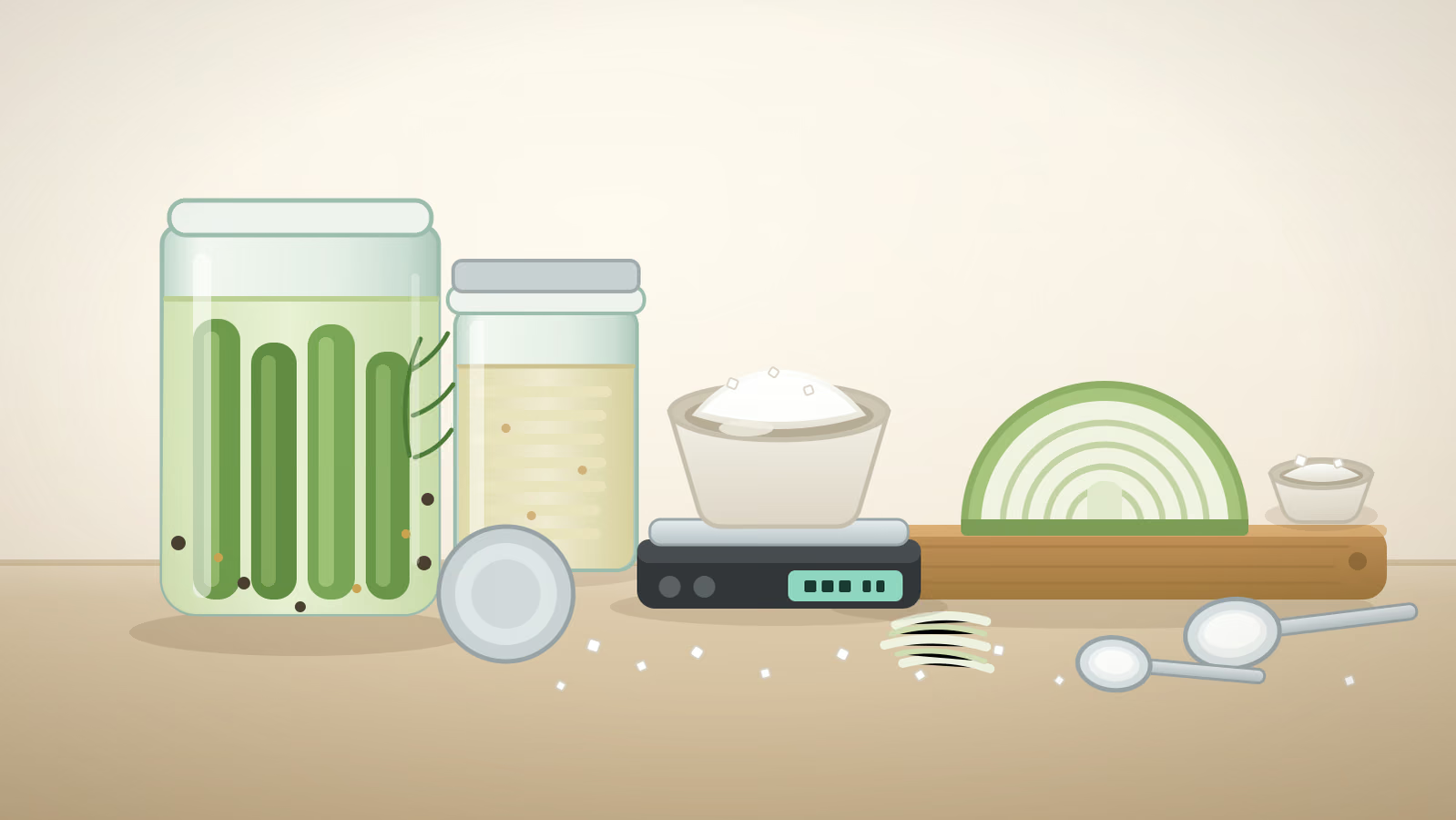
Ferment and pickle recipes give salt as a percentage because a percentage travels: 2.5% works whether you have a kilo of cabbage or four. What a percentage does not do is tell you how much salt to pick up.
This calculator does that one conversion. It takes the percentage a recipe already gave you, applies it to the weight in front of you, and then converts the answer into spoons of the specific salt you own, because a teaspoon of fine table salt weighs roughly twice what a teaspoon of Diamond Crystal kosher does.
Use Brine Salt Calculator as a planning checkpoint for Salt Works. The form is intentionally paired with assumptions, limits, and related reading so the result stays tied to a real decision instead of becoming a standalone score.
Interactive Tool
Brine Salt Calculator
Change the inputs and the result updates in your browser. Results are not saved, shared, or added to the URL.
Result
Adjust the fields to calculate a result.
How to use this tool
- Choose whether you are salting shredded vegetables directly, submerging cut vegetables in added water, or mixing a brine on its own.
- Enter the weights your recipe applies to, then the salt percentage the recipe asked for. The calculator does not choose the percentage for you.
- Pick the salt you will actually measure with, then weigh the result if you have a scale and use the spoon figure only if you do not.
What the result means
The gram figure is the recipe’s own percentage applied to your batch. It is arithmetic, not a judgment about whether the recipe is a good one.
The spoon figure is a conversion at typical crystal densities. Brands, grinds, humidity, and how firmly you scoop all move it, which is why every serious preserving recipe asks for weight.
The caution line flags strengths that sit outside the range most tested vegetable ferments use, and reads the room temperature you gave it. It is a prompt to check your recipe again, not permission to ignore it.
Assumptions and limitations
Salt is treated as a percentage of the vegetable and water weight, which is how ferment and pickle recipes are normally written. A 2% sauerkraut means 20 g of salt per 1000 g of cabbage.
Ounce entries are weight, not fluid ounces, and are converted at 28.35 g per ounce. Water is close enough to 1 g per milliliter for kitchen work, but weighing it is still steadier than measuring it.
Spoon conversions use roughly 6 g per teaspoon for fine table, fine sea, and pickling salt, 4.8 g for Morton coarse kosher, 2.8 g for Diamond Crystal kosher, and 5.5 g for coarse sea salt.
This tool covers salt for vegetable ferments, pickles, and brines. It is not for curing salts, nitrites, meat curing, or canning safety, all of which follow separate tested procedures.