Weight Is a Design Decision
A tiny house on wheels is not only a small house. It is also a loaded trailer, and that second identity has to be respected from the first sketch. The floor plan, cabinetry, tile, water storage, batteries, appliances, roof shape, porch details, and even the habit of keeping tools under the bed all become part of the towing system. If the home is built beautifully but carries too much weight, carries it in the wrong places, or asks the tow vehicle to do work it was not rated to do, every relocation becomes harder than it needed to be.
This is the gap between a tiny home that looks mobile and one that is actually ready to move. Many owners park for months or years at a time, so towing can feel like a one-day event. The problem is that the decisions that make towing calm are made long before moving day. They happen when you choose the trailer, place the water heater, decide whether the kitchen gets tile, route the batteries, and leave enough margin for the ordinary things people bring into a home after the build is finished.
The Building Guide covers trailer selection and construction order. The Site Prep and Setup guide covers access, pads, and arrival. This guide sits between them. It is about the traveling version of the house: what it weighs, where that weight sits, how the trailer and tow vehicle share the load, and what to check before the wheels turn.
The Numbers Are Connected
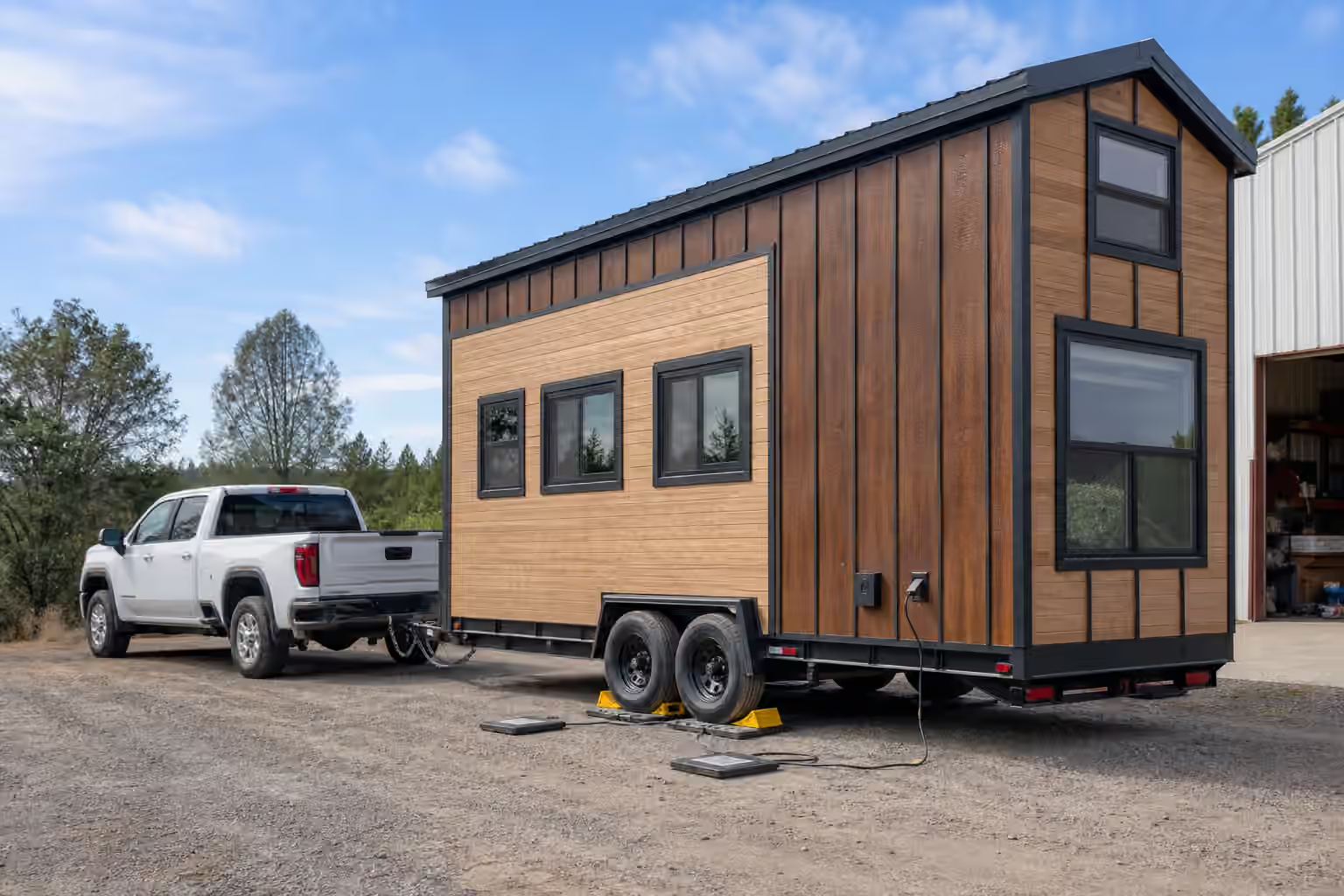
Trailer weight language can feel like a row of abbreviations, but each number describes a different part of the same problem. GVWR is the maximum loaded weight the trailer is rated to carry. GAWR describes how much each axle group is rated to carry. Tongue weight is the downward load on the hitch. Payload is the useful room left after the empty trailer and built structure are accounted for. Tow rating belongs to the vehicle, not the house, and it only matters when combined with hitch rating, payload rating, brake capacity, cooling, and the real conditions of the route.
The important habit is to stop treating these as separate facts. A tiny home can be under the trailer’s overall rating and still be wrong if one axle is overloaded. It can have a strong enough trailer and still tow poorly if tongue weight is too light. It can sit on a capable truck and still exceed the truck’s payload once passengers, tools, fuel, and hitch load are included. Good towing behavior comes from the relationship among the numbers, not from one impressive rating printed on a spec sheet.
If you are still planning the build, ask for the trailer manufacturer’s documentation before you finalize the design. If you are buying an existing tiny home, ask for real scale weights, not guesses. A confident seller should be able to explain the trailer rating, the estimated finished weight, and how the heavy systems were placed. If nobody can answer those questions, assume you need to verify them before any long move.
Start With Margin, Not Hope
The easiest time to control weight is before materials are bought. A wall assembly, roof choice, countertop, tub, masonry finish, wood stove, solar battery bank, and full water tank can each look reasonable on its own. Together, they can erase the margin that made the trailer choice seem safe. Tiny homes are especially vulnerable to this because every design decision is concentrated into a short chassis. A few heavy upgrades in one zone can change both total weight and balance.
A practical build keeps a running weight plan. It does not need to become a perfect engineering model, but it should be more honest than memory. Write down the heavy items, their approximate weights, and where they land relative to the axles. The point is not to calculate every screw. The point is to notice patterns while they are still easy to change. If the batteries, water tank, range, refrigerator, and storage bench are all drifting toward the rear, the plan is telling you something.
Margin also needs to include lived weight. The finished empty home is not the moving weight. Food, clothing, books, tools, cookware, fresh water, propane, pet supplies, outdoor gear, spare parts, and the boxes people swear they will sort later all count. A tiny home with no useful margin at completion is asking daily life to become a weight problem. The Tiny Home Budgeting guide makes a similar point about money: the realistic number is the one that includes the unglamorous extras. Weight works the same way.
Tongue Weight Decides How the Trailer Behaves
Tongue weight is easy to ignore because it is invisible until the home is connected to a tow vehicle. Too little downward force at the hitch can make the trailer feel nervous and prone to sway. Too much can overload the rear of the tow vehicle, lighten the steering axle, and make braking and control feel worse. The right range depends on the trailer design, hitch setup, and loaded condition, so the answer should come from the trailer and towing professionals involved, not from a guess after the cabinets are installed.
The design principle is simple enough: heavy things should be low, secured, and distributed with the axles in mind. That usually means avoiding a heavy cluster at the very back of the house and avoiding a front end that becomes a storage cave for every dense object the owner did not want indoors. Water tanks deserve special attention because water is heavy and it moves. A full tank can change the ride. A partially filled tank can slosh. If the home is meant to travel with tanks empty, that practice needs to be built into the move routine rather than remembered at the last minute.
Batteries deserve the same respect. A compact lithium bank may be lighter than older alternatives, but it is still a dense load. Lead-acid batteries are heavier still. Placing any battery bank should consider service access, ventilation needs where relevant, temperature protection, cable runs, and weight distribution at the same time. If the electrical plan is part of a larger off-grid system, coordinate the weight conversation with Solar Power Sizing instead of treating the power system as a separate design layer.
Width, Height, and Overhang Are Part of Readiness
Weight gets most of the attention, but the physical envelope matters just as much. A tiny house on wheels often lives near common road limits for width and height, and small changes can matter. Roof thickness, exterior lights, gutters, trim, wheel wells, awnings, mini-split placement, solar panel mounts, porch brackets, and decorative overhangs can all become towing problems if they were drawn as house details rather than road details.
Measure the finished home, not the plan. Measure from the actual ground condition to the highest fixed point. Measure width at the widest permanent element, including trim and hardware. Look underneath for low points that may drag on steep driveways, ferry ramps, crowned roads, or uneven site entrances. The Legal Requirements guide is the place to start for local classification and permit questions, but even where a move is legal, the route still has to physically work.
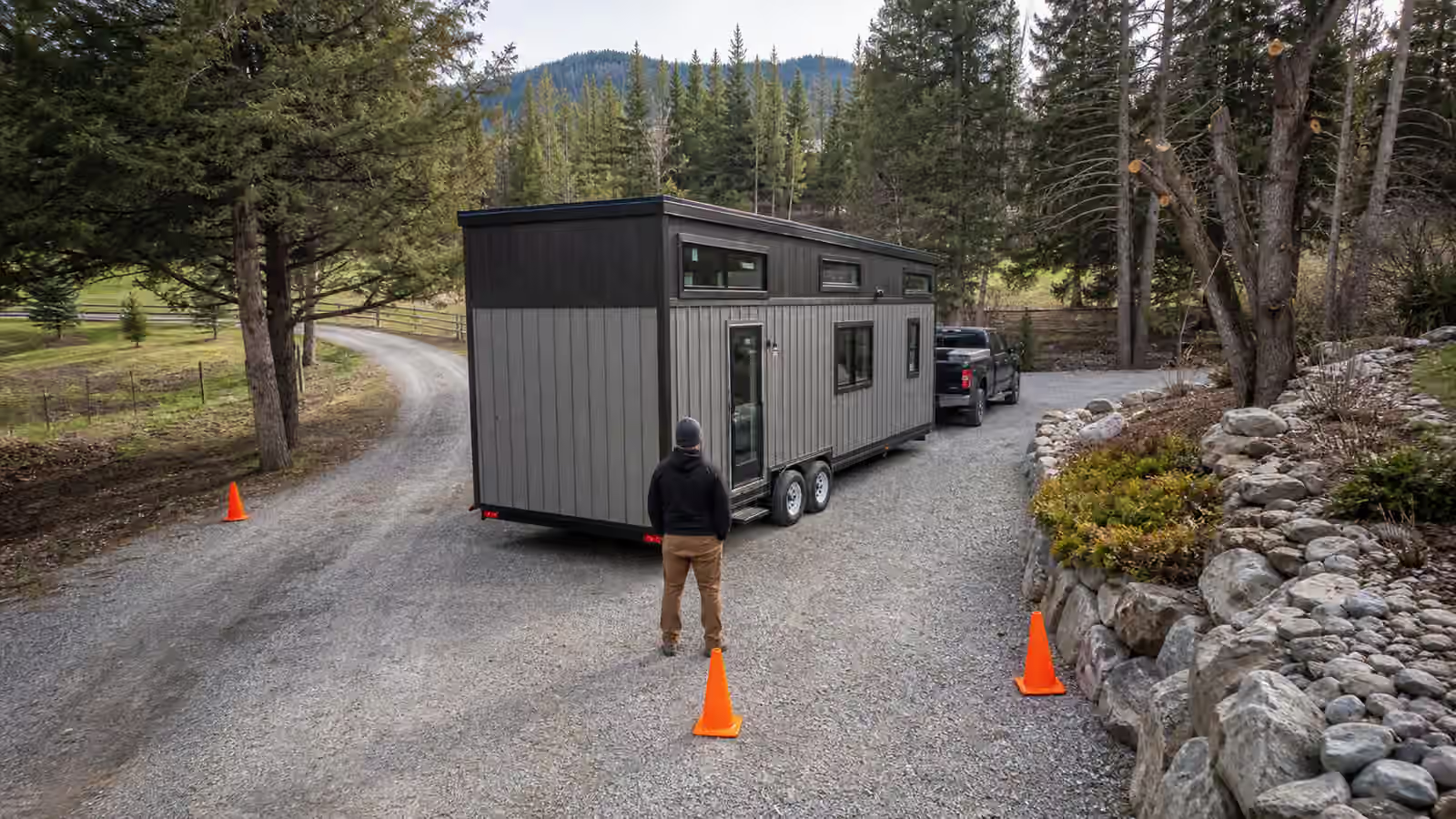
Route planning should happen before moving day. Low branches, tight turns, soft shoulders, narrow gates, bridge clearances, steep grades, fuel stops, and places to pull over matter more with a tiny home than with an empty utility trailer. A professional hauler will look for these constraints automatically. An owner towing their own home has to bring the same seriousness to the route. The goal is not drama. The goal is a boring trip because the awkward parts were found on a map, a site walk, or a measuring tape instead of in traffic.
The Trailer Is a System, Not a Platform
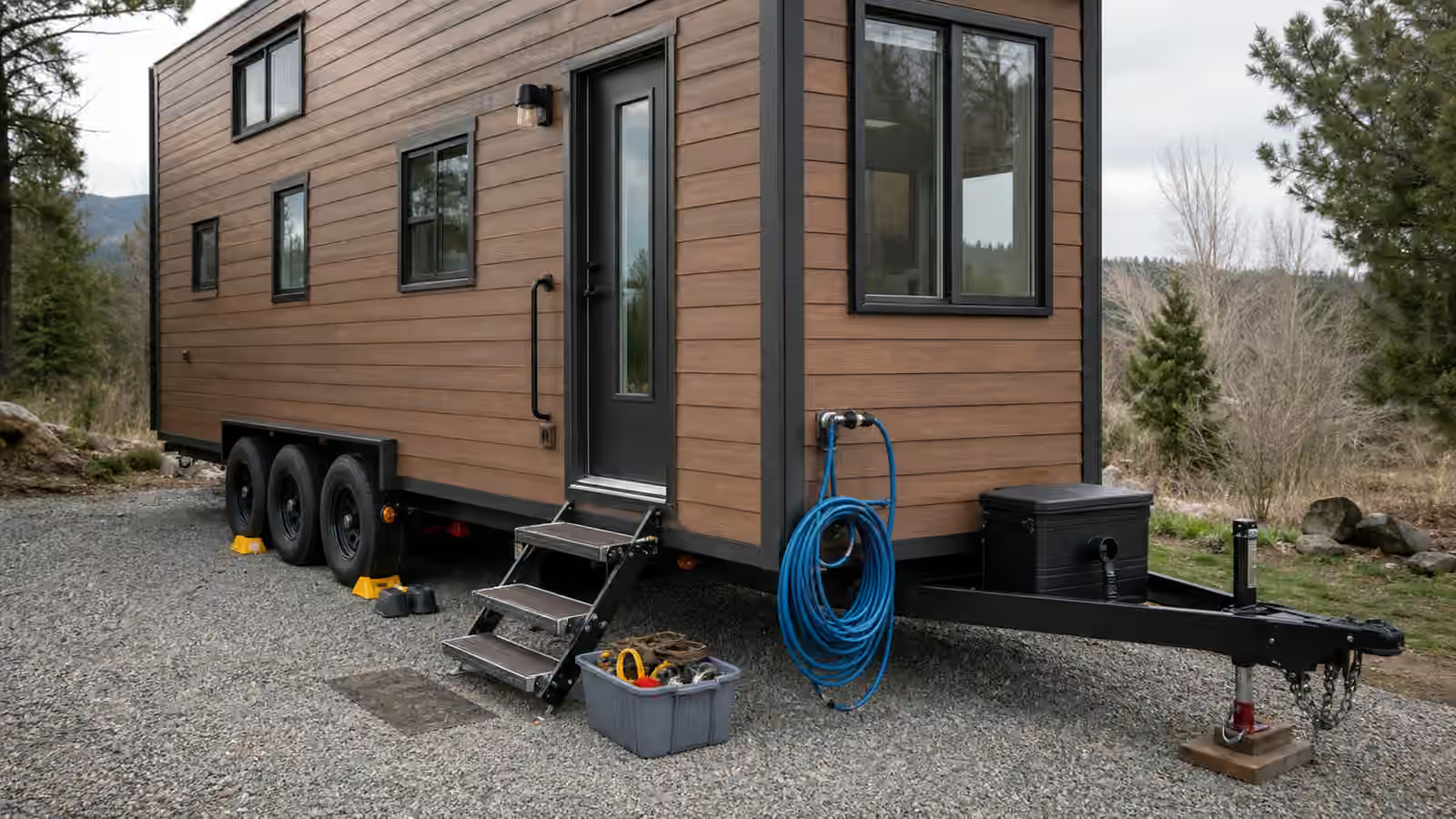
The trailer under a tiny home can disappear from attention once the interior starts looking finished. That is a mistake. The trailer remains the foundation, frame, suspension, brake system, lighting system, and connection point for every relocation. Tires age while parked. Brakes need inspection. Bearings need service. Safety chains, breakaway systems, lights, couplers, jacks, and attachment points all deserve routine attention. A home that has been stationary for two years should not be assumed road-ready just because the tires still hold air.
Parking adds its own complications. Tires can develop flat spots or sidewall aging. Stabilizers can carry loads they were not meant to carry during towing. Skirting can hide frame issues. Moisture around a pad can accelerate rust. Rodents can damage wiring. The seasonal habits in Tiny Home Maintenance should include the trailer whenever the home is on wheels, even if relocation is rare.
Before a move, inspect from the tow vehicle back. The hitch rating, ball size, coupler fit, safety chains, breakaway cable, wiring harness, brake controller, trailer lights, tire condition, lug nuts, wheel bearings, suspension, frame, stabilizers, loose exterior items, roof attachments, doors, windows, vents, and interior cargo all work together. This is not a decorative walkthrough. It is a systems check on a small building that is about to experience wind, vibration, braking, turning, and road shock.
Interior Design Can Make Towing Easier
The best towing choices often look like good interior design. Low storage reduces sway risk and keeps heavy objects from becoming overhead hazards. Cabinets that latch properly protect both the contents and the structure. Open shelves may look good when parked, but they need a travel plan. A refrigerator, pocket door, composting toilet, propane cylinder, water heater panel, or fold-down table should not be able to surprise you on the first hard stop.
The Design Principles guide argues for designing around real habits. For a THOW, travel is one of those habits even if it happens rarely. Ask how the house changes when it moves. Where do the loose countertop appliances go? Can the loft ladder be secured? Are drawers latched? Can plants, tools, bedding, and bathroom items be stowed without turning the tow vehicle into overflow storage? A tiny home that needs six hours of frantic packing before every relocation is technically mobile, but not gracefully mobile.
This is also where material choices matter. Heavy finishes are not automatically wrong, but they need to earn their place. Tile, hardwood, stone, thick butcher block, large appliances, and built-in furniture can all be reasonable in the right home. The mistake is choosing them only for appearance and then discovering that the trailer has no remaining margin. A lighter finish that preserves towing margin may be the more durable choice because it keeps the whole system within a more forgiving range.
When to Use a Professional Hauler
Towing a tiny home is different from towing a small camping trailer. The load is taller, heavier, more affected by wind, and often more expensive to repair. Some owners have the right vehicle, experience, hitch setup, and confidence for short moves. Many do not. Hiring a professional hauler can be the sensible choice, especially for long distances, unfamiliar terrain, tight delivery sites, or a home close to rating limits.
A good hauler will care about weights, dimensions, access, route, weather, brakes, tires, and the receiving site. They may ask for photos of the approach, measurements of the driveway, or proof that the pad is ready. Those questions are useful. They expose problems while they are still planning problems. If a hauler seems uninterested in the details, keep looking.
Professional help does not remove the owner’s responsibility to prepare the home. The hauler cannot know which cabinet latch is weak, which shelf holds glass jars, which vent cap was recently loosened, or whether the water tank is full. The owner knows the interior. The hauler knows the road. A calm move comes from both sides doing their work.
Make Road Readiness Part of Ownership
The healthiest mindset is to treat road readiness as a standing condition, not a panic project. That does not mean the tiny home has to be towable with ten minutes of notice. It means the owner knows the current approximate weight, keeps trailer documents accessible, maintains tires and brakes, protects the frame from rust, stores move-specific hardware in one place, and understands what has changed since the last relocation.
Every major upgrade should include the same question: what does this do to weight, balance, dimensions, and travel prep? Adding a bigger battery bank, swapping to heavier siding, installing a wood stove, enclosing a porch, or moving water storage may be worth it. The question is not whether upgrades are allowed. The question is whether the towing system still makes sense afterward.
A tiny home on wheels gives you the option to relocate, but that option has to be maintained. Build with margin. Put heavy systems where they help rather than hurt. Measure the finished envelope. Weigh the home when the numbers matter. Keep the trailer maintained even when it sits still. Then moving day becomes what it should be: a careful transfer from one prepared place to another, not the first time the house is asked to prove it can still be a trailer.