The village started with a conversation over a fence.
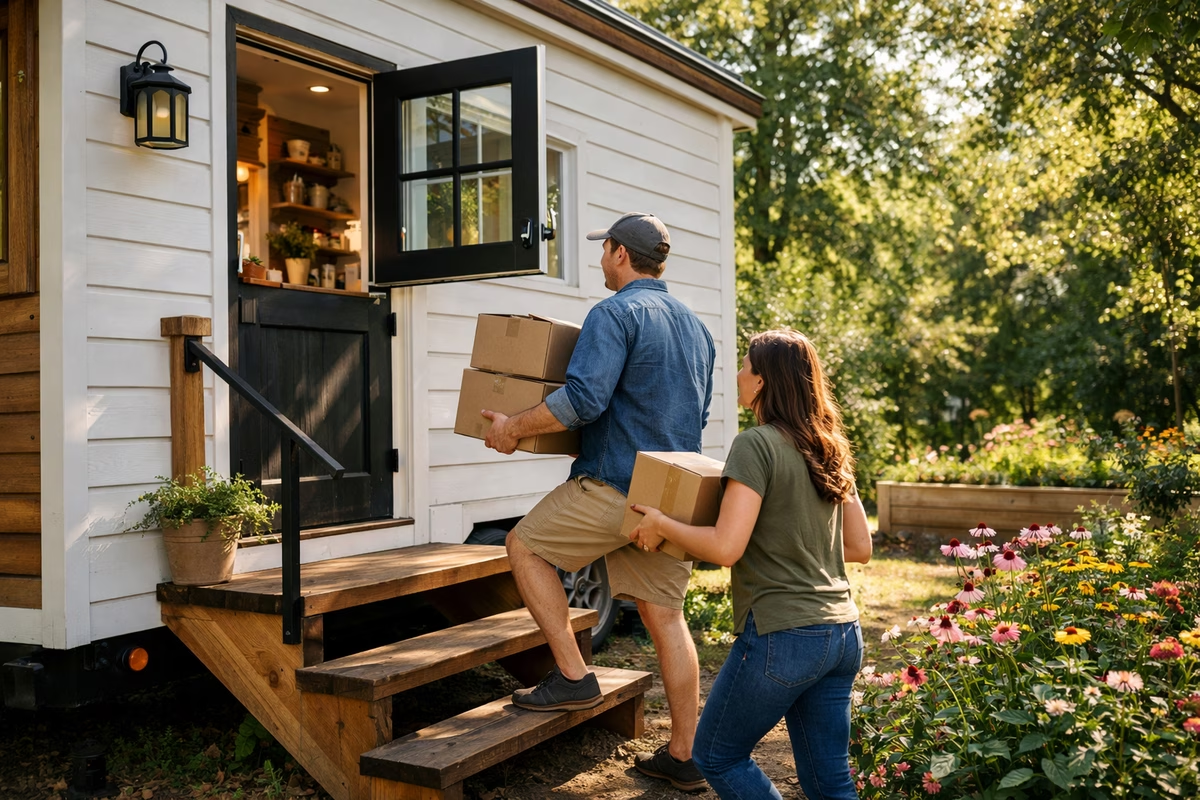
Marta and James lived in tiny homes on adjacent lots at the edge of a mid-size Oregon town—two separate parcels they’d bought independently, both zoned for single-family residential, both subject to minimum square footage requirements that their 280-square-foot and 340-square-foot homes technically violated.
They’d each gotten their homes permitted through a combination of ADU (Accessory Dwelling Unit) regulations, careful code reading, and a sympathetic building inspector who appreciated what they were doing even if the zoning code hadn’t fully caught up.
One evening, standing at the fence between their properties, Marta said: “What if there were more of us?”
James said: “How many more?”
“Enough to share a laundry. Enough to share a garden. Enough that when someone’s water heater breaks at midnight, there’s a neighbor who knows how to fix it.”
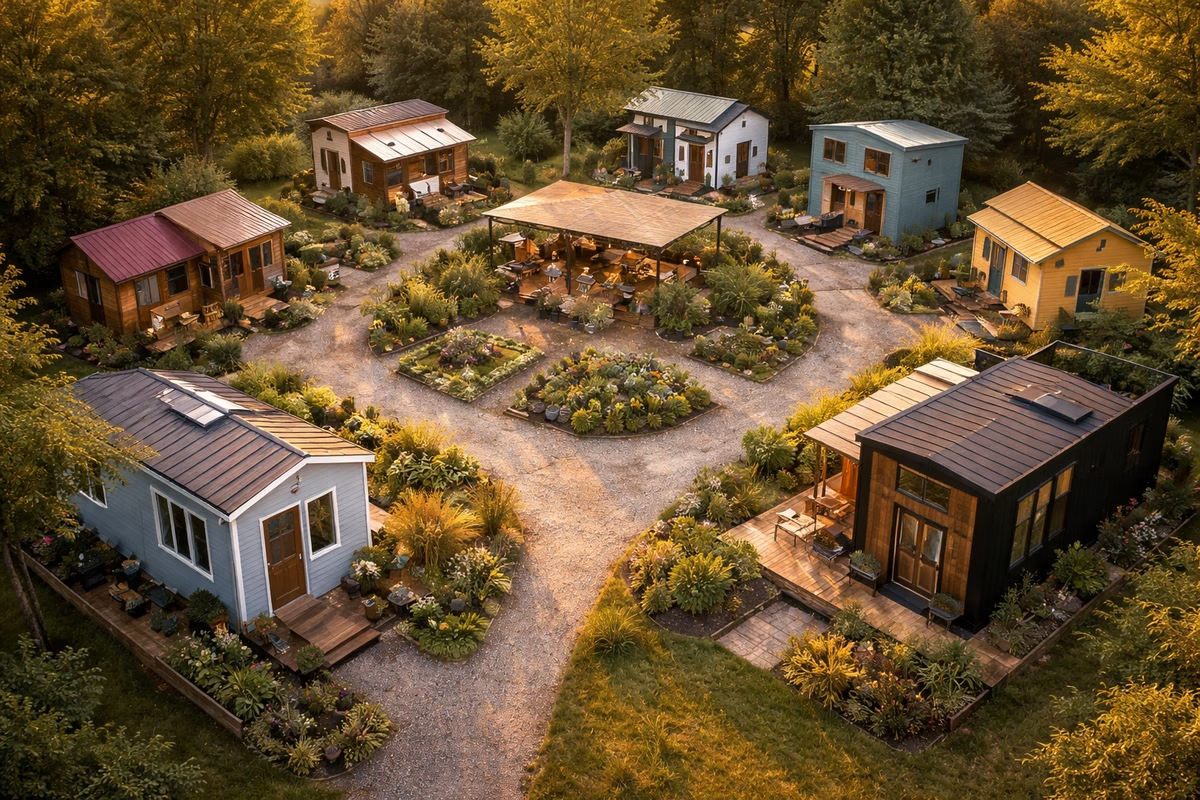
That conversation was four years ago. Today, there are eleven tiny homes on a 1.3-acre parcel of land, connected by gravel paths, surrounding a shared garden, a common pavilion with a kitchen and laundry, and a workshop where someone is always building something.
This is the story of how it happened—and a practical guide for anyone who wants to try.
The idea: why tiny homes work better in groups
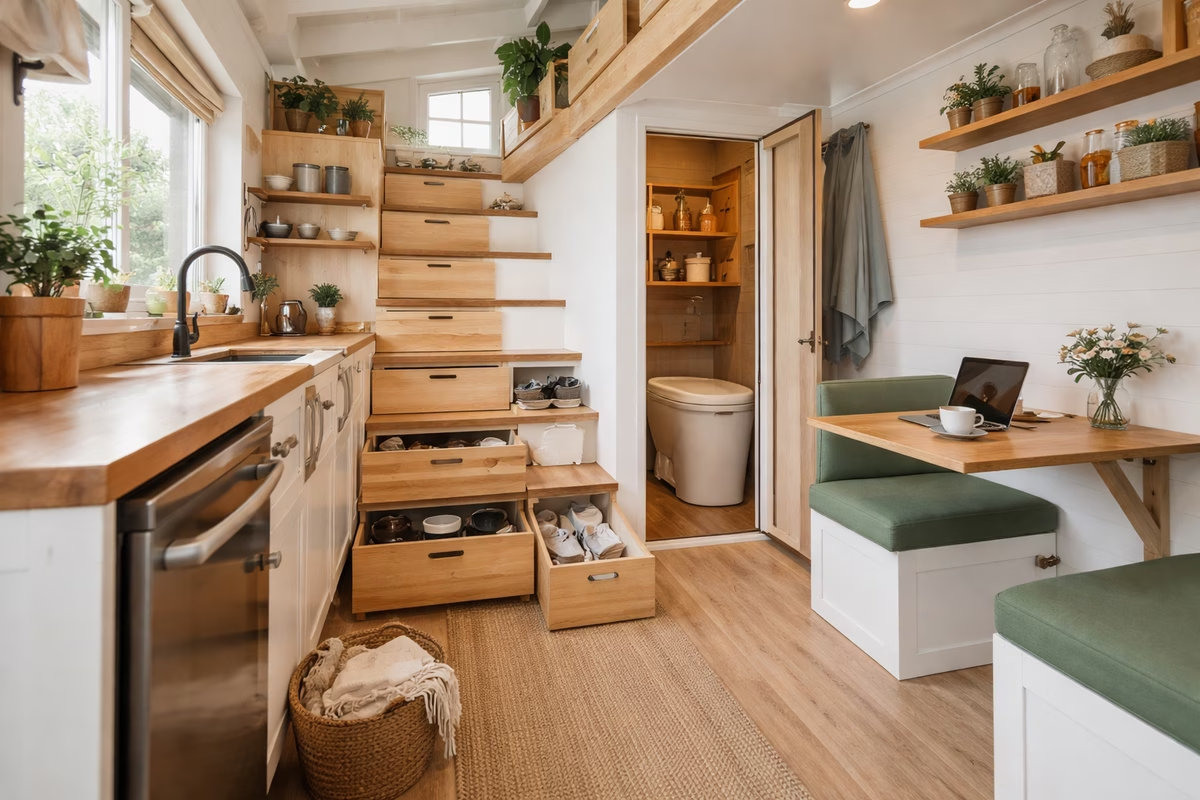
A single tiny home is an exercise in personal efficiency. Everything is optimized for one person or one couple: compact kitchen, lofted bed, minimal storage, self-contained systems.
But efficiency creates gaps. A tiny home doesn’t have space for a guest bedroom. It doesn’t have a workshop. It doesn’t have a laundry room or a big kitchen for hosting dinner parties. Living tiny means living without certain things—or going elsewhere for them.
A community of tiny homes solves this by sharing what individuals can’t justify alone:
- Shared laundry: One washer/dryer serves 10–15 homes, eliminating the need for each tiny home to find space for machines.
- Common kitchen/dining space: A pavilion with a full-size kitchen and a long table means dinner parties, potlucks, and cooking projects don’t require squeezing six people into 300 square feet.
- Workshop/tool library: One well-equipped workshop (with tools shared among residents) replaces eleven inadequate toolboxes.
- Garden: A shared garden produces more food per square foot than eleven tiny individual plots, and the labor is distributed.
- Guest quarters: One or two dedicated guest rooms (often a small cabin) mean visitors have a place to sleep without displacing residents.
The infrastructure cost is divided. The social benefit is multiplied. And the land use is dramatically more efficient than conventional suburban development—eleven homes on 1.3 acres, with shared green space, where a traditional subdivision would fit perhaps four or five houses with private lawns.
The land: finding and affording it
Marta and James started looking for land in early 2022. Their criteria:
- At least one acre (enough for 8–12 tiny homes with shared space)
- Within or adjacent to a town (access to services, jobs, schools)
- Zoned permissively or in a jurisdiction open to zoning changes
- Affordable when split among future residents
They found the parcel—1.3 acres of flat, unimproved land on the edge of town, previously used as a nursery—for $180,000. Split among the first six committed residents, that was $30,000 per household for land. Not cheap, but less than a third of what a traditional lot in the same area would cost.
Ownership structure
This was the hardest legal question: who owns what?
They explored three models:
Individual lots (subdivision): Each resident owns their home and a small lot. Requires formal subdivision approval, which is expensive and slow.
Condominium structure: The land is collectively owned, and each resident owns their individual home (a “unit”). Common areas are owned by the association. Requires legal setup but avoids subdivision.
Cooperative/land trust: A cooperative or community land trust owns the land. Residents own their homes and lease the land from the trust, typically on a 99-year lease. This keeps land affordable long-term and prevents speculation.
They chose option 3—a community land trust. An attorney helped them set it up for about $5,000 in legal fees. The trust owns the land. Residents own their homes. Monthly land-lease fees cover property taxes, insurance, and maintenance of shared infrastructure.
This structure meant that when a resident leaves, they sell their home at a price based on improvements (not land speculation). The land stays affordable for the next person. It’s a model borrowed from affordable housing cooperatives, adapted for tiny homes.
The zoning battle: the hardest part
Oregon has some of the most progressive tiny home regulations in the country, but “progressive” doesn’t mean “easy.”
The parcel was zoned R-1 (single-family residential). R-1 allowed one dwelling per lot, with a minimum of 800 square feet. Their plan—eleven homes of 200–400 square feet on one parcel—violated both the density and the size requirements.
They needed a zoning variance or a Planned Unit Development (PUD) approval—a special category that allows flexible site design in exchange for meeting broader planning goals.
The process
Pre-application meeting with planning staff (Month 1): They presented the concept informally. The planning director was cautiously interested. “This could work as a PUD if you can show it meets our density, infrastructure, and design standards.”
Hiring a planner (Month 2): They hired a land-use consultant ($8,000, split among residents) to prepare the PUD application—site plan, infrastructure plan, stormwater management, parking, and a community governance document.
Neighbor outreach (Month 3): Before the public hearing, they knocked on every door within 500 feet. They brought site plans and renderings. They answered questions. The most common concern: “Will this lower our property values?” The honest answer, backed by studies: no. Small, well-designed housing tends to increase adjacent property values because it brings residents who maintain the area and patronize local businesses.
Public hearing (Month 5): The planning commission hearing lasted three hours. Three neighbors spoke in opposition (concerns about traffic, parking, and “what kind of people” would live there). Seven spoke in support, including two who lived adjacent to the property. The commission approved the PUD 4–1.
Building permits (Month 6–8): Each home needed individual building permits. Because the homes were built on permanent foundations (not on wheels), they were subject to the Oregon Residential Specialty Code. The homes met all structural, electrical, and plumbing requirements—they were simply small.
For general legal context, see Legal Requirements for Tiny Homes.
The build: eleven homes, one year
Construction happened in phases over 14 months:
Phase 1 (Months 1–3): Infrastructure. Water, sewer, electrical, and gravel paths. One shared water meter with individual sub-meters. One shared septic system (designed for 15 residents). Underground electrical conduit to each home site.
Phase 2 (Months 3–8): First six homes. Three were factory-built shells (Park Model-style, delivered by truck and set on foundations). Three were stick-built on-site by a local contractor specializing in small structures. Each home was customized to its owner’s needs—different layouts, different materials, different styles.
Phase 3 (Months 8–12): Shared spaces. The pavilion (a 600-square-foot open-sided structure with a full kitchen, dining area, and covered patio). The laundry building (a 100-square-foot shed with two washers and two dryers). The workshop (a 200-square-foot shed with a workbench, tools, and storage).
Phase 4 (Months 10–14): Remaining five homes. These filled in as new residents committed and construction schedules allowed.
Total infrastructure cost (shared among all residents): ~$120,000 Average per-home construction cost: $45,000–$85,000 depending on size and finishes Average total cost per resident (land + infrastructure + home): $75,000–$120,000
In a region where the median home price was $420,000, this was not just affordable—it was an entirely different economic model.
Life in the village: what works and what’s hard
What works
The social fabric. Eleven households, close together, with shared spaces, create a social density that suburbs don’t have. People see each other daily—on the paths, in the garden, at the pavilion. Relationships form organically. Meals are shared regularly (Friday potluck is a standing event). Problems get solved collaboratively.
“I’ve lived in apartments and houses,” said one resident, Kara. “I’ve never known my neighbors the way I know them here.”
The economics. Shared laundry, shared internet, shared tools, shared garden—the collective savings are significant. Most residents estimate they save $200–$400/month compared to renting a studio apartment in the same town, while owning their home.
The environmental footprint. Less land per household. Less energy per household (smaller homes to heat and cool). Shared infrastructure (one washer instead of eleven). A communal garden that reduces grocery trips. The per-person environmental impact is roughly 60% lower than the regional average.
What’s hard
Governance. Eleven households means eleven opinions about every shared decision: when to mow, what to plant, how loud is too loud, who cleans the pavilion. They adopted a consensus-based governance model with monthly meetings and a rotating “steward” role. It works—but it requires emotional labor, compromise, and the willingness to have conversations that suburban homeowners never have to have.
Privacy boundaries. Close neighbors and shared spaces mean that privacy is intentional, not default. You have to create it—with fences, with plantings, with agreed-upon norms about when to approach someone and when to leave them alone. “The homes are small, but the community is big,” Marta said. “Sometimes you need the community to be small too.”
Maintenance expectations. Shared spaces need maintenance, and not everyone contributes equally. The community addressed this by creating a monthly “work day” where all residents contribute three hours to shared maintenance. Miss a work day, and you contribute $50 to the maintenance fund instead. This simple structure prevents resentment from festering.
What the village teaches about tiny living
Small homes need big communities
The tiny home movement often emphasizes individual self-sufficiency: build your own home, live your own life, reduce your footprint. The village model adds a missing piece: interdependence. Small homes work better when they’re connected to shared resources and people who care about each other. Self-sufficiency is the starting point. Community is the destination.
Zoning is the real barrier
The hardest part of building the village wasn’t construction—it was permission. Zoning codes in most American towns were written for single-family homes on individual lots. Tiny home communities don’t fit neatly into any existing category. Changing this requires advocacy, patience, and the willingness to sit through three-hour public hearings with a smile.
Affordability is a design choice
The village proves that housing can be affordable without being substandard. The homes are small but well-built, well-insulated, and beautiful. The shared spaces are generous. The total cost—$75,000–$120,000 per household—is achievable for people who can’t afford a $400,000 house but can save $30,000 and take a small construction loan.
The ending: the light at dinner
Every Friday evening, the pavilion fills. Someone has cooked. Someone else has brought bread. The long table seats fourteen, and there are usually twelve to sixteen people—residents, partners, the occasional guest.
The pavilion has string lights. Marta hung them the first week and nobody has taken them down. In winter, when it’s dark by five, the lights come on and the pavilion glows like a lantern in the middle of the village.
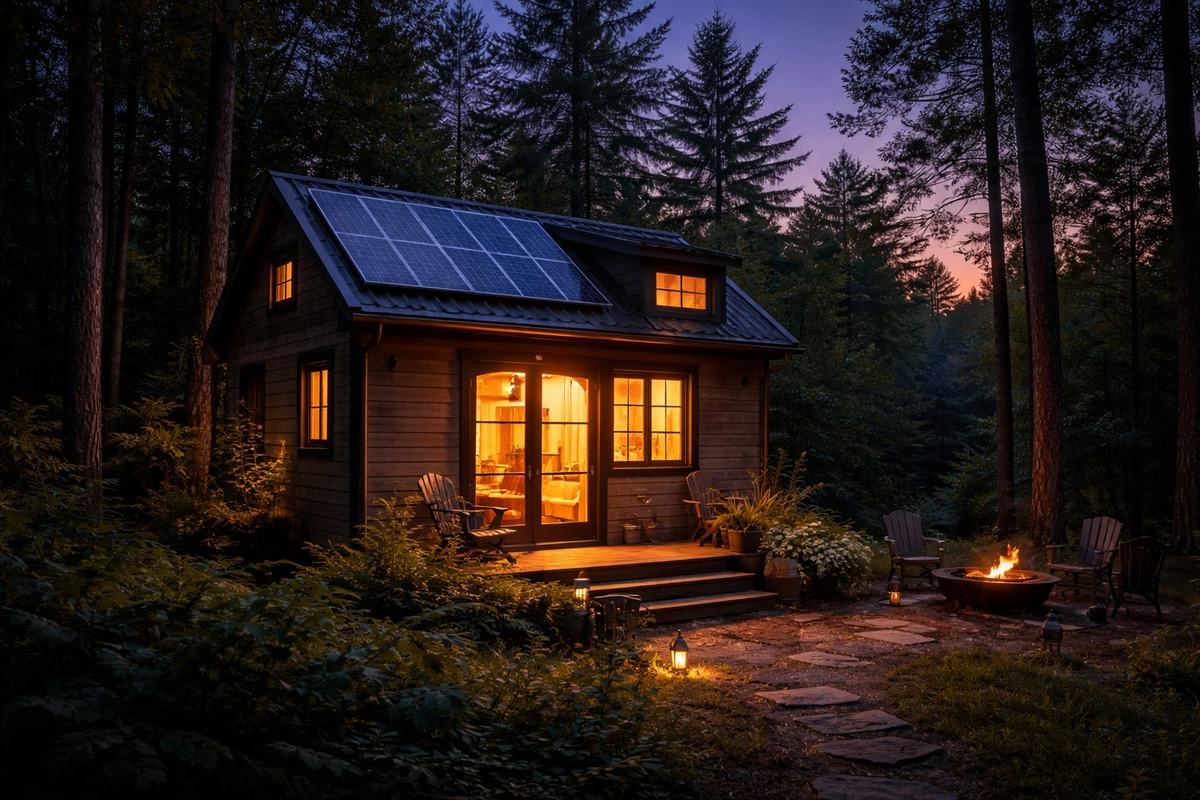
One Friday in December, I sat at the table with soup and bread and looked around. Eleven tiny homes, warm and lit, arranged around a garden that was sleeping for winter. The paths between them glowed faintly with solar path lights. The workshop light was on—someone was always in the workshop.
Marta was across from me. I said: “Do you remember the conversation at the fence?”
She laughed. “I remember thinking, ‘What if there were more of us?’”
“Now there are.”
“Eleven homes,” she said. “Twenty-three people. One garden. One laundry. One very long table.”
She looked at the string lights.
“Enough,” she said.
Next steps
- Read Legal Requirements for Tiny Homes for the zoning and code framework
- Explore Building Guide for construction approaches that work at community scale
- See Tiny Home Budgeting for the financial planning behind affordable small homes
- Check Design Principles for making small spaces feel generous
- Read Sustainable Systems for shared infrastructure planning