Rain Falls in Patterns
A tiny home roof may be small, but the water that lands on it still has to go somewhere. It runs off metal panels, drips from trim, splashes off gravel, follows porch edges, freezes at shaded corners, stains siding, and finds the low places under steps. Because the building is compact, the same few spots receive that water again and again. A small mistake can become a repeated wetting pattern.
Roof runoff connects the shell to the site. Tiny Home Exterior Envelope: Siding and Roofing covers the roof and wall details. Site Prep and Setup covers the ground. Tiny Home Foundations and Anchoring covers support. Tiny Home Storm and Outage Readiness covers weather routines. This guide follows the water from the roof edge to the place it should safely leave the home.
Start at the Roof Edge
The roof edge is where design confidence often ends. A metal roof, shingled roof, or membrane roof may shed water well across the field, but the edge decides what happens next. Does water fall cleanly beyond the siding? Does it curl back under the edge? Does it pour onto a step? Does it splash against a low window? Does it drop beside a wheel, jack, pier, or underfloor vent?
Drip edges, gutters, fascia details, and roof overhangs all shape that answer. The right detail depends on the roof type, climate, mobility, snow load where relevant, and maintenance capacity. A tiny home on wheels may have limited overhang because of road width. A foundation tiny home may be able to use wider eaves. A steep metal roof may shed snow or rain quickly. A low roof near trees may gather leaves. The design should not assume water politely disappears after leaving the roof surface.
Look at the home from below the roof edge. The underside view often reveals where water can cling, run backward, or hit trim. Streaks on siding, darkened wood, damp skirting, and muddy lines in gravel are clues. The roof is not only the top of the house. It is the beginning of a drainage route.
Gutters Are Useful Only When They Can Be Maintained
Gutters can be a strong choice for tiny homes because they gather roof water and move it away from the wall, entry, and underside. They can also become trouble if they clog, overflow, detach during travel, ice up, or empty into the wrong place. A gutter should be treated as a system with an outlet, cleanout habit, secure mounting, and a destination.
For a stationary tiny home, a well-placed gutter can protect doors, steps, deck edges, and siding. For a THOW, gutters must be considered with travel width, vibration, tree clearance, and removal or protection during moves. Some owners use simple removable gutters or short sections over entries rather than full roof-line systems. Others prefer roof edges that shed cleanly onto gravel. The best answer is the one that fits the home and the maintenance habit.
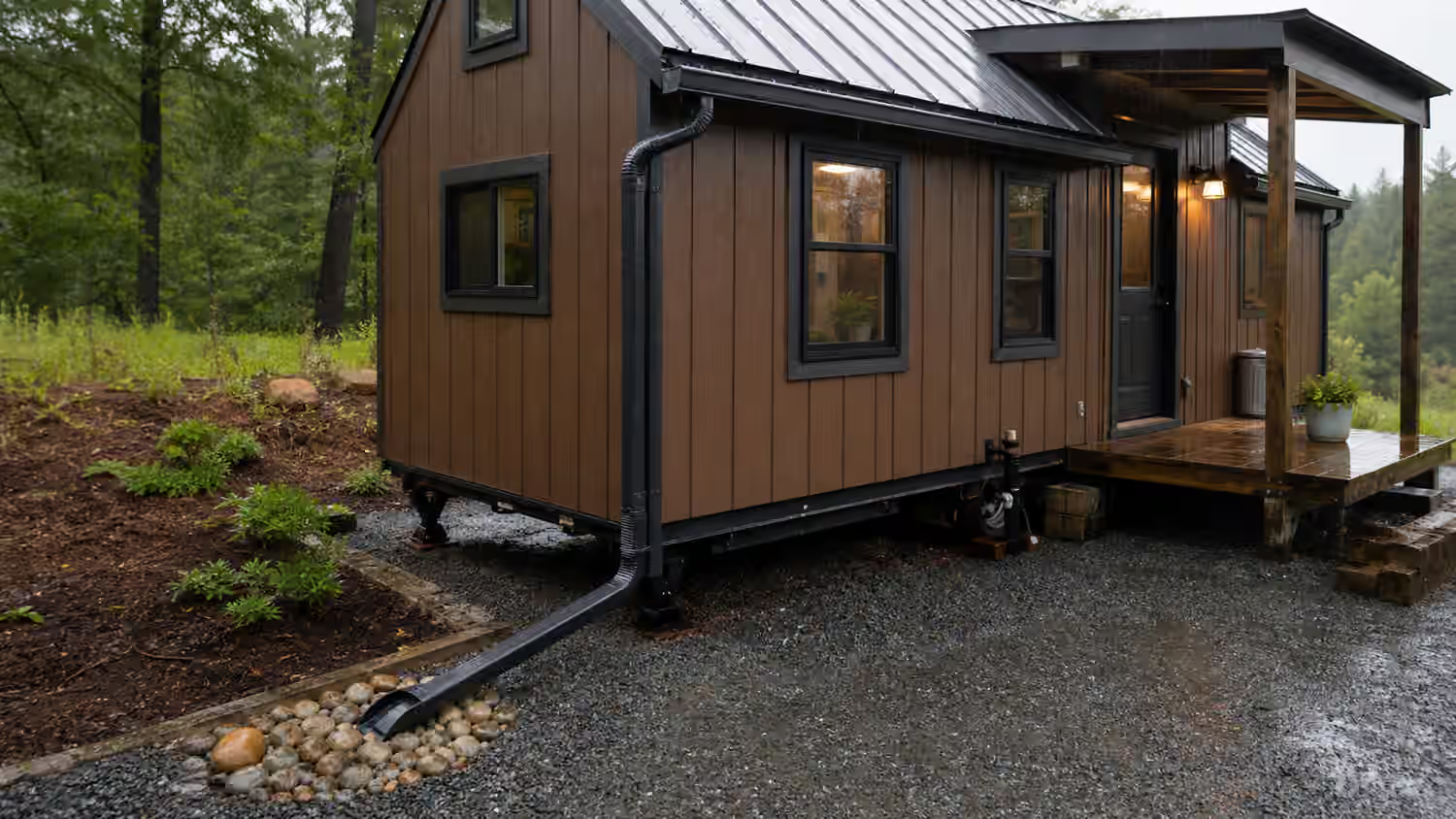
Downspouts matter as much as gutters. A downspout that empties beside the foundation, under the trailer, onto a porch post, or into a walking path has only moved the problem. Extensions, splash blocks, stone beds, swales, or buried drains may help when they are appropriate and serviceable. Avoid sending water where it softens the pad, undermines supports, freezes on steps, or keeps storage areas damp.
Splashback Is a Wall Problem
Water does not have to leak through the roof to damage a tiny home. It can bounce. When roof runoff hits hard ground near the wall, splashback can wet siding, trim, skirting, door bottoms, and low windows. Gravel reduces mud, but sharp splash can still occur if water drops from height into a narrow strip. Decking can splash too, especially when boards run close to the wall or trap debris.
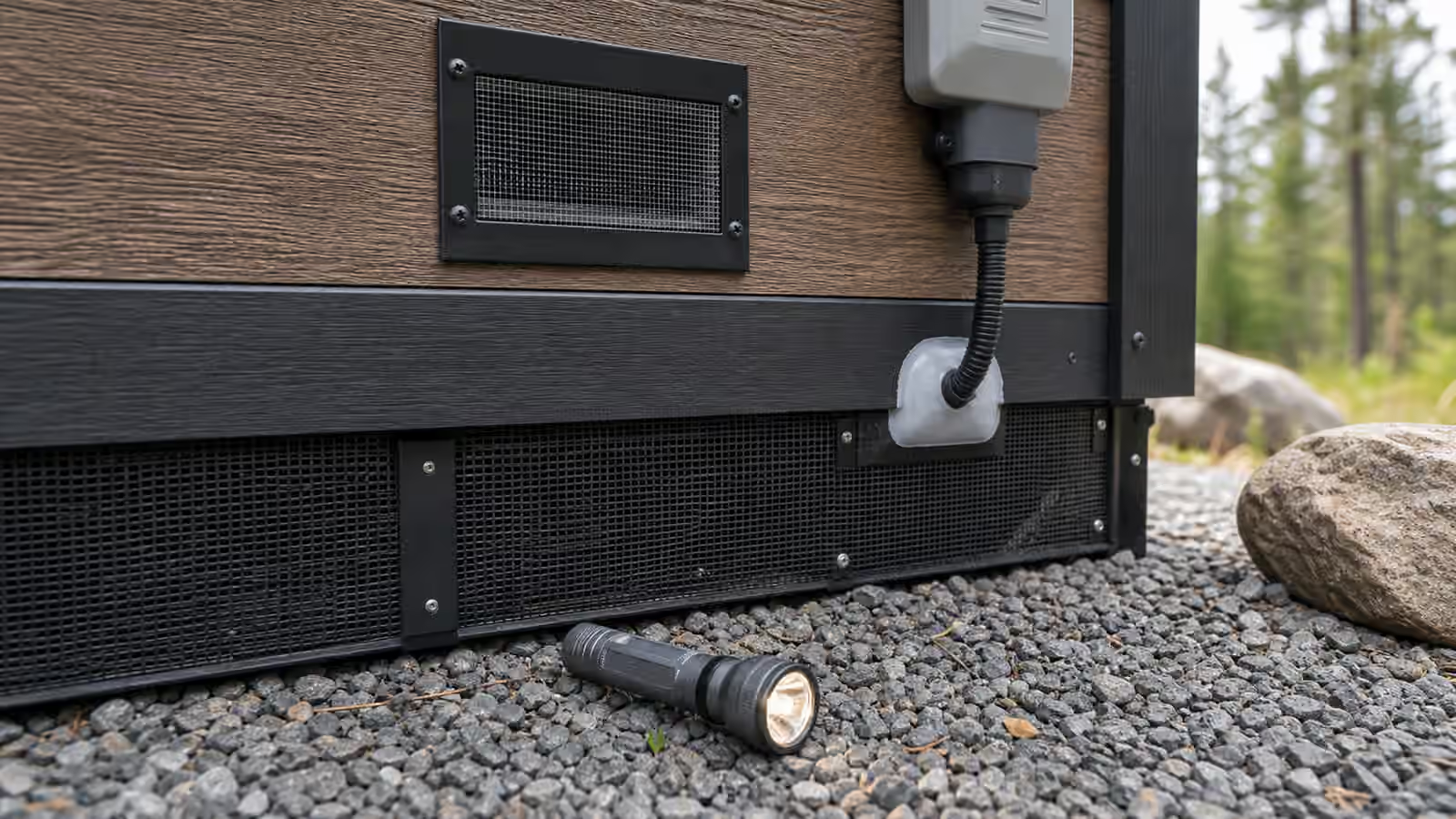
Watch the base of the home during rain if it is safe. Notice how high water bounces. Look for dirt lines, algae, peeling finish, swelling trim, or damp storage at the wall base. These are maintenance signals. A wider drip line, better gutter, lower splash stone area, adjusted grade, or protected skirt may be needed. The Tiny Home Skirting and Underfloor Protection guide is relevant because skirting often receives splash before anyone thinks about it as part of the envelope.
Materials should be chosen for the wet reality at the base of the wall. Wood siding close to grade needs more care than siding with generous clearance. Trim that sits where snow piles or rain bounces should be detailed for drying and inspection. A tiny home can look charming close to the ground, but water prefers clearance.
Decks and Porches Change the Water Path
A porch can make a tiny home much more livable, but it also changes roof runoff. A porch roof may dump water onto the main wall if its edges are not managed. A deck attached too tightly can trap debris and moisture against siding. Steps can settle into wet ground if the roof drips directly onto the landing. A beautiful outdoor room can quietly create the wettest place on the house.
The porch should be drawn into the water plan, not added after it. Where does roof water land? Where does porch roof water land? Does the deck slope away from the home? Can leaves clear out from the wall edge? Can the siding dry? Can the threshold stay protected without hiding a leak? Tiny Home Outdoor Living: Porches and Decks covers the daily use of that space. Runoff planning asks whether the outdoor room behaves in weather.
Covered entries deserve special care because they are high-use wet zones. People stand there with wet shoes, dripping coats, packages, and pets. A small roof can make the threshold calmer, but only if its runoff does not pour where people step. Downward exterior lighting, handrails, mats, and storage all work better when water is not crossing the same path.
Rainwater Collection Is a System, Not a Barrel
Some tiny homes collect rainwater for irrigation, washing, or other non-potable uses where allowed and appropriate. Others consider collection for off-grid living. Rainwater collection can be useful, but it should not be reduced to placing a barrel under a downspout. Roof material, debris, first flush, screening, overflow, freezing, tank support, pump needs, treatment requirements, and local rules all matter. Potable use is especially sensitive and should follow proper guidance.
Even a non-potable collection setup needs a safe overflow path. A full barrel that spills beside the home during a storm can create exactly the drainage problem the gutter was meant to solve. Tanks are heavy when full and need stable support. Hoses need routing. Mosquito control, algae, cleaning, and winter storage may matter depending on climate. Sustainable Systems and Tiny Home Water Systems and Plumbing are better places to think through broader water use. This page keeps the rainwater lens narrow: captured or not, water still needs a destination.
For many owners, the most sustainable move is simply to keep runoff from damaging the home. A dry wall, stable pad, and protected threshold can reduce repair waste and improve comfort long before a storage tank enters the picture.
Maintenance Is the Real Drainage Detail
Leaves fall, gravel shifts, splash blocks move, gutters clog, downspout extensions get kicked aside, and decks collect debris. Roof runoff is not a one-time design problem. It is a seasonal observation habit. The first heavy rain after setup is a useful test. So is the first storm with wind, the first freeze-thaw period, and the first season when nearby trees drop material onto the roof.
Keep the inspection simple. Look at roof edges, gutter outlets, downspouts, wall bases, window bottoms, door thresholds, skirting, deck connections, pad edges, and the ground under supports. Notice where water lingers after the rest of the site dries. Notice where stains begin. Notice where a person avoids stepping because the ground is always soft. Those small observations prevent larger repairs.
Good runoff planning makes rain less interesting. Water leaves the roof, moves away from vulnerable surfaces, crosses the site without undermining support, and dries without drama. The tiny home does not need to fight every storm with heroic details. It needs a clear path for ordinary water, because ordinary water is what visits most often.