Privacy Is Daily Comfort
Tiny home privacy is often discussed as if it only means curtains. Curtains help, but privacy in a small home is broader than covering glass at night. It includes where windows face, how the entry meets the site, what a passerby can see when the door opens, where packages land, how outdoor lighting behaves, whether storage spills into public view, and how the home feels when someone is resting a few feet from the kitchen.
Everyday security belongs in the same conversation because the two goals overlap. A clear entry path, sensible locks, visible but not glaring lighting, protected storage, and a legible site make the home feel less exposed. This is not about making a tiny home fearful or fortified. It is about designing the threshold so normal life feels calm: coming home after dark, opening a window, hosting a guest, leaving for a weekend, or sleeping while the porch light glows outside.
This guide complements Tiny Home Window and Daylight Planning , Tiny Home Acoustic Privacy Planning , Tiny Home Entry Mudroom and Drop Zone , Tiny Home Outdoor Living , and Tiny Home Insurance and Documentation Readiness . Those pages cover light, sound, entry flow, exterior rooms, and records. Privacy and security planning ties them together at the edge between the home and the world.
Design Sightlines Before Buying Shades
Window coverings are useful, but they should not be asked to solve every privacy problem after the home is parked. Sightlines begin with placement. A window that faces a road, neighbor, work yard, campground path, or shared driveway has a different privacy job from a window facing trees or a private garden. The same glass that brings beautiful daylight at noon may become a bright display case at night when the interior lights are on.
The strongest privacy plans work in layers. Window position controls the first layer. Exterior distance, planting, fences, decks, awnings, and screens create another. Interior layout adds another by deciding what sits in view. Shades and curtains complete the plan rather than carrying it alone. A bed, bathroom door, desk, or kitchen sink placed directly in a public sightline will always feel more exposed than the same feature turned slightly away or softened by a screen.
Tiny homes make these choices more important because there are fewer rooms to retreat into. A person may work, sleep, cook, and dress within one visual field. That does not mean every window should be small or high. It means daylight should be designed with use. The Tiny Home Window and Daylight Planning guide covers heat, wall space, and privacy from the window side. The practical test is simple: stand outside at the likely approach points, imagine the lights on, and ask what part of daily life is visible.
Window Coverings Need Day and Night Modes
A single shade rarely solves every condition. A room may need daylight privacy during the day and stronger coverage at night. Sheer curtains can soften daytime views while preserving light, but they often become transparent from outside after dark. Blackout curtains can make sleeping easier, but they may make a tiny room feel closed during the day. Top-down shades, layered curtains, cafe curtains, exterior screens, and textured glass can all help when matched to the window’s job.
The covering should also be easy to operate. If privacy requires climbing onto a bench, moving plants, or untangling cords, it will not happen consistently. Loft windows, bathroom windows, and windows near the bed deserve special attention because people use them when tired, wet, or half awake. A beautiful shade that cannot be reached safely is not a working shade.
Moisture matters in window covering choices. Bathrooms and kitchen-adjacent windows need materials that tolerate humidity and can dry. Fabric trapped against cold glass can collect condensation. A shade mounted so tightly that air cannot move may create a damp edge in winter. Privacy should not work against Ventilation and Moisture Control . Air, glass, fabric, and habits need to agree.
The Entry Should Not Expose the Whole Home
The door is the most important privacy moment because it opens the whole interior at once. In many tiny homes, the door reveals the kitchen, bed, storage, and bathroom hall in a single glance. That can be fine on a private site and uncomfortable near a shared path. The entry plan should create a small pause between outside and inside.
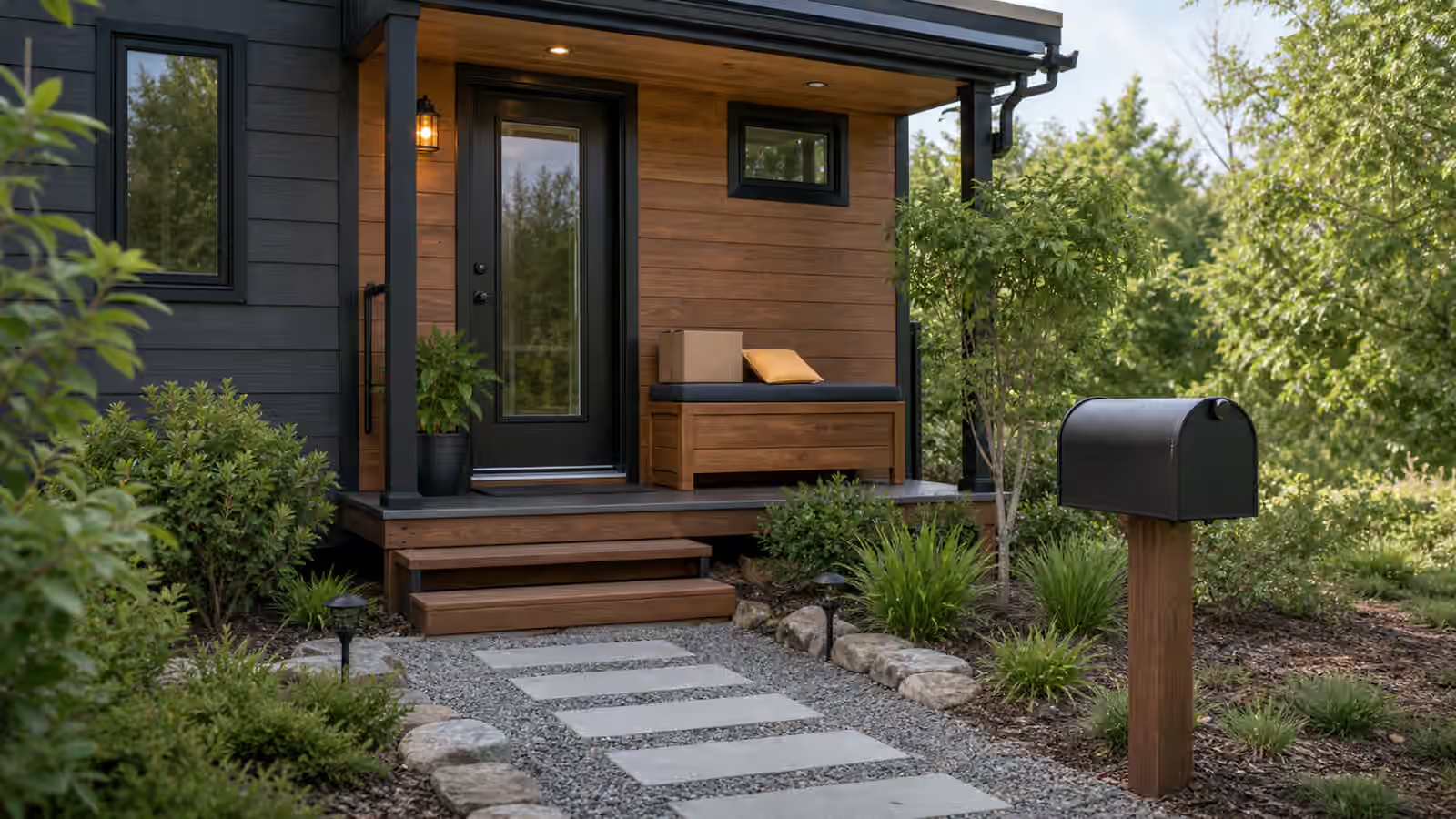
That pause can be architectural or simple. A porch angle, a half wall, a coat panel, a built-in bench, a tall cabinet, a curtain, or a change in door swing can reduce the feeling that opening the door puts the entire home on display. The Tiny Home Entry Mudroom and Drop Zone guide focuses on shoes, wet gear, and daily landing. Privacy adds another purpose: the entry should let a person receive a package, greet a neighbor, or shake off rain without revealing every private corner.
The entry also needs to be understandable at night. A lock that is hard to find in the dark, a step that disappears, or a cluttered threshold makes the home feel less secure even if the hardware is good. Good design keeps the path clear, lights the landing, and gives everyday objects a place to go so the door area does not become a pile.
Lighting Should Help Without Broadcasting
Exterior lighting has two jobs that can conflict. It should help people see the path, step, lock, and nearby ground. It should not turn the home into a stage or blast into windows. Tiny homes benefit from low, deliberate lighting rather than one harsh fixture doing all the work. A porch light, a small path light, and a soft light near a storage area can be more useful than a single bright lamp mounted high.
Interior lighting affects privacy too. A bright ceiling light at night can make windows reveal more. Task lighting, lower lamps, and warmer zones can let the home function without broadcasting every movement outside. The Tiny Home Lighting Design guide covers comfort and glare; privacy planning asks what the light does from the outside looking in.
Motion lighting should be chosen with the site in mind. In a quiet rural setting, a light that triggers constantly from windblown branches may become irritating. In a shared village, a harsh motion light may annoy neighbors. In a parked THOW, a battery or solar light may be useful only if it is maintained. Lighting is not only hardware. It is a relationship between path, neighbor, window, and habit.
Storage and Deliveries Are Security Details
Tiny homes often lack garages, deep closets, and spare rooms, so ordinary belongings can end up outside: tools, propane bottles, bicycles, hoses, folding chairs, leveling blocks, spare fasteners, and delivery boxes. Exterior storage should be planned rather than improvised. A lockable bench, small shed, tongue box, under-deck compartment, or interior service drawer can keep useful gear from becoming visual clutter or easy loss.
Delivery routines matter. If packages arrive at a main house, campground office, shared mailbox, or rural gate, the tiny home needs a predictable handoff. A parcel left on a tiny porch may block the door or invite weather damage. A box placed under an eave may still be visible from the road. The solution depends on the site, but the habit should be deliberate. Where does mail land? Where does a courier go? What happens when the owner is away?
Documentation supports this quiet layer of security. Photos of major equipment, serial numbers, purchase records, trailer details, and appliance information are useful for maintenance and insurance conversations. They also help future owners understand what belongs to the home. The Tiny Home Insurance and Documentation Readiness guide covers records more fully, but privacy and security planning benefits from the same plain habit: know what you own and where the proof lives.
Site Boundaries Should Be Clear Without Feeling Closed
A tiny home site can feel exposed when its edges are unclear. Visitors may not know where to walk. Neighbors may drift too close because no threshold says otherwise. A shared driveway may feel like part of the living area. Clear boundaries help everyone behave more comfortably. They do not have to be tall fences. A gravel path, planted edge, low rail, porch step, gate, lighting line, or change in ground surface can signal the approach.
The Tiny Home Outdoor Living guide shows how porches and decks extend a small interior. Privacy adds the question of orientation. A porch facing the best view may also face the busiest path. A deck placed slightly to the side may create a better outdoor room because it does not put chairs directly in public view. Planting can soften sightlines, but it should not block service access, trap moisture against the wall, or hide steps.
Local rules and land arrangements can shape what boundaries are allowed. A backyard cottage, rural THOW, tiny home village, and campground site all have different expectations. The Legal Requirements and Site Prep and Setup guides are useful companions when the boundary affects parking, utilities, setbacks, or shared access. Privacy works best when it respects the actual agreement that lets the home be there.
Travel, Parking, and Keys Need Simple Routines
For a tiny house on wheels, privacy and security change when the home moves. Travel locks, cabinet latches, window closures, hitch equipment, exterior boxes, and utility gear all need a departure routine. The routine should be written and practiced enough that it does not depend on memory during a rushed morning. This overlaps with Tiny Home Weight, Balance, and Towing Readiness , but the privacy layer asks what is visible, loose, or accessible when the home is parked before and after a move.
Keys and access should be simple. Too many hidden keys, unlabeled locks, or unusual access habits create confusion for trusted helpers and future owners. A spare key plan should fit the site and household, not a generic trick. If someone needs to check the home during travel, illness, or a storm, they should know how to enter appropriately, shut off water or power if needed, and secure the place afterward.
The same plainness applies to guests. A guest should understand which door to use, how to lock it, where shoes go, how shades work in the sleeping area, and which outdoor areas are private. Good privacy design is not secretive. It is legible. It lets other people respect the home without being coached through every inch of it.
Calm Is the Measure
The measure of privacy and security planning is not how many devices the home has. It is whether ordinary moments feel calm. Can someone make tea at night without feeling displayed through the window? Can the door open to a neighbor without exposing the bed? Can a package arrive without blocking the threshold? Can a path be seen in rain? Can exterior gear be stored without turning the porch into a yard sale? Can someone leave for a weekend with a clear routine?
Tiny homes ask for this clarity because there is less spare space to absorb awkward decisions. A shade that works, a better porch light, a planted screen, a lockable storage bench, a clearer path, a slightly turned window, or a more thoughtful entry cabinet can change the whole feeling of the home. Privacy is not withdrawal from the world. It is the small design work that lets a compact home feel like it belongs to the people inside it.