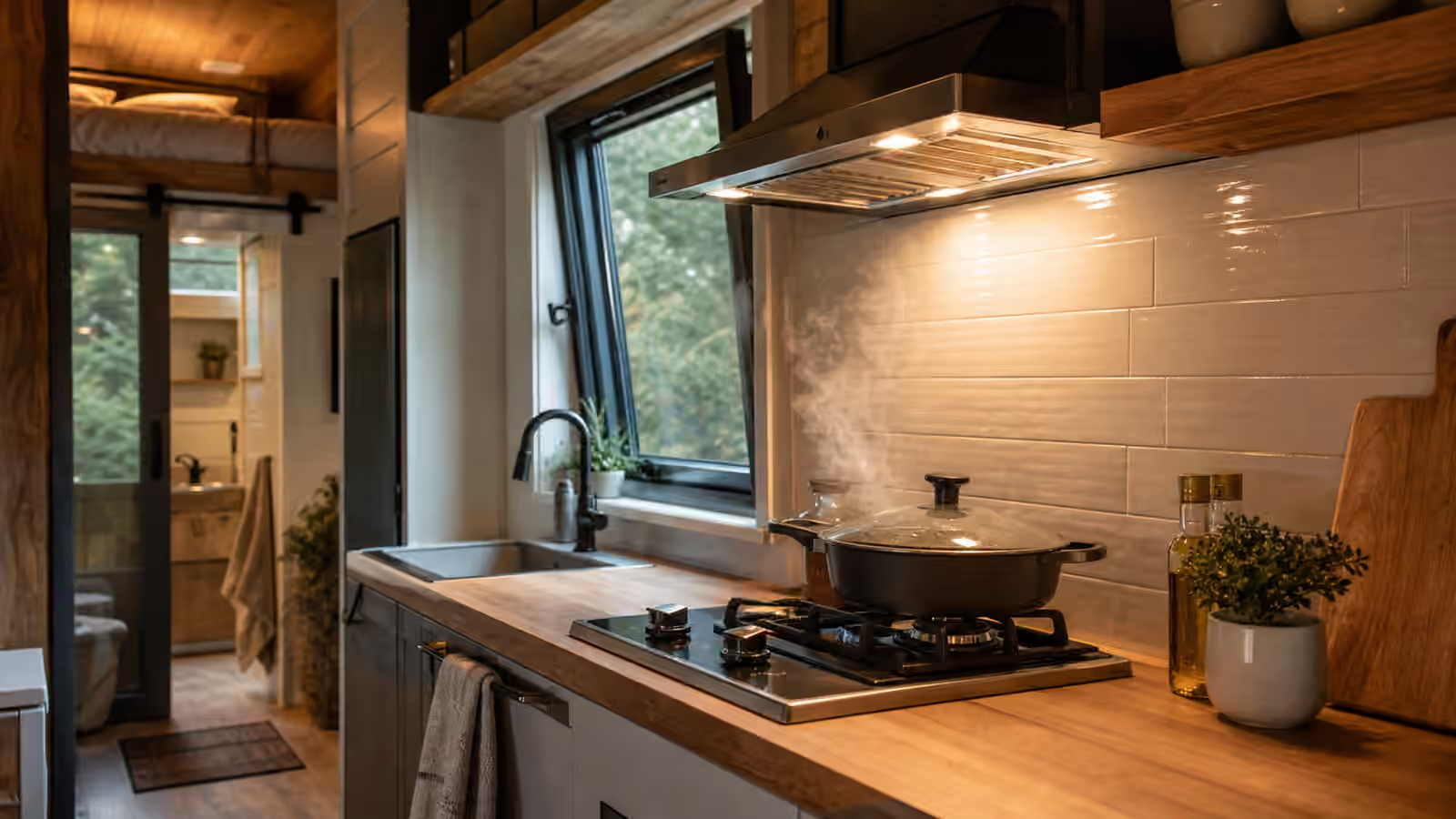
Food Storage Decides How the Kitchen Feels
A tiny home kitchen can look calm on move-in day and become overwhelmed by the first real grocery trip. The problem is usually not that the owner bought too much food. It is that the plan never named where food actually goes. The refrigerator was chosen by width. The pantry was drawn as leftover cabinet volume. The counter was treated as prep space, not as the place groceries land when someone walks in tired. Then daily life arrives with onions, coffee, flour, leftovers, snacks, oils, tea, pet food, and a half-used bag of rice.
Food storage is not a side topic. It connects directly to Tiny Home Kitchen Design , Tiny Home Storage Planning , Tiny Home Electrical Planning , and Tiny Home Water Systems and Plumbing . It affects appliance loads, counter clutter, moisture, trash, cabinet depth, shopping trips, cooking patience, and the way the home smells after dinner.
The goal is not to create a miniature version of a suburban pantry. A tiny home rarely has room for that. The better goal is to make food visible enough to use, protected enough to last, and close enough to the cooking routine that meals do not begin by rearranging the house.
Start With Shopping Rhythm
The right pantry begins outside the home, with the way food enters. Someone who shops every few days can live with less storage than someone who parks far from stores or buys staples in larger quantities. A person who cooks most meals from scratch needs different dry storage than a person who assembles simple breakfasts and eats dinner elsewhere. A gardener, a bulk buyer, a baker, a coffee enthusiast, and a person with medical or dietary requirements all create different pantry pressure.
Tiny homes become frustrating when the pantry is designed for an imaginary shopper. The drawing assumes a perfect row of jars and a modest refrigerator. Real life includes odd packages, half-used bags, tall bottles, produce that should not be refrigerated, bread that crushes easily, and the emergency backup food people keep because storms, work schedules, or remote sites make quick errands unreliable. Planning for those realities is not indulgent. It is how the kitchen stays usable.
Shopping rhythm also determines landing space. Groceries need somewhere to pause before they are sorted. If the first available surface is the cooktop, bed, or desk, unpacking becomes an invasion. A short counter near the entry or kitchen can do a lot of work if it stays clear enough to receive bags. This is one reason the kitchen guide keeps returning to counter discipline. Food storage begins before the cabinet door opens.
Make the Refrigerator Match the Routine
The refrigerator is often the largest always-on appliance in a tiny home, so it sits at the intersection of food habits, power planning, ventilation, and floor space. Shrinking it too far can create constant grocery trips and crowded shelves where leftovers disappear. Oversizing it can steal cabinet volume, add weight, and increase energy demand. The right size is not the smallest available. It is the one that matches how often food comes in and how much cold storage the household actually uses.
Placement matters as much as size. A refrigerator door needs swing clearance or drawer clearance. It should open without blocking the only walking path for too long. It should not trap a person between the cooktop and a hot pan. Ventilation around the appliance should follow the manufacturer’s instructions because a tiny cabinet that looks clean can make equipment work harder if heat cannot leave. If the home is off-grid or battery-supported, the daily energy use of refrigeration belongs in the solar and electrical plan, not in a late appliance decision.
Cold storage also has categories. Produce, leftovers, condiments, drinks, freezer items, medications where relevant, and meal prep containers each ask for different shelf behavior. A refrigerator that technically has enough volume may still be annoying if every meal requires unstacking containers. Good tiny home refrigeration is less about impressive capacity and more about repeatable access.
Use Shallow Storage Before Deep Storage
Deep pantry cabinets look efficient because they hold a lot. In a tiny home, they often hide food until it expires. The front row blocks the back row. The owner buys another jar because the first one is buried. A shelf becomes a geological record of past good intentions.
Shallow storage usually performs better. A narrow pull-out, a wall cabinet with visible rows, a drawer for dry goods, or a toe-kick space for flat backup items can keep food in circulation. Clear containers can help when they prevent torn bags and make quantities visible, but they should not become a performance. Decanting every item into matching jars is only useful if the household will maintain the habit. Otherwise, the jars become one more chore standing between groceries and dinner.
Some deep storage still has a place. Long-term staples, extra coffee, canning jars, emergency food, or seasonal supplies can live farther from the main cooking loop if they are labeled or organized clearly enough to find later. Daily food should be closer and easier. The hand should not have to excavate breakfast.
Separate Food From Cleaning and Utility Items
Tiny homes compress categories, and the pantry often becomes the victim. Food, cleaning sprays, trash bags, water filters, paper goods, batteries, tools, and pet supplies all want dry cabinet space. Mixing them may save inches, but it can make the kitchen feel unsettled and may create odor, spill, or safety problems. Food deserves a protected zone. Cleaning supplies deserve their own containment. Utility items should be reachable without making dinner smell like a storage closet.
This separation does not require more space as much as clearer boundaries. A narrow cleaning pull-out near the sink can prevent sprays from drifting into food shelves. A lidded bin under a bench can handle backup paper goods if it stays dry. Water filters and plumbing parts should live near the system they serve when possible, not in the middle of the breakfast shelf. The Tiny Home Storage Planning guide describes this as category protection. In the pantry, category protection keeps the kitchen from feeling like one crowded cabinet with different labels.
Food storage also needs to respect moisture. A cabinet beside a shower wall, cold exterior corner, or unvented under-sink space may not be the best place for flour, crackers, tea, or paper packaging. If a pantry smells stale, feels cold and damp, or sits against a surface that condenses in winter, the problem is not solved by buying better containers. The location itself needs attention.
Plan for Produce, Bread, and Awkward Food
Dry goods in jars are the easy part. The awkward foods decide whether the pantry works. Potatoes and onions want dark, airy storage but not the same sealed box. Bananas want counter space and then suddenly do not. Bread needs protection from crushing and humidity. Oils need a stable place away from heat. Tall bottles defeat short shelves. Bulkier items such as cereal, chips, or flour can overwhelm a cabinet designed around attractive jars.
A good pantry includes a few flexible spaces for these imperfect shapes. That may be a ventilated drawer, a small hanging basket, a section of open shelf, a vertical slot, or a general bin that is easy to pull out. The important part is that awkward food is expected. If every shelf is optimized for one perfect container size, the first ordinary grocery trip breaks the system.
Produce also changes with climate and site. A hot sunny tiny home may ripen food quickly. A cold corner may damage produce or invite condensation. A home with limited trash service may need a stronger plan for peels, packaging, compost, and odors. Food is perishable, which means storage is also time management.
Let Meal Prep Shape the Cabinet Plan
People often plan pantry storage by object count, but meals are sequences. Breakfast may need coffee, oats, mugs, a kettle, honey, and a spoon. Lunch may need leftovers, cutting board, wraps, condiments, and a container. Dinner may need oil, pan, spices, vegetables, rice, and a place for scraps. If these items live in five awkward places, the tiny kitchen feels smaller than it is.
Group food by routine where the layout allows. Daily coffee can live near the kettle. Cooking oils and salt can live near prep, but not so close to heat that they suffer. Baking supplies can sit together even if they are used less often. Snacks may need an obvious home if the household includes children, guests, or anyone who works from home. The exact categories are personal. The principle is stable: the pantry should support meals, not only store ingredients.
The rehearsal test is simple. Imagine making a normal meal, then putting the kitchen back to calm. Notice what lands on the counter and why. If the same three items never return to their homes, their homes are probably wrong. If leftovers have no container space, the refrigerator plan is incomplete. If trash blocks the prep zone, waste handling belongs in the layout conversation.
Keep Waste Close Enough, But Not Dominant
Food storage creates food waste, packaging, recycling, and sometimes compost. In a tiny home, the trash system cannot be an afterthought because odors and visual clutter move fast. A tiny bin emptied often may work better than a large bin that sits too long. Compost may be practical in some settings and wrong in others. Recycling may require a transport routine if there is no curbside service. The right answer depends on the site, but the bins still need physical homes.
The trash location should support prep without blocking doors or drawers. It should be easy enough to use with messy hands and contained enough that smells do not drift into the sleeping area. If compost is part of the routine, ventilation, sealing, and emptying frequency matter. A beautiful under-sink cabinet can become unpleasant if it holds damp trash beside warm plumbing with no air movement.
Good pantry planning ends with a quiet kitchen. Groceries come in, food has visible homes, awkward produce has a place to wait, daily meals are easy to assemble, waste leaves before it defines the room, and the counter returns to being a work surface rather than overflow storage. In a tiny home, that calm is worth more than a larger cabinet that hides confusion.