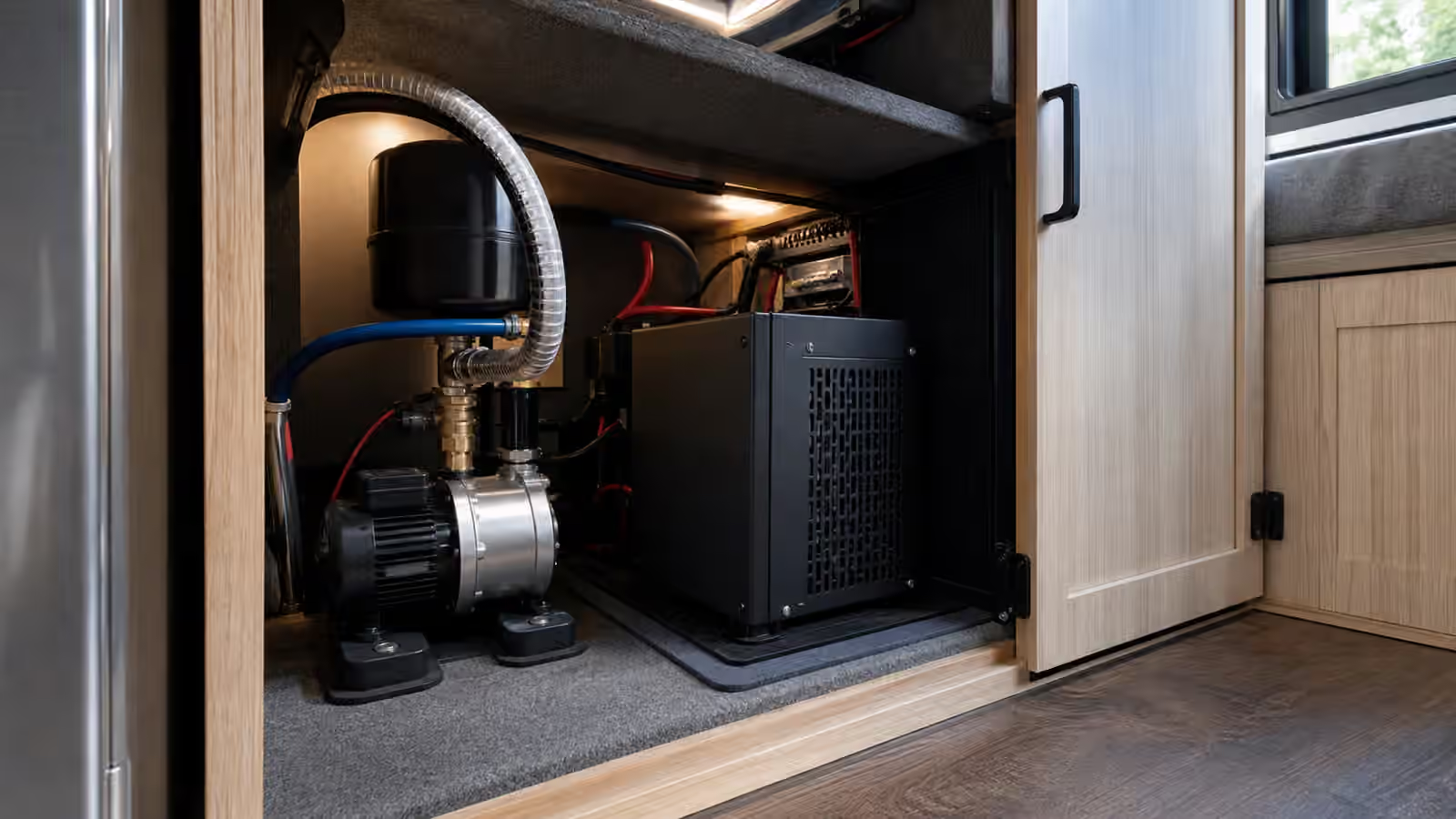
Small Homes Make Small Sounds Larger
Mechanical noise in a tiny home is rarely just one loud machine. More often it is a collection of modest sounds that have nowhere to go. A water pump chatters through a cabinet. A refrigerator hums beside the bed. A bath fan vibrates in a thin wall. An inverter has a faint electrical whine. A mini-split outdoor unit transfers a low buzz through a bracket. A loose pipe knocks when the sink turns off. None of these sounds may be alarming, but together they can make the home feel less restful than its size suggests.
This guide sits beside Tiny Home Acoustic Privacy Planning , Tiny Home Water Systems and Plumbing , and Tiny Home Electrical Planning . Acoustic privacy focuses on voices and room-to-room sound. Plumbing and electrical planning focus on function and safety. Mechanical noise control asks a quieter question: how do the necessary systems touch the structure, and what will they sound like at midnight?
The goal is not silence. Tiny homes have fans, pumps, appliances, weather, and people. The goal is to keep ordinary mechanical sound from becoming a constant presence, especially near sleeping, working, and sitting areas.
Separate Airborne Sound From Structure-Borne Vibration
Noise control improves when the source is understood. Airborne sound travels through the air, like fan noise or a pump motor heard through a cabinet door. Structure-borne vibration travels through framing, panels, pipes, brackets, and floors. A small pump can sound much louder when it is screwed directly to a thin plywood panel that acts like a drum. A quiet appliance can become irritating if it makes a cabinet buzz.
Listen with your hand as well as your ear. Touch the cabinet, pipe, floor, or wall near the sound. If the surface vibrates, isolation may matter more than adding soft material inside the room. If the surface is still but the sound is loud through a grille or opening, airflow path and enclosure design may matter more. This distinction prevents wasted effort. A rug will not fix a pipe clamped tightly to a resonant wall. A rubber mount will not make an undersized fan move air quietly.
Tiny homes are especially sensitive because many systems share short structural paths. The water pump may be inches from the sink cabinet, a few feet from the bed platform, and mounted above a hollow storage bay. Small changes in mounting, hose flexibility, and cabinet mass can have noticeable effects.
Put Noisy Systems Where Noise Can Be Tolerated
Placement is the strongest noise control because it happens before the problem exists. A pump below a bed platform will be heard differently from a pump in a service cabinet near the entry. A refrigerator beside a pillow is different from one across the room. A fan near a desk microphone is different from one near a door. The best location is not always the most hidden location. It is the place where sound, heat, airflow, service access, and plumbing or wiring runs make sense together.
Sleeping areas deserve special protection. A system that runs at night should not be mounted to the sleeping platform if another practical location exists. Workspaces deserve the same thought, especially for people who take calls from home. The Tiny Home Workspace Planning guide covers power and sound at the desk, and mechanical equipment should be part of that conversation before cabinets are built.
Exterior equipment has its own placement issues. A mini-split outdoor unit, generator where permitted and appropriate, or utility cabinet fan may be quieter outside, but vibration can still return through brackets, decks, skirting, or wall penetrations. Keep equipment off lightweight assemblies when possible, provide manufacturer-recommended clearances, and avoid placing an outdoor noise source directly beside the window that is opened for sleep.
Isolate Pumps and Pipes Without Hiding Them
Water pumps are common tiny home noise sources because they combine motor sound, vibration, pressure pulses, and pipe movement. A pump mounted on rubber isolation feet, connected with flexible hose sections where appropriate, and secured to a solid surface usually behaves better than one hard-mounted to a thin cabinet wall. Pipes should be supported enough that they do not slap or buzz, but not clamped in a way that transmits every pulse into the framing.
Pressure settings, accumulator tanks, and plumbing layout can also affect cycling and noise, but those choices should follow the equipment instructions and the overall water system design. The practical habit is to listen during normal use. Does the pump chatter rapidly when the faucet barely opens? Does a pipe knock when the valve closes? Does the cabinet door buzz only at one speed? Each symptom points to a different kind of correction.
Do not bury a noisy system so deeply that it cannot be serviced. Soundproofing that requires removing half the kitchen to reach a pump is not a good trade. A better utility bay uses isolation, solid mounting, removable panels, and enough airflow. Tiny Home Service Access and Shutoff Mapping is the companion principle: quiet systems still need to be reachable systems.
Fans Need Airflow, Not Just Padding
Fans become noisy when they are too small for the job, blocked by restrictive grilles, mounted loosely, connected to poor duct runs, or forced to move air through dirty filters. Adding soft material around a fan can make things worse if it restricts airflow or traps heat. A quiet fan installation begins with the right fan for the task and a path that lets air move without fighting every inch.
Bathroom fans, range hoods, ventilation equipment, and cabinet fans all have different sound profiles. Some hum steadily. Some rattle at a grille. Some transmit vibration into a roof or wall panel. Check the simple things first: secure the cover, clean the filter, make sure the duct is not crushed, and confirm that the fan is mounted firmly. If a fan is inside a cabinet, the cabinet needs intake and exhaust paths. A sealed box around warm equipment may reduce sound briefly while shortening equipment life or creating unsafe heat conditions.
Fan noise also affects behavior. If the bath fan is unpleasant, people run it less, and then moisture becomes the larger problem. Ventilation and Moisture Control depends on systems people are willing to use. A slightly better fan, mounted well, can protect the building by making the right habit less annoying.
Stop Cabinet Buzz Before It Becomes Background
Tiny homes contain many lightweight panels, drawers, sliding doors, shelves, and removable access covers. These parts can buzz when a nearby compressor, pump, fan, speaker, or road vibration excites them. The source may be mechanical, but the audible problem is often a loose latch, a thin panel, a pipe touching wood, or a stored object vibrating against a cabinet wall.
Buzz control is detective work. Recreate the sound, then touch one suspect surface at a time. If the buzz stops when pressure is applied, improve the fit. A small bumper, latch adjustment, felt pad, tighter screw, or better pipe clip may solve what sounded like an appliance problem. Do not overlook stored items. A metal pan, glass jar, or loose tool can make a system seem louder than it is.
Travel adds another layer for tiny houses on wheels. Cabinets and access panels should remain quiet not only while parked but also after movement. Tiny Home Travel Day Readiness covers securing the home for transport. After a move, listen again. A quiet system before travel may need a small adjustment afterward.
Plan Night and Quiet-Hour Routines
Some noise control is operational. A water pump may be acceptable during the day but unwelcome when someone washes hands near a sleeping loft at night. A battery charger, dehumidifier, or fan may have a setting that works better for quiet hours. A refrigerator cannot be turned off casually, but its placement and leveling can reduce irritation. If equipment has modes or schedules, use them thoughtfully while still protecting moisture control, food safety, and system health.
Quiet-hour routines should not depend on heroic memory. If a fan needs to run after showers, it should not be so loud that everyone avoids it. If a pump switch is used for overnight quiet in an off-grid setup, the household needs to understand the tradeoff and restore it reliably. If a dehumidifier is necessary, placing it on a stable mat and away from the bed may matter more than buying a smaller one that cannot do the job.
Mechanical noise is part of living in a small, systems-rich home. It becomes manageable when equipment is placed thoughtfully, mounted honestly, isolated where needed, given air, kept serviceable, and listened to before irritation hardens into resignation. A quiet tiny home is not one without machines. It is one where the machines do their work without taking over the room.