The Small Threshold Has to Meet the Outside World
Tiny home planning often focuses on the room inside the walls, but mail, deliveries, service visits, guests, and directions all arrive from outside. A package does not care that the entry is narrow. A repair person does not know which gravel drive leads to the tiny home. A food delivery driver may stop where the address seems to end. A friend may stand in the rain because there is no covered place to wait or set something down. The threshold is small, but it represents the whole home to the outside world.
This guide belongs with Site Prep and Setup , Tiny Home Entry Mudroom and Drop Zone Design , Tiny Home Privacy and Security Planning , and Tiny Home Trash and Recycling Routines . Mail and deliveries are not only communication problems. They become storage, privacy, path, lighting, package-waste, and address problems very quickly.
Rules for addresses, mailboxes, road names, emergency addressing, and delivery access vary by location and property type. A tiny home on private land, in an RV park, in a backyard, in a village, or on a foundation may have different requirements. Treat local rules and service-provider instructions as the authority. The evergreen design work is to make arrival clear, dry enough, respectful of privacy, and easy to reset.
Know What Address the Home Actually Uses
The first question is not where the mailbox looks best. It is what address the home can actually use for mail, services, utilities, insurance discussions, and visitors. Some tiny homes share a property address. Some have a unit designation. Some use a park office or community mail area. Some foundation homes have a conventional address. Some mobile residents use separate mailing services. Each arrangement changes how packages, official mail, and guests find the resident.
Do not assume that a shipping address, legal address, emergency location, and everyday directions are the same thing. They may overlap, but they can also diverge. A remote site may receive mail at a roadside box while packages need a delivery instruction. A backyard tiny home may need clear unit language so drivers do not leave parcels at the wrong door. A tiny home village may have central delivery protocols. A rural address may require visible wayfinding from the road before anyone reaches the home.
This connects to Legal Requirements and Zoning because the home’s official status can affect what it is allowed to be called and where services can be established. It also connects to documentation. Keep address records, site maps where useful, utility account information, and delivery instructions in the home file so the household is not reconstructing basic facts every time a service call is scheduled.
The Path Should Make Sense to a Stranger
Residents learn the site quickly. Strangers do not. A delivery driver, visiting friend, inspector, hauler, emergency responder, or repair person sees the site without the private mental map. If there are multiple structures, gates, paths, driveways, or similar doors, confusion is easy. Clear wayfinding reduces nuisance and can matter when someone needs to find the home quickly.
Visibility should be balanced with privacy. A clear path does not require exposing the whole interior. Exterior lighting, path surfaces, simple landmarks, and visible entry orientation can do a lot. The path should be usable after rain and in low light. It should not require stepping over hoses, ducking under a deck edge, guessing which door is active, or walking through a private outdoor seating area unless that is truly the only access.
Site Prep and Setup covers access for large vehicles and utilities. Mail and delivery planning focuses on smaller arrivals that happen repeatedly. The package carrier may not need the same route as a hauler, but both benefit from a site that is legible. A tiny home tucked behind a larger building can still be easy to find when the route is intentional.
Packages Need a Landing Zone
Packages are awkward in tiny homes because they combine volume, weather, privacy, and waste. A parcel left in the rain may bring damp cardboard inside. A parcel placed directly in front of an outswing door can block entry. A parcel left visible from a public path may feel exposed. A parcel carried inside without a sorting spot can turn the kitchen counter into a cardboard station.
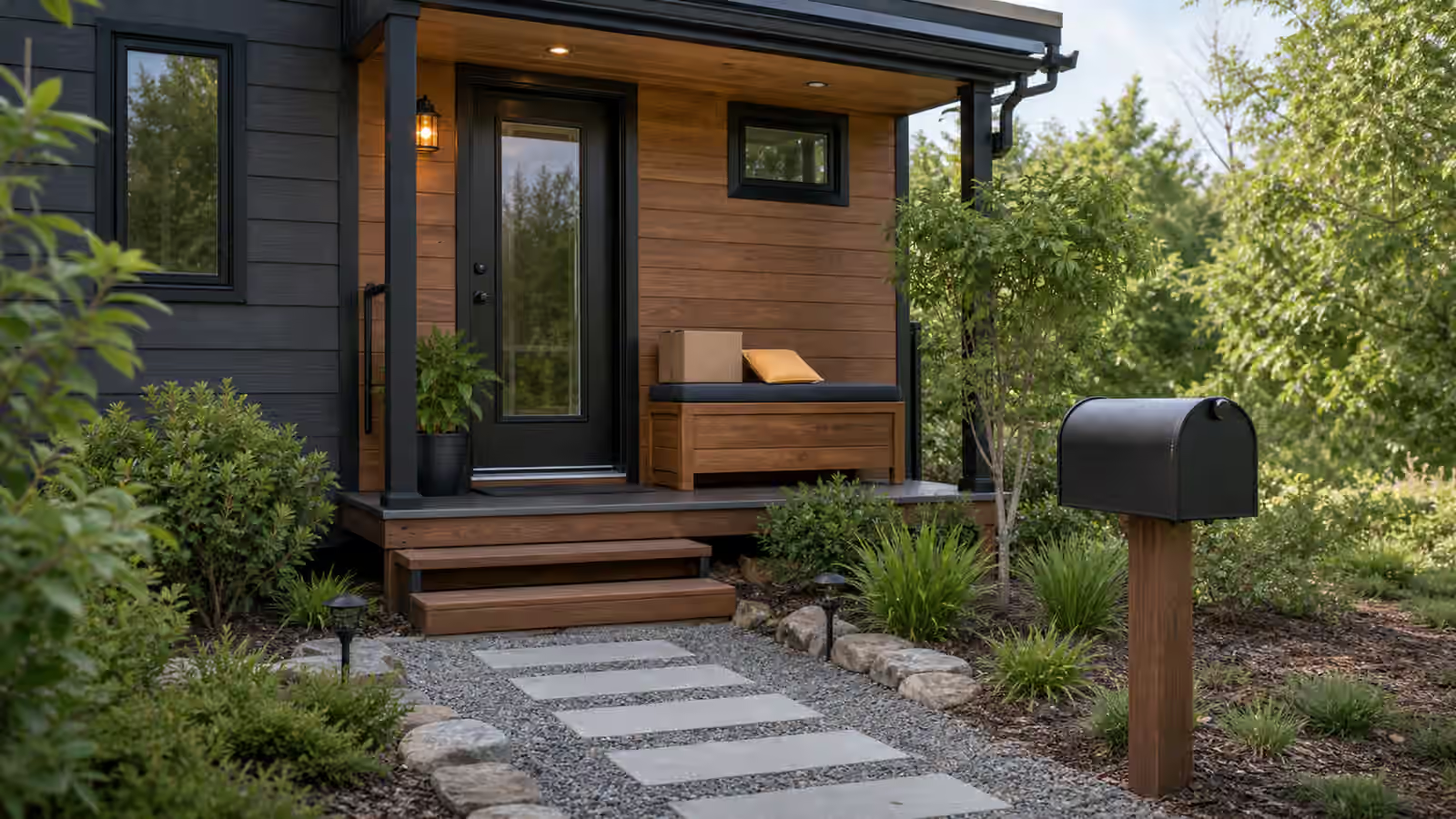
A small landing zone solves more than it seems. It might be a covered porch bench, a weather-resistant box, a shelf near the door, or a protected spot inside the entry. The right choice depends on site security, climate, package frequency, and local delivery habits. It should be large enough for common parcels but not so large that it becomes permanent storage. It should not block egress, step safety, or utility access.
After the package is opened, the waste path matters. Cardboard, packing paper, cold packs, envelopes, and labels need a route. A tiny home with frequent deliveries may need a regular flattening and recycling habit rather than a hopeful pile by the door. Tiny Home Trash and Recycling Routines is relevant because delivery convenience can quietly create a waste problem.
Privacy Is Part of Delivery Design
Tiny homes have fewer buffer rooms. A person at the door may see the bed, desk, kitchen, pet crate, medication shelf, or laundry with one glance. A package camera may capture most of the outdoor living area. A delivery instruction may reveal more about the resident’s routine than intended. Planning for mail and deliveries should protect privacy without making the home hard to find.
Window placement, porch orientation, curtains, screens, plantings, and entry lighting all shape what a visitor sees. A small exterior shelf or bench can let someone leave an item without standing in the doorway. A doorbell or knock zone can be placed where it does not force the resident to open directly into the private core of the home. If cameras are used, aim and store footage thoughtfully, especially in shared settings.
The Tiny Home Privacy and Security Planning guide covers locks, sightlines, and thresholds more broadly. Mail and delivery planning adds the daily social layer: people will approach the home for ordinary reasons. The design should expect that without making every arrival feel intrusive.
Service Visits Need Better Instructions Than Packages
Repair people, utility workers, inspectors, propane deliveries where applicable, septic or waste service, haulers, and internet installers need more than a porch. They need access to the correct side of the home, the right utility connection, a safe place to park, and sometimes room to carry tools. A tiny home can make service harder if decks, sheds, fences, skirting, or landscaping block the working edge.
Keep service areas visible and documented. If the water shutoff is under a bench, say so before the plumber arrives. If the electrical inlet is on the back side of the home, keep the path clear. If the internet antenna is reached by a removable panel, note that in the home record. Tiny Home Internet and Connectivity Planning is a good companion because connectivity often involves exterior equipment and service visits.
Service access also affects safety planning. Address visibility, clear paths, lighting, and unobstructed entry help more than deliveries. Tiny Home Fire and Life Safety Planning discusses exterior access from that angle. Mail and delivery planning should never make the home harder to reach in order to keep the porch looking cleaner.
Keep the Entry From Becoming a Mail Pile
Even when outside delivery works, the inside routine can fail. Mail, keys, receipts, returns, batteries, tools, and small packages often collect on the first flat surface. In a tiny home, that surface may also be the dining table, kitchen prep area, work desk, or stair tread. The clutter is not a character flaw. It is a missing landing system.
A good mail routine is small. It gives active papers a place, removes envelopes quickly, and separates returns or outgoing items from everyday storage. If the household handles official documents, vehicle papers, site agreements, insurance notes, permits, or warranties, those should not live in the same pile as coupons and packing slips. Tiny Home Insurance and Documentation Readiness is useful because tiny homes often need records to be easier to find than the square footage suggests.
The best delivery plan feels ordinary. The address is clear enough. The path is readable. Packages have a dry landing zone. Privacy is respected. Waste has a route. Service people can reach what they need. The entry resets after arrivals instead of becoming a storage annex. When those small systems work, the tiny home can stay connected to the outside world without letting every arrival take over the room.