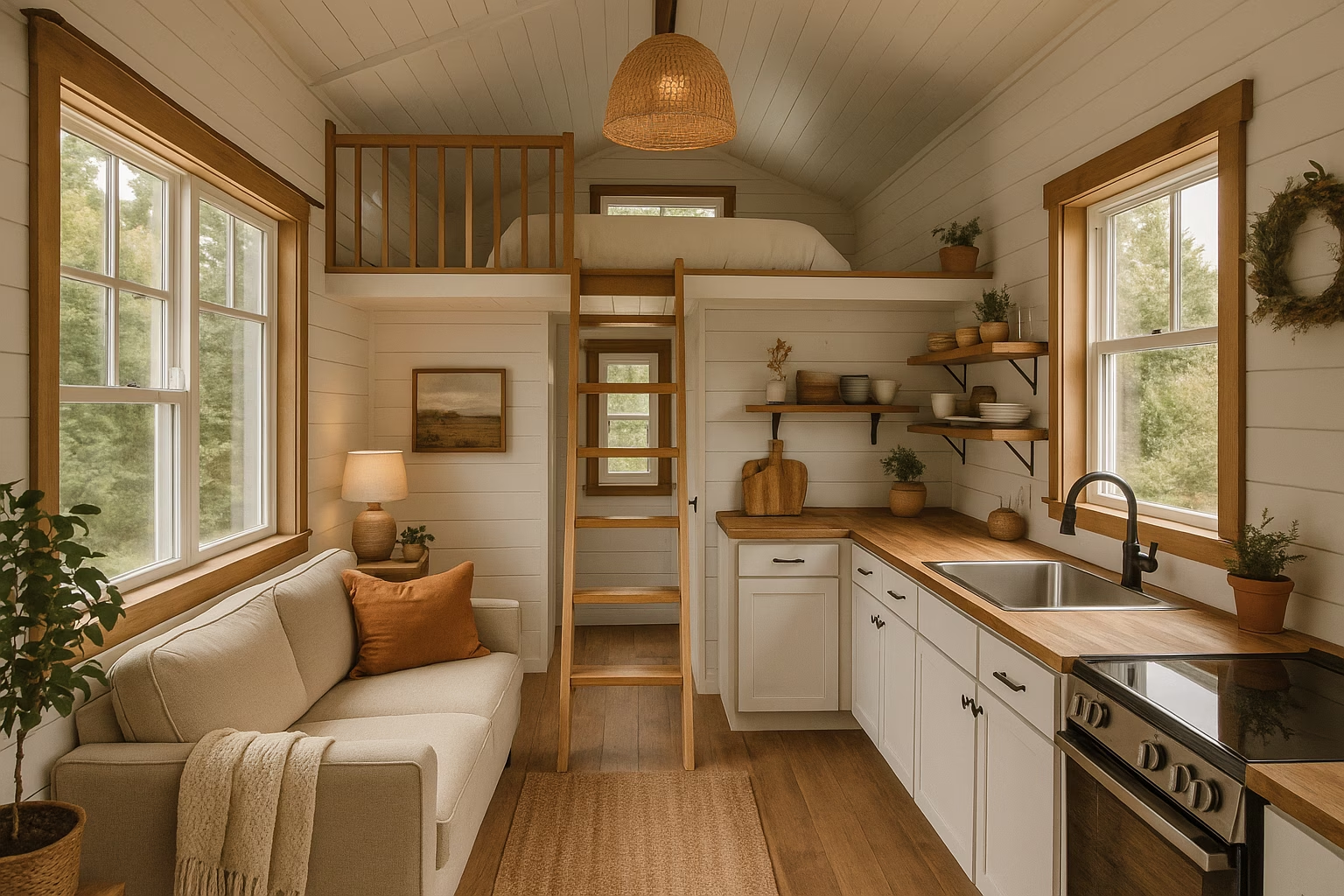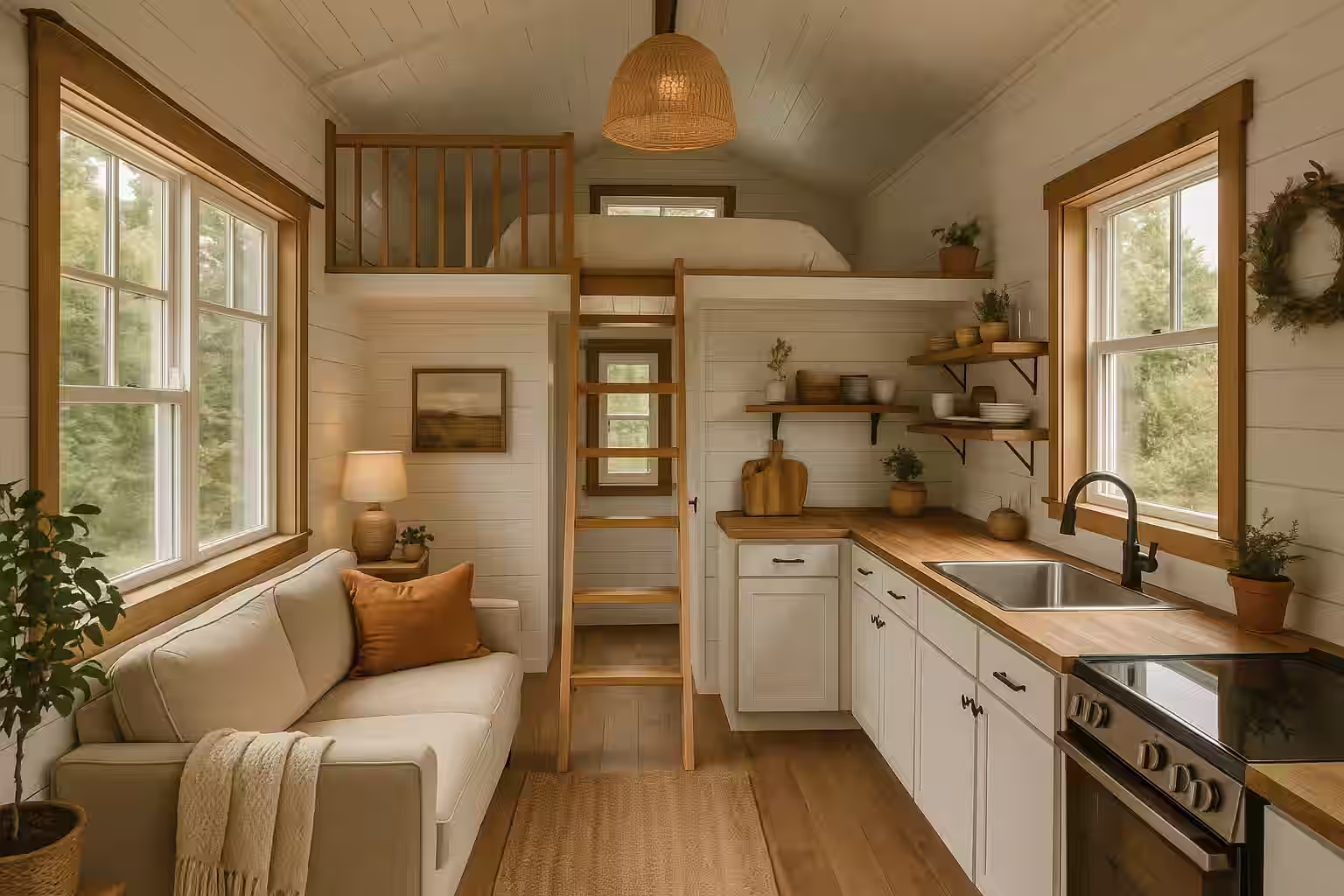
In a tiny home, the kitchen is not just “where you cook.” It’s where you decide whether daily life feels elegant or exhausting.
If the bed is the emotional center, the kitchen is the practical center. It’s where clutter begins (mail, keys, appliances, groceries). It’s where humidity shows up. It’s where your storage strategy either works or collapses. And because the space is small, every inconvenience gets amplified.
This guide is written for the realistic tiny-home builder and buyer. It focuses on the decisions that create a kitchen that actually works: layout flow, what to make small and what not to, ventilation, storage that prevents countertop creep, and the subtle choices that make the space feel calm.
Start with behavior, not Pinterest
Before you choose a backsplash, decide how you actually live.
Do you cook daily or mostly reheat? Do you bake? Do you drink pour-over coffee and own a small ritual’s worth of gear? Do you host, even occasionally? Are you a “clean as I go” cook or a “big clean at the end” cook?
Tiny homes reward honesty. If you don’t cook much, a minimal kitchen can be perfect. If you cook constantly, shrinking the kitchen too far turns every meal into a negotiation.
The three non-negotiables: prep space, sink usability, ventilation
A tiny home kitchen feels good when three things are true.
1) You have real prep space
Prep space is the kitchen’s oxygen. If you can’t put down a cutting board without moving a toaster, the space will feel tight no matter how pretty it is.
You don’t need a large counter run, but you do need at least one “clear zone” that stays clear most of the time. Many successful tiny kitchens create prep space with a fold-down extension or an over-sink cutting board. The trick is friction: if expanding the prep space takes five steps, you won’t do it on a weeknight.
2) The sink is comfortable
In tiny kitchens, the sink is often undersized to “save counter.” That’s usually a false economy. An uncomfortable sink makes dishes feel endless and creates clutter because dirty items have nowhere to go.
A slightly larger sink with a good faucet often improves daily life more than an extra square foot of counter.
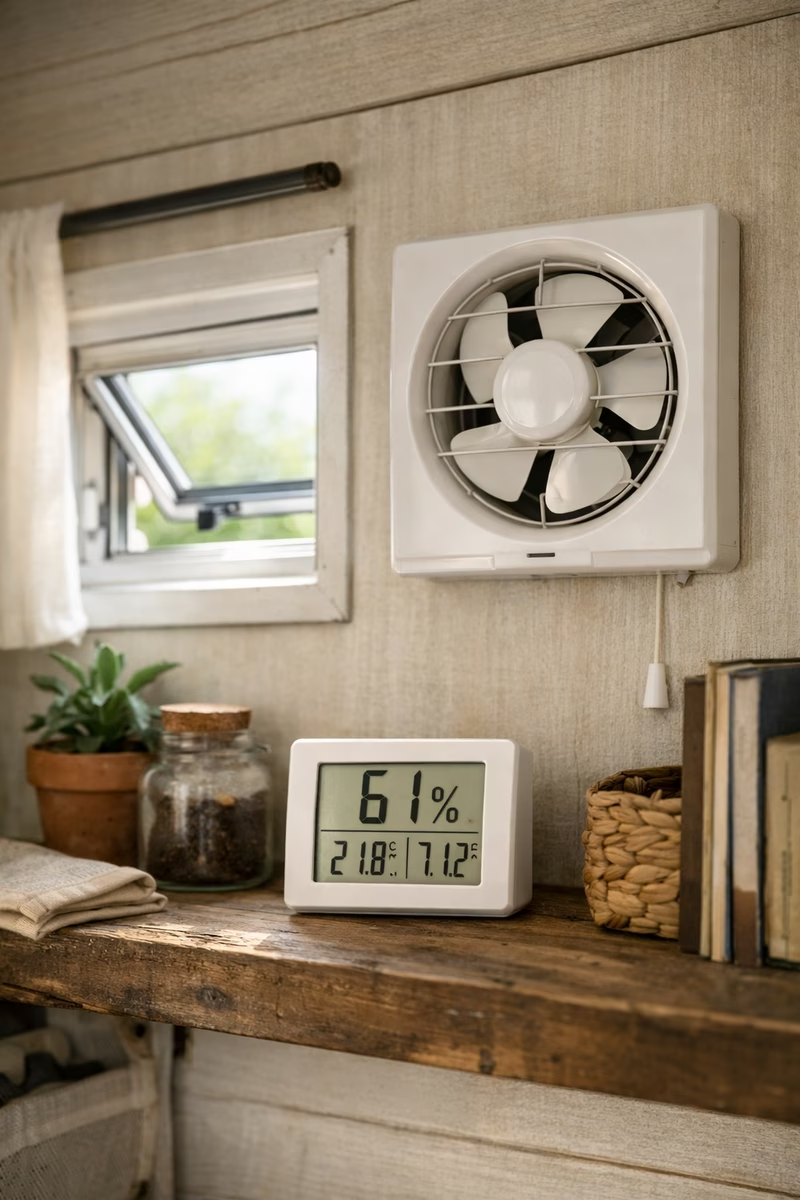
3) You can move moisture and smells out
Ventilation is not a luxury in small spaces. Cooking moisture becomes humidity, which becomes condensation, which becomes discomfort and mold risk.
A vent hood that exhausts outside is ideal. If you can’t do that, use a strong recirculating hood and compensate with deliberate airflow: operable windows, a bathroom fan strategy, and a habit of venting steam.
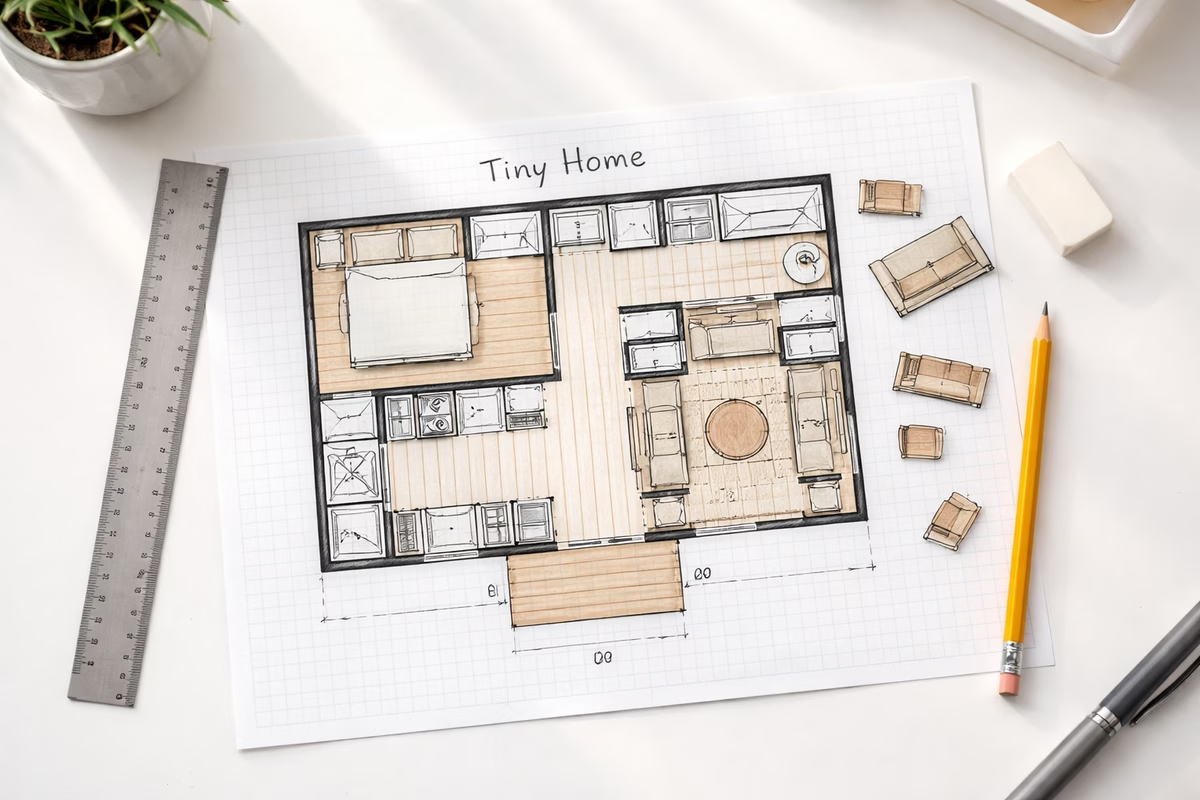
Layout: choose a flow you can repeat
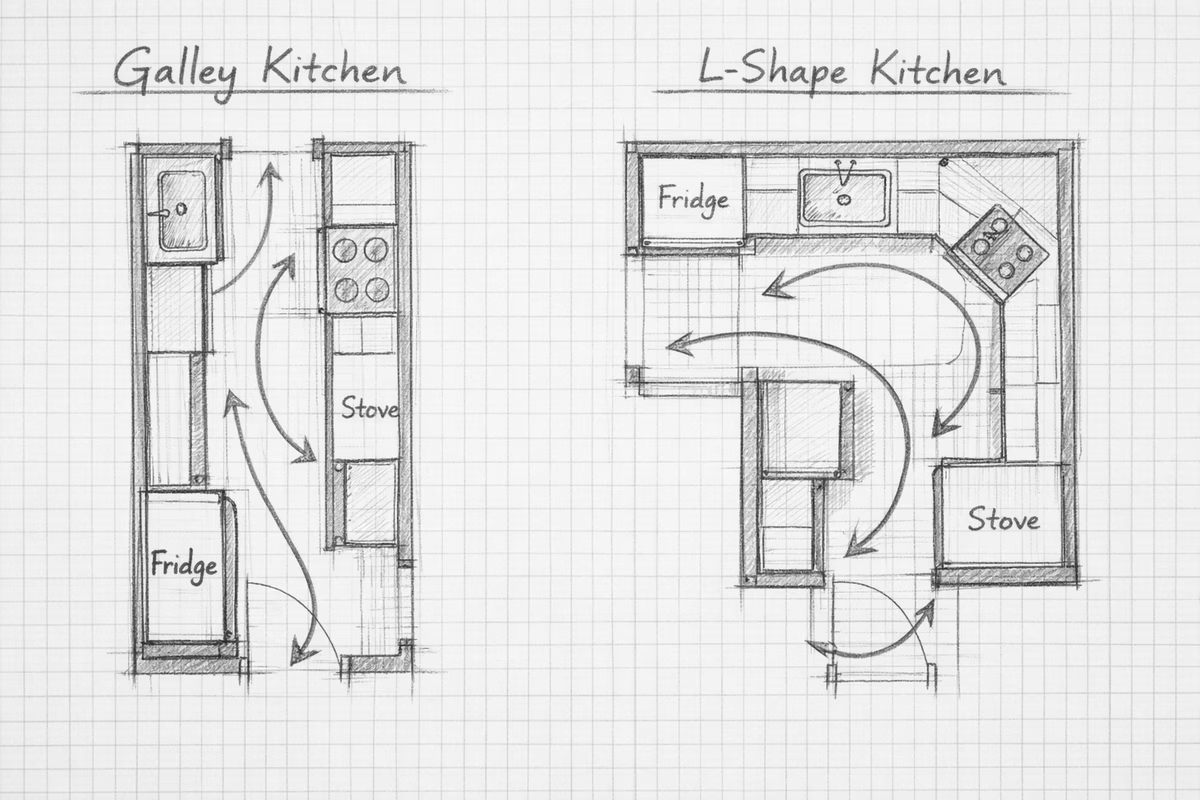
Tiny kitchens typically succeed in one of two formats: a galley or an L-shape.
A galley kitchen can be extremely efficient. It also risks feeling like a hallway if the aisle is tight. An L-shape can create a clear prep corner and can feel more “room-like,” but it can also create dead corners if storage isn’t planned.
The most important layout principle is simple: your most common loop should be short.
For most people, the daily loop is fridge → sink → prep → cook. If those points are in a clean sequence, the kitchen feels easy.
Appliances: what to shrink, what not to
Tiny kitchens can’t carry every appliance category at full size. But not every appliance is safe to shrink.
Refrigerator
If you cook frequently, don’t over-shrink the fridge. A too-small fridge creates grocery friction, and grocery friction creates eating-out spending.
Many happy tiny-home owners choose a compact but real fridge rather than a mini-fridge. The “right size” is the one that fits your shopping rhythm without forcing you to shop every two days.
Cooktop and oven
A two-burner cooktop can be fine if you cook simply. If you cook complex meals, the third burner is surprisingly meaningful.
Ovens are heavy and take space. Many tiny kitchens work beautifully with a combination approach: a smaller oven, a good toaster oven, or a convection microwave depending on your habits.
The key is to avoid doubling the same function unless you’re sure you’ll use it.
Dishwasher
A dishwasher in a tiny home is controversial because it feels like a “luxury,” but for many people it’s a mental-health device. It prevents sink pileups, keeps the kitchen visually reset, and reduces humidity from hand-washing.
If you have the water and power capacity, a compact dishwasher can be a quality-of-life win.
Vent hood
If you cook with oil, sear meat, or boil pasta often, prioritize the hood. Smells and grease travel farther in tiny homes, and surfaces are closer together.
Storage that prevents countertop creep
Countertop clutter is the fastest way to make a tiny kitchen feel chaotic.
The goal isn’t maximal storage. It’s frictionless storage: a place for the things you use daily that doesn’t require rearranging other things.
Closed storage is your friend for visual calm. Open shelving is beautiful, but it is also honest: it shows everything. Many tiny kitchens work best with a blend—open shelves for a small set of “pretty and used” items, closed cabinets for everything else.
Deep cabinets can be deceptive. They hold a lot, but they also hide a lot. In tiny homes, drawers often outperform cabinets because they make every item reachable. A few well-planned drawers can do more for usability than additional cabinet volume.
If you’re building, take advantage of weird spaces: toe-kick drawers, narrow pull-outs, and vertical slots for cutting boards and sheet pans.
Lighting: the difference between cozy and cramped
Tiny kitchens need task lighting. One overhead light can make the space feel dim and shadowy right where your hands work.
Under-cabinet lighting (or a light strip under an open shelf) is a small decision with a big payoff. It makes the counter feel wider, cleaner, and more usable at night.
Warm lighting creates comfort, but overly warm task lighting can make it hard to see food colors. A balanced approach is often best: warm ambient light, neutral task light.
Materials: choose forgiving, not fussy
In a tiny home, surfaces get used hard.
Countertops should be durable and easy to maintain. Wood can be beautiful and repairable, but it needs sealing and a willingness to care for it. Laminate can be a practical, budget-friendly choice. Stone can be durable but heavy.
For backsplash and wall surfaces, prioritize cleanability. Steam and oil will touch more of your home than you expect.
Flooring near the kitchen should tolerate water. Tiny homes compress the consequences of spills.
The quiet systems: water, waste, and power
Even if you’re not “off-grid,” tiny homes benefit from systems thinking.
If your water pressure is low or your hot water recovery is slow, the kitchen feels frustrating. If your electrical circuits are undersized, you’ll trip breakers when the kettle and the toaster run together. If your waste setup is constrained, you’ll feel it when cooking and cleaning.
A good tiny kitchen is not just cabinets. It’s a set of supports that make cooking and cleanup easy.
A simple design test before you commit
When you think your layout is done, do a two-minute rehearsal.
Imagine cooking a basic meal. Where do groceries land when you come in? Where does the cutting board live? Where does the trash go during prep? Where do wet dishes drain? What happens when two people occupy the space—one cooking, one making coffee?
If you can answer those questions without inventing new surfaces, the kitchen will likely work.
If you can’t, the design is still mostly aesthetic.
The best tiny kitchens feel boring in the best way
A kitchen that works doesn’t demand attention. It disappears into habit.
You cook, you clean, and the space returns to calm. That “return to calm” is the real luxury in a tiny home. It’s what makes the home feel larger than it is.
If you want a broader framework for planning your whole home around daily behavior, pair this with Tiny Home Interior Design and use the Building Guide to make sure the beauty is supported by structure.