A Tiny Home Needs a Paper Trail
Tiny homes often live between familiar categories. One may be a house on a foundation. Another may be a tiny house on wheels. Another may resemble an RV, a park model, a cabin, a studio, or a custom-built structure that does not fit neatly into a single everyday phrase. That category question affects more than vocabulary. It can matter when someone asks about insurance, hauling, storage, financing, permitting, resale, repairs, or emergency replacement after damage.
This guide is not insurance, legal, or financial advice. Policies, titles, laws, and underwriting rules vary, and serious decisions belong with qualified professionals and current local requirements. The practical point here is simpler: a tiny home owner should be able to explain what the home is, how it was built, what systems it has, how it has been maintained, and what evidence supports those claims. Documentation does not guarantee approval or coverage. It makes conversations clearer and repairs less mysterious.
Good records also help even when no insurer is involved. A maintenance file tells a future buyer what they are looking at. Photos from construction reveal wiring and plumbing routes after walls are closed. Appliance manuals make service calls easier. A weight ticket helps a hauler plan. A folder of receipts can turn a vague memory into a clear replacement list. The record is part of the home.
Start With Identity
The first documentation question is identity. What is this tiny home, in plain terms and in any formal terms that apply? A tiny house on wheels may have trailer documents, axle ratings, a VIN or serial information, and builder records. A foundation-built tiny home may have permits, inspection records, plans, utility records, and site documents. A professionally built unit may have manufacturer paperwork. A DIY build may rely more heavily on photos, receipts, drawings, and system notes.
The identity file should capture dimensions, year built, builder or owner-builder information, construction type, trailer or foundation details, heating and cooling equipment, electrical service type, water and wastewater setup, and whether the home is intended to move. This sounds basic, but it prevents confusion later. A person who has only seen photos may not understand the difference between a road-ready THOW and a small cottage on piers. Your records should make that distinction easy to explain.
This identity work connects directly to Legal Requirements and Zoning and Buying a Used Tiny Home . A buyer, inspector, landowner, hauler, or agent may ask many of the same questions. The clearer your answer, the less the home depends on charm and memory.
Photograph What Will Be Hidden
Construction photos are valuable because tiny homes hide a lot behind a small amount of finish material. Before walls, floors, ceilings, and cabinets close, photograph framing, insulation, air sealing, wiring routes, plumbing routes, drain lines, vent paths, blocking, tie-down points, water heater location, tank placement, battery area, solar penetrations, and mechanical chases. The photos do not have to be artistic. They need to be clear, dated if possible, and organized well enough that someone can find the kitchen wall or bathroom floor later.
These photos can save real trouble. If a future repair requires opening a wall, the photo may reveal where a wire or pipe runs. If a buyer asks whether insulation is continuous, a photo may support the answer. If a leak appears under a cabinet, an older picture may show the fitting arrangement. If a professional is asked to evaluate the home, good photos can help them understand the build before they arrive.
Finished photos matter too. Photograph the exterior from all sides, the roof, the underside, service hatches, utility connections, appliances, built-ins, storage areas, smoke and carbon monoxide detector locations, and any removable travel parts. Update those photos after major changes. A tiny home changes over time as decks, skirting, solar, steps, and storage are added. The record should change with it.
Keep System Records Where You Can Use Them
System records should be practical, not ornamental. A binder that nobody opens is less useful than a simple folder with the right documents. Keep manuals for appliances, water heaters, pumps, fans, mini-splits, electrical equipment, batteries, inverters, solar components, toilets, filters, detectors, and specialty hardware. Save model numbers and serial numbers where they exist. Photograph labels before they fade or become hard to reach.
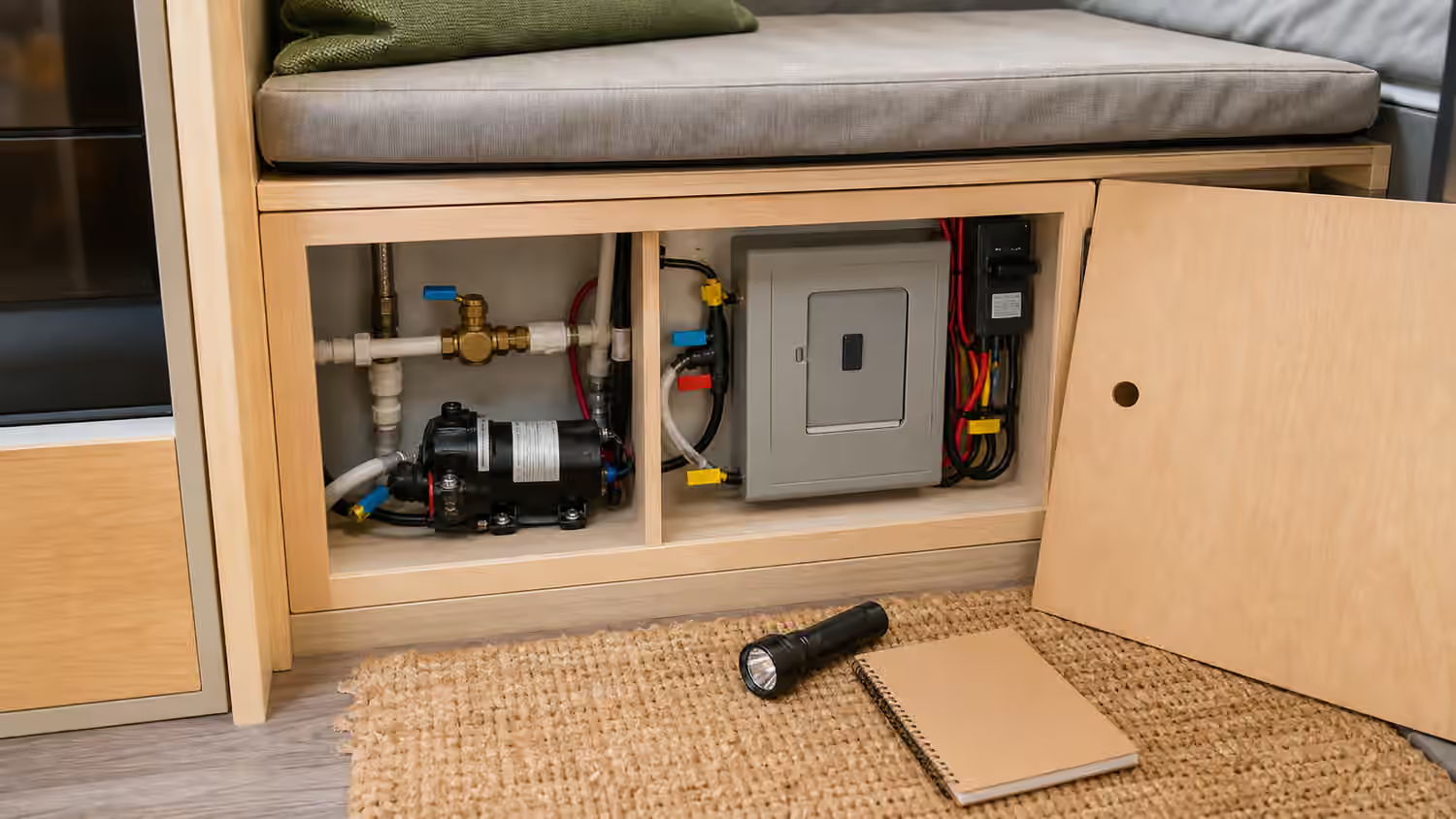
Make a simple map of the home’s systems. It can be a rough drawing, but it should show the main shutoff, water pump, tank locations, water heater, electrical panel, battery location, inverter, exterior power inlet, drains, cleanouts, detector locations, and any access panels that are easy to forget. The map is especially useful when someone else needs to help in a hurry. In a small home, service points may be hidden under cushions, behind drawers, below stairs, or inside benches. A map turns the house back into a readable system.
The system record belongs beside guides like Tiny Home Electrical Planning , Tiny Home Water Systems , and Tiny Home Fire and Life Safety Planning . Those guides help you decide what to build. The documentation file helps future you prove, service, and understand what was actually built.
Maintenance Notes Are Evidence of Care
Maintenance records do not need to be complicated. They should answer what was checked, what was repaired, who did the work, what materials were used, and when the next inspection should happen. Roof sealant, exterior paint, tire age, bearing service, detector replacement, filter changes, water heater service, HVAC cleaning, battery checks, plumbing winterization, leveling adjustments, skirting repairs, and moisture investigations all deserve notes.
This habit makes ownership easier. If a stain appears near a window, you can see when that window was last checked. If a heater fails, you can find the model and service history. If you sell the home, a maintenance file shows care in a way that polished photos cannot. If an insurer or repair professional asks about the home’s condition, you have more than a shrug.
Maintenance documentation also reduces repeated work. Tiny homes are compact, so the same questions come back: when were the filters changed, where is the shutoff, what sealant was used, which tire is oldest, which breaker feeds the heater, when was the mini-split cleaned? A good record lets the owner answer without reconstructing history from memory.
Receipts Help More When They Are Organized
Receipts are useful for replacement, resale, budgeting, and understanding the build, but only if they can be found. Save major receipts for appliances, trailer work, windows, doors, roofing, siding, insulation, electrical equipment, plumbing fixtures, solar components, batteries, HVAC, flooring, cabinetry, and safety equipment. Smaller material receipts can also matter if they document a repair or product choice.
Organization can stay simple. Keep digital copies in folders by system or year. Keep physical copies in a weather-safe place. Photograph important receipts because thermal paper fades. If a receipt does not identify the item clearly, add a short note while you still remember. The goal is not to create a museum archive. It is to make the record useful when stress is high and time is short.
An inventory also helps. Walk the home and record major items, including built-ins and portable equipment that would be hard to replace quickly. Photos are often easier than typed descriptions. Avoid storing the only copy of this inventory inside the home. A record that burns, floods, or disappears with the home cannot help when it is needed most.
Road and Site Documents Deserve Their Own Section
For a tiny house on wheels, road-related documents should be easy to find. Trailer title or ownership records, registration where applicable, axle information, tire information, brake details, weight tickets, hitch information, safety chain details, and hauling records all belong together. If the home has moved before, note who moved it, what route issues appeared, and what parts had to be removed.
For a site-based tiny home, keep site documents separate from the home identity file. Permits, inspection records, utility connection notes, septic or sewer information, well information, pad or foundation drawings, landowner agreements, campground rules, or community documents may matter only at that location. Separating site records from home records helps prevent a common confusion: approval in one place does not automatically make the home acceptable in another.
This is where documentation connects to Site Prep and Setup and Tiny Home Foundations and Anchoring . The home and the site work together, but the records should still make clear which facts belong to the structure and which facts belong to the place.
Store Records Like You Expect to Need Them
The best documentation system is the one you can actually maintain. A digital folder, a physical binder, and a small emergency summary can work together. The digital folder can hold photos, scans, receipts, manuals, and maps. The binder can hold the essentials for service visits. The emergency summary can list shutoffs, detector dates, appliance models, and contact information for builders or tradespeople.
Keep copies outside the home. Cloud storage, an external drive kept elsewhere, or a trusted backup location can protect the record if the home is damaged. Update the file after major repairs, seasonal maintenance, moves, and equipment replacements. A stale file is still better than none, but the habit of updating it while the work is fresh keeps it useful.
Documentation will not make a tiny home fit every category or satisfy every question. It will make the home less mysterious. That matters. A small home asks people to trust a compact set of choices. Good records show those choices clearly, and they give the owner a calmer way to handle insurance conversations, maintenance, resale, repair, and the ordinary surprises that come with owning a real building.