Living Sustainably in Small Spaces
Tiny homes shrink your footprint by default: fewer materials, less conditioned space, and (usually) a more intentional lifestyle. Sustainable systems take that natural advantage and make it reliable—so your comfort and independence don’t depend on wasteful habits or fragile infrastructure.
This guide focuses on the systems that matter most: power, water, waste, and climate. The best approach is rarely “max out everything.” It’s choosing a strategy that matches your site, your budget, and your tolerance for maintenance.
Two ground rules save most people money and frustration. First, efficiency comes before capacity: every watt and gallon you avoid using is infrastructure you never have to buy. Second, design for your worst week rather than your best day. Cloudy stretches, freezing nights, and surprise guests are where systems prove whether they were sized honestly.
Solar Power Systems
Solar can be a joy in a tiny home because your loads are often small enough that “real independence” is achievable. But solar is also the most expensive system to get wrong, so it pays to size it thoughtfully and build in margin.
Understanding Solar for Tiny Homes
Solar is most compelling when you want predictable operating costs, quiet power, low routine maintenance, and the freedom to site your home somewhere that does not have convenient utility access. It becomes harder to justify when winter is cloudy, when your loads are unusually large, or when you do not want to manage batteries and power behavior at all. Solar rewards people who are willing to think like operators rather than passive utility customers.
System Sizing
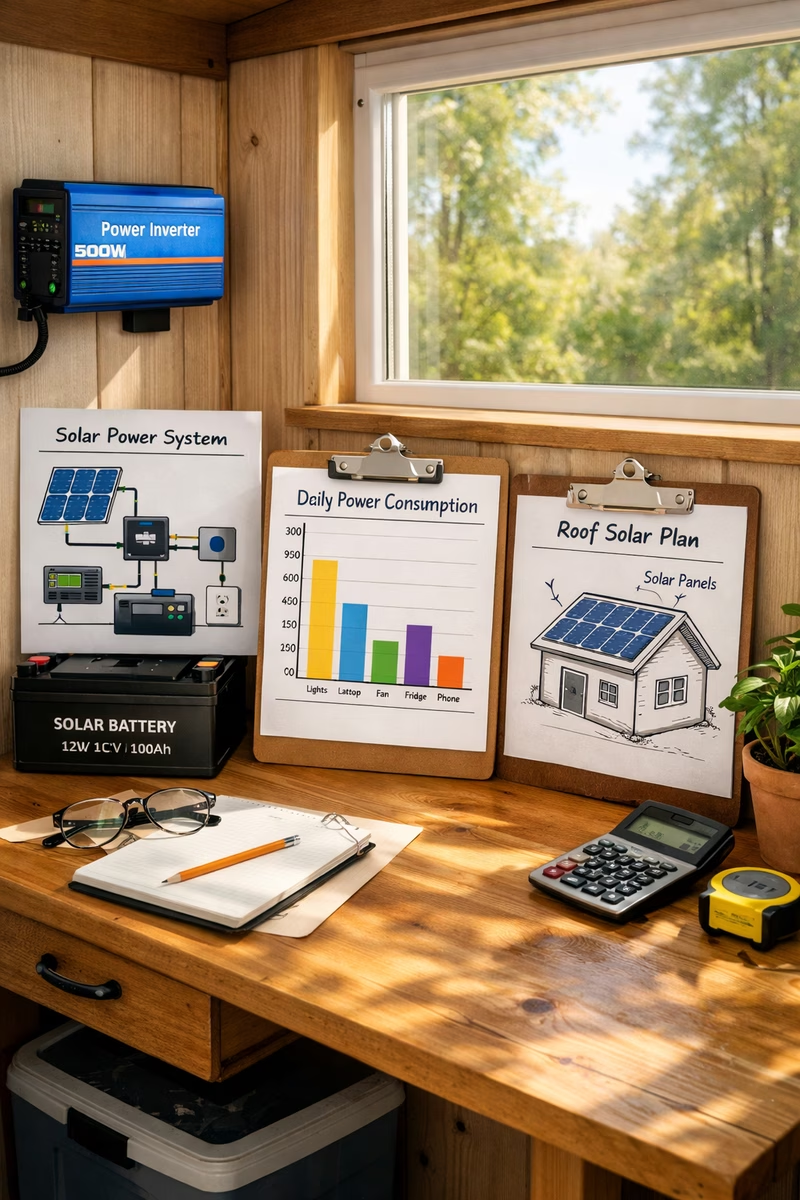
Sizing starts with a simple question: how many watt-hours do you need per day? That number sets everything else.
1) List your loads and estimate daily energy
| Device | Watts | Hours/Day | Watt-Hours |
|---|---|---|---|
| Refrigerator | 150W | 24 hrs | 3,600 Wh |
| LED Lights (5) | 50W | 5 hrs | 250 Wh |
| Laptop | 60W | 4 hrs | 240 Wh |
| Phone chargers | 10W | 3 hrs | 30 Wh |
| Mini-split AC | 500W | 6 hrs | 3,000 Wh |
| Water pump | 100W | 1 hr | 100 Wh |
| Daily Total | 7,220 Wh |
2) Add margin
Real life isn’t a spreadsheet. Add a safety margin (often ~20%) for losses and “normal drift” in usage. Example: 7,220 Wh x 1.2 = 8,664 Wh/day.
3) Translate that into panels + batteries
Panels are about production on a normal day, ideally with enough headroom that one average day is not a near miss. Batteries are about endurance: nights, storms, and bad-weather stretches. That is why many off-grid systems aim for 2–3 days of usable storage. The goal is not luxury; it is avoiding panic.
Solar Components
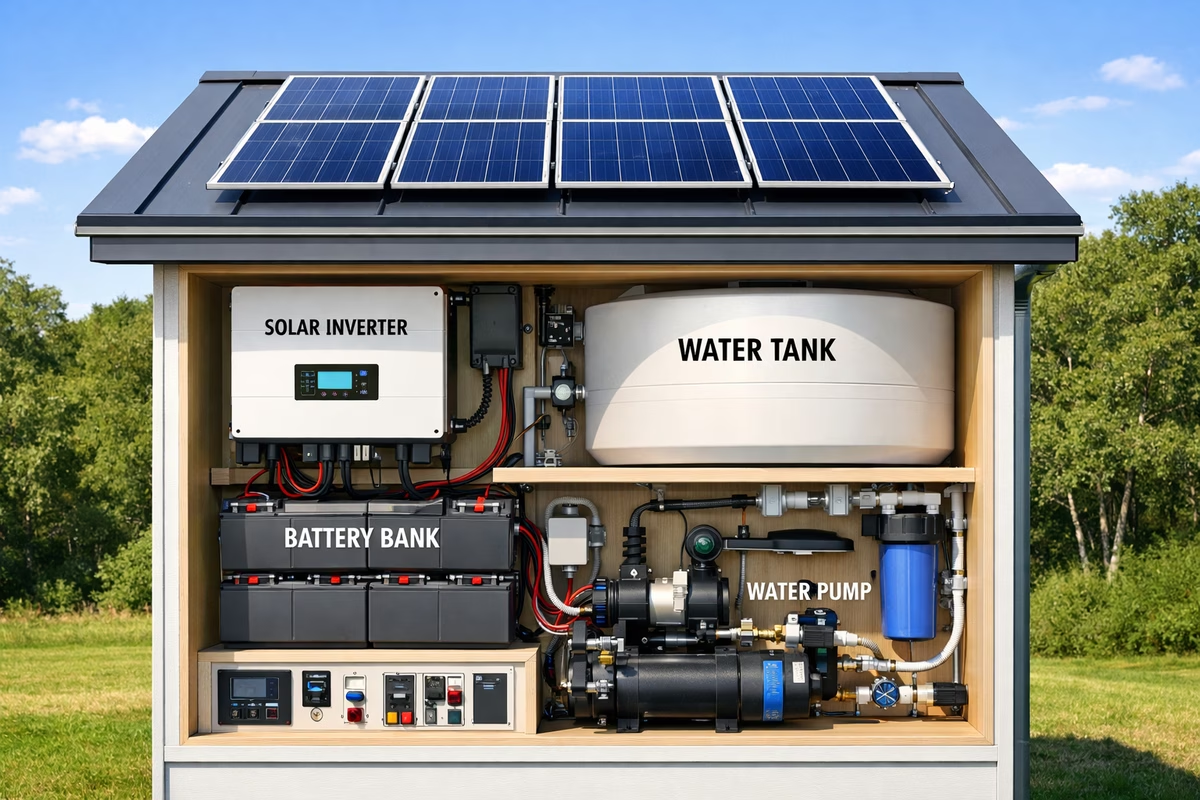
Think of the system as a chain: panels make DC power, a controller manages charging, batteries store energy, and an inverter turns it into household AC power. The system is only as reliable as its weakest link.
Solar panels
Monocrystalline panels are the common choice for tiny homes because roof space is limited and efficiency matters. The main design constraint is often physical: how many watts you can fit on the roof without shading issues.
Charge controller
MPPT controllers are usually worth it for off-grid builds because they squeeze more usable energy out of the same panel array—especially in cold weather and variable sun.
Batteries
LiFePO4 batteries are the modern standard for tiny homes: longer lifespan, higher usable capacity, and better performance for the weight. Lead-acid can work, but it often costs more over time once replacement and reduced usable capacity are accounted for.
Inverter
Pure sine wave inverters are the safest default for modern electronics and appliances. Size the inverter for peak loads and surge demands, not just average consumption.
Energy Efficiency Tips
Efficiency is not deprivation—it’s simply choosing tools that do the same job with fewer watts.
High-impact wins in tiny homes:
LED lighting, efficient refrigeration, serious insulation and air sealing, mini-split heat pumps instead of resistance heat, and cooking strategies that avoid giant electrical spikes all punch above their weight. In a tiny home, efficiency upgrades are not abstract virtue. They directly shrink battery banks, solar arrays, and stress on every other part of the system.
Behavior also matters more than people expect. If you can run heavy loads (laundry, power tools) during peak sun, you reduce battery stress and extend system life.
Water Systems
Water independence is a blend of supply, storage, filtration, and freeze protection. The “right” system depends on where you park and what you’re legally allowed to do.
Off-Grid Water Supply
Most tiny homes end up in one of four water patterns. Rainwater collection can work beautifully, but only where climate and regulations cooperate. Hauling water is simple and reliable almost anywhere, though it makes you personally responsible for logistics. Well access can be excellent but usually carries the highest upfront cost. City hookup is the easiest option if you have it, which is precisely why off-grid systems should be compared against that convenience honestly.
Rainwater can be great, but it’s not a shortcut: it requires proper first-flush diversion, filtration, and a plan for dry seasons.
Rainwater collection system components
Instead of thinking in a checklist, think in flow:
roof → gutters → first-flush diverter → storage → filtration → pressure pump → fixtures
Your failure modes are predictable: clogged gutters, contaminated first rain, algae in tanks, freezing lines, and filters that aren’t maintained. Design so those problems are manageable, not catastrophic.
Filtration and Potability
If water is for drinking, build your system like it matters—because it does.
At a high level, filtration is usually staged:
sediment filtration to protect downstream equipment, carbon filtration to improve taste and reduce some contaminants, and a final disinfection step such as UV or another appropriate treatment. The exact specification depends on the source, but the logic is always the same: take out the big problems first, then the smaller and more dangerous ones.
Specific requirements depend on the water source and local health guidance. If you’re uncertain, treat “potable water design” as a professional consultation item.
Greywater
Greywater (water from sinks/showers) can reduce waste, but it’s regulated differently in different places. The sustainable approach has two parts: reduce greywater volume with efficient fixtures, then manage what remains through approved routing or treatment. The most sustainable greywater plan is the one you can legally maintain without guessing.
If you irrigate with greywater, use soaps that are compatible with plants and soil, and keep it away from edible plant surfaces unless your local rules explicitly allow otherwise.
Waste Management
Waste systems determine whether off-grid living feels elegant or exhausting. A sustainable setup is one where maintenance is predictable, odors are controlled, and you’re compliant with local rules.
Composting Toilets
Composting toilets work well in tiny homes because they remove the need for a blackwater tank or septic connection. The key is understanding what you’re signing up for: a composting toilet is a small waste-management appliance. It requires correct use and regular emptying.
If you want composting to feel simple:
separate liquids and solids well, manage moisture carefully, and take ventilation seriously. Most composting-toilet complaints are not moral objections to the concept; they are basic airflow and moisture problems in disguise.
Traditional Options (Septic / Sewer)
If you have legal access to septic or sewer, it’s often the lowest-maintenance day-to-day experience. Sustainability then becomes about water efficiency and minimizing chemicals that stress systems.
Trash and Recycling
In tiny homes, the best waste system is often “don’t generate it.” Small space makes that easier—there’s nowhere to hide clutter. Use your physical constraints as a sustainability advantage.
Heating and Cooling
Comfort is the place many “sustainable” builds fail, because small spaces swing temperature quickly. The most sustainable heating/cooling is the one that keeps you comfortable without forcing constant system interventions.
Heating
Mini-split heat pumps are the clean, efficient answer and pair well with solar, though they are still a meaningful load. Propane heat gives you strong output with modest electrical demand, which is why it remains common in truly off-grid setups. Wood stoves are powerful and emotionally appealing, but they ask for fuel storage, clearance planning, and disciplined installation. Whatever route you choose, insulation and air sealing do more for comfort than any appliance upgrade, and any combustion system needs safe ventilation plus a backup plan for cold snaps and outages.
Cooling
Cooling is usually easier than heating if the building itself helps you. Shade, overhangs, cross-ventilation, reflective roofing, and humidity control all reduce how hard your active cooling has to work. Good design buys comfort before electricity ever enters the conversation.
Laundry Solutions
Laundry is a sustainability issue because it quietly drives energy and water use. In tiny homes, the “best” solution is often whichever one causes the least routine friction.
The common laundry approaches each trade convenience against system load. Laundromats or shared facilities are the easiest on your infrastructure because they consume no space and no onboard energy. A compact washer plus line drying is a good middle lane. Hand-washing works for very minimal lifestyles, but only if you are honest about how much inconvenience you are actually willing to absorb.
If you’re fully off-grid, line drying is a powerful strategy: it shifts a high-energy task into a low-energy routine.
Sustainable Materials
Sustainable systems aren’t only mechanical. The materials you build with determine indoor air quality, durability, and how much future maintenance you’ll be doing.
Low-VOC paints and finishes improve indoor air quality immediately, durable roofing and siding reduce future replacement cycles, and insulation choices should be judged not only by R-value but by moisture behavior and health considerations. Reclaimed or FSC-certified wood can make sense too, but only if the material is still appropriate for the actual wear the home will see.
For furniture, durability and multi-functionality are sustainability superpowers. A tiny home punishes disposable furniture quickly.
Waste Reduction
Tiny living is naturally “anti-waste” because space is honest. The sustainable move is to make your systems match that honesty.
Practical habits compound over time: buy fewer things, buy better things, prefer repairable items over sealed disposable ones, and adopt a simple one-in, one-out rule before clutter has a chance to become invisible.
Cost Summary: Full Off-Grid System
Sustainability isn’t always cheaper upfront. The win is resilience, predictable costs, and lower resource consumption over time. These ranges vary massively by location and whether you DIY or hire pros, but they’re useful for planning.
| System | Cost Range | Notes |
|---|---|---|
| Solar (2kW + batteries) | $15,000-24,000 | Full off-grid |
| Water (rainwater) | $1,200-3,200 | 275-gal storage |
| Composting toilet | $960-1,050 | Self-contained |
| Greywater | $200-1,000 | Irrigation system |
| Propane heating | $800-1,500 | Heater + install |
| Total | $18,160-30,750 | Complete independence |
Grid-Connected Sustainable:
A grid-connected version usually costs much less upfront. Grid-tied solar often lands around $4,300-6,500, low-flow fixture upgrades for city water may be only $200-500, a composting toilet still runs about $960-1,050 if you want one, and a mini-split heat pump might cost $1,000-2,500. That puts a representative total around $6,460-10,550.
Next Steps
Review Building Guide if you are still in the construction phase, check Legal Requirements before assuming any off-grid plan is permissible, and continue into Living in a Tiny Home for the lifestyle side of the equation.
Sustainable systems align perfectly with tiny home philosophy: independence, simplicity, and minimal environmental impact. Start with the most critical constraint in your situation (power, water, heating, or waste), design for the hard weeks, and let the easy days be the reward.