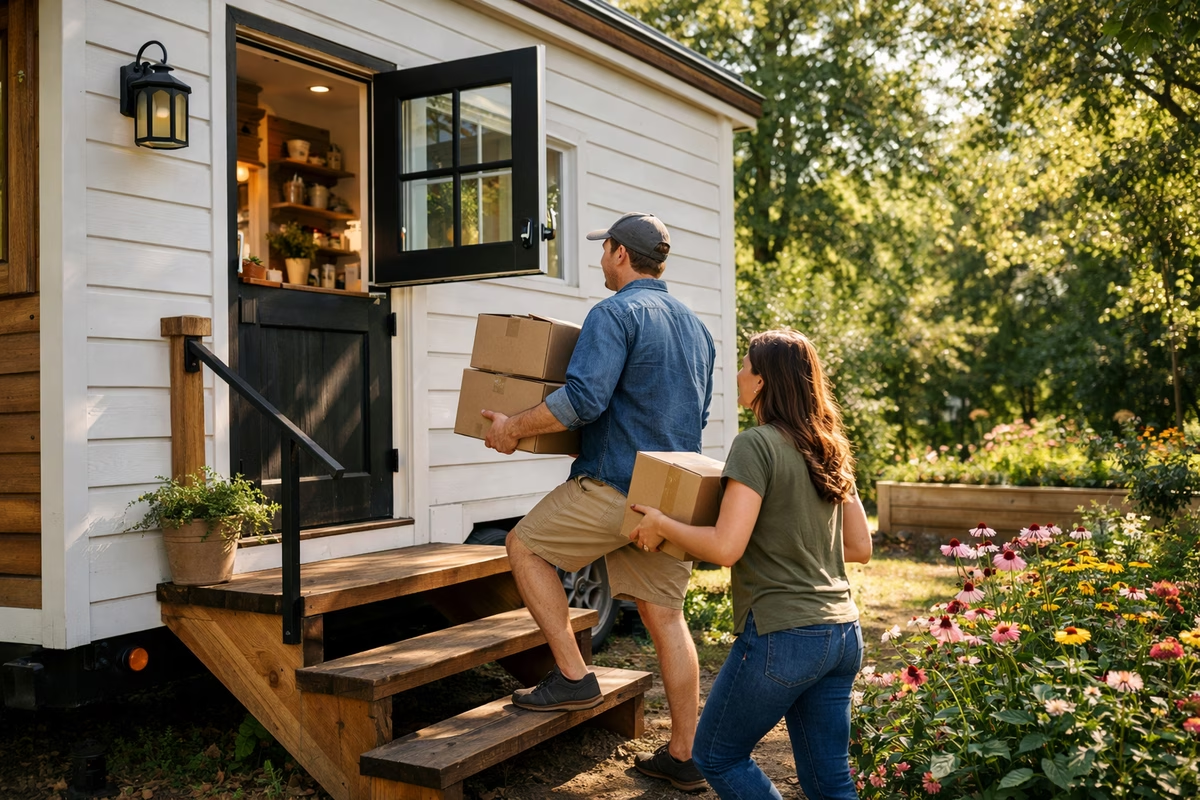
The moving truck pulled away at 11 a.m. on a Saturday in June, and for a moment I felt nothing. Then I looked at the tiny home sitting in the clearing—our tiny home, technically, though it still felt like someone else’s decision—and realized that everything we owned was already inside it.
All of it. The clothes, the kitchen, the books we’d fought about keeping, the single set of towels, the tools, the dog’s bed.
Two hundred and ten square feet.
We had spent a year building it: weekends in the driveway, arguments about loft height, late-night insulation cuts, a plumbing lesson from YouTube that went badly before it went well. We had told ourselves we were ready.
Standing in the doorway that first morning, watching my partner try to find the coffee grinder in a kitchen smaller than our old bathroom, I wasn’t sure “ready” was the right word. But we were there.
This is the story of our first summer—the part nobody talks about after the Instagram tour.
Week one: the honeymoon that wasn’t
The first three days were fine. Better than fine. We cooked on our two-burner stove, ate outside on the little deck, slept in a loft that felt like a treehouse. The dog found a patch of sun and stayed there. We told each other this was going to be great.
Day four, it rained.
Rain in a tiny home is intimate in a way that sounds romantic and is, in reality, loud. Metal roof. Two hundred square feet. Every conversation requires a slight raise in volume, every phone call feels public, and there is nowhere to go that isn’t also where the other person is.
We didn’t fight. We just… bumped. Literally and emotionally. The kitchen counter is also the desk is also the dining table. The loft is where you sleep, read, and stare at the ceiling when you need space but there is no space.
The possession problem (it’s not what you think)
Before we moved in, we spent three months “decluttering.” We read the books. We made the piles. We donated seventeen bags to charity and sold furniture on the internet. We felt virtuous and lean.
We were not lean enough.
The things that didn’t fit weren’t the obvious ones. We had already dealt with obvious. What remained were the quietly difficult objects: the box of letters from college, the cast-iron skillet that didn’t fit our tiny stove but felt like abandoning a friend, three coats for a closet that held one and a half, six mugs when we had shelf space for two.
Here’s what nobody tells you about downsizing: the hard part isn’t getting rid of things you don’t use. It’s getting rid of things you love but don’t have room for.
What actually worked
We developed a system over weeks, not days:
The one-week shelf. We put uncertain items on a single shelf near the door. If we reached for something during the week, it stayed. If we didn’t, it went into a box for donation. No emotion, no debate—just observation.
The seasonal rotation. Instead of trying to store four seasons of clothing in a closet the size of a phone booth, we packed off-season clothes in a single bin under the trailer. Every equinox, we swapped.
The “if it enters, something exits” rule. Every new object that came into the house required removing something of similar size. This sounds strict. In practice, it became a game—and it prevented the slow creep of accumulation that defeats tiny living.
Learning the kitchen (when the kitchen is four feet long)
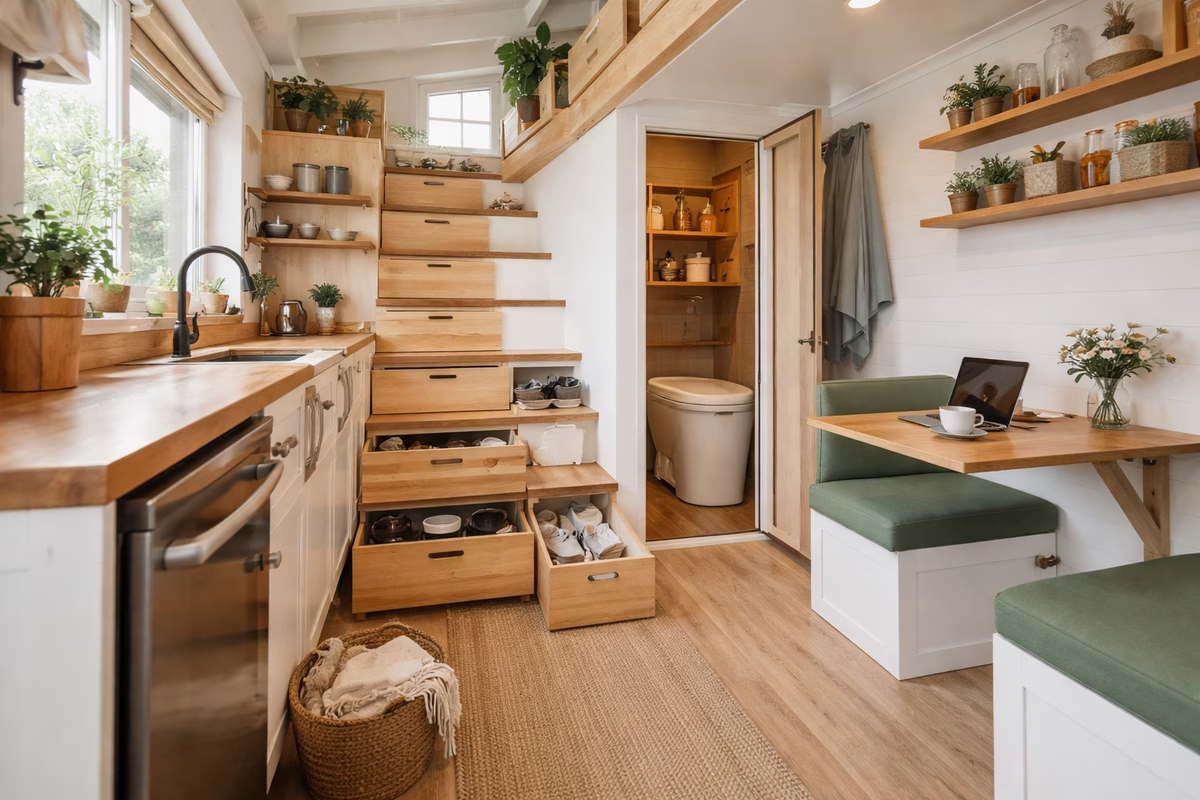
Our kitchen had: a two-burner propane stove, a compact sink, a bar fridge, and about eight square feet of counter space if you counted the cutting board balanced on the sink.
The first week, every meal felt like a logistics problem. Where do I put the cutting board while the pan is on the stove? Where does the colander go while I’m draining pasta? Why do I own three spatulas?
The turning point came when I stopped trying to cook like I had a full kitchen and started cooking like I had a galley.
The galley mindset
Boats and tiny homes have the same constraint: everything must earn its cubic inches.
- One good knife instead of a block. A chef’s knife and a paring knife do 95% of the work.
- Stackable, nesting cookware. One pot, one skillet, one saucepan. If they nest, they take the space of one.
- Prep in sequence, not in parallel. Chop everything first, clear the board, then cook. Tiny kitchens reward linear workflows.
- Magnetic strips and hooks turn walls into storage. The wall behind the stove held our three most-used utensils, a timer, and a small shelf for spices.
By week three, cooking felt efficient instead of cramped. By week six, it felt intentional—and meals tasted better because we were paying more attention to each one.
The relationship test
People always ask: “How do you live with another person in that space?”
The honest answer: you learn, or you don’t.
Tiny living exposed every friction point in our relationship and smoothed most of them—but not automatically. The smoothing came from having nowhere to hide. In a house, you can retreat to separate rooms and let irritation cool on its own. In 200 square feet, irritation is a shared experience.
What we figured out
Scheduled solitude. We each claimed one evening a week where the other person went for a walk, went to a café, or sat outside with headphones. Not because we were angry—because solitude isn’t a luxury, it’s maintenance.
Headphones as doors. When one of us put on headphones, it meant “I’m in my room.” No explanation needed. This was the single best tiny-home relationship hack we discovered.
Ruthless honesty about mess. In a house, a pile of laundry on a chair is invisible. In a tiny home, it’s the only chair. We learned to communicate about shared space without keeping score.
Doing things outside. The tiny home is for sleeping, cooking, and quiet time. Living happens outside: the deck, the garden, the fire pit, the trails nearby. The home’s footprint is small; our daily life’s footprint grew larger than it had ever been in a conventional house.
The money conversation (what actually changed)
We built our tiny home for $38,000 over fourteen months of weekends. That’s in the mid-range for a DIY tiny home on wheels—less than we expected for the quality, more than the optimistic YouTube estimates suggested.
But the real financial shift wasn’t the build cost. It was the ongoing cost.
| Expense | Before (apartment) | After (tiny home) |
|---|---|---|
| Housing (rent/mortgage) | $1,650/month | $0 (paid off) |
| Utilities | $180/month | $45/month (propane + solar) |
| Insurance | $120/month (renter’s) | $65/month (tiny home) |
| Maintenance | ~$0 (landlord) | ~$80/month average |
| Total | $1,950/month | $190/month |
That’s $1,760 per month in savings—$21,120 per year. In the first year, the savings nearly covered half the build cost.
We put the difference toward paying off student loans. By the end of the second year, they were gone. That felt more like freedom than any square footage ever had.
What I wish someone had told me
If you’re considering tiny living, here’s the honest list:
It is harder than you think for the first month. Then it becomes easier than you imagined.
You will miss exactly three things. For me it was a full-size oven, a bathtub, and a place to spread out a big project. Your three will be different. Knowing them in advance helps.
Guests are a logistics challenge. A fold-out couch or a pull-out table bed helps. So does a good campsite nearby.
Storage is a verb, not a noun. You don’t “have storage.” You constantly practice storing. Everything needs a place, and the place needs to be consistent. If something doesn’t have a home, it becomes clutter instantly.
The mental shift is the point. The tiny home itself is just a box. The real change is learning to need less—and discovering that less doesn’t feel like deprivation. It feels like clarity.
The ending: what 200 square feet taught us about space
By September, three months in, we stopped noticing the size.
Not because we’d gotten used to it in some resigned way. Because the question had shifted. We stopped asking “Is this enough space?” and started asking “What do we actually do with our time?”
The answer, it turned out, was: more. More cooking, more reading, more walking, more sitting outside watching the dog discover a new stick. Less scrolling, less buying, less maintaining, less cleaning.
The tiny home didn’t simplify our life. It revealed how much complexity we’d been carrying that had nothing to do with what we wanted.
Two hundred and ten square feet. It turns out that’s enough for a kitchen, a bed, a dog, a partnership, and the quiet discovery that space was never really the thing we were looking for.
Next steps
- Read the Design Principles guide to plan a layout that fits your life
- Explore the Interior Design guide for making small spaces feel bigger
- See Tiny Home Budgeting for the financial breakdown
- Check Heating and Cooling for staying comfortable year-round
- Read The First Winter in a Tiny Home for what comes after summer