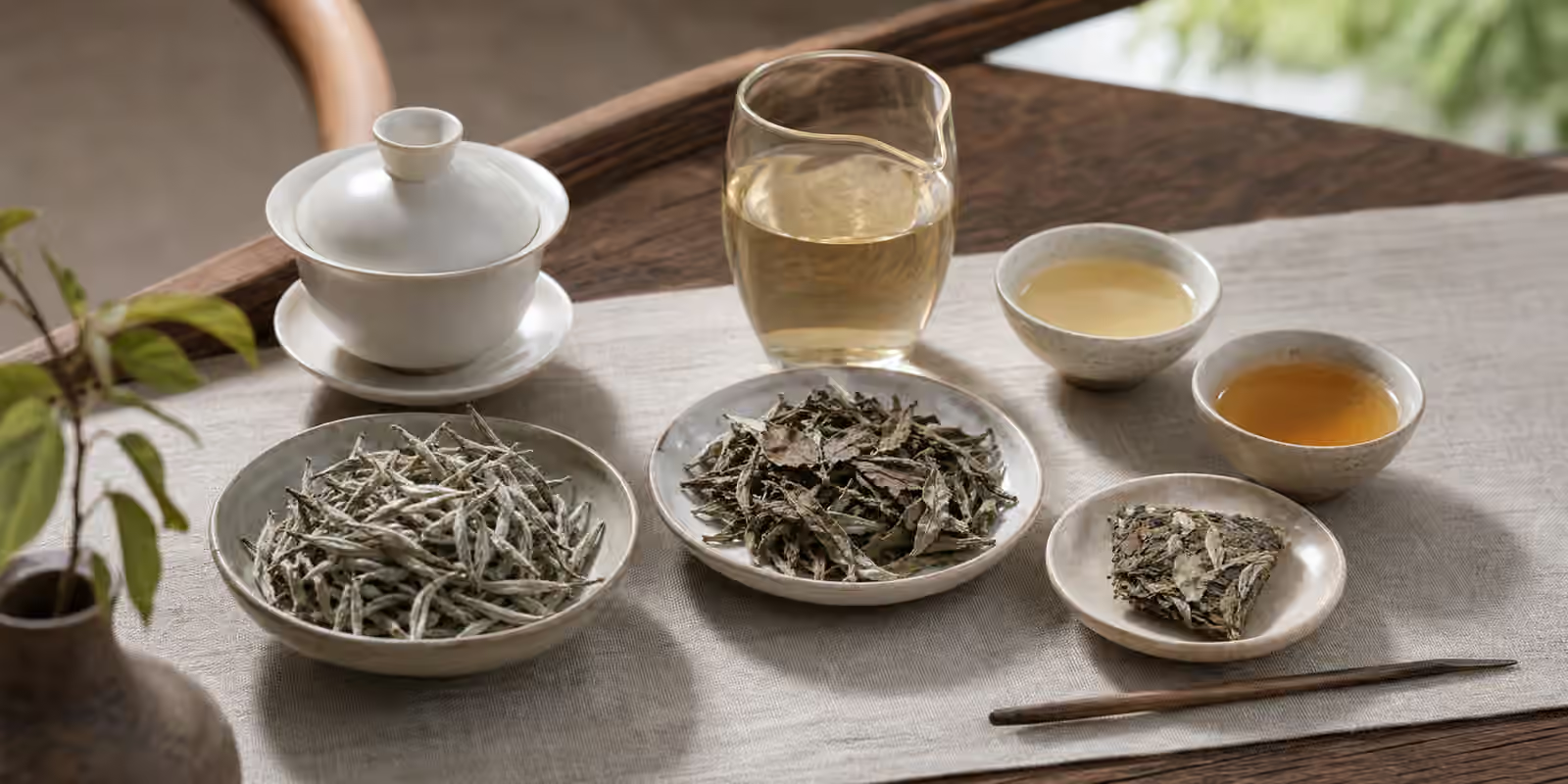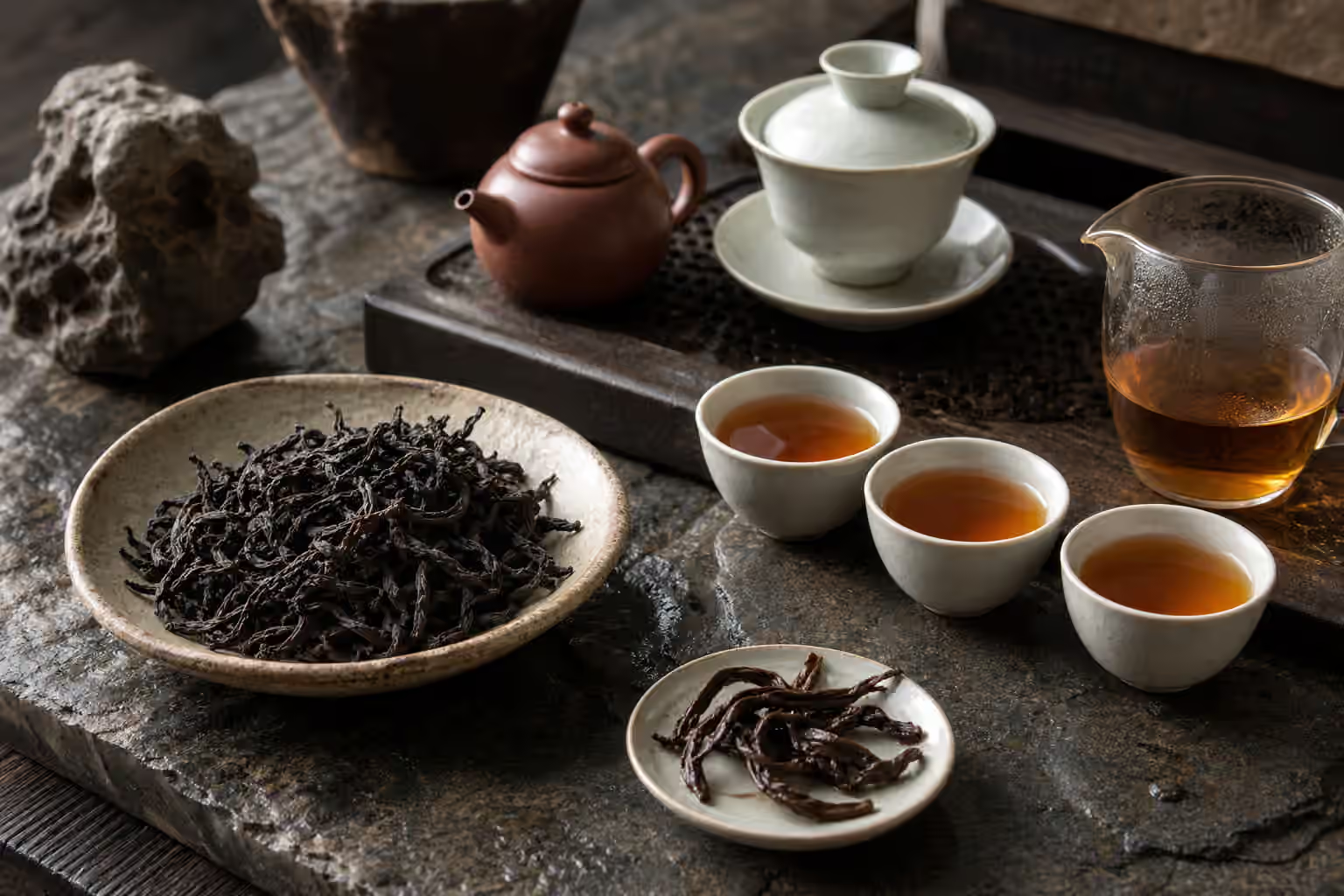
Wuyi rock oolong can sound intimidating because the names are often poetic, the leaves are dark and twisted, and the language around the tea can lean heavily on mineral romance. The useful path is simpler. Treat Wuyi oolong as a family of roasted, strip-shaped teas that can show fragrance, depth, dry rock-like texture, fruit, flowers, wood, and a long finish when brewed with patience. The goal is not to prove that you taste a mountain. The goal is to make the roast and leaf speak clearly without turning the cup harsh.
Start With Oolong, Then Add Place And Roast
The general Oolong Tea guide gives the broad foundation. Oolong is shaped by partial oxidation, rolling or twisting, roast, cultivar, and brewing rhythm. Wuyi oolongs are often strip-style teas rather than tightly rolled balls. They tend to open in long leaves, extract steadily, and carry roast as part of their structure. Some are heavily roasted and dark. Others are lighter, more aromatic, and more floral. The category is not one flavor.
The word “rock” is most useful when it reminds you to notice texture and finish. A good Wuyi-style cup may feel dry in a clean way, with a mineral edge that frames sweetness rather than erasing it. It may have aromas of orchid, baked fruit, cocoa, charcoal, wood, spice, or roasted nuts. A poor or mishandled cup may taste ashy, sour, hollow, or aggressively drying. The difference is not solved by buying a famous name. It is solved by tasting the leaf, roast, water, and recipe together.
This is where Roasted Teas: Hojicha, Oolong, and Toasted Depth becomes a close companion. Roast can deepen tea, but it can also dominate it. With Wuyi oolong, the roast should support the leaf. If the cup smells impressive for one sip and then collapses into char, the roast is doing too much work or the brewing is too hard.
Why Small Infusions Help
Wuyi oolong often benefits from small-vessel brewing because the tea changes over several infusions. A large mug can be pleasant, especially with an everyday version, but it tends to compress the story into one extraction. A gaiwan or small teapot lets the first infusion wake the roast, the next infusions reveal aroma and body, and the later cups show whether the finish has depth or only dryness.
Gongfu Tea for Beginners explains the rhythm without mystifying it. More leaf, less water, shorter infusions, and repeated pours give you more chances to steer. The first steep may be brief. The next may carry more aroma. Later steeps can lengthen as the leaves give less. A fairness pitcher helps keep each cup even, which matters when a few seconds can change the balance between fragrance and roughness.
This does not mean the session has to be formal. The practical question is whether the leaves drain cleanly and return for another cup without sitting in hot water. Fairness Pitchers and Decanting Tea for Even Cups is useful because Wuyi oolong can become muddled when the last cup from a pot is much stronger than the first. Decanting is not ceremonial decoration. It stops extraction and makes tasting fair.
Handling Roast Without Flattening Aroma
Roast is a major reason people seek Wuyi oolong, but roast alone is not enough. Warm the vessel and smell the dry leaves. A clean roast may smell like toasted grain, warm stone, cocoa, baked fruit, flowers behind charcoal, or dry wood. A tired roast may smell dusty. A rough roast may smell burnt without sweetness. After water hits the leaves, the aroma should evolve rather than repeat the same charred note again and again.
If the cup tastes too sharp, shorten the infusion before assuming the tea is bad. If it tastes hollow, use a little more leaf before steeping much longer. If the roast tastes stale, check storage and freshness. Wuyi oolong is not immune to air, moisture, heat, or stray kitchen odors. The storage habits in Tea Storage matter because roasted aroma can fade into cabinet flavor.
Water also changes the impression. Very dull water can make roast taste dusty and mineral texture feel flat. Strongly treated water can blur fragrance. You do not need laboratory control, but Tea Water: Why the Same Leaves Taste Different is worth reading if one session tastes alive and the next tastes muted with the same leaves.
Names Are Clues, Not Guarantees
Wuyi oolong labels may mention famous cultivar or style names. Those names can be meaningful, but they can also become a shopping fog. A familiar name does not guarantee careful production, good storage, or a recipe that suits your taste. The guide to Reading Tea Origin Names Without Getting Lost applies strongly here. Use names as clues, then let the cup confirm or correct them.
For learning, contrast is better than prestige. Try a lighter roast beside a deeper roast. Try one aromatic style beside one more woody or mineral style. Keep the same vessel and water. Taste the dry leaf, the first cup, the middle cup, and the final cup. Notice which tea gains sweetness as it opens and which one fades into dryness. Notice whether the finish invites another sip or leaves the mouth tired.
Small samples help because Wuyi oolong can become an expensive guessing game if you buy by famous name alone. Tea Samples and Small Orders Without Shelf Clutter keeps the purchase connected to actual tasting. A small packet brewed carefully is more educational than a large bag you are afraid to finish.
Pairing And Daily Drinking
Wuyi oolong is often excellent with food because roast, tannin, and mineral dryness can handle richness. It can sit beside roasted vegetables, mushrooms, nuts, dark chocolate, grilled foods, aged cheese, or not-too-sweet pastries. The pairing logic from Tea Pairing With Breakfast, Dessert, Cheese, and Snacks is straightforward: match body with body, roast with roast, and sweetness with enough structure that the cup does not disappear.
It can also be a quiet daily tea if you choose a forgiving version. Not every session needs rare leaves and tiny cups. A sturdy roasted oolong in a mug may be satisfying when brewed with care. A more aromatic tea may deserve a small pot on a slow afternoon. The same leaf can teach both habits if you let the method serve the moment.
The practical reward of Wuyi rock oolong is not the language around it. It is the way the cup can hold warmth, aroma, dryness, and sweetness at once. Brew it cleanly, give it several infusions when you can, and judge the tea by what remains after the roast steps back. If the finish is long, the texture clean, and the next cup still interesting, the tea has earned its name without needing mythology.