Vietnamese tea can look deceptively familiar from a distance. A beginner may see green tea, oolong, scented tea, or mountain tea and file each one beside a better known Chinese, Japanese, or Taiwanese example. Those comparisons can help with first guesses, but they should not close the subject too soon. Vietnamese tea includes everyday green cups, carefully scented lotus teas, highland oolongs, large-leaf mountain teas, and local serving habits that deserve to be tasted on their own terms.
Start With The Job Of The Cup
The Tea House habit is to ask what a tea is supposed to do before judging whether it is good. Vietnamese tea makes that habit useful. Some teas are meant to be a daily green cup, direct and refreshing. Some are built around aroma, especially lotus-scented teas where the scenting process is central. Some oolongs are meant to show fragrance, texture, and repeated infusions. Some mountain teas are sold through origin romance and need plain tasting before belief.
Reading Tea Origin Names Without Getting Lost helps because Vietnam labels can mix country, province, mountain, cultivar, scenting, and style words. A label may be specific in one way and vague in another. “Vietnam green tea” tells you less than “lotus-scented green tea” or “rolled highland oolong.” “Mountain tea” sounds evocative, but the cup still needs processing details, freshness, and a workable recipe.
Begin with small quantities and a written baseline. Use the same practical method from Tea House for Beginners : leaf, water, heat, time, vessel, and one honest note. Vietnam becomes easier when each cup teaches the next one instead of being forced into an imported category.
Green Tea Can Be Direct And Social
Vietnamese green tea is often discussed as an everyday drink, and that matters. Not every green tea is trying to be a delicate competition of sweetness and umami. Some cups are pleasantly grassy, lightly bitter, brisk, vegetal, nutty, or drying. They may be served strong enough to refresh, cut through food, or anchor conversation. If a beginner expects every green tea to behave like Japanese sencha or Chinese Dragonwell, the cup may be misunderstood.
The brewing caution from Green Tea: Sencha, Dragonwell, Gunpowder, and Everyday Brewing still applies. Very hot water and long steeping can push many green teas into harshness. But the goal is not always maximum softness. Some Vietnamese green teas have a direct edge that belongs to their style. The question is whether the bitterness is lively and integrated or rough and stale.
If the cup bites too hard, lower temperature or shorten time before giving up. If the cup tastes hollow, use more leaf rather than simply waiting longer. If the finish is dusty, check age and storage. A good everyday green tea does not need to be rare. It needs to taste alive, fit the moment, and be easy enough to brew again.
Lotus Tea Is About Integration
Lotus-scented tea is one of the most recognizable Vietnamese tea styles for outside drinkers. The idea sounds simple: tea scented with lotus aroma. The actual quality question is more subtle. The scent should meet the base tea instead of floating above it. A good cup can feel floral, creamy, green, soft, or quietly sweet, with the aroma arriving before the sip and lingering without turning perfumed or soapy.
The broader guide to Scented and Blended Teas Without Confusion explains the difference between scenting, blending, and flavoring. Lotus tea belongs in that conversation. Some teas may be scented through contact with lotus parts or aroma-rich components. Some may include visible petals. Some may lean on added flavoring. A pretty dry leaf does not guarantee a better cup, and an understated leaf may still carry deep aroma.
Brewing should protect clarity. Start a lotus green tea with gentler water than a black tea and avoid a long steep that makes the base harsh. Taste it plain before adding anything. Sweetness can be pleasant, but it can also hide whether the tea and scent are integrated. If the first cup smells lovely but tastes thin, the base tea may not support the aroma. If the cup tastes bitter and floral at once, the water may be too hot or the tea may be oversteeped.
Oolong Connects Vietnam To A Wider Tea Map
Vietnamese oolong can be a useful bridge for drinkers who know Taiwanese or Chinese rolled oolongs. Some teas may show floral aroma, creamy texture, green freshness, honeyed warmth, or a more roasted character. The leaf may be tightly rolled and able to handle repeated infusions. The comparison to Taiwan can be helpful because processing knowledge and cultivar movement have influenced some highland oolong production, but the comparison should not become a ranking habit.
Oolong Tea: Light, Roasted, Rolled, and Complex gives the right tasting questions. How oxidized does it seem? Is there roast? Do the leaves open over several infusions? Does the fragrance stay clean after the first cup? A Vietnamese oolong can be brewed gongfu style, western style, or somewhere between, as long as the recipe respects leaf expansion and extraction speed.
A gaiwan or small pot can reveal changes across infusions. A roomy basket infuser can still make a good everyday cup. If the tea smells floral but tastes flat, increase leaf slightly. If it becomes sharp, shorten the first infusion. If it feels creamy but muted, try better water before blaming the tea. Oolong rewards small adjustments, not dramatic corrections.
Mountain Tea Needs Evidence In The Cup
Some Vietnamese teas are sold with mountain or old-tree language, including large-leaf teas from northern regions. These descriptions can be meaningful, but they can also become marketing fog. A mountain name may point toward climate, leaf material, local processing, or cultural context. It does not automatically tell you how the tea will taste.
Read these teas with the same calm skepticism used for all origin labels. Does the vendor tell you whether the tea is green, white, black, dark, or semi-oxidized? Does the leaf appearance match the description? Is there harvest information? Are there brewing suggestions? If a tea is described mainly through romance, buy a small amount and let the session decide.
The guide to Reading Wet Tea Leaves After Brewing can help. Large leaves, broken leaves, bud-heavy picking, rolling, and uneven processing all show themselves after steeping. You do not need to turn the leaves into a formal test. Spread them in a shallow dish, look at texture and size, and compare what you see to what the label promised.
Serving Habits Can Be Practical, Not Decorative
Vietnamese tea is often part of hospitality, meals, family tables, shops, and everyday visits. That social role matters because it changes what a good tea must do. A cup served with food or conversation may be stronger, simpler, and more direct than a quiet tasting tea. A lotus tea may be saved for a more aromatic moment. A highland oolong may invite repeated pouring. A daily green tea may simply need to refresh.
Tea Service for Guests Without Weak Cups is a good companion because it focuses on pacing, cup size, and comfort. You do not need special Vietnamese equipment to learn the teas. A clean teapot, gaiwan, or infuser can work. What matters is stopping extraction clearly, serving while the tea is alive, and matching the vessel to the leaf.
If you brew for several people, make the recipe repeatable. Use enough leaf, avoid letting leaves sit in a forgotten puddle, and pour evenly. If the tea is meant to be strong, serve it honestly strong rather than accidentally bitter. Directness can be part of the pleasure.
Buying A Vietnamese Tea Shelf
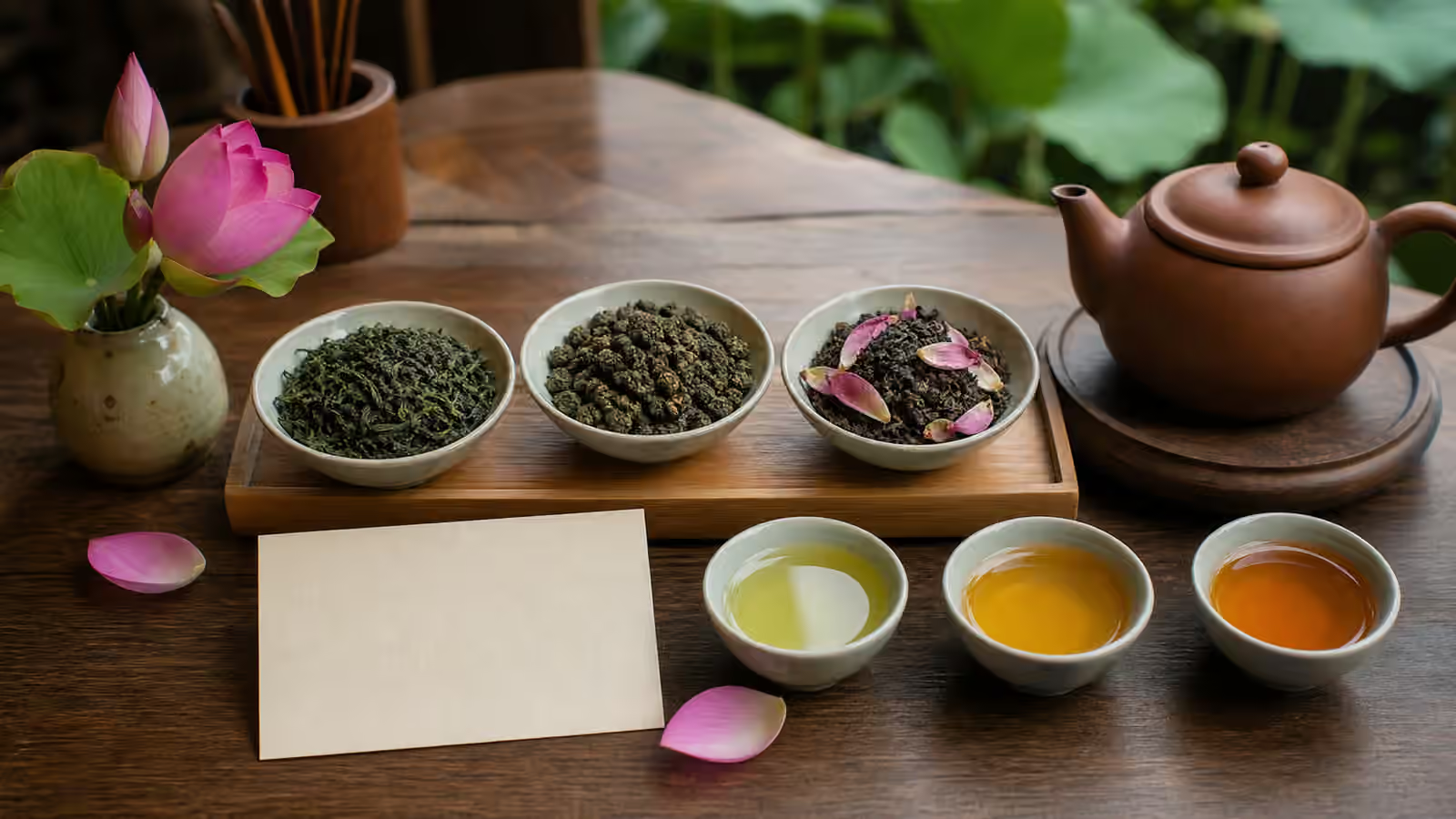
A useful first shelf might include one green tea, one lotus-scented tea, and one oolong or mountain tea sample. That is enough to learn without clutter. Buy small amounts, store scented teas away from quiet leaves, and write a brief note after each session. Tea Storage: Freshness, Light, Air, Heat, and Scent matters especially for lotus tea because aroma can fade or migrate.
Do not chase every famous-sounding place at once. Taste nearby examples. Compare a Vietnamese green tea to a Chinese green tea. Compare a lotus tea to Jasmine Tea: Scenting, Pearls, Blossoms, and Clear Brewing . Compare a Vietnamese oolong to a Taiwanese oolong, then write what actually changed in aroma, body, sweetness, dryness, and finish.
Vietnamese tea becomes clearer when approached through roles. One cup may be everyday and brisk. One may be floral and scented. One may be rolled, aromatic, and patient over several infusions. One may be mountain-grown and hard to classify. Let each one show its job in the cup, and the category stops feeling borrowed.