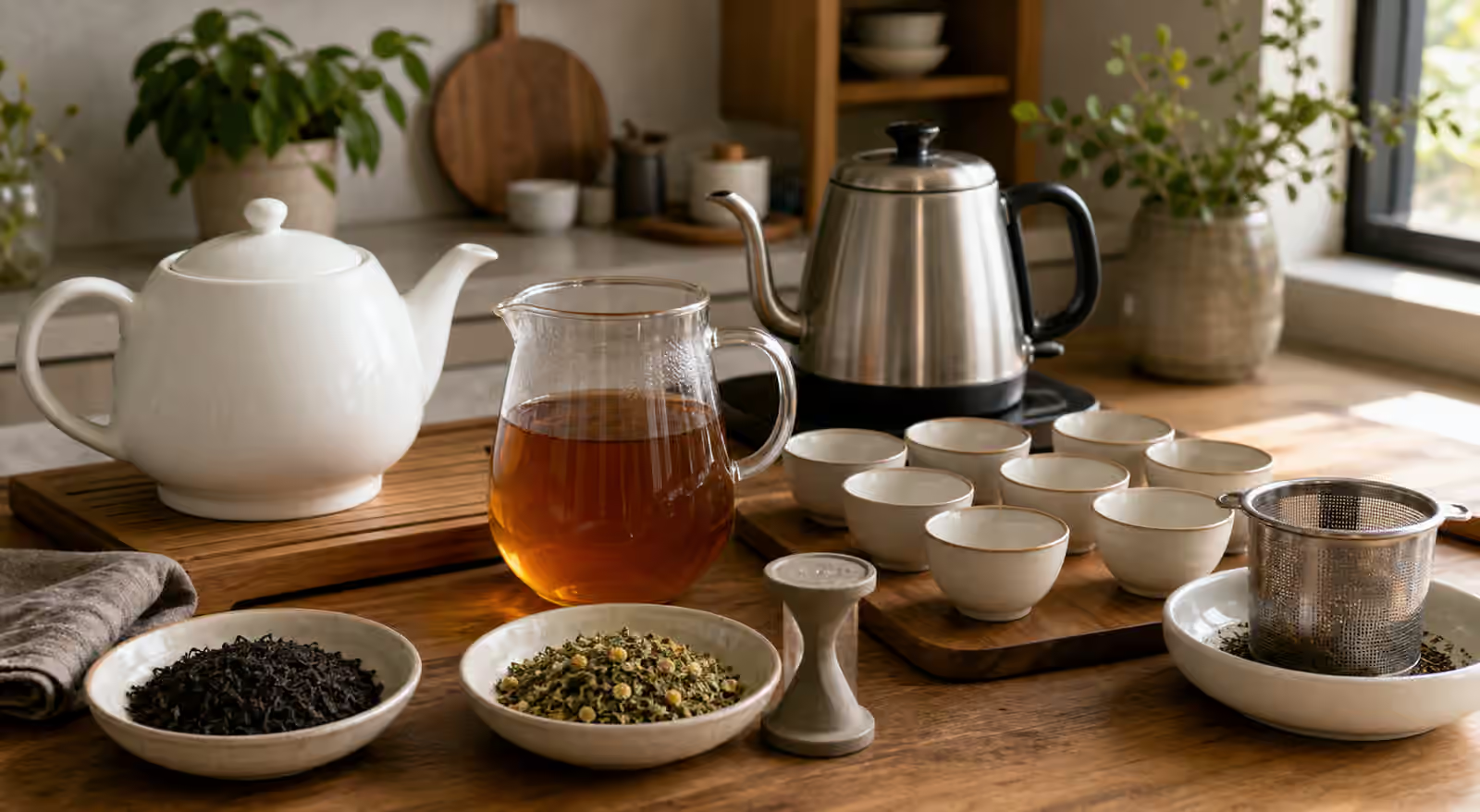
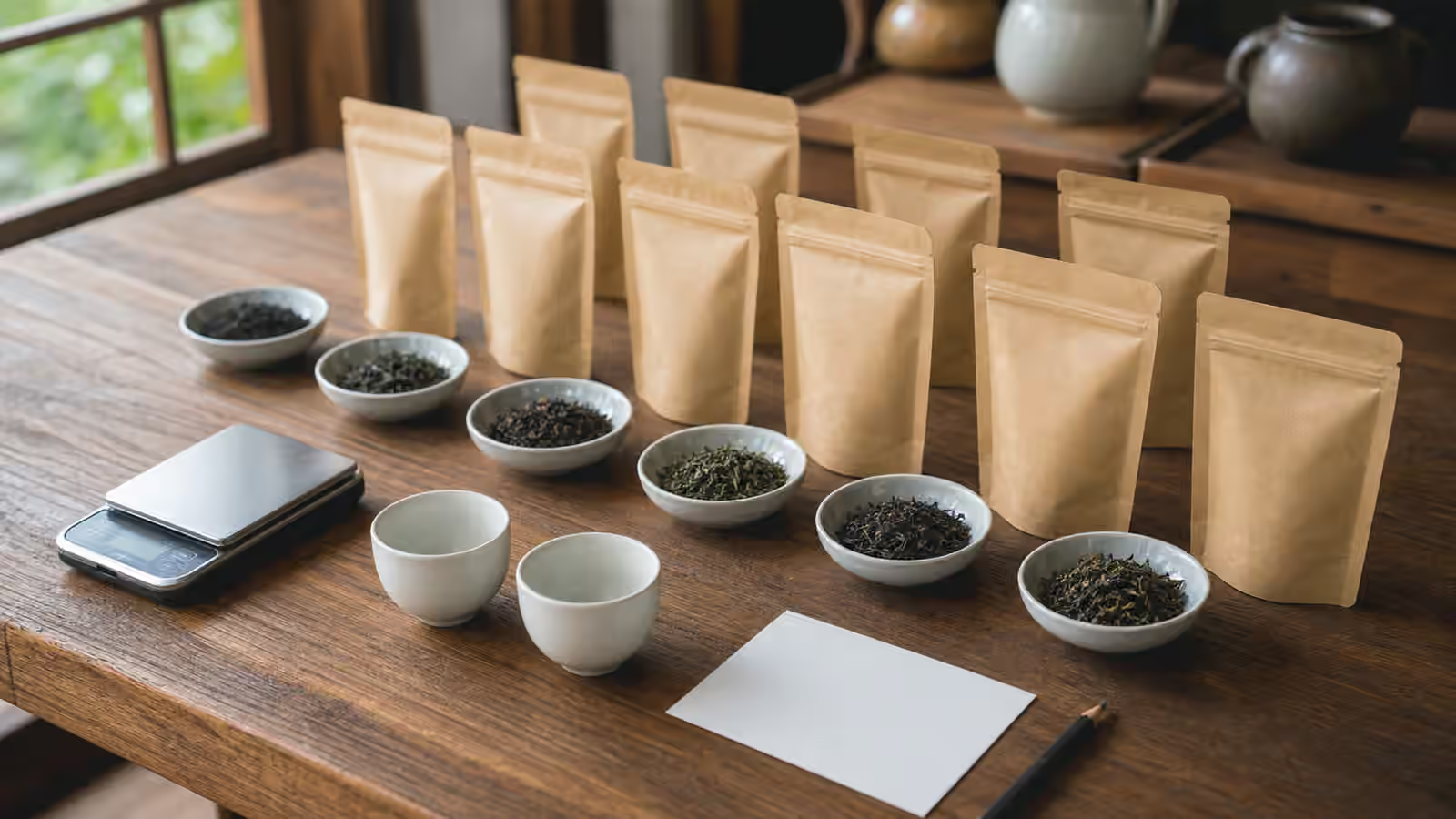
Tea grades and leaf styles can help you predict how a tea will brew, but they are easy to misunderstand. A long string of letters on a black tea packet, a vendor’s praise for whole leaf, or a low price on a box of broken tea can sound like a ranking of worth. In practice, grades are closer to shop-floor language. They describe size, appearance, pluck, sorting, and intended use more than they describe whether a cup will please you.
Why leaf style matters
Tea leaves do not all give flavor to water at the same pace. A large twisted oolong opens slowly. A small broken black tea gives up color and briskness quickly. A tight rolled tea may look small in the spoon and then expand into whole leaves after a few steeps. Silver buds can look luxurious yet brew quietly because they contain more downy bud material and less mature leaf. Flat green teas, needle-shaped white teas, compressed Pu-erh, and tiny fannings each ask for a different hand.
This is why the same spoonful can behave so differently from one tea to another. Leaf size changes surface area. Shape changes how quickly water reaches the interior of the leaf. Processing changes solubility, aroma, and body. A beginner who treats every leaf like a generic ingredient will often blame the tea when the real issue is mismatch. The practical move is to look at the leaf before choosing a recipe, then connect what you see to the habits in Brewing Temperature and Time Without Guesswork .
Whole leaf usually extracts more gradually than broken leaf. That does not automatically make whole leaf better. It means it may give you more room to adjust time, water temperature, and repeat steeping. Broken leaf can be excellent when you want strength, color, and a direct cup, especially in breakfast tea or tea meant for milk. Fannings and dust are tiny particles often used in tea bags because they infuse fast. They can taste flat or harsh when badly handled, but their speed is the point. Judging them by the standards of a slow gaiwan session misses the job they were designed to do.
Grades are local languages
Black tea grades are the most visible source of confusion. Terms such as Orange Pekoe, Flowery Orange Pekoe, Broken Orange Pekoe, and Tippy Golden Flowery Orange Pekoe do not mean orange flavor, and they do not work as a universal score across all tea. They come from sorting systems used for certain orthodox black teas, especially in regions shaped by British tea trade habits. The letters may tell you whether the leaf is whole or broken, whether tips are present, and how carefully the tea was sorted. They will not tell you whether the tea was fresh, well stored, well brewed, or suited to your taste.
Other tea families use different cues. Green tea may be described by cultivar, harvest, shape, region, steaming level, pan firing, shade, or roast. Oolong may be described by oxidation, roast, shape, elevation, cultivar, or place. White tea may emphasize bud proportion and picking standard. Pu-erh may mention raw or ripe processing, compression, region, factory, storage, or age. These are not interchangeable grading systems. A phrase that matters for Darjeeling may be irrelevant for sencha, and a sencha term may say little about a Wuyi oolong.
That is why Tea Buying Without Getting Lost is a useful companion. A good tea description gives enough information to set expectations. It does not need to bury you under codes. If a vendor gives only a fantasy name and no leaf information, you are buying mystery. If a vendor gives so much terminology that you cannot tell how the tea should taste, you may still be buying mystery, just with more decoration.
Whole leaf is not always the goal
The phrase “whole leaf” carries a quiet moral charge in tea shops. It suggests patience, care, and quality. Sometimes that suggestion is fair. A whole leaf oolong that unfurls over several infusions can show aroma, body, and finish in a way a crushed leaf cannot. A careful white tea can be beautiful because the intact buds and leaves preserve a soft structure. Whole leaf also helps you see workmanship. Broken stems, uneven color, and excessive crumbs may reveal rough handling.
But the cup does not become good by staying visually intact. Some excellent teas are intentionally cut, curled, rolled, roasted, compressed, or blended for a particular result. A strong Assam for milk may benefit from smaller leaf because the cup needs brisk extraction. A tea bag can be the right tool for an office mug if the goal is speed and consistency, as Loose Leaf, Tea Bags, and Sachets explains. A rolled oolong may look like pellets, not because it is cheap, but because rolling shapes the oxidation, aroma release, and brewing rhythm.
The better question is whether the leaf style matches the promise. If a delicate green tea is full of dull dust, the cup may turn bitter before it turns sweet. If a tea marketed as a premium whole leaf black tea contains mostly broken fragments and stalk, the description deserves skepticism. If a breakfast blend says it is built for milk and uses smaller leaf to create body, that may be honest. Leaf style becomes useful when it is tied to purpose.
Reading the dry leaf before brewing
Before heating water, spend a few seconds with the dry leaf. Notice size, shape, color, aroma, and consistency. Whole leaves should not all look identical, but the batch should make sense. A green tea may show fresh greens, olive tones, or deep steamed color depending on style. A black tea may show dark twist, golden tips, or copper highlights. A roasted oolong may range from greenish brown to deep charcoal. A stale tea often smells muted, papery, dusty, or like the container it lived in.
Consistency matters more than perfection. A bowl of rolled oolong should not be half tight pearls and half powder. A black tea can contain tips, stems, and varied leaf sizes, but it should not look like floor sweepings unless the style is explicitly a small-particle cut tea. A white tea can look loose and shaggy without being careless. A compressed tea cake may shed fragments at the edge but still contain intact leaves inside. The point is not to become suspicious of every irregularity. The point is to connect appearance to extraction.
Smaller particles usually need less time or less leaf than whole leaves. Dense rolled teas may need a rinse or a slightly longer first steep to open, depending on style. Bud-heavy teas can become thick in aroma but light in body, so pushing them too hard may bring dryness before depth. Broken black tea can turn satisfying quickly, then harsh quickly. If the first cup is wrong, adjust one variable and taste again rather than changing the whole setup.
How grades affect buying
Grades are most useful when comparing nearby teas, not distant ones. If two Assam black teas from the same vendor differ mainly in leaf grade, the grade may help predict body, briskness, price, and milk compatibility. If you compare a tippy Darjeeling, a roasted Tieguanyin, a Japanese sencha, and a white peony, the grade words stop lining up. You are no longer comparing a single ladder. You are comparing different crafts.
Price can follow appearance, but not always in a tidy way. Labor-intensive picking, careful sorting, rare origin, low yield, fashionable reputation, and shipping all shape price. Broken leaf may be cheaper because sorting and appearance are less prized, or because it is made for a different market. Whole leaf may be expensive because it is genuinely careful, or because it is visually impressive. Samples protect you from both mistakes. A small amount brewed two ways teaches more than a large tin bought because the grade sounded important.
Storage also changes the meaning of grade. A carefully sorted tea that sat in light, heat, or kitchen humidity can lose to a humbler tea kept airtight and fresh. Scented teas can contaminate quiet leaves, and roasted teas can fade in a different way from green teas. The advice in Tea Storage matters because grade describes what the tea was at sorting. Your cup reflects what it is now.
Let the cup finish the argument
After reading the leaf, brew plainly and taste without trying to prove the label right. Notice whether aroma matches appearance. Notice whether body arrives quickly or slowly. Notice whether bitterness appears before sweetness has a chance. A broken breakfast tea may do exactly what it should by giving a brisk, dark cup in a few minutes. A whole leaf oolong may need several short steeps before its best aroma appears. A bud-heavy white tea may never become muscular, and that may be its charm.
Tea grades should make you calmer, not more anxious. They give clues about brewing speed, likely body, sorting, and intended use. They can help you ask better questions when buying, and they can stop you from treating every tea with the same recipe. They cannot replace tasting. The most useful standard is still ordinary and strict: does the leaf style make sense, does the brew taste clean, and can you repeat the cup when you want it again?