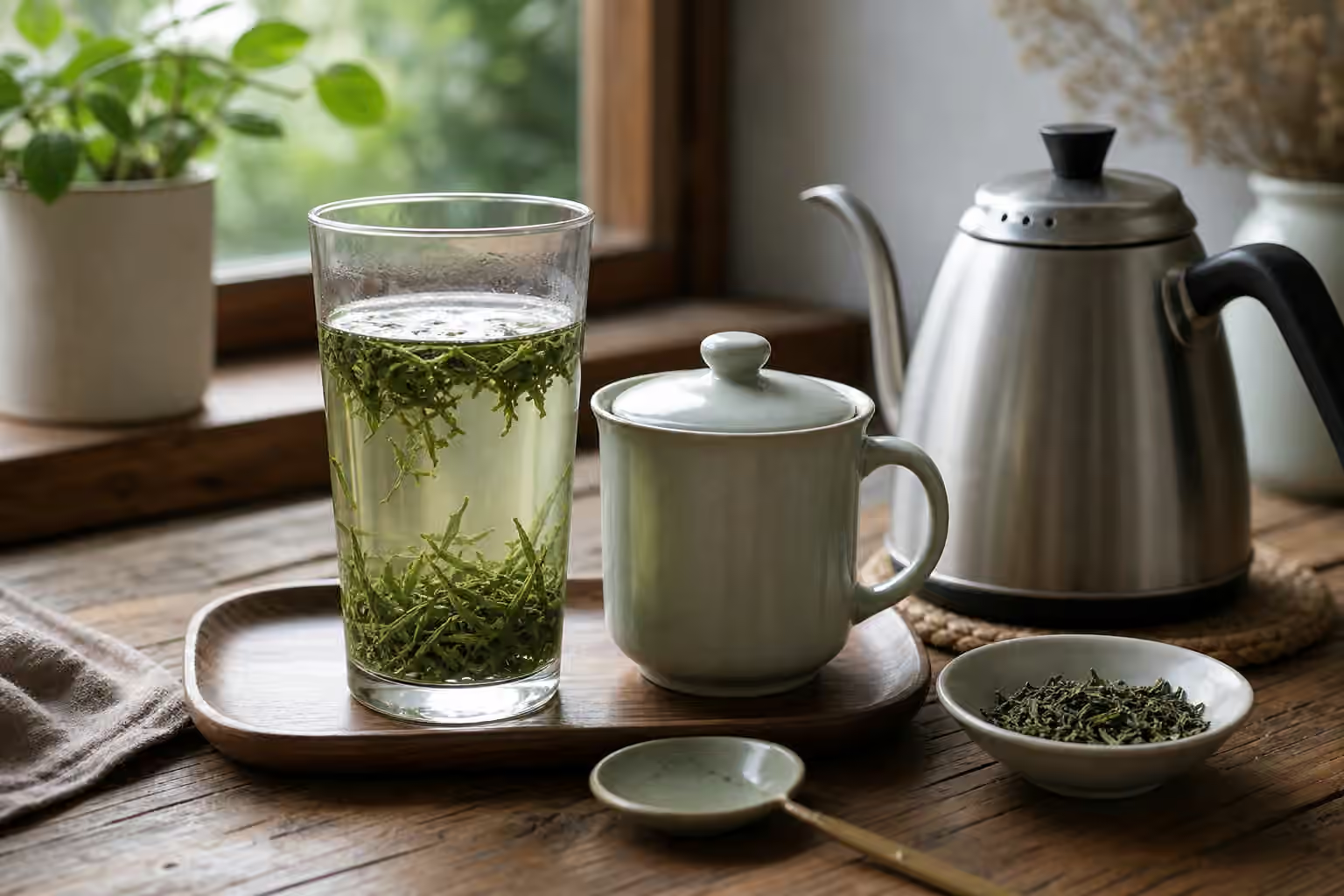
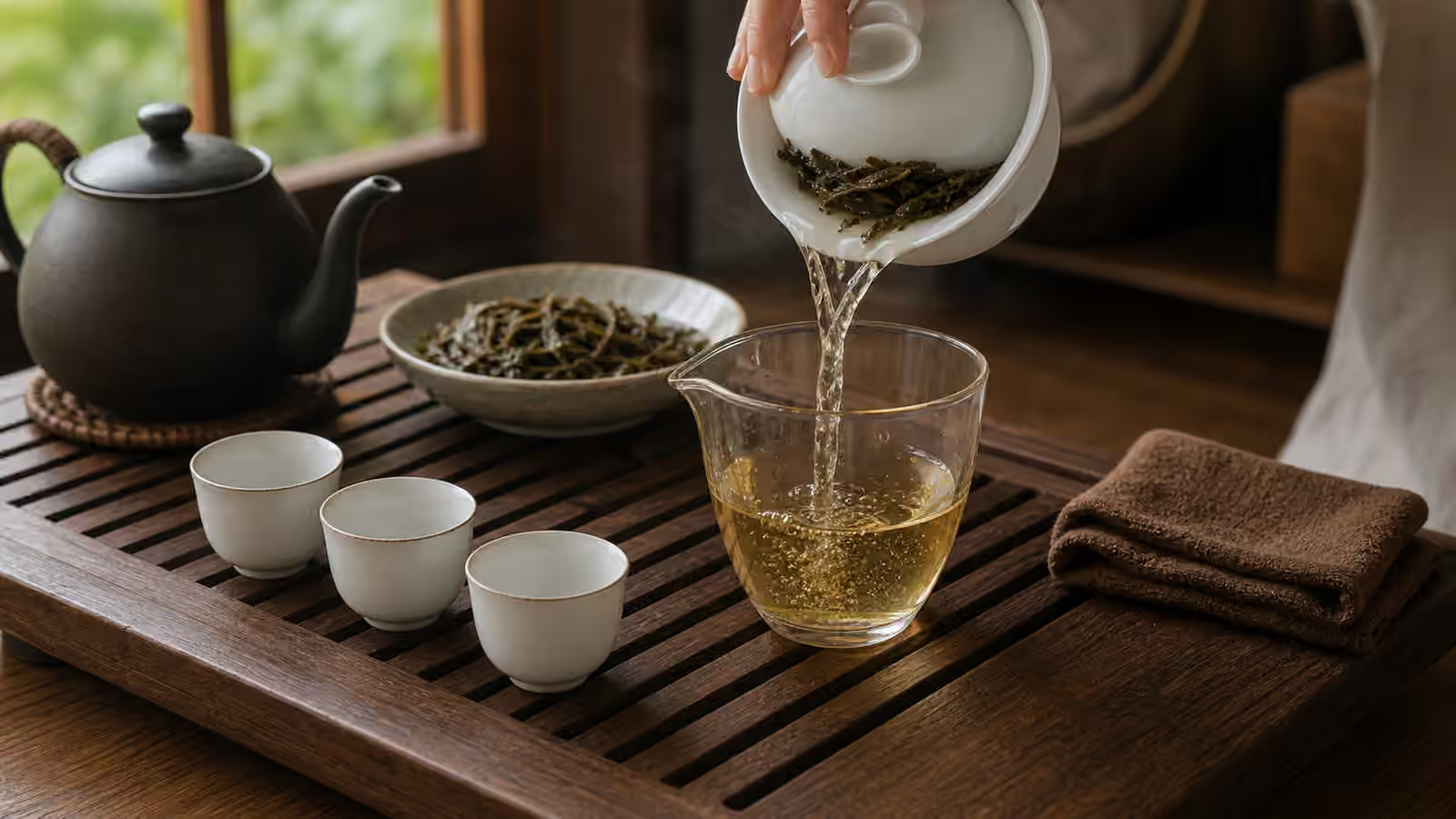
The vessel you brew in does less than the marketing suggests and more than beginners expect. It will not turn ordinary leaves into extraordinary tea, but the right one makes good tea easy to repeat and the wrong one fights you on every cup. What separates the useful vessels from the frustrating ones comes down to three practical things: whether the leaves have room to open, whether you can separate leaf from water when the steep is done, and whether the thing is a pleasure or a chore to clean.

Room to open is the whole game
Dry tea leaves are compact; brewed ones can swell to several times their size, and they need space to do it. When leaves are crammed into a tiny mesh ball or a stuffed sachet, the water cannot circulate around them, and you get a weak, uneven cup no matter how carefully you measured your temperature and time. This single fact — leaves need room — explains why the humble basket infuser outperforms the cramped tea ball that so many people start with. If you take only one idea from this guide, let it be that whatever you brew in should give the leaves space to unfurl.
That is also why the shape of a vessel matters. A wide, roomy pot lets leaves tumble and expand; a narrow one restricts them. And it is why simply dropping loose leaves straight into a mug or pot and pouring around them, then straining as you drink, often beats a fussy infuser: nothing constrains the leaves at all.
The everyday teapot
A ceramic or glass teapot is the workhorse for making several cups at once, and for most people it is the right first serious vessel. Ceramic holds heat well, which suits black tea, roasted oolong, and herbal infusions that want to stay hot through a longer steep. Glass shows off the color of the liquor and the dance of the leaves, which is its own quiet pleasure and genuinely useful when you are learning to judge strength by eye. The main thing to check in a teapot is the strainer between the body and the spout: a wide, unobstructed opening lets whole leaves brew freely and pours cleanly, while a tiny built-in hole clogs and dribbles. A teapot excels when you want to brew once and pour a few cups, which is the western style of brewing described in the western versus gongfu comparison .
The gaiwan
A gaiwan is a lidded bowl with a saucer, and it is the most versatile vessel in the tea world once you get past its slight learning curve. You put leaves in the bowl, add water, and use the lid held at an angle to hold the leaves back as you pour the liquid off. Because it has no absorbent walls and no fixed strainer, it brews any type of tea neutrally and washes clean in a second, which makes it ideal for tasting many teas without one flavoring the next. It is the natural home for the short, repeated infusions of gongfu brewing , where you steep briefly and pour completely again and again. The one skill it demands is the pour itself, holding a hot rim without scalding your fingers, and the gaiwan pouring and handling guide walks through the grip that makes it painless.
The kyusu, for Japanese greens
A kyusu is a Japanese side-handled teapot built for one job and built well: brewing green teas like sencha and gyokuro. Its defining feature is a very fine mesh strainer, often a broad ceramic or metal screen, that copes with the small, needle-like particles Japanese greens shed, particles that would slip straight through a coarse strainer and cloud your cup. The side handle is not decoration; it suits the low temperatures and quick, complete pours these teas need. If Japanese green tea is where your interest lies, a kyusu makes the whole ritual smoother, as the kyusu brewing guide explains, and it is a case where a specialized vessel genuinely earns its place.
The basket infuser and its cousins
For a single mug with the least fuss, a large basket infuser is hard to beat. It sits in the cup, holds a generous amount of leaf with room to spare, lifts out cleanly when the steep is done, and rinses in seconds. It is the sensible default for office and everyday brewing, and the reason it beats the small mesh ball comes back to space: the basket gives leaves the room the ball denies them. Fine mesh balls, novelty silicone infusers, and paper filters all work in a pinch, but they either cramp the leaves or trap fine particles that are a nuisance to clean, so treat them as travel compromises rather than daily tools.
Matching the vessel to the tea
The honest advice is to own one vessel and learn it before buying more. A gaiwan or a roomy basket infuser will brew nearly anything you are likely to drink, and mastery of one tool teaches you far more than a cabinet of specialized gear used carelessly. Add a second vessel only when a specific tea keeps asking for it — a kyusu once you fall for Japanese greens, an unglazed clay pot once you settle into one style of dark tea or roasted oolong and want to give it a dedicated home. Clay is the one material that is not neutral; its porous walls slowly take on the character of what you brew, which is a feature when you commit to a single tea type and a drawback when you want to taste widely, so it is a later purchase rather than a first one.
Whatever you choose, keeping it clean protects the flavor of the next cup, and the teaware cleaning guide covers how to do that without harsh soap that lingers. A vessel is a tool for making a habit easier, nothing more; the best one is simply the one you reach for without thinking, that gives your leaves room, and that you never dread washing.