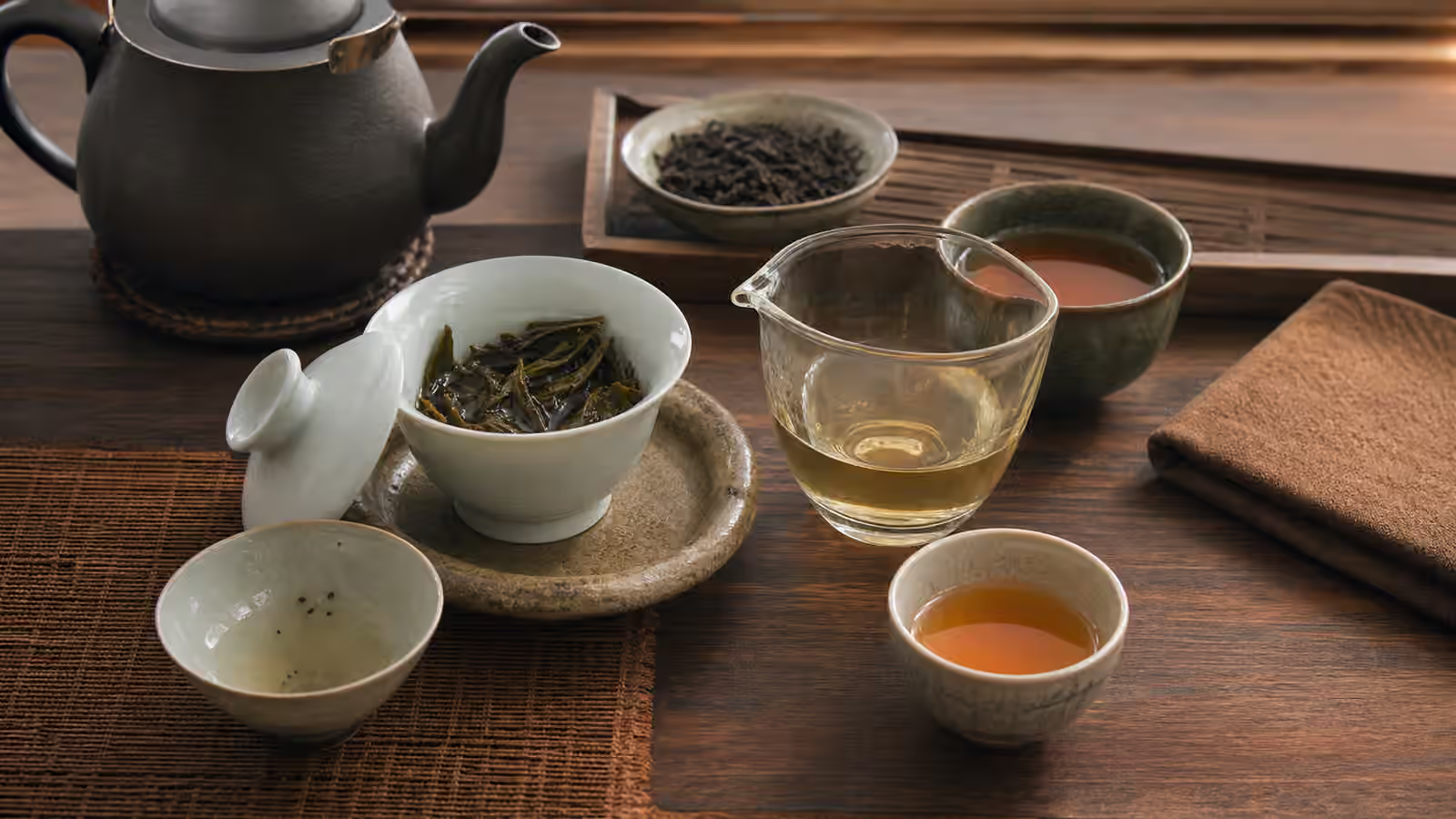
A gaiwan looks simple: bowl, lid, saucer. That simplicity is why it is useful and why it can feel awkward at first. The same lid that traps aroma also becomes the strainer. The same bowl that shows the leaf also asks your fingers to stay near hot porcelain. The same fast pour that makes repeated infusions lively can turn clumsy if the water level is too high, the lid gap is wrong, or the tea leaves clog the opening. A gaiwan becomes easier when you stop treating it as ceremonial equipment and start reading it as a small, responsive brewing tool.
What the gaiwan does well
A gaiwan is good at revealing tea. It gives leaves room to open, lets you smell the lid and wet leaf, and makes short infusions easy to repeat. The wide opening cools water faster than a tall closed pot, which can be helpful for many green oolongs, white teas, and delicate black teas. The lid lets you control the pour without committing to a built-in filter. You can see what is happening instead of guessing inside a dark teapot.
This is why the gaiwan belongs near Gongfu Tea for Beginners , but it is not limited to formal gongfu practice. You can use a gaiwan for quiet tasting, comparing samples, or brewing a small amount of tea at a desk. It is also a useful teacher. If the cup turns bitter, you can see whether the leaves were crowded. If the pour is slow, you can see whether the leaf shape blocked the gap. If the aroma changes across infusions, the lid captures that change clearly.
The gaiwan is less good at multitasking. A large mug infuser is easier when you want to walk away. A teapot is friendlier when serving several people. A travel brewer is better away from a stable table. Teapots, Gaiwans, Kyusu, and Infusers covers those tradeoffs. A gaiwan shines when you are willing to stay with the brew for a few short rounds.
Size matters more than ornament
Beginners often buy a gaiwan that is too large. A big bowl looks generous, but it asks for more leaf, more water, and a heavier pour. When full, it can feel hot and unstable. A small or medium gaiwan is usually easier because the hand can control it without strain, and the tea can be poured quickly before overextracting. The right size is the one you can empty cleanly into a cup or sharing pitcher without hesitation.
Porcelain is a practical first material because it is neutral, easy to clean, and shows the color of the liquor. Thin porcelain heats quickly and can feel sharp in the hand if overfilled. Thick porcelain may feel steadier but can pour more slowly. Glass shows the leaves beautifully but can become slippery and hot. Unglazed clay may hold aroma and is better saved for drinkers who already know which teas they want to dedicate to it.
The saucer is optional in practice. Some people use it as part of the grip, especially with hot bowls. Others lift only the bowl and lid. What matters is control. If the saucer wobbles, leave it on the table. If the bowl is too hot to touch at the rim, lower the fill line and let the porcelain cool for a moment before pouring. There is no prize for handling uncomfortable heat.
The lid is the strainer
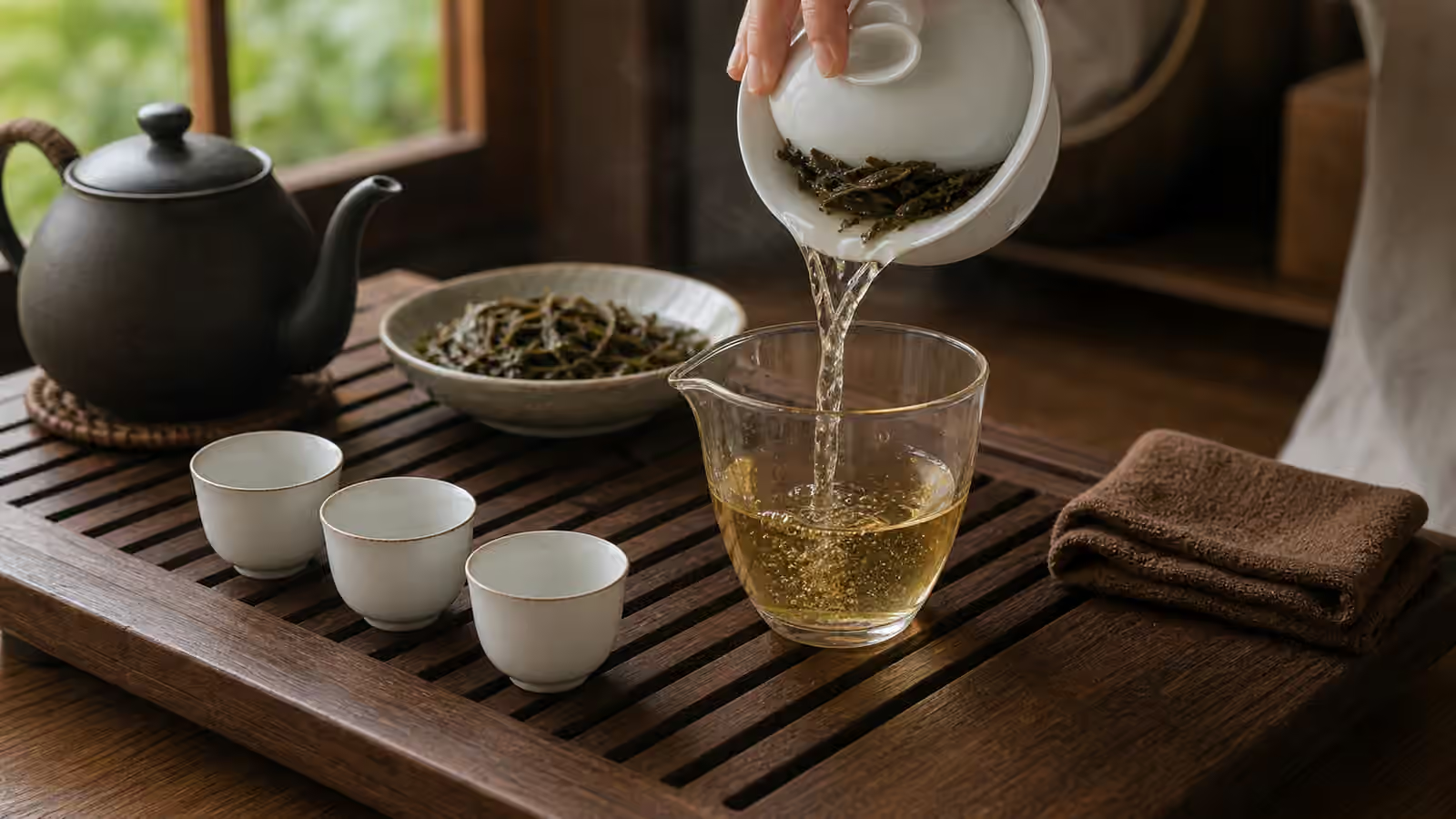
The core gaiwan skill is lid angle. Slide the lid slightly off center to create a narrow crescent gap between lid and bowl. That gap should be wide enough for liquid to escape and narrow enough to hold back the leaves. If the gap is too small, the pour dribbles and the tea keeps steeping while you struggle. If the gap is too wide, leaves slide into the pitcher or cup. The right gap changes with leaf shape. Rolled oolong may need a wider opening after the leaves expand. Needle-like green tea or broken leaf may need a tighter one.
Pour decisively once the lid is set. A hesitant pour is not gentler; it simply leaves water on the leaves longer. Tilt the gaiwan toward the pitcher or cup and let the stream leave cleanly. If you are brewing gongfu style, empty the gaiwan fully so the leaves do not sit in a hidden puddle. A little retained moisture is inevitable, but a pool of tea at the bottom can make the next infusion harsh before it begins.
This connects directly to Western Brewing vs. Gongfu Brewing . Western brewing often uses less leaf and more time, so a slow pour matters less. Gongfu brewing uses more leaf and shorter timing, so pour speed becomes part of the recipe. The gaiwan makes that relationship visible.
Fill line controls heat and spilling
Many gaiwan problems start with too much water. Filling to the brim leaves no cool rim to grip and no room for the lid to move. It also creates a messy pour because the first tilt sends tea over the edge before the stream forms. A slightly lower fill line is calmer. The leaves still infuse, the lid still traps aroma, and your fingers have more distance from the hottest part of the bowl.
Leaf amount also affects the fill line. Tightly rolled oolong expands dramatically. A gaiwan that looked half empty at first may be crowded by the third infusion. Long white tea leaves can spring against the lid and interfere with pouring. Broken leaves can pack against the gap. Leave physical room for the tea you are brewing, not just visual room for the dry leaf.
If the gaiwan feels difficult, practice with cooler water and a forgiving tea. Roasted oolong, hojicha, or an everyday black tea can teach the motion without punishing every second. Very hot water and tiny broken leaves are a harder lesson. The point is to learn the pour before adding delicate timing pressure.
Use a sharing pitcher when it helps
A fairness pitcher, also called a cha hai or sharing pitcher, is not decorative clutter. It solves a practical problem. Tea gets stronger while it pours, so the first cup and last cup can taste different if you pour directly into several cups. Emptying the gaiwan into a pitcher first creates one even infusion. Then you can divide that tea among cups without rushing.
The pitcher also gives you a wider target. Pouring from a gaiwan into a tiny cup can be satisfying once you have the motion, but it is needlessly stressful at first. A clear pitcher lets you see color, volume, and clarity. It also gives you a moment to smell the wet leaves before drinking. For tasting several teas, the pitcher keeps the table organized and the cups more consistent.
When serving one person, a pitcher is still useful if the gaiwan holds more than one small cup. If you drink directly from one cup while the rest of the infusion sits in the gaiwan, the second pour will be stronger. Empty first, drink second. That small discipline improves repeatability more than many expensive tools.
Match tea to the tool
The gaiwan is friendly to many teas, but not equally friendly to all leaf shapes. Rolled oolong is a classic match because the leaves open over repeated infusions and the gaiwan lets you watch that change. White tea can work beautifully if the gaiwan is large enough for airy leaves. Black tea can be excellent in short infusions when you want aroma without a heavy tannic cup. Pu-erh can be easy to manage because the lid strains chunks and opened leaves well.
Small broken tea, dusty tea bags emptied into a gaiwan, and blends with fine spices can be annoying because particles escape through the lid gap. Very delicate green tea may prefer a kyusu or open cooling approach if heat control is the main concern. Matcha does not belong in a gaiwan because it is suspended powder, not infused leaf; Matcha Tools explains the whisking tools that suit it better.
Cleaning is straightforward. Rinse the gaiwan soon after use, avoid soap that leaves scent, and let the pieces dry separately. If the rim feels slippery or the lid smells like old tea, give it more careful attention. Cleaning and Caring for Teaware matters because a neutral gaiwan should show the tea you brewed today, not yesterday’s roasted oolong or jasmine.
Make the motion ordinary
A gaiwan becomes comfortable through repetition, not performance. Set the lid gap, lift with a stable grip, pour into a forgiving target, and empty the bowl. Keep the fill line lower than pride wants it. Choose a tea that gives you time to learn. After a few sessions, the awkwardness fades and the gaiwan starts doing what it was meant to do: make leaf, water, aroma, and timing easy to observe.
The best sign is not a dramatic pour. It is a clean infusion that tastes like the tea rather than the struggle. When the tool disappears into the rhythm, the gaiwan has earned its place on the table.