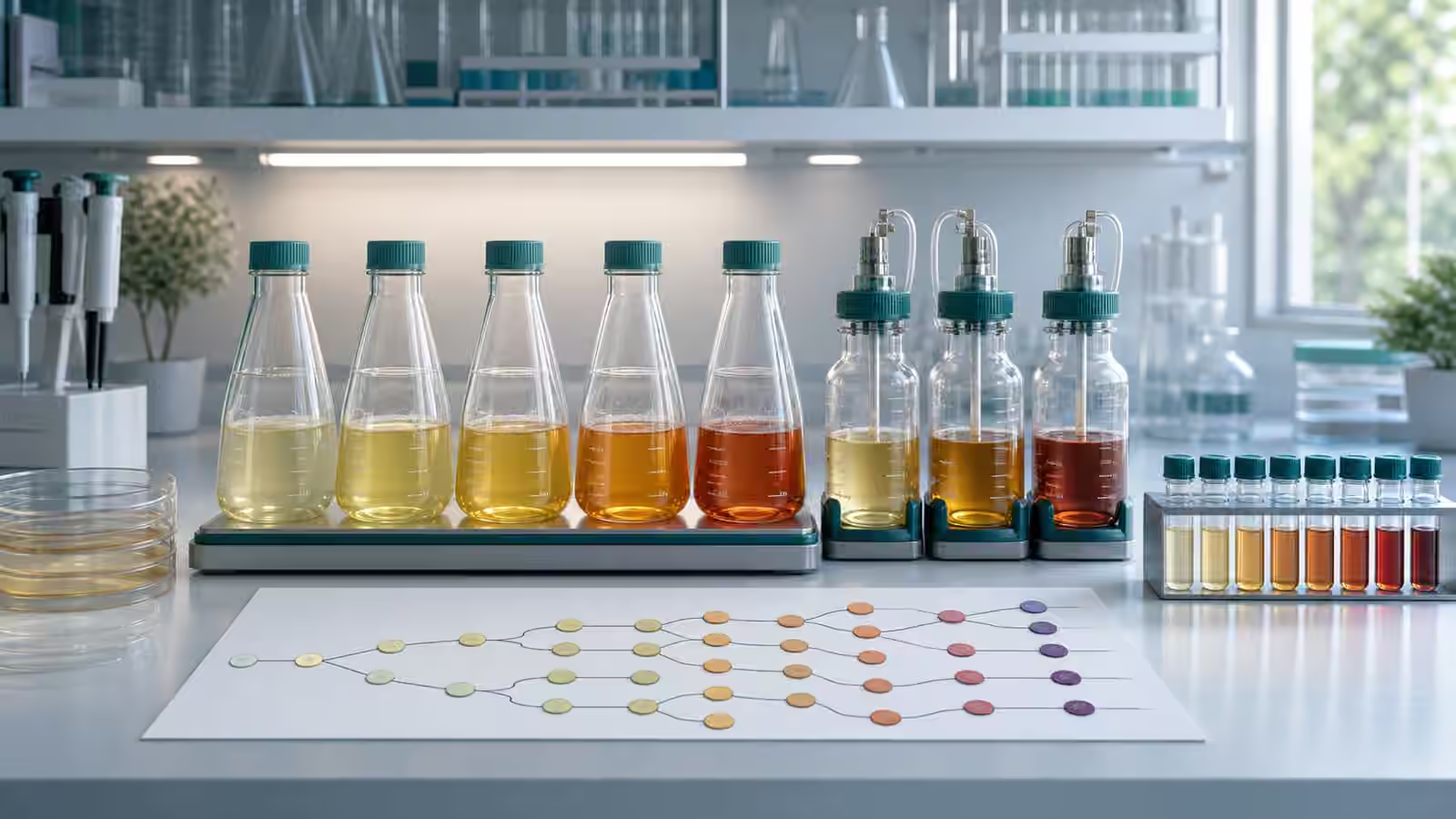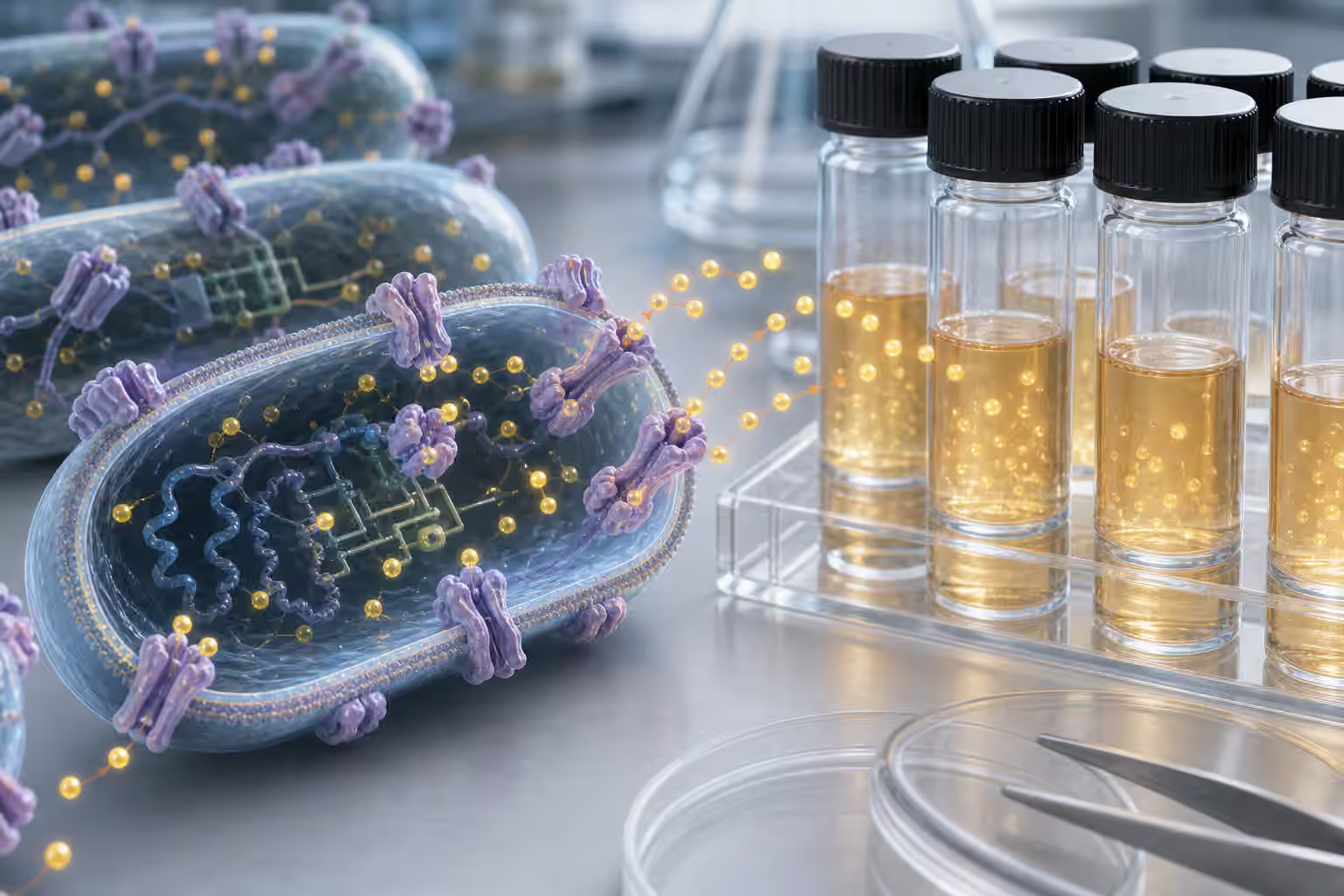
A pathway diagram usually draws molecules as if they move wherever the designer needs them. Feedstock enters. Intermediates pass from one enzyme to the next. Product leaves the cell or appears in a recovery stream. The arrows are tidy because the drawing is trying to explain chemistry. The cell is less tidy. Every useful molecule has to exist somewhere, cross some boundary, avoid the wrong reaction, and survive long enough to be measured. A related reference is Bacterial membrane transporter systems for aromatic compounds: Regulation, engineering, and biotechnological applications .
Transporters and membranes are the hidden logistics of synthetic biology. They decide which molecules enter, which molecules leave, which compounds remain trapped, which products become toxic, and which compartments can support a reaction. A cell can contain a complete engineered pathway and still disappoint because the substrate does not enter efficiently, an intermediate stays in the wrong place, a product damages the membrane, or export is too slow for the intended process.
This guide connects Metabolic Pathway Design with Secretion and Export Pathways . Pathway design asks what chemistry should happen. Secretion and export ask where the product should end up. Transporter and membrane engineering sits between them, where chemistry becomes traffic.
Membranes are active infrastructure
A membrane is not a plastic bag around the cell. It is an active boundary that maintains gradients, hosts proteins, shapes energy flow, separates incompatible chemistry, and helps the organism decide what belongs inside. Bacteria, yeast, algae, plant cells, mammalian cells, and organelles all present different boundary problems. A bacterial cell envelope is not a yeast secretory pathway. A chloroplast membrane is not a mammalian endoplasmic reticulum. The membrane system is part of the chassis.
That is why Chassis Organisms matters for transport. A host may look attractive because it grows quickly or has good genetic tools, but the product may need a transporter that host does not naturally provide. Another host may grow more slowly but already tolerate and move the target molecule better. The useful host is not simply the organism that accepts the construct. It is the organism whose boundaries fit the job.
Membranes also impose physical limits. Hydrophobic products may accumulate in lipid layers and change membrane behavior. Charged molecules may struggle to cross without help. Large proteins may need secretion machinery rather than ordinary transport. Some products leak naturally, some require active export, and some must stay inside until recovery. Each case changes both strain design and process design.
Uptake can be the first bottleneck
Synthetic biology often focuses on what a cell makes, but the cell also has to take in what the process feeds it. A familiar sugar may enter through native transport systems. A less familiar carbon source may need a different transporter, pretreatment, adaptation, or host choice. A side stream may contain useful nutrients alongside inhibitors. A gas feedstock may require a completely different physiological strategy from soluble sugar.
Biomanufacturing Feedstocks explains why inputs shape claims and economics. Transport makes that lesson cellular. If a feedstock looks inexpensive on a supply-chain chart but enters the cell poorly, the apparent advantage may disappear. If a transporter brings in the desired substrate but also increases sensitivity to impurities, the process may become unstable. If uptake depends on growth phase or oxygen state, a small flask result may not predict a longer run.
Uptake is also a measurement problem. Low product formation may mean the pathway is weak, but it may also mean the substrate never reached the pathway at the right rate. A team that measures only final product can miss this. A better investigation asks where the carbon, nitrogen, energy, and cofactors actually went.
Export can protect the cell
Products are not automatically harmless to the organisms that make them. A molecule may disrupt membranes, alter pH, drain cofactors, inhibit enzymes, damage proteins, or interfere with growth. Export can reduce that stress by moving the product away from sensitive internal chemistry. In some projects, improving export matters as much as improving the pathway enzyme.
This is one reason transporters appear in Adaptive Laboratory Evolution . When cells are selected under product stress, evolved lineages may reveal mutations in transport, membrane composition, regulation, or stress response. The cell may solve tolerance in a way the designer did not predict. That does not make rational design useless. It shows that the membrane is often where the cell negotiates with the product.
Export can also improve recovery. If a product appears outside the cell, downstream processing may avoid cell disruption and some debris. But export is not a free purification step. The broth may still contain host molecules, media components, degraded product, salts, byproducts, and cells. Downstream Processing remains part of the design. Moving the product out helps only if the recovered product becomes easier to prove, purify, stabilize, and use.
More transport is not always better
It is tempting to imagine transporters as open doors. If a product should leave, add more export. If a substrate should enter, add more uptake. Biology rarely rewards such simple thinking. Transport can spend energy, disturb gradients, leak valuable intermediates, or import unwanted compounds. A transporter may accept several related molecules rather than the one the designer has in mind. It may help in one condition and harm in another.
The membrane also has limited capacity. Transport proteins occupy space, require folding and insertion, and can stress quality-control systems. A poorly expressed transporter may become a burden without moving enough product to matter. An overactive transporter may change the internal concentration of a metabolite that the pathway still needs. A product exported too early may starve a later reaction that was supposed to use it.
This is where transport connects to Cellular Burden and Resource Allocation . The cell’s budget is not only ribosomes and energy for pathway enzymes. It includes membrane area, insertion machinery, ion gradients, and repair. A membrane engineering strategy that makes the product chart look better for one day may fail over longer culture if the host cannot afford the boundary work.
Compartment boundaries can be design tools
Not every transport question is about the outer membrane. Eukaryotic cells contain compartments with different chemistry. A yeast cell, plant cell, or mammalian cell may route proteins and metabolites through the endoplasmic reticulum, Golgi, vacuole, mitochondria, peroxisomes, chloroplasts, or other local environments. Those compartments can be useful because some reactions need a particular redox state, pH, cofactor supply, membrane context, or folding environment.
Protein Expression and Folding explains why a product’s workplace matters. A transporter or targeting signal can place the product in a better workplace, but it can also create new constraints. A compound made in one compartment may need to reach another. A precursor may cross easily while the final product does not. A pathway split across compartments may reduce toxicity or improve folding, but only if the traffic between compartments keeps up.
Compartment design can make synthetic biology more precise, but it also makes measurement harder. Detecting a product in whole-cell extract may not reveal where it accumulated. A strong signal may hide local depletion of a precursor. A weak signal may reflect poor transport rather than poor enzyme activity. The more compartments matter, the more the experiment needs localization, time course, and controls.
Membrane engineering changes scale-up
Transport behavior can shift when a process scales. Oxygen transfer, pH, mixing, feed rate, product concentration, foam, shear, and temperature gradients all influence membranes and transport. A product that diffuses acceptably in a small vessel may accumulate near cells in a larger one. A transporter that works during early growth may become stressed during production. A feed that enters well in a rich lab medium may behave differently in a cost-conscious process medium.
Bioprocess Scale-Up is therefore part of the transporter story. The membrane is where the production strain meets the process. It feels oxygen availability, product stress, solvent stress, osmotic pressure, and feed pulses. If the process creates conditions the membrane cannot tolerate, the pathway design may be blamed for a problem that belongs partly to the vessel.
Transporters and membrane engineering remind synthetic biology that cells are spatial systems. Molecules are not only made. They are admitted, held, moved, excluded, modified, and recovered. A design that ignores traffic can look perfect in sequence and fail in culture. A design that respects traffic may be less dramatic on paper, but more useful in practice.
The mature question is not simply which enzyme makes the product. It is how the product moves through the living boundary system from feedstock to measurement to recovery, and how much stress the cell pays along the way.