Synthetic biology can make impressive small things: a flask with a new molecule, a plate with a brighter signal, a protein that folds better than expected, a prototype material with surprising texture. Those moments matter because they show what biology might be able to do. They do not yet show whether the idea can become a product, a process, or a defensible environmental claim. A related reference is Integrating enzyme fermentation in lignocellulosic ethanol production: life-cycle assessment and techno-economic analysis .
That is where techno-economic and life-cycle thinking enter the story. Techno-economic analysis asks whether the process could make sense as a manufacturing system. Life-cycle thinking asks what the broader material and environmental consequences look like when inputs, energy, water, waste, transport, use, and end of life are included. Neither exercise is a magic spreadsheet. Both are ways of forcing the biological idea to meet the physical world.
This guide is educational, not financial, legal, or regulatory advice. The useful habit is simple: when a synthetic biology claim sounds promising, ask what would have to be true about the process and the system around it for that promise to hold.
The Biology Is Only One Cost Center
Early synthetic biology stories often focus on the organism. A microbe can make a chemical. A yeast strain can produce a food protein. A cell-free system can express a useful molecule. A pathway can turn sugar into a material precursor. The organism is central, but it is not the whole cost structure.
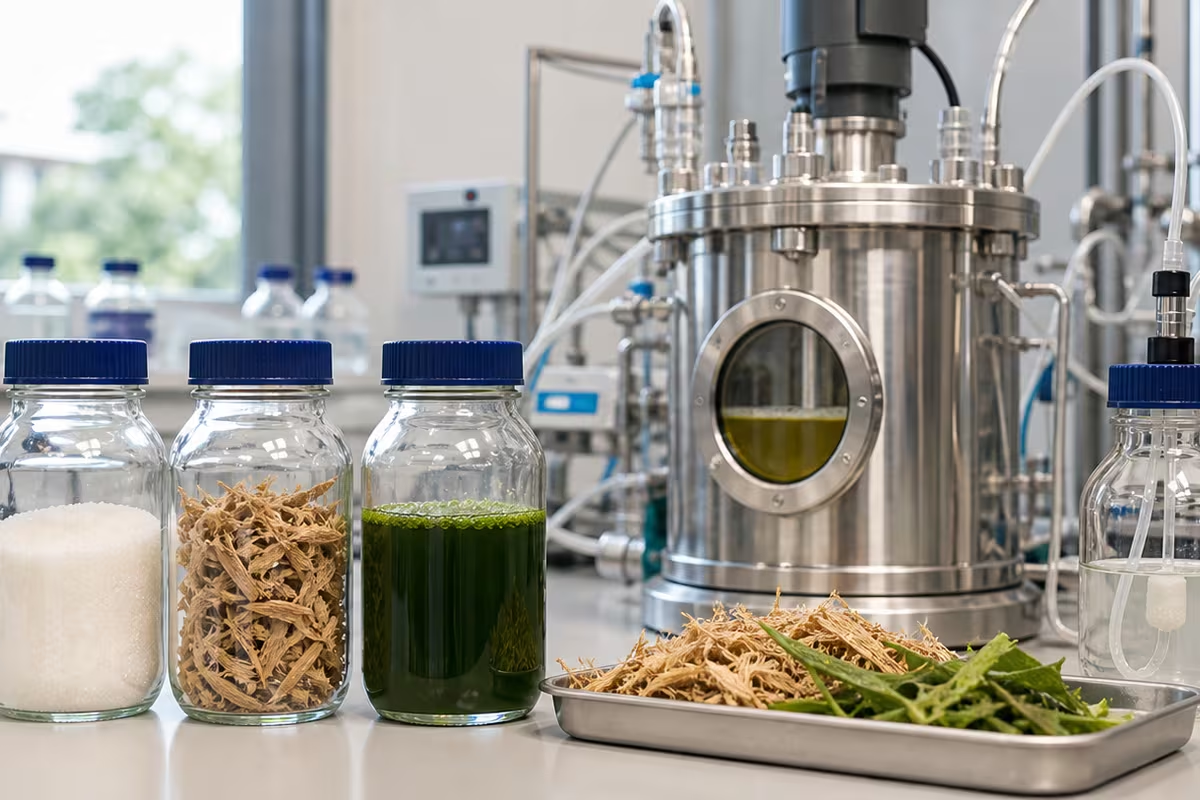
A process also needs feedstock, media, water, energy, equipment, cleaning, labor, quality testing, contamination control, downstream processing, waste treatment, storage, formulation, packaging, transportation, and sometimes cold chain or special handling. A strain that performs beautifully in one metric can still fail if the rest of the system is expensive or fragile.
Bioprocess Scale-Up explains why a flask is not a factory. Techno-economic thinking extends that lesson into numbers. It asks which parts of the process dominate cost, which assumptions matter most, and which biological improvements would actually change the outcome.
Yield, Titer, Rate, and Productivity Tell Different Stories
Four words appear often in biomanufacturing conversations: yield, titer, rate, and productivity. They are related, but they do not mean the same thing. Yield asks how efficiently input becomes product. Titer asks how much product accumulates in a given volume. Rate asks how quickly production happens. Productivity often combines amount and time in a way that matters for equipment use.
These measures can pull in different directions. A process may have a good yield but low titer, which means the product is dilute and expensive to recover. Another process may reach a high titer but take too long, tying up tanks. A fast process may generate impurities or stress the cells. A strain may look efficient in a clean bench test and weaker when real feedstocks, oxygen transfer, or downstream constraints appear.
The point is not to worship any one number. It is to ask which number limits the process. For some products, purification cost makes titer especially important. For others, feedstock price makes yield decisive. For a facility with expensive equipment, time in the tank may matter strongly. A biological improvement is valuable when it moves the actual bottleneck, not only when it improves a graph.
Feedstock Choices Shape Both Cost and Claims
Synthetic biology processes have to eat. The input may be refined sugar, plant oils, glycerol, agricultural side streams, methane, methanol, carbon dioxide with an energy source, or another material flow. Biomanufacturing Feedstocks follows that supply story in detail, and Media Development in Fermentation brings it into the vessel.
For techno-economic analysis, feedstock is often one of the first realities. A cheap input may be inconsistent. A consistent input may be expensive. A local side stream may be useful at one plant and unavailable at another. A carbon source may support good growth but create byproducts. A gas feed may sound elegant but require energy, transfer equipment, and safety controls.
For life-cycle thinking, the feedstock also carries an environmental history. Land use, fertilizer, water, transport, energy, competing uses, and displaced products all matter. Calling an input renewable, waste-based, bio-based, or carbon-derived does not settle the question. The full comparison depends on what was used, what else it could have become, and what conventional route the new process claims to improve.
Downstream Processing Can Decide the Process
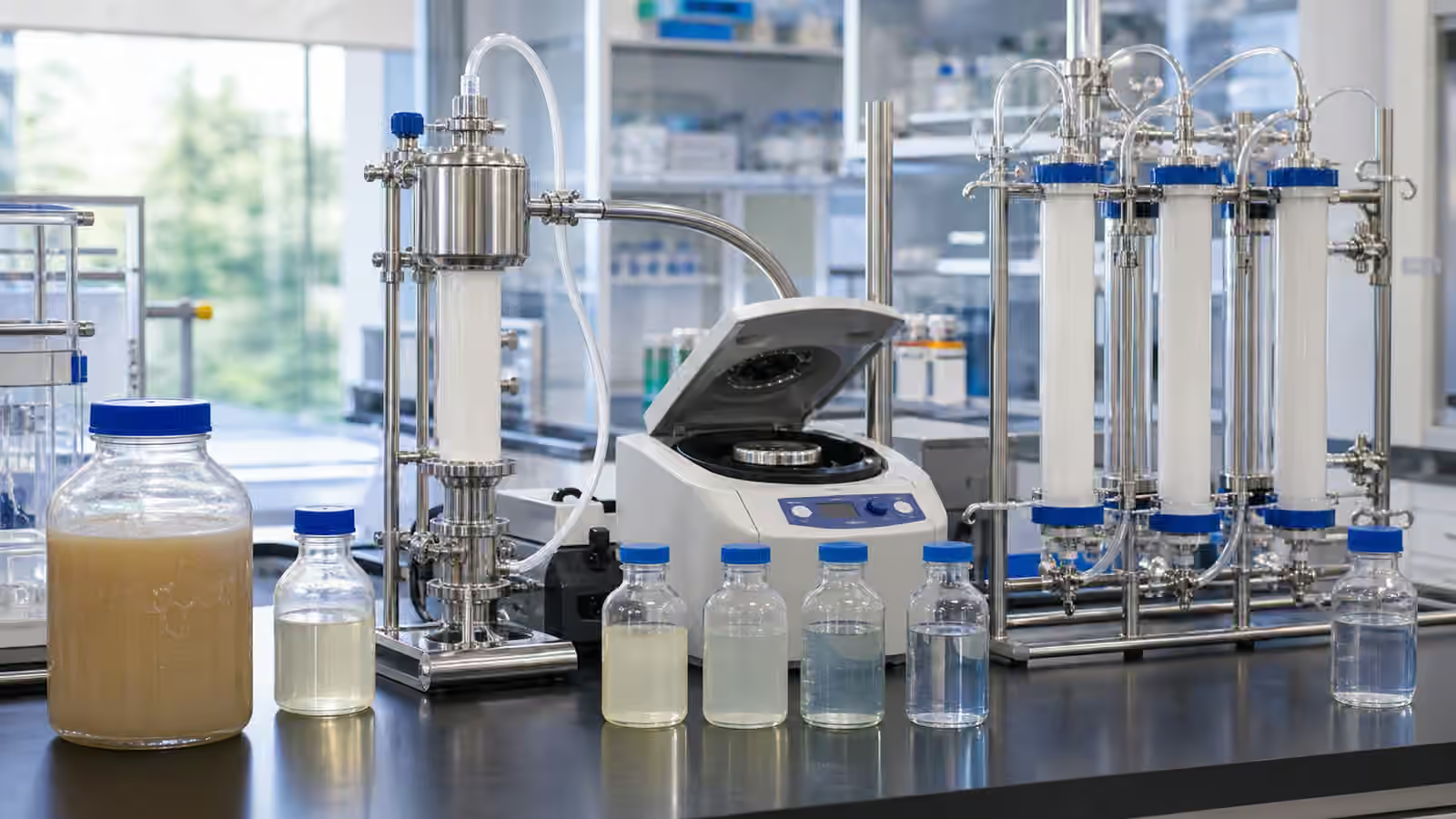
A production strain may make the target molecule, but the product still has to be recovered. Downstream processing can include separation, filtration, extraction, chromatography, drying, crystallization, formulation, polishing, waste handling, and quality testing. For some bioproducts, this part of the process can dominate cost and environmental footprint.
Downstream Processing for Bioproducts explains why making a molecule is only half the work. Techno-economic thinking asks how much product is lost during recovery, how pure it must be, how much energy is used, which consumables are required, and whether the process can run repeatedly without becoming a maintenance problem.
This is why secretion can be valuable in some systems. If a product exits the cell into the broth, recovery may be simpler than breaking cells open. Yet secretion is not automatically better. The product may degrade, bind to impurities, foam, or require different process controls. A good analysis follows the molecule from feedstock to finished product rather than stopping when the cell makes it.
Life-Cycle Thinking Begins With the Comparison
A sustainability claim is always a comparison, even when the comparison is hidden. Lower emissions than what? Less land than what? Less water under which conditions? Biodegradable where? Animal-free in what sense? Bio-based compared with which petrochemical route, agricultural route, mined material, or existing supply chain?
Life-cycle thinking begins by making the comparison explicit. A fermentation-derived ingredient may reduce animal inputs but rely on sugar, energy, purification, and transport. A bio-based material may reduce fossil feedstock but require disposal infrastructure to realize its end-of-life benefit. A process using captured carbon may still depend on the source of energy used to convert that carbon into product.
This connects directly to Synthetic Biology Product Claims and Public Trust . Public trust weakens when environmental language is broad and evidence is narrow. A claim can be promising and still conditional. It is more honest to say what has been measured, what is estimated, what scale was assumed, and what comparison is being made.
Sensitivity Is Where the Model Becomes Useful
Early techno-economic and life-cycle models are often uncertain. That does not make them useless. Their value is not only in predicting a final number. Their value is in showing which assumptions matter. If the model changes dramatically when yield improves, the strain team has a clear target. If purification dominates cost, downstream development may matter more than another round of pathway tuning. If electricity source drives emissions, plant location and energy procurement become part of the biology story.
Sensitivity thinking also protects against false precision. A model with many uncertain inputs should not be presented as a single confident truth. It should show ranges, bottlenecks, and decision points. It should help a team ask better questions sooner.
For synthetic biology, this can prevent years of elegant work on the wrong constraint. A strain may be scientifically interesting but unable to compete with a cheap incumbent. Another strain may have modest performance but make a high-value product where purity, traceability, or supply resilience justify the process. Economics and impact are product-specific.
Small Markets and Large Markets Behave Differently
Not every synthetic biology product needs commodity scale. A specialty enzyme, high-value ingredient, research reagent, therapeutic input, fragrance molecule, or advanced material may support a process with higher costs because the product delivers high value. A commodity fuel, bulk chemical, or packaging material faces a different reality. It must compete against enormous existing systems built for low cost.
This distinction helps explain why some bio-based ideas arrive first in narrow markets. The early market may pay for performance, scarcity, ethical sourcing, purity, supply security, or novelty. That does not automatically mean the same process can replace a bulk incumbent. Scaling down ambition can sometimes make a product more real.
Life-cycle claims also change with market size. A small product may have a modest total footprint even if the process is inefficient. A large replacement market magnifies every input and waste stream. A feedstock that is available for pilot runs may not exist in enough volume for global substitution. Synthetic biology becomes more credible when it treats scale as a material constraint rather than an applause line.
The Best Analysis Changes the Research
Techno-economic and life-cycle thinking should not wait until the end of a project. If analysis arrives only after the biology is finished, it may discover that the process needs a titer the organism cannot reach, a feedstock the host cannot use, a purification route that was never considered, or an energy profile that weakens the environmental claim.
Used earlier, analysis can shape better research. It can tell the strain team whether yield, tolerance, secretion, rate, or substrate flexibility matters most. It can tell the process team which unit operation deserves attention. It can tell the product team which claims are supportable and which are premature. It can tell the company that a smaller, better-defined application is more realistic than a sweeping replacement story.
This does not drain the imagination from synthetic biology. It disciplines it. The field needs ambitious design, but ambition becomes useful when it survives contact with inputs, tanks, purification, energy, waste, customers, and comparisons.
Proof Is a System
Synthetic biology often begins with proof that a cell can do something new. Techno-economic and life-cycle thinking ask whether that new ability belongs inside a system that works. The system includes biology, equipment, workers, supply chains, quality controls, energy sources, disposal routes, product standards, and public claims.
No early model can know everything. No sustainability estimate should pretend to settle every future condition. But the habit of asking system questions early makes the field more honest. It separates a beautiful demonstration from a plausible process, and a plausible process from a responsible claim.
The strongest synthetic biology stories will not be the ones with the most dramatic promises. They will be the ones where the organism, process, economics, and impact evidence all point in the same direction. A cell can start the story. The whole system has to finish it.