
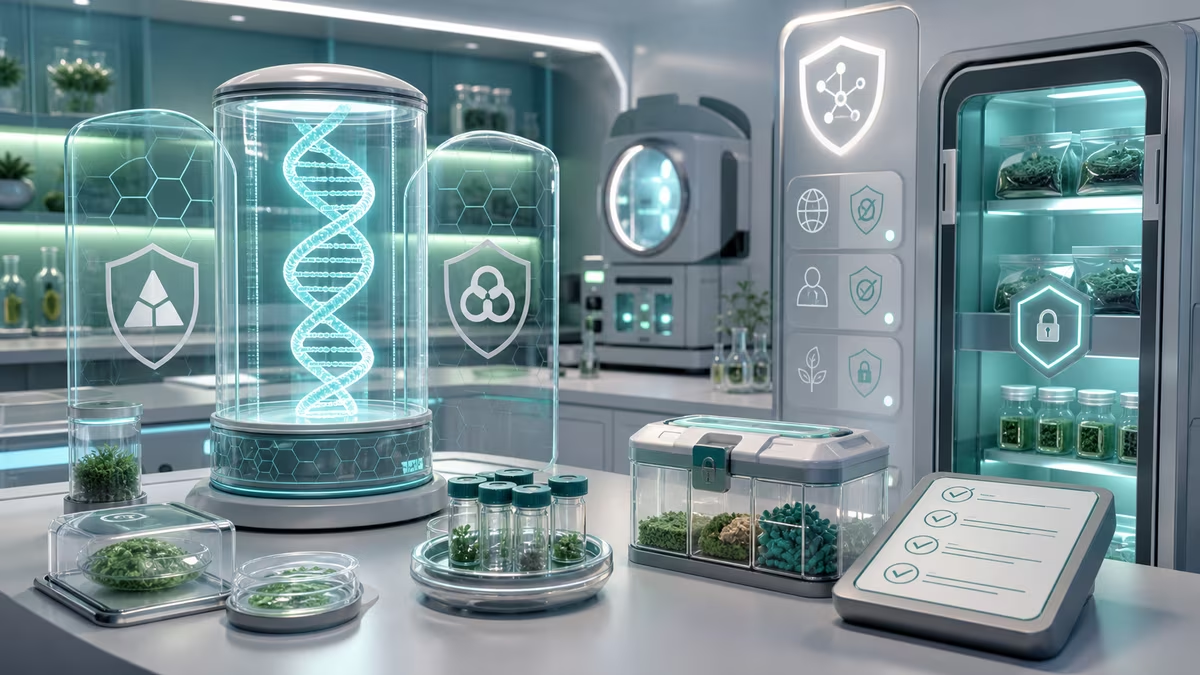
Synthetic biology safety is often described in extremes. One story says engineered biology will save the world if nervous people get out of the way. Another says any ability to program cells is a doorway to catastrophe. Neither story is good enough.
The real safety conversation is more practical, layered, and serious. Biology can be useful and risky. The same tools that help make medicines, enzymes, materials, diagnostics, and food ingredients can also raise questions about accidents, misuse, ecological effects, contamination, privacy, ownership, and unequal access. Good guardrails do not begin after the exciting work is done. They are part of the work.
There are two words worth separating early: biosafety and biosecurity. Biosafety is about preventing accidental harm: exposures, contamination, infections, environmental release, or unsafe procedures. Biosecurity is about preventing misuse, theft, unauthorized access, or deliberate harm. The two overlap, but they are not identical. A locked freezer can be a biosecurity control. Proper containment equipment can be a biosafety control. Documentation, training, screening, and oversight support both.
This guide is educational, not a lab manual. It explains how to think about risks and guardrails without providing instructions for engineering organisms.
Start with the organism, the change, and the context
Safety depends on context. A harmless classroom microbe in a sealed demonstration is different from a pathogen, different from an engineered production strain in a factory tank, different from a live therapeutic cell in a patient, different from a proposed environmental release.
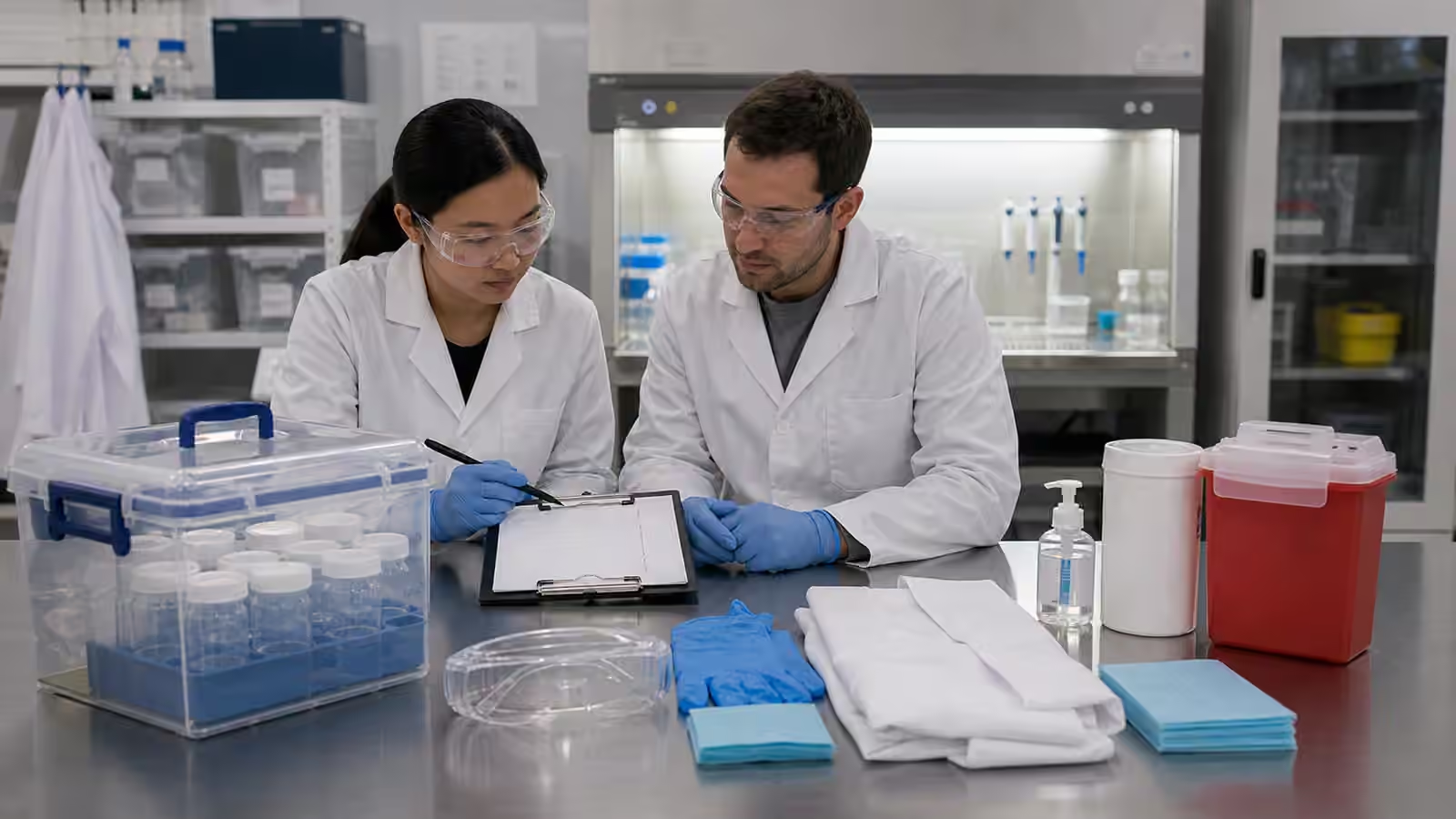
A useful risk question has three parts. What organism or biological component is involved? What has been changed or added? Where will it be used?
An engineered yeast strain that produces a food protein inside a controlled fermentation facility is one risk profile. A microbe designed to survive in soil and spread a trait is another. A protein therapeutic injected into the body is another. A DNA synthesis order for a hazardous sequence is another. Synthetic biology safety fails when people argue about “the technology” as if all uses were identical.
Read Synthetic Biology Quickstart for the basic field map, then return here whenever a claim involves release, medicine, food, or powerful design tools.
Containment is more than a sealed door
Containment has physical, biological, procedural, and digital layers.
Physical containment includes facilities, equipment, filters, barriers, sealed vessels, waste systems, and controlled access. Biological containment can include using organisms that are weak outside the lab, depend on special nutrients, or include genetic safeguards. Procedural containment includes training, labeling, inventory, standard operating rules, incident reporting, and supervision. Digital containment includes access control for sequence data, design tools, lab automation, and ordering systems.
No single layer is perfect. Good safety uses layers because people make mistakes, equipment fails, organisms vary, and incentives can drift. A robust system assumes that one control may fail and asks what catches the failure before it becomes harm.
For contained industrial work, the goal is often boring reliability: keep the organism in the vessel, keep contamination out, keep workers safe, keep records accurate, and make sure waste is treated appropriately. In high-consequence work, the controls become stricter and the oversight heavier.
Escapes: what the word really means
When people hear “engineered organism escape,” they may imagine a superorganism spreading through the world. Some scenarios deserve serious concern, especially when organisms are designed for survival, transmission, environmental persistence, or interaction with wild populations. But many engineered production strains are not built for life outside their controlled conditions. They may be metabolically burdened, dependent on special media, or poor competitors.
That does not mean escapes are irrelevant. It means the risk assessment should be specific. Could the organism survive outside the facility? Could it transfer genetic material? Could it affect other organisms? How much exposure would be needed? What environment would support it? What monitoring exists? What is the cleanup plan? How would an incident be reported?
The right response is neither panic nor dismissal. It is a case-by-case safety case.
DNA synthesis screening
DNA synthesis changed biology because researchers can order custom DNA sequences rather than assembling everything manually. That capability supports medicine, research, vaccines, diagnostics, and industrial biology. It also creates a responsibility: some sequences should not be easy to acquire without review.
Screening DNA orders is one biosecurity guardrail. Providers can compare requested sequences against databases of regulated or concerning material and evaluate customer legitimacy. Screening is not a complete solution. It depends on participation, database quality, international coordination, and the ability to interpret sequence fragments. But it is an important layer because it moves safety upstream, before physical material exists.
As AI tools make biological design easier, sequence screening, user verification, audit trails, and responsible access policies become more important. The goal is not to freeze research. It is to make powerful capabilities harder to misuse casually or anonymously.
What people often misunderstand
The first misunderstanding is that safety is anti-science. Good safety is how science keeps earning public trust. Aviation did not become safer by ignoring crashes. Medicine did not become ethical by assuming every doctor had good intentions. Synthetic biology needs the same maturity.
The second misunderstanding is that only pathogens matter. Pathogens are important, but safety can also involve allergens, toxins, ecological disruption, gene transfer, contamination, worker exposure, misleading claims, privacy of genomic data, and inequitable deployment.
The third misunderstanding is that safe organisms make unsafe systems impossible. A low-risk organism can still contaminate a product, ruin a batch, create an allergen concern, or be mishandled. System design matters.
The fourth misunderstanding is that openness and security are simple opposites. Biology benefits from open science, shared data, education, and reproducibility. Biosecurity asks where openness should be paired with norms, screening, staged access, red-teaming, or oversight. Mature fields learn how to share responsibly.
Biosecurity in the age of AI
AI does not change the fact that biology is hard. A model output is not a working organism. But AI can lower some barriers: literature search, sequence analysis, protein design, protocol planning, and automation control. That is useful for legitimate scientists and potentially useful for bad actors or careless actors.
The safety response should be proportional. Some AI biology tools can remain broadly educational. Some should have monitoring, rate limits, or restricted capabilities. Some lab automation should require authenticated users and institutional oversight. High-risk design requests should trigger review. Evaluations should test whether tools provide dangerous assistance, not only whether they answer ordinary biology questions.
This connects to the broader governance lessons in AI Agents : permissions, logs, tool access, and human review matter whenever software can act in the world.
Public trust and labeling
Safety is not only technical. Food made with precision fermentation may be safe but still face public resistance if labels are confusing. A biofabricated material may make sustainability claims that consumers cannot verify. A medical cell therapy may raise consent and access questions. A biosensor deployment may create concerns about environmental monitoring and data ownership.
Public trust grows when institutions explain what was made, how it is controlled, what evidence supports safety, what uncertainty remains, who benefits, who bears risk, and how problems will be reported.
Synthetic biology should not ask the public for blind faith. It should offer legible evidence.
Future guardrails
The future safety stack will likely include stronger DNA synthesis screening, better strain tracking, biological containment systems, standardized risk assessment, secure biofoundry operations, improved waste treatment, AI tool evaluations, incident-sharing networks, and international norms.
It should also include education. A society that understands programmable biology can ask sharper questions. Is the organism contained? Is the product purified? Is the claim about sustainability measured? Is the release reversible? What happens if the system fails? Who reviews the work? Who can inspect the evidence?
Good guardrails are not a moat around innovation. They are the structure that lets useful work continue without pretending risk is someone else’s problem.
Try this: safety case practice
Choose one synthetic biology idea from this section: a precision-fermented dairy protein, an engineered microbe that makes plastic precursor, a tissue-printed skin model, an AI-designed enzyme, or a biosensor for water pollution.
Write a short safety case:
- What is the organism, molecule, or cell type?
- Is the system contained, implanted, eaten, or released?
- What accidental harm is most plausible?
- What deliberate misuse is worth considering?
- Which three guardrails would you require before deployment?
The goal is not fear. The goal is disciplined imagination.
Further reading
- WHO laboratory biosafety manual, fourth edition
- National Academies report on biodefense in the age of synthetic biology
- ASPR page on the OSTP Framework for Nucleic Acid Synthesis Screening
Next steps
Go back to Synthetic Biology Quickstart if you want the field map, or read AI-Designed Proteins to see why biological design tools make safety and governance more urgent.


