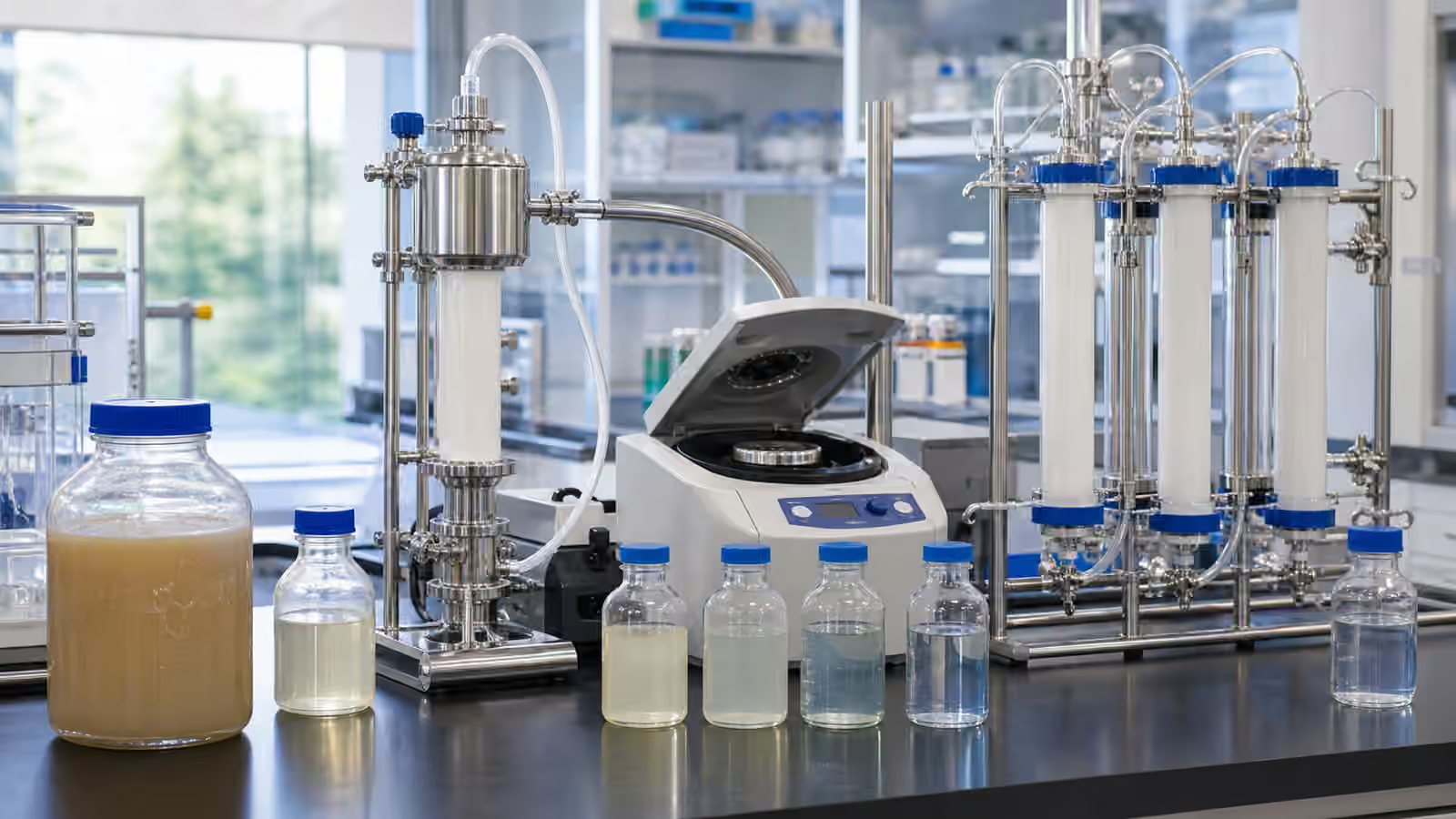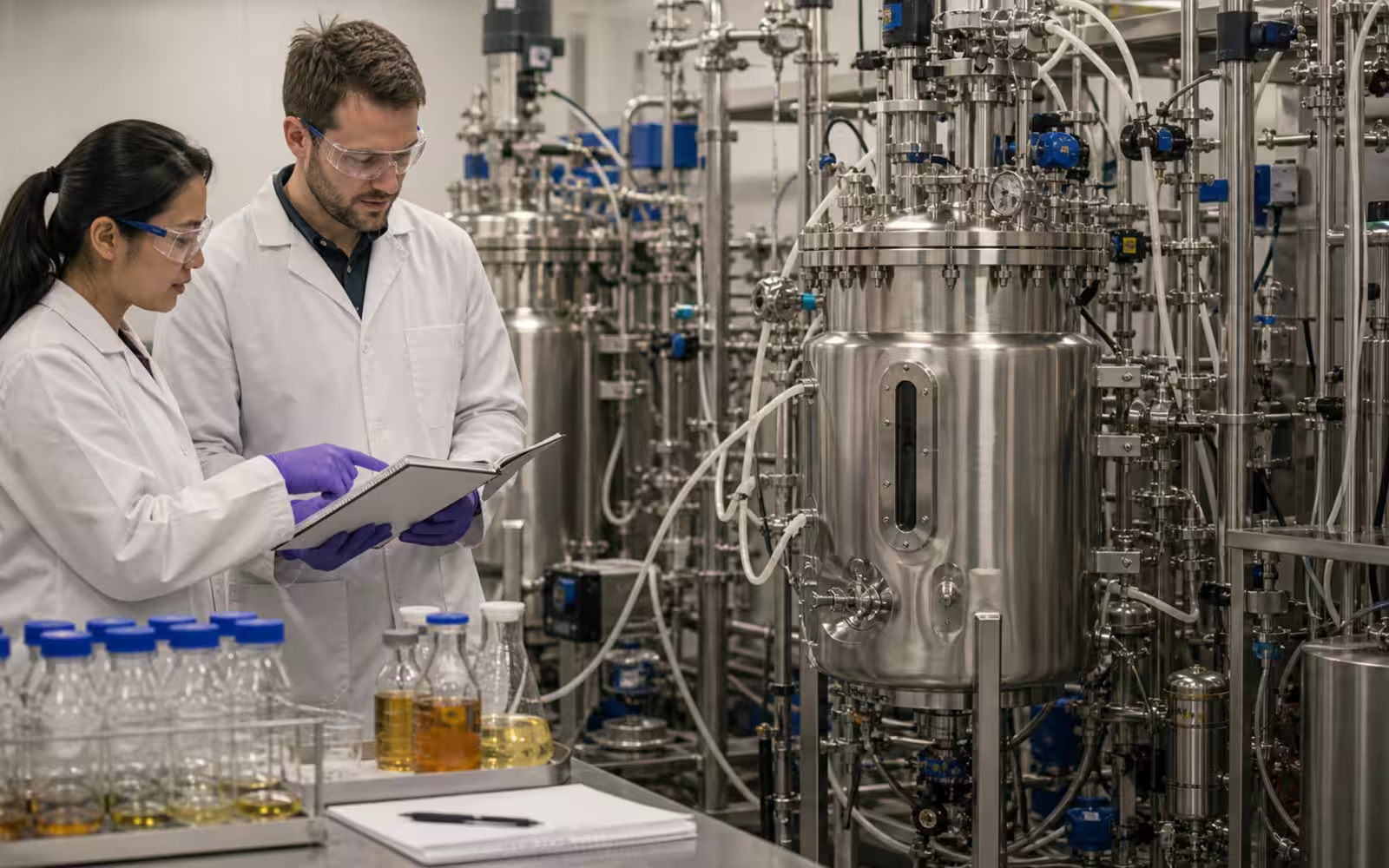
Synthetic biology teams learn early that a flask is not a factory. A strain that behaves well in a small culture can change when the vessel gets larger, mixing slows, oxygen transfer shifts, heat removal matters, feeding becomes uneven, and the run lasts longer. Scale-up gets much of the attention because it is where the process becomes expensive and visible. Scale-down models are the quieter counterpart. They ask how much of that larger reality can be studied before the big run. A related reference is A scale-down mini-bioreactor for the acceleration of data-driven bioprocess optimisation in cell therapy .
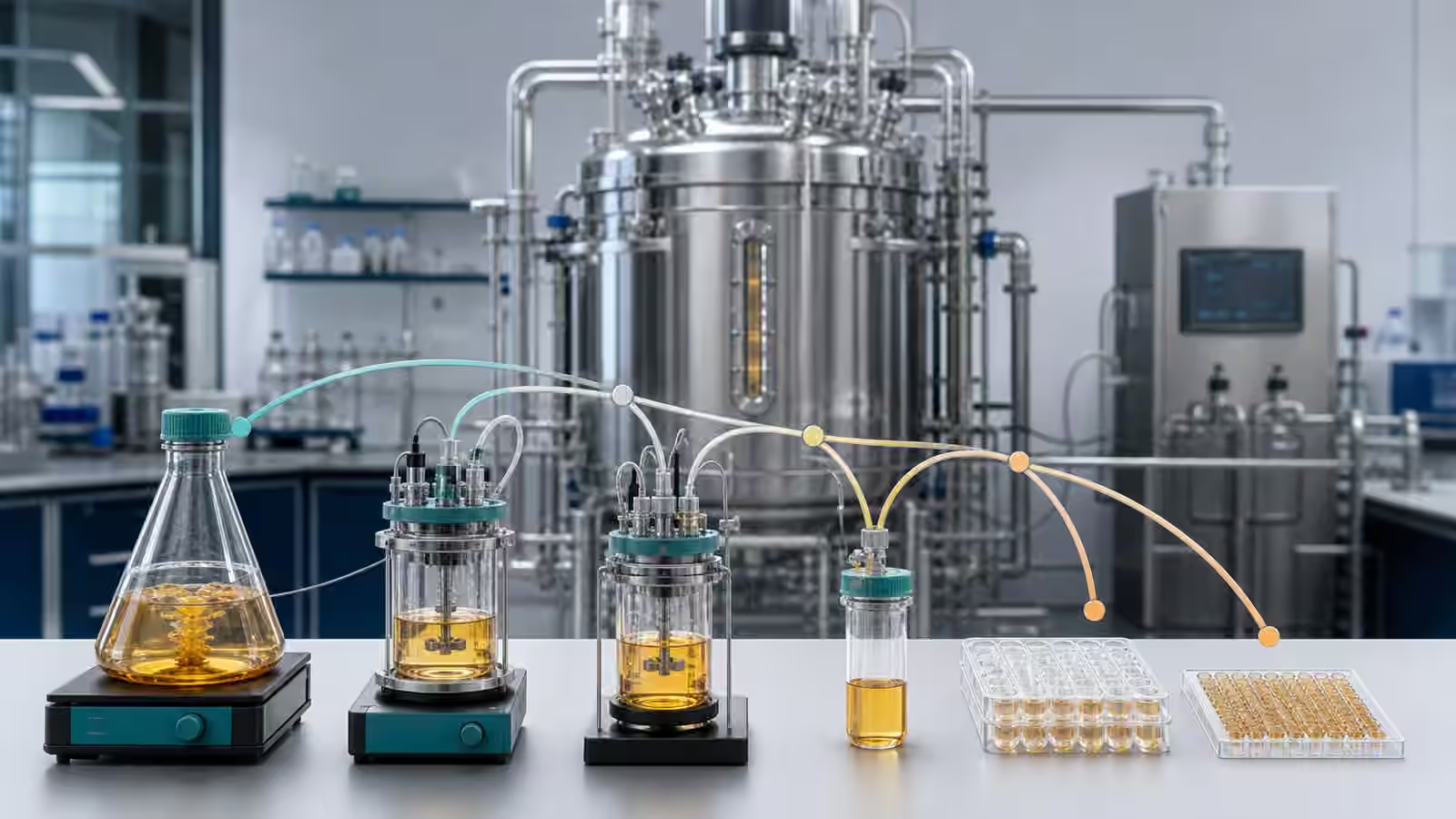
A scale-down model is not merely a smaller vessel. It is a small system designed to represent a particular stress, gradient, timing pattern, or operating window from a larger process. It might be a bench bioreactor, shake flask, microplate, miniature fermenter, or paired vessel setup. Its value depends on what it is trying to mimic and what decision it helps the team make.
This guide follows Bioprocess Scale-Up and connects to Media Development in Fermentation , Bioprocess Quality Control , and Strain Engineering . Scale-up asks what changes as volume grows. Scale-down asks how to learn about those changes while the experiment is still small enough to repeat.
A Small Vessel Must Have a Job
The weakest scale-down model is a small vessel that exists only because it is convenient. Convenience is useful, but it is not a model. A real model has a job. It may test oxygen limitation, feeding pulses, pH excursions, shear exposure, temperature sensitivity, product inhibition, medium variability, or the timing of induction and production. It may compare strains under a stress expected at larger scale. It may help define a process window before a pilot run.
The model does not need to capture everything. In fact, it cannot. A microplate cannot reproduce the fluid dynamics of a production bioreactor. A shake flask cannot hold pH and dissolved oxygen the way a controlled reactor can. A bench vessel cannot represent every gradient in a large tank. The useful question is narrower: which feature of the larger process might decide success, and can a small experiment expose it?
This kind of thinking protects teams from false confidence. A strain that performs well in a comfortable small culture may fail because the larger process exposes a weakness. If the scale-down model includes a relevant stress, the weakness may appear earlier, when changing the strain or process is still cheaper.
Oxygen Is Often the First Reality Check
Many engineered cells care deeply about oxygen. Oxygen affects growth, energy metabolism, redox balance, product formation, byproducts, and stress responses. In small cultures, oxygen may be plentiful or poorly defined. In larger vessels, oxygen transfer depends on mixing, aeration, vessel geometry, foam control, viscosity, cell density, and time.
A pathway that looks strong under well-aerated conditions may behave differently when oxygen is limited or fluctuating. A production organism may route carbon into different byproducts. A redox-sensitive pathway may stall. A protein expression process may stress cells differently. Cofactor and Redox Balancing explains why the cell’s internal electron accounting can decide whether a pathway runs.
Scale-down oxygen models can help compare candidates under controlled limitation or fluctuation. The goal is not to punish strains randomly. The goal is to understand whether the design depends on an oxygen environment that the intended process cannot maintain. If a strain only performs in a condition that larger equipment cannot provide, the problem should be discovered before scale-up consumes more time and material.
Feeding and Gradients Change Cell Experience
In a small well-mixed culture, nutrients may appear evenly available. In a large vessel, cells can move through zones with different nutrient levels, oxygen levels, pH, dissolved carbon dioxide, product concentration, or temperature. These gradients may last seconds or minutes, but cells can respond to them. The population’s experience is not one uniform condition. It is a moving history.
Feeding strategy is especially important. A carbon source added too quickly can create overflow metabolism, byproducts, osmotic stress, or oxygen demand that the process cannot support. A feed added too slowly can starve production. A nitrogen source, trace nutrient, inducer, or precursor may create different responses depending on timing and local concentration.
Media Development in Fermentation explains how feeding engineered cells is more than adding ingredients. Scale-down models make that lesson testable. A small model can compare pulse feeding, gradual feeding, restricted nutrients, or transient stress. It can show whether the strain responds smoothly or swings into unwanted byproduct formation, slowed growth, or unstable expression.
The model should record the story, not only the endpoint. A final product measurement may miss when the culture struggled. Time-course data for growth, substrate, byproducts, pH, oxygen, and product can reveal whether the process was stable or merely ended in an acceptable place once.
Process Windows Are Better Than Perfect Points
A fragile process can look excellent at one ideal setting. Manufacturing prefers a window. A process window is a range of conditions where the strain, product, and quality remain acceptable. Scale-down work helps find that window before larger runs magnify the consequences of being wrong.
For synthetic biology, the relevant window may include temperature, pH, dissolved oxygen, feed rate, induction timing, inoculum state, harvest time, medium composition, antifoam use, or product concentration. Some variables affect growth. Some affect pathway behavior. Some affect downstream recovery. Some affect quality attributes that are invisible if the only measurement is product amount.
Bioprocess Quality Control matters because the window has to be defined by measurements, not comfort. A strain might produce a high titer across several conditions while creating more impurities in one corner of the space. A protein might express well but fold poorly when temperature shifts. A small molecule might accumulate but degrade if harvest timing stretches.
Scale-down models make it possible to explore these edges. The team can learn where the process bends, where it breaks, and where extra control is worth the cost. The answer may guide equipment choice, control strategy, strain selection, or downstream planning.
The Model Must Be Challenged
A scale-down model can become a ritual if nobody checks whether it predicts anything useful. The model should be compared with larger runs when those runs become available. If the small model predicts a problem that never appears, it may be too harsh or aimed at the wrong stress. If it misses a problem that appears at scale, it may be too comfortable. If it ranks strains differently from larger vessels, the team needs to understand why.
Model qualification does not require pretending small and large systems are identical. It requires evidence about what the small model is good for. Perhaps it predicts oxygen sensitivity but not foam behavior. Perhaps it screens feed timing well but says little about heat removal. Perhaps it is useful for comparing strains but not for estimating final titer. That bounded usefulness is still valuable.
This discipline resembles Synthetic Biology Modeling . A mathematical model is a map, not the territory. A scale-down model is a physical map. It simplifies the larger system so the team can learn, but it should not be believed beyond its evidence.
Scale-Down Work Feeds Back Into Design
The best scale-down work does not merely prepare for scale-up. It changes design decisions. If a strain fails under oxygen fluctuation, pathway design, host choice, or redox balancing may need attention. If feeding pulses create byproducts, media strategy and metabolic engineering may change together. If product quality shifts near the edge of a process window, analytical methods and downstream processing may need earlier involvement.
Strain Engineering is strongest when it sees the process that the strain must inhabit. A production cell is not being engineered for an idealized flask. It is being engineered for a vessel, feedstock, run time, recovery path, quality standard, and cost structure. Scale-down models bring pieces of that future environment into the present.
They also help teams resist heroic scale-up. A large run should not be a dramatic reveal of problems that small work could have anticipated. Some surprises are unavoidable, but many can be made smaller. Scale-down models let synthetic biology ask practical questions while the work is still agile: How does this strain handle the stress it will actually see? How wide is the process window? Which measurements warn us early? Which design is robust rather than merely impressive?
The big run will always have the final authority. Scale-down work earns its place by making that run less mysterious.