Synthetic biology sounds like a science-fiction phrase until you place it beside something ordinary: a bakery.
A baker does not invent wheat, water, yeast, or heat. The craft is in choosing ingredients, setting conditions, shaping dough, waiting, observing, and learning what the living yeast will do. Synthetic biology works with a deeper layer of instructions, but it still has that same humility. Scientists can design DNA sequences, insert genetic circuits, and ask cells to make useful molecules, but the result is not a robot following commands. It is a living system responding to its environment.
That distinction matters. When people say synthetic biology is “programming life,” the phrase is useful as a doorway and dangerous as a destination. Cells use information. DNA stores recipes for proteins and regulatory signals. Researchers can now read, write, edit, synthesize, and test those instructions at a scale that would have looked impossible a generation ago. But a cell is not a laptop. It has metabolism, stress responses, mutations, resource limits, evolutionary pressure, and a messy interior crowded with molecules.
The best mental model is not “biology is software.” It is “biology is a programmable garden.” You can plan, plant, prune, monitor, and build trellises. The garden still grows.
What synthetic biology means
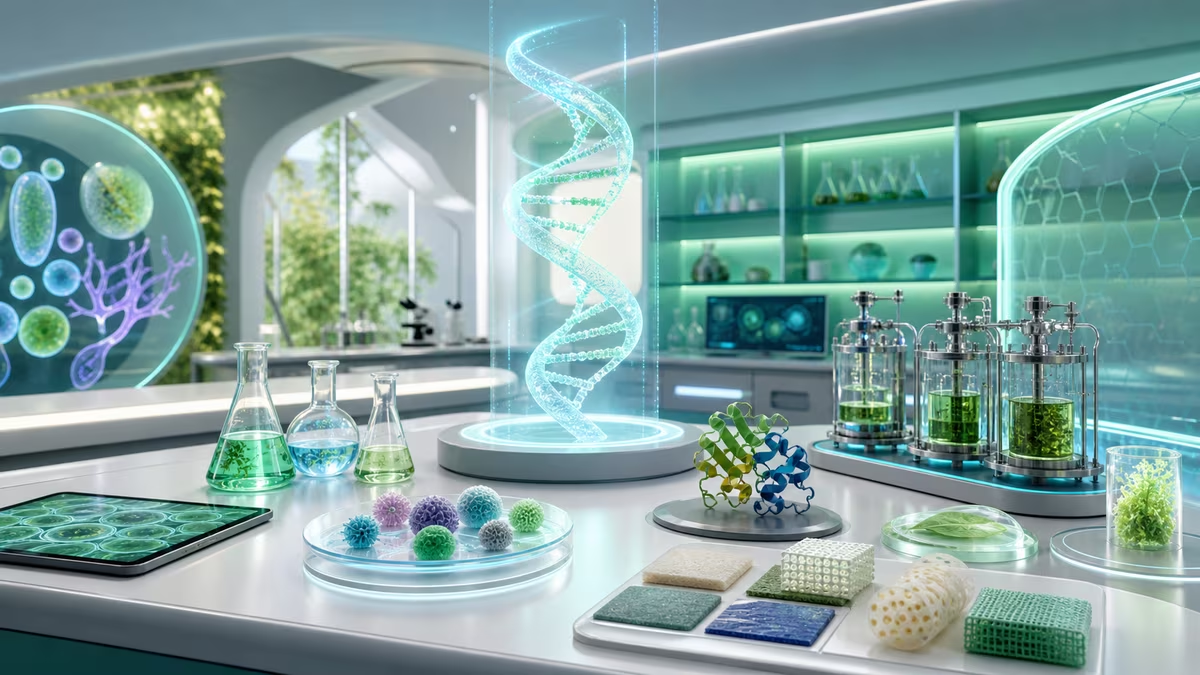
Synthetic biology is an engineering-minded approach to biology. Instead of only observing how organisms work, scientists try to design or redesign biological systems to do useful jobs. Those jobs might be small, such as producing a flavor molecule. They might be medical, such as engineering immune cells to recognize cancer. They might be industrial, such as using microbes to make a chemical normally derived from petroleum. They might be environmental, such as building biosensors that respond to contamination.
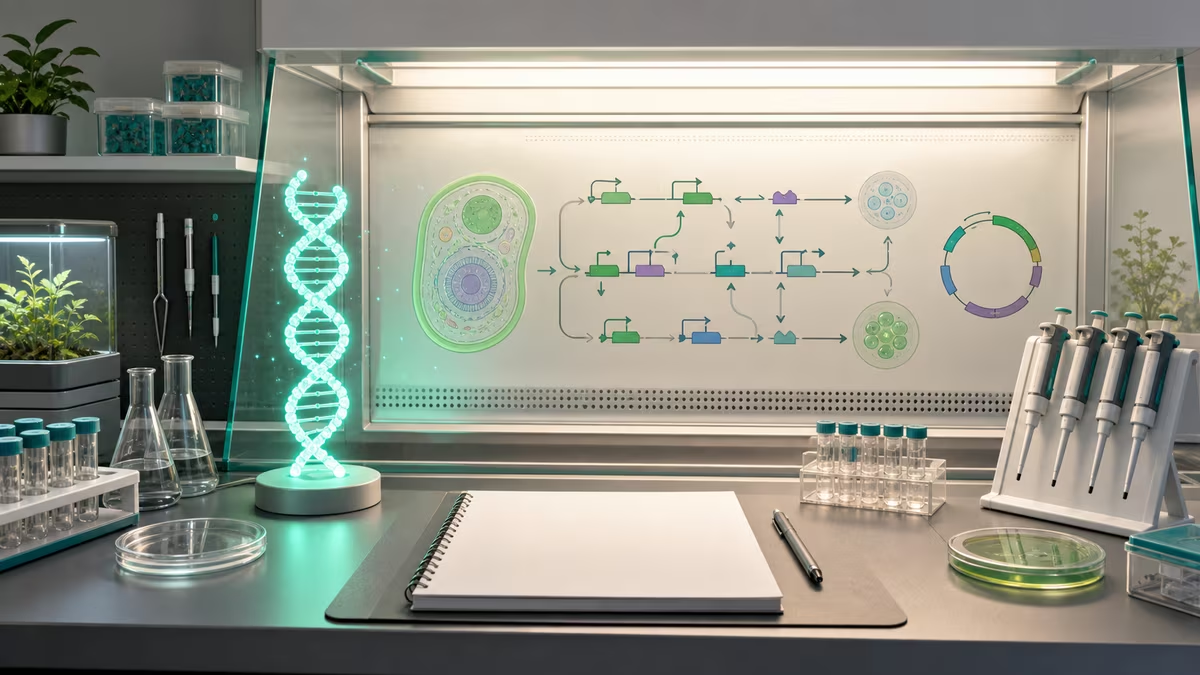
The field usually combines several abilities. First, scientists read DNA to understand what instructions already exist. Second, they write or synthesize DNA to create new variants. Third, they build those designs into cells or cell-free systems. Fourth, they test what happens. Fifth, they learn from the results and redesign.
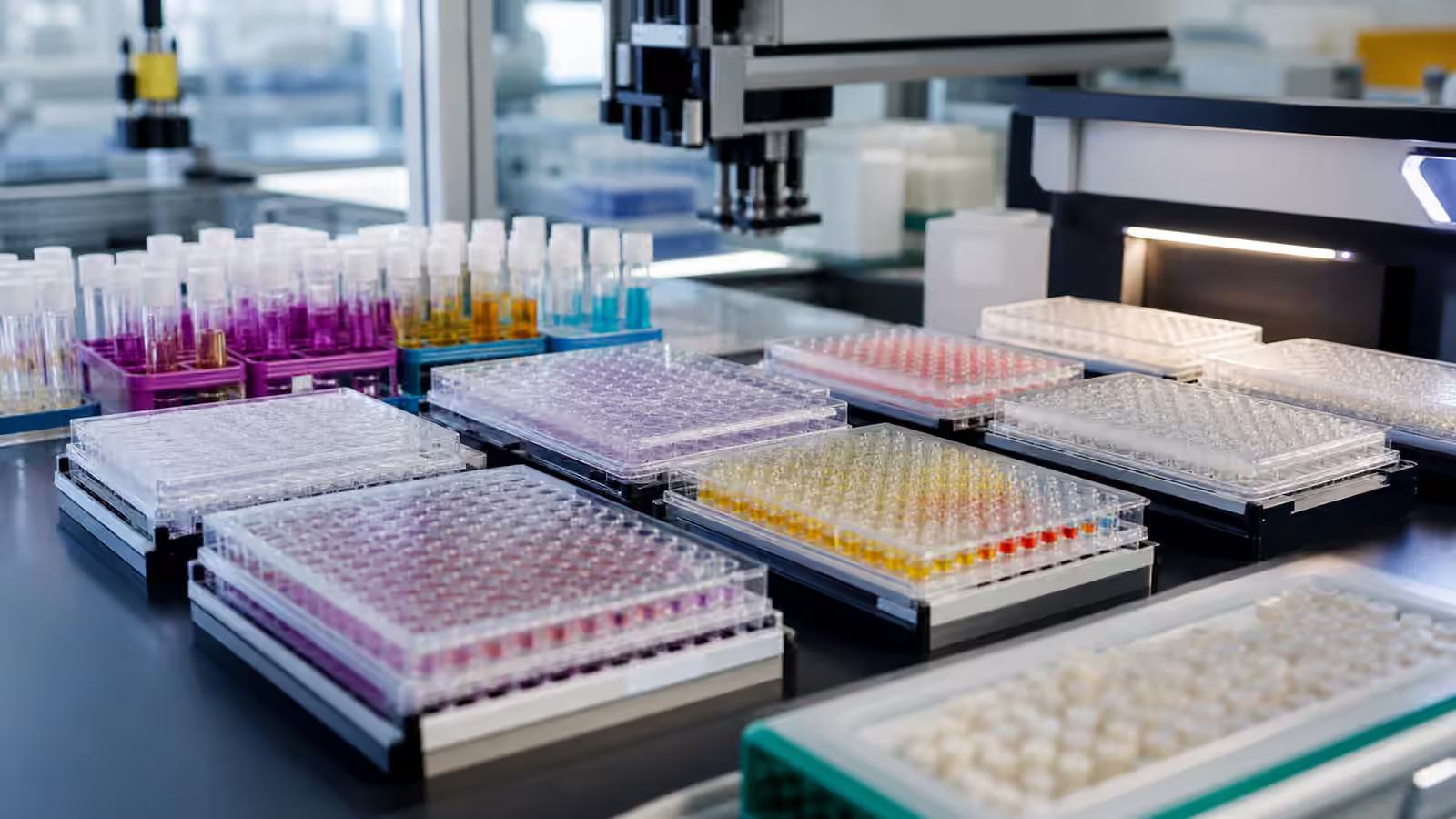
That design-build-test-learn loop is the heartbeat of synthetic biology. It is why biofoundries matter. A biofoundry is a more automated, measurement-heavy lab environment where robots, software, instruments, and standardized workflows help researchers test many biological designs faster and more consistently. You can think of it as a prototyping shop for biology, although the prototypes are living or biochemical systems rather than metal parts.
If you want the broad production side, read What Is Biofabrication? . If you want a concrete food example, read Precision Fermentation Explained .
The beginner version of DNA
DNA is often described as code, but it is closer to a set of recipes, switches, labels, and control regions written in a chemical alphabet. Genes can contain instructions for proteins. Proteins are the workhorses of cells: they can build structures, catalyze reactions, carry signals, cut molecules, move things, and sense conditions.
Synthetic biology uses DNA design to change what a cell can do. A researcher may add a gene for an enzyme, adjust when that gene turns on, remove a pathway that wastes resources, or combine several steps so a microbe makes a target molecule from sugar. The visible outcome might be a medicine ingredient, a textile fiber, a pigment, a fragrance, a dairy-like protein, or a biodegradable polymer precursor.
But every change has context. A gene that works in one organism may burden another. A pathway that works in a tiny flask may not scale cleanly to a large tank. A molecule that is easy to make may be hard to purify. A beautiful design can fail because the cell routes energy elsewhere. Biology is full of negotiation.
What people often misunderstand
The first misunderstanding is that synthetic biology means making brand-new life from nothing. In most work, researchers modify existing organisms or use cell-free biological machinery. Even ambitious genome projects depend on known biology, careful validation, and many layers of oversight.
The second misunderstanding is that DNA is destiny. DNA matters enormously, but living systems also depend on environment, development, chemistry, physical structure, timing, and chance. Giving a cell a new instruction does not guarantee the cell will execute it well.
The third misunderstanding is that anything “bio” is automatically green. A biological route can reduce petroleum dependence or use lower temperatures than traditional chemistry, but sustainability depends on feedstocks, energy, water, land use, purification, waste, shipping, and what happens at end of life. A bioplastic that requires industrial composting is not magically harmless in the ocean.
The fourth misunderstanding is that safety is only about preventing a movie-style disaster. Most real safety work is more ordinary and more important: choosing low-risk organisms, controlling access, documenting materials, using containment, preventing contamination, validating strains, screening DNA orders, monitoring waste, and designing systems that do not survive well outside their intended setting.
The fifth misunderstanding is that the future will be one breakthrough product. Synthetic biology is more likely to arrive as many quiet substitutions: a better enzyme in detergent, an animal-free protein in food, a microbial route to a chemical, a faster vaccine platform, a biosensor in a water system, a material grown under gentler conditions.
Why it matters
Synthetic biology matters because biology already manufactures much of the living world with elegance humans cannot match. Trees pull carbon into wood. Yeast turns sugar into alcohol and carbon dioxide. Bacteria make pigments, acids, proteins, and polymers. Cells build tissues at body temperature, in water, with molecular precision.
The question is whether we can responsibly borrow some of that manufacturing power.
For medicine, synthetic biology can help design therapies, vaccines, diagnostics, and engineered cells. For food, it can produce specific proteins, fats, flavors, vitamins, and enzymes without needing the original animal or plant source. For materials, it can create fibers, coatings, adhesives, pigments, and plastics with new routes. For climate and industry, it may help replace some fossil-derived chemicals, although scale and economics remain difficult. For science, it gives researchers a way to test how life works by rebuilding parts of it.
The field also matters because it changes who needs to understand biology. Programmable biology is no longer only a lab conversation. It touches food labels, public health, agriculture, manufacturing, medicine, data governance, and environmental policy. A society that understands only the miracle story or only the fear story will make poor decisions.
Real-world examples without the fog
Insulin is a useful entry point. Modern insulin has long been produced with genetically engineered microbes or cells that make human insulin rather than extracting it from animal pancreases. That is not usually marketed as futuristic, but it is one of the clearest examples of engineered biology serving a practical need.
Fermentation-derived enzymes are another everyday example. Enzymes used in food processing, detergents, textiles, and industrial chemistry can be produced by microbes under controlled conditions. The enzyme is the product; the production organism is not what consumers use.
Engineered immune cells are a medical example. CAR T-cell therapy modifies a patient’s immune cells so they recognize certain cancer cells. It is not simple, cheap, or universal, but it shows how biological instructions can become a therapeutic tool.
Newer examples include precision-fermented dairy proteins, microbes engineered to make specialty chemicals, and AI-assisted protein design workflows. To understand the protein side, continue to AI-Designed Proteins . To understand microbial production, read Can Bacteria Make Plastic, Fuel, and Medicine? .
The responsible imagination
The most useful synthetic biology question is not “Can we build it?” It is “Should we build it this way, at this scale, with this organism, for this use, under these controls, with these alternatives considered?”
That question keeps the field grounded. A lab-grown material might spare animals but use a lot of energy. A microbe-made chemical might reduce fossil inputs but require expensive purification. A biosensor might help monitor water but raise questions about release and retrieval. A new food ingredient might be safe and useful while still needing honest labeling and consumer trust.
Responsible imagination means holding promise and limits together. It makes room for wonder without surrendering to hype.
Try this: the programmable biology lens
Pick one familiar product: yogurt, a cotton shirt, a plastic bottle, a vaccine, a leather shoe, a protein bar, or a household cleaner. Then answer four questions.
- Which part of this product is already biological or could be made biologically?
- What would a cell or enzyme need to produce, sense, or transform?
- What could go wrong when moving from a small lab result to a real supply chain?
- What safety, labeling, or environmental question would you want answered before trusting the product?
There is no single correct answer. The goal is to practice seeing synthetic biology as a chain of design decisions, not a magic wand.
Further reading
- NHGRI overview of synthetic biology
- NIBIB introduction to synthetic biology
- NIST engineering and synthetic biology program
Next steps
Read What Is Biofabrication? next if you want to see how programmable biology becomes materials, medicines, and food. Read Synthetic Biology Safety if you want the guardrails first.