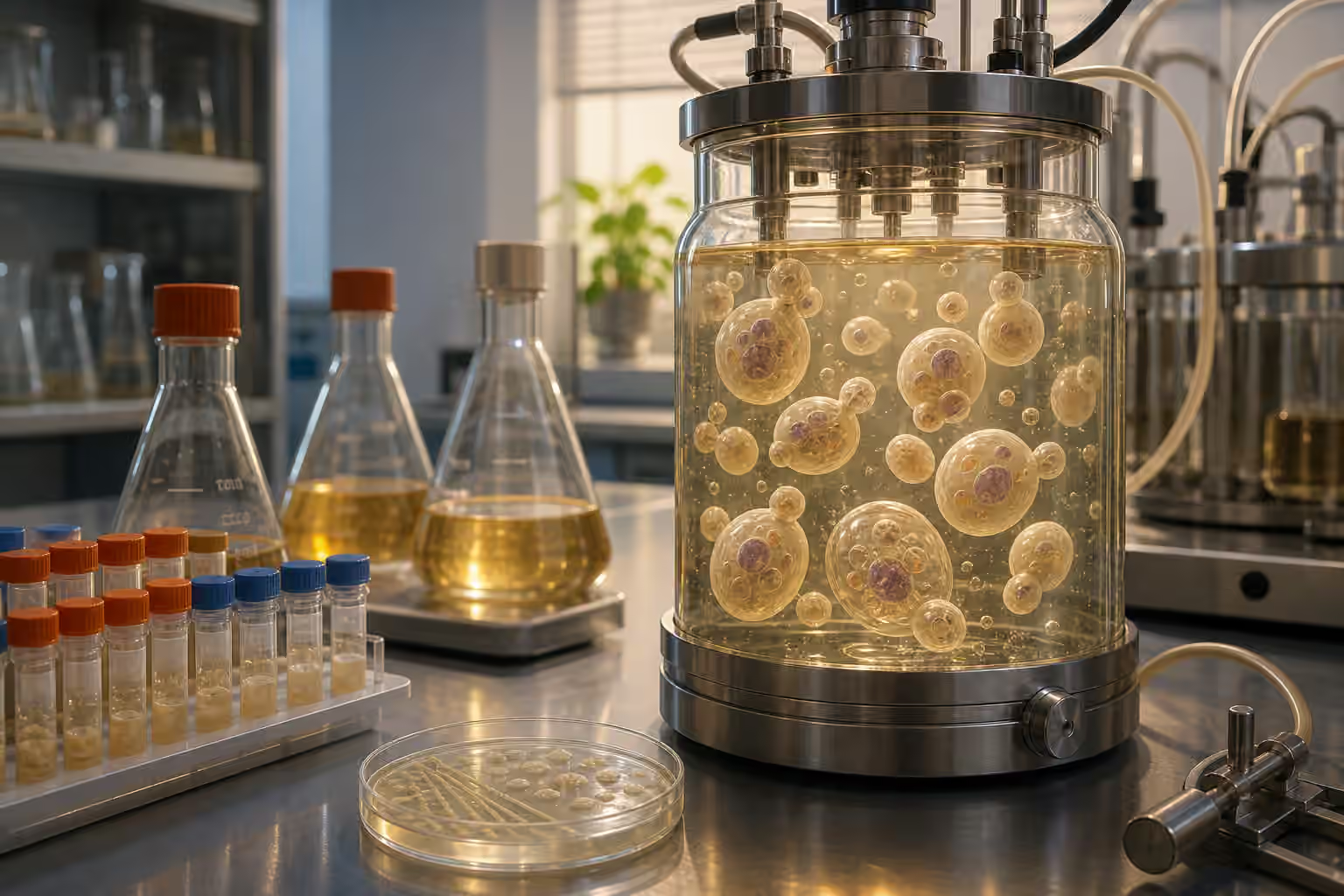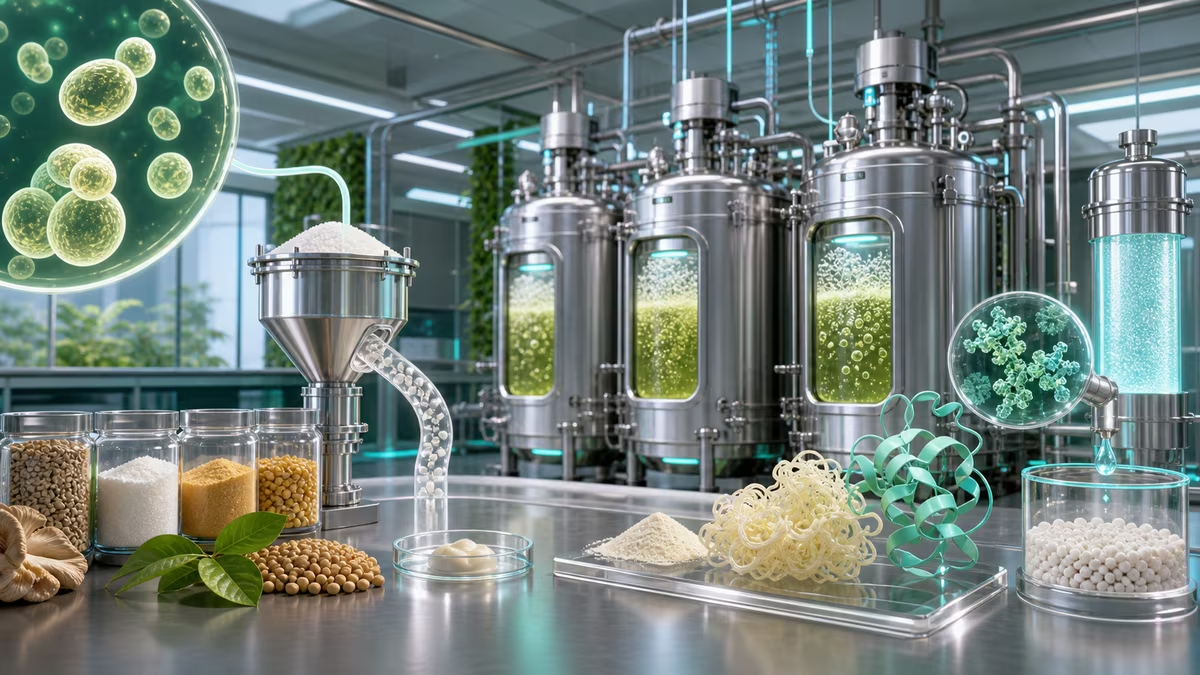
Fermentation is one of humanity’s oldest partnerships with microbes. Bread rises because yeast eats sugar and releases carbon dioxide. Yogurt thickens because bacteria transform milk. Beer, wine, kimchi, sauerkraut, miso, vinegar, and cheese all depend on invisible workers changing flavor, texture, acidity, aroma, or preservation.
Precision fermentation keeps the ancient partnership but changes the assignment.
Instead of asking microbes to transform a whole food, scientists program them to make a specific molecule. The microbe becomes a tiny production worker for a target ingredient: an enzyme, protein, fat, vitamin, flavor compound, pigment, or specialty chemical. The final product is usually purified away from the production organism. The tank does not produce a living food culture like yogurt. It produces an ingredient that can be used somewhere else.
That is why the phrase “brewing more than beer” works. The same broad idea of controlled microbial growth can become a route to dairy proteins without cows, egg proteins without hens, enzymes for food processing, heme-like flavor molecules, medicine ingredients, or industrial chemicals.
The basic story
A precision fermentation project begins with a target. Suppose a company wants a protein that gives food a creamy texture, helps dough rise, binds water, foams like egg white, or contributes a dairy-like function. Researchers identify the genetic instruction for making that protein. They place that instruction into a suitable production organism, often yeast, fungus, or bacteria. The organism is grown in controlled tanks with nutrients. As it grows, it makes the target molecule. The molecule is then separated, purified, tested, and turned into an ingredient.
That description hides many hard details. The instruction has to be expressed efficiently. The cell must fold or process the molecule correctly. The production organism must stay healthy. The feedstock must be affordable. The tank conditions must scale. The purification process must remove unwanted material. The final ingredient must be safe, consistent, labeled correctly, and useful in actual products.
Still, the core idea is simple: use microbes as programmable ingredient factories.
For the broader field, read Synthetic Biology Quickstart . For the material side, read What Is Biofabrication? .
Why precision matters
Traditional fermentation often changes a whole mixture. Grapes become wine. Cabbage becomes sauerkraut. Milk becomes yogurt. The microbes are part of the process and sometimes part of the food. The product is shaped by many compounds at once.
Precision fermentation is narrower. It is designed around a specific output. That precision can be powerful because many valuable biological molecules are hard to obtain from their original source. A cow makes milk proteins as part of milk. A chicken makes egg proteins as part of eggs. A plant makes a flavor molecule in tiny amounts. A microbe can be asked to make the one molecule people need, without growing the whole organism that normally produces it.
The value is not only animal-free production. It can also be consistency, supply resilience, lower land use, improved functionality, or the ability to make molecules that would otherwise be expensive, seasonal, rare, or ethically difficult to source.
What people often misunderstand
The first misunderstanding is that precision fermentation is the same as cultivated meat. It is not. Cultivated meat grows animal cells. Precision fermentation usually uses microbes to make specific ingredients. A precision-fermented dairy protein is not a chunk of animal tissue. It is a protein made by a microbe using an instruction associated with that protein.
The second misunderstanding is that the consumer eats engineered microbes. In many precision fermentation products, the production organism is removed during purification. The finished ingredient is what matters. Regulations and labels vary by jurisdiction and product, but the basic production story should not be confused with eating a live engineered culture.
The third misunderstanding is that precision fermentation is new because it sounds new. The production of medicines, enzymes, vitamins, and food-processing ingredients using microbes has a long history. What is changing is the breadth of targets, the quality of DNA design tools, the scale of data, and the ambition to make familiar food functions through fermentation.
The fourth misunderstanding is that every precision-fermented ingredient will be cheap and climate-friendly by default. Tanks cost money. Sterile operations are demanding. Sugar or other feedstocks must come from somewhere. Purification can be expensive. Energy and water matter. Some molecules are easy to produce; others are stubborn. Scale-up is the exam.
A tour through a fermentation facility
Picture a clean industrial room with stainless steel tanks, pipes, sensors, and control screens. The scene may look more like a brewery or pharmaceutical plant than a farm. A production strain is prepared, expanded through stages, and moved into larger vessels. The system controls temperature, pH, oxygen, mixing, nutrients, and timing. Instruments watch for contamination, growth, yield, and product quality.
The microbe’s job is to turn feedstock into the target molecule. The engineers’ job is to keep the process boring. In biomanufacturing, boring is a compliment. A successful process behaves predictably batch after batch.
After fermentation, the target molecule must be recovered. That may mean filtering, separating, concentrating, drying, or otherwise purifying the ingredient. The final product might be a powder, liquid, paste, or intermediate used by another manufacturer.
The organism is only part of the system. The full system includes strain engineering, tanks, sensors, feedstock contracts, cleaning protocols, waste handling, quality assurance, regulatory submissions, food formulation, customer trust, and distribution.
Why it matters for food
Food is one of the clearest places where precision fermentation becomes visible to ordinary people. Many foods depend on functional ingredients. Proteins can foam, gel, emulsify, stretch, melt, bind fat, hold water, or carry flavor. Fats influence mouthfeel and aroma release. Enzymes make bread, juice, cheese, brewing, and processing work better.
Precision fermentation can make specific food components without copying the whole animal or plant. That might allow a plant-based cheese to melt more like dairy because it includes a dairy-like protein made by microbes. It might allow an egg alternative to foam better. It might make a rare flavor molecule more available. It might reduce pressure on some agricultural inputs.
But it will not replace cooking, culture, farming, or taste. A food succeeds when people trust it, afford it, enjoy it, and understand it. A fermentation-derived ingredient may be technically elegant and still fail if the product tastes odd, costs too much, carries confusing labels, or feels dishonest.
For a comparison with cultivated meat and plant-based foods, read Lab-Grown Meat vs Precision Fermentation vs Plant-Based Food .
Beyond food
Precision fermentation also matters for medicine, cosmetics, agriculture, and industry. Microbes can produce enzymes for detergents, active ingredients, specialty chemicals, fragrances, pigments, and materials precursors. This connects to Can Bacteria Make Plastic, Fuel, and Medicine? , where the same idea becomes a broader story about microbial cell factories.
Biofoundries could accelerate the field by testing many production strains and conditions. AI could help suggest protein variants or metabolic pathway changes. Better sensors could show when a culture is stressed before a batch fails. Better life-cycle analysis could separate genuinely lower-impact products from clever branding.
Future possibilities
The near future is likely to be ingredient-level change rather than total replacement. A familiar food may include one precision-fermented protein. A cosmetic may include a fermentation-derived molecule. A detergent may use an improved enzyme. A material may use a biologically produced precursor. The consumer may not notice every substitution, but supply chains may.
Longer term, precision fermentation could support local or regional manufacturing of some ingredients, reduce dependence on animal-derived inputs, make rare molecules more accessible, and provide new ways to design food texture and nutrition. It could also concentrate production power in companies that own strains, data, and fermentation capacity. That is why open standards, fair regulation, and honest labeling matter.
The future of fermentation is not a replacement for the farm. It is another production layer. The important question is when that layer makes food and materials more resilient, humane, affordable, and sustainable, and when it merely moves problems out of sight.
Try this: ingredient detective
Choose a packaged food and read the ingredient list. Look for a protein, enzyme, flavor, vitamin, stabilizer, or color. You do not need to know how it was made. Ask:
- Is this ingredient part of the food’s structure, taste, nutrition, or processing?
- Could a microbe plausibly make this ingredient or something with the same function?
- Would consumers care more about taste, price, animal-free sourcing, allergen labeling, or environmental impact?
- What evidence would make a sustainability claim credible?
The exercise is not about finding a perfect answer. It is about seeing food as a system of functions.
Further reading
- Food Standards Agency explainer on precision fermentation
- FDA list of microorganisms and microbial-derived food ingredients
- FDA guidance on enzyme preparations
Next steps
Read Can Bacteria Make Plastic, Fuel, and Medicine? to widen the frame from food ingredients to microbial manufacturing. Read Synthetic Biology Safety to understand the guardrails around engineered organisms and products.