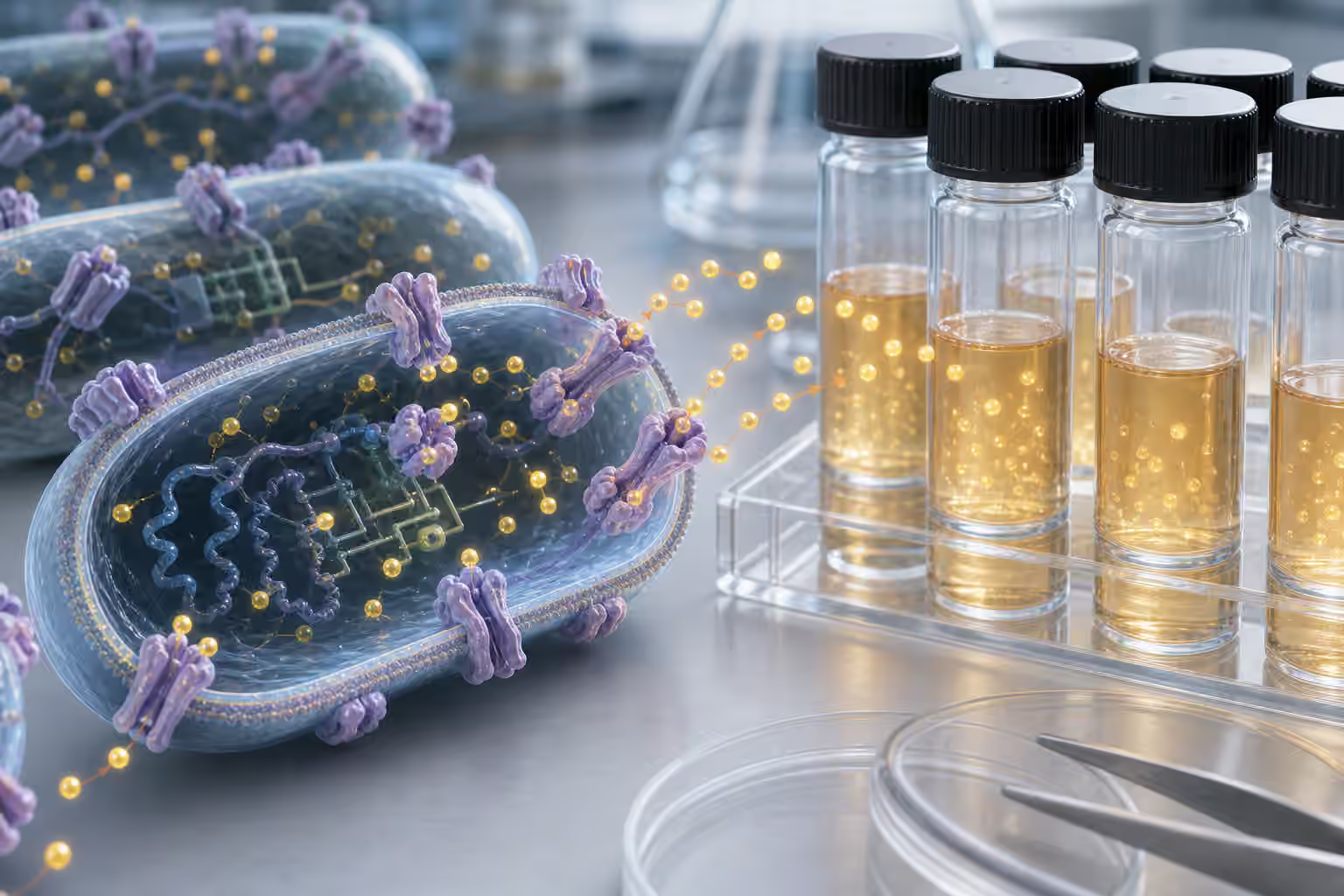
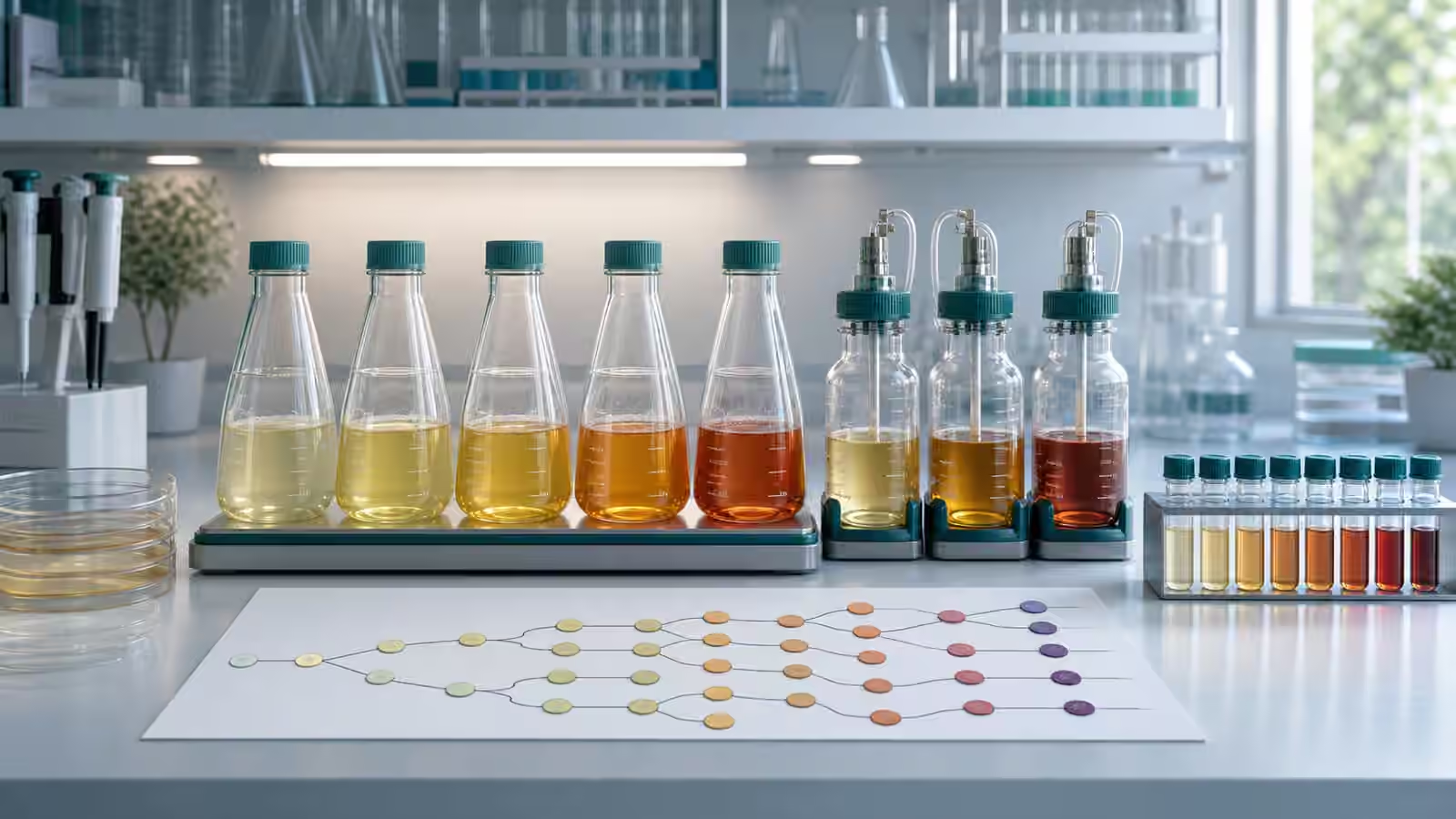
Photosynthetic synthetic biology begins with a tempting idea: if cells already know how to turn light, carbon dioxide, water, and minerals into living chemistry, perhaps they can be engineered to make useful products more directly. Algae and cyanobacteria make that idea visible. They grow in green cultures, respond to light, and sit between biology, climate imagination, materials, food, fuels, pigments, and environmental technology. A related reference is Application of synthetic biology in cyanobacteria and algae .
The idea is real, but it is easy to oversimplify. Photosynthetic organisms are not solar panels with genes attached. They are living systems with growth habits, light limits, nutrient needs, stress responses, contamination risks, product tolerance, and cultivation constraints. Engineering them means working with photosynthesis rather than merely pointing light at a tank.
This guide builds on Chassis Organisms , which compares possible host platforms for synthetic biology. It also sits near Plant Synthetic Biology , but algae and cyanobacteria deserve separate attention. They are not crops in miniature, and they are not ordinary microbial factories. Their design logic is shaped by light.
Light Is a Feedstock and a Constraint
In many fermentation systems, the main feedstock story begins with sugar, side streams, gases, or other chemical inputs. Biomanufacturing Feedstocks explains why those inputs shape cost, sustainability, logistics, and process design. Photosynthetic systems change the question by using light as a central energy source and carbon dioxide as a carbon source in many contexts. That can make them appealing for products where the feedstock story matters.
Light, however, is not a simple ingredient. It has intensity, wavelength, timing, direction, and depth. A thin culture may receive light evenly, while a dense culture shades itself. Cells near the surface may receive too much light and become stressed, while cells deeper in the vessel receive too little. Mixing can move cells through changing light zones. Outdoor settings add weather, day length, temperature, and contamination pressure. Indoor settings add equipment, electricity, heat, and cost.
This is why a photosynthetic process is not automatically low-impact or simple. The product, organism, cultivation format, energy source, nutrients, water, harvesting, purification, and land or facility needs all matter. A claim about light-driven biology is credible only when the whole process is visible enough to evaluate.
Algae and Cyanobacteria Are Different Platforms
Algae and cyanobacteria are often grouped together because both can be photosynthetic and aquatic. For engineering, that grouping can hide important differences. Cyanobacteria are bacteria with photosynthetic machinery, which can make some genetic tools and growth patterns closer to microbial synthetic biology. Microalgae are eukaryotic organisms with compartments, organelles, and regulatory layers that can create different opportunities and difficulties. Larger algae and seaweeds bring still other cultivation and processing questions.
The choice of organism affects editing tools, expression behavior, growth rate, product location, containment, and measurement. A pigment, lipid, protein, polymer precursor, fertilizer-related product, flavor compound, or biosensor concept may fit one platform better than another. The relevant question is not whether algae are good or bad as a category. It is whether a specific organism can support a specific function under conditions that can be measured and maintained.
Genome Mining for Biosynthetic Pathways is useful here because photosynthetic organisms carry many biochemical possibilities. Some make pigments, lipids, protective compounds, polysaccharides, or enzymes that may inspire engineered systems. Discovery still has to become evidence. A gene or pathway that looks interesting in sequence data has to express, function, and remain interpretable in the chosen host.
Carbon Fixation Does Not Remove Metabolic Tradeoffs
Photosynthetic organisms can fix carbon, but they still live inside a metabolic economy. Carbon can become biomass, storage molecules, secreted material, stress responses, or the target product. Energy and reducing power are limited. Nutrients such as nitrogen, phosphorus, sulfur, iron, and trace metals can change growth and product formation. A product pathway can compete with native priorities just as it does in yeast or bacteria.
Metabolic Pathway Design describes cell chemistry as traffic rather than plumbing. Photosynthetic systems make that image especially useful. Light drives electrons and energy through pathways that must also support repair, growth, and stress protection. Redirecting carbon toward a product may lower growth, change pigment balance, or increase sensitivity to light and oxygen stress. A pathway that looks attractive in a diagram may become fragile when the cell has to balance photosynthesis with production.
For some products, secretion or export becomes a decisive issue. If the product stays inside the cell, harvesting may require collecting and breaking biomass. If it is secreted, the culture medium, product stability, contamination control, and recovery method become central. Downstream Processing matters because the product that can be recovered cleanly is more important than the product imagined in the pathway drawing.
Cultivation Is Part of the Engineering
Photosynthetic synthetic biology depends on cultivation format. Open ponds, closed photobioreactors, greenhouse systems, bench vessels, immobilized cultures, and hybrid formats create different tradeoffs. Open systems may be cheaper in some settings but face contamination, weather, evaporation, variable light, and harder containment. Closed systems offer more control but require more equipment, cleaning, monitoring, and energy. Small lab vessels can be excellent for learning while hiding scale problems.
The guide to Bioprocess Scale-Up is relevant because the flask is not the factory, and the illuminated flask is not the outdoor pond or the production photobioreactor. Scale changes light path length, mixing, gas exchange, heat, nutrient delivery, and sampling. It also changes the economics of harvesting dilute cultures. Photosynthetic systems may spend much of their practical difficulty on moving light, gas, water, and biomass through equipment in a way that the cells can tolerate.
This is one reason engineering the organism and engineering the process cannot be separated. A strain that grows well under one light cycle may fail under another. A product that accumulates under nutrient stress may appear only when growth slows. A culture that works in a clean lab may behave differently when exposed to outdoor variation. The organism is designed with the cultivation environment, not before it.
Measurement Needs to Separate Growth From Product
Green cultures can be visually persuasive. A dense vessel looks productive. A bright pigment looks like a result. A change in color can feel like proof that a pathway worked. Those impressions are not enough. Photosynthetic systems need measurements that distinguish cell growth, pigment state, product identity, productivity over time, contamination, stress, and byproducts.
Assay Design for Engineered Cells explains why the assay defines the question. In algal or cyanobacterial work, this is especially important because photosynthetic state can affect many signals. Fluorescence, color, optical density, oxygen, pH, and product measurements can all be influenced by growth phase, light history, and culture density. A result measured at one time of day or one light condition may not describe the system under another.
Good measurement also asks whether product formation is coupled to growth or separated from it. A culture that makes product only while barely growing may still be useful for some products and unsuitable for others. A culture that grows beautifully but produces little target material may be a good host but a poor process. A credible claim needs to explain what was measured and what was only inferred.
Containment and Environment Need Plain Language
Photosynthetic organisms naturally invite environmental imagination. People picture ponds, wastewater, air capture, field sensors, marine cultivation, or greener materials. Some ideas may stay entirely inside contained facilities. Others touch outdoor or semi-open settings. The difference matters.
Environmental Synthetic Biology and Biocontainment and Kill Switches provide the broader safety frame. For photosynthetic systems, the containment question includes organism choice, survival outside the process, gene transfer context, harvesting, waste, water movement, aerosols, surfaces, and what happens when cultures are stressed or contaminated. A closed photobioreactor and an outdoor culture should not be described with the same safety language.
Plain language is also important for product claims. A material or ingredient made with algae is not automatically sustainable, natural, carbon negative, or safer. It may have advantages, but the evidence depends on inputs, yields, processing, quality, end use, and disposal. Synthetic Biology Product Claims and Public Trust is useful because photosynthetic biology often attracts claims that sound cleaner than the data behind them.
Photosynthetic synthetic biology is strongest when it respects both sides of the story. Algae and cyanobacteria offer access to light-driven metabolism, unusual chemistry, and cultivation routes that differ from sugar-fed fermentation. They also bring limits in light delivery, scale-up, harvesting, stability, contamination, and measurement. The serious version of the field does not sell green culture as a shortcut. It treats photosynthesis as a powerful biological context that has to be engineered, measured, and explained with the same care as any other living platform.