Bacteriophages, usually shortened to phages, are viruses that infect bacteria. They are abundant in nature, highly specific in many of their interactions, and deeply tied to microbial ecology. To synthetic biology, they are interesting for a simple reason: they already know how to recognize bacterial cells, deliver genetic material, and shape bacterial populations. A related reference is [Construction of an anti-phage network system based on synergistic mechanisms and its applications in synthetic biology] .
That does not make them simple tools. Phages are biological agents with host range, evolution, resistance, manufacturing challenges, regulatory questions, and safety responsibilities. A phage platform is not a programmable courier that obeys a diagram. It is a system built from virus-bacterium interactions, and those interactions can change.
This guide is educational, not a lab manual. It explains why phages matter to synthetic biology without providing instructions for engineering or deploying them. It pairs naturally with Synthetic Biology Safety , because any design involving self-replicating biological agents needs careful boundaries, evidence, and oversight.
Phages are bacterial specialists
A phage is built around a relationship with bacteria. Some recognize specific surface features on bacterial cells. Some inject genetic material. Some replicate inside the host and release new phage particles. Others can integrate or persist in ways that change bacterial behavior over time. The details vary widely, which is why phage biology is a field rather than a single mechanism.
For synthetic biology, the appealing feature is specificity. A phage may target certain bacteria while leaving unrelated cells alone. That specificity suggests possible uses in bacterial detection, controlled delivery, microbiome research, bioprocess monitoring, and targeted antimicrobial concepts. It also creates a practical limitation: if the target bacteria change, hide the receptor, or exist in a mixed environment, the phage may not behave as expected.
Biosensors and Living Diagnostics is a useful comparison. A biosensor is valuable only when its signal is specific, robust, and validated in the real sample context. A phage-based sensor or targeting platform faces the same burden of proof. Recognition in a clean model system is not the same as reliable behavior in a messy biological setting.
Phages are specialists, and specialists are powerful only when the target is understood.
Delivery is more than arrival
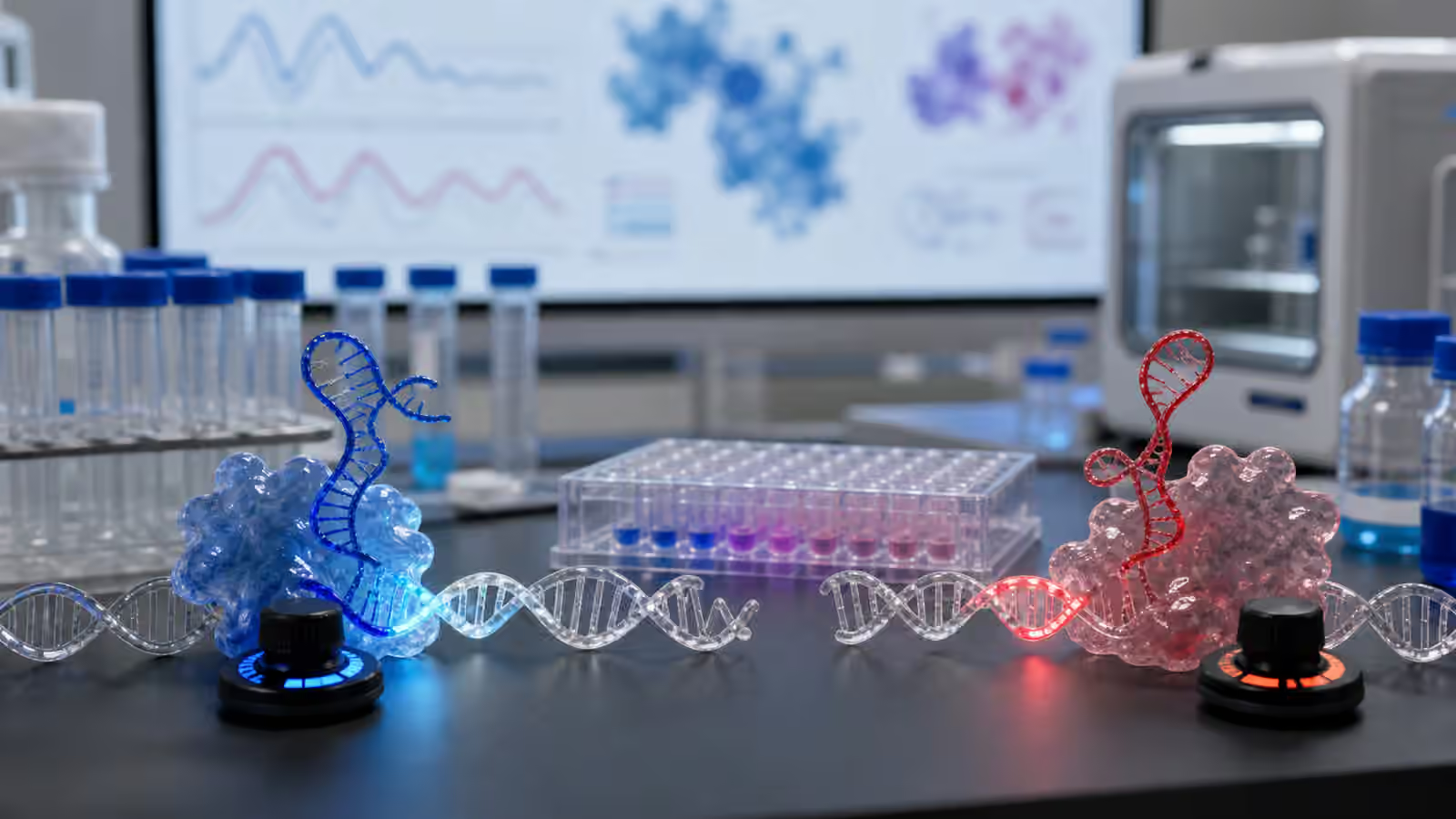
Phages can deliver genetic material to bacteria, which makes them attractive as biological delivery vehicles. A synthetic biology designer may imagine using that delivery ability to add a marker, disrupt a function, carry a sensor, or change a bacterial population in a controlled research or industrial context.
The difficult part is that delivery is not the same as useful delivery. The phage must reach the right bacteria, recognize them, introduce the payload, express it in the desired way, and avoid unwanted effects. The target bacteria may resist. The surrounding environment may inactivate the phage. The payload may burden the host, fail to express, spread differently than expected, or be selected against.
This overlaps with Plasmids, Vectors, and Delivery , but phages add a living ecological layer. A plasmid vector inside a controlled lab workflow is one delivery story. A phage interacting with bacterial populations is another. The phage’s own biology matters, not just the payload.
Good phage synthetic biology therefore treats delivery as a measured process. It asks what fraction of targets are reached, what happens to non-target bacteria, how long the effect lasts, how resistance appears, and how the system is contained or stopped.
Diagnostics and process monitoring can be a practical fit
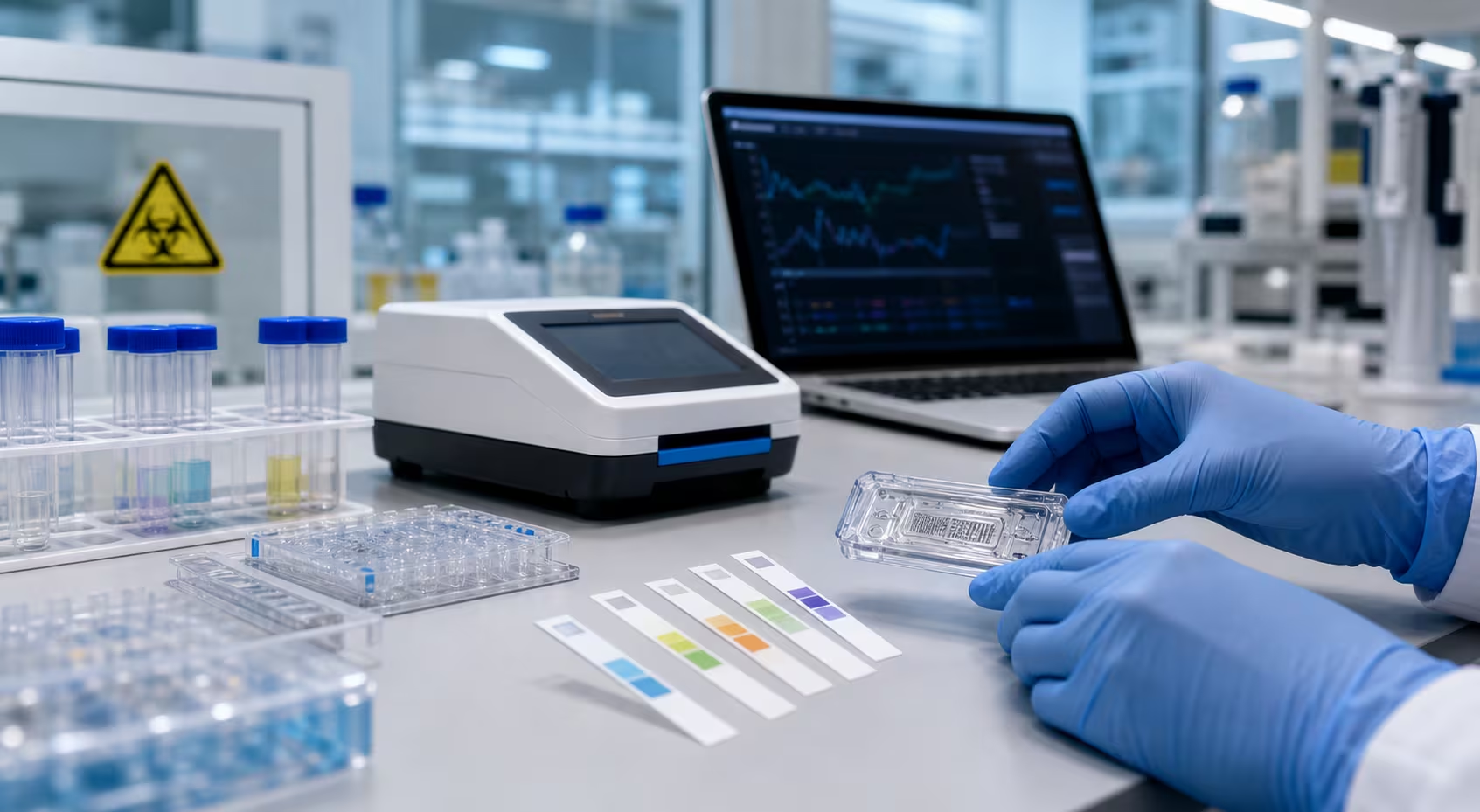
Some phage concepts are attractive because they turn bacterial recognition into a signal. A phage or phage-derived component may be used to help detect a bacterial group, reveal contamination, or distinguish live targets from background material. In controlled manufacturing, food, water, or research settings, that kind of specificity can be useful if the assay is validated.
The word if matters. Real samples contain inhibitors, mixed organisms, debris, temperature variation, storage issues, and ambiguous signals. A phage-based diagnostic idea must survive those conditions. It also has to be compared with existing methods, not only with an idealized no-test alternative.
Bioprocess Quality Control gives the manufacturing context. A production facility cares about contamination, drift, identity, and repeatable evidence. Phage-derived tools may help in some monitoring tasks, but only when they fit the process and produce interpretable results. A clever recognition mechanism is not enough if it does not improve decision-making.
In this sense, phage tools are like other synthetic biology tools. Their value depends less on novelty and more on whether they make a real measurement or intervention more trustworthy.
Therapeutic claims need particular caution
Phages are often discussed as possible tools against harmful bacteria, especially when ordinary antimicrobial strategies are limited. That possibility is scientifically important, but public discussion can become too casual. A phage that affects one bacterial strain may not affect another. The immune system, delivery route, dose, bacterial resistance, product purity, bacterial toxins, patient context, and regulatory oversight all matter.
This guide does not offer medical advice. Any therapeutic use belongs in regulated clinical and professional settings, with appropriate evidence and supervision. Synthetic biology can help design and study phage platforms, but a design concept is not a treatment.
The same caution applies to microbiome claims. The idea of editing microbial communities with precision is appealing. Real microbial communities are dense, adaptive, and context-dependent. Removing or changing one member can have indirect effects. A platform that works in a simplified model may behave differently in an animal, a patient, a production tank, soil, or water.
Microbial Consortia is a good companion because it explains why communities are harder than lone strains. Phages add another moving actor to that community.
Manufacturing phages is its own engineering problem
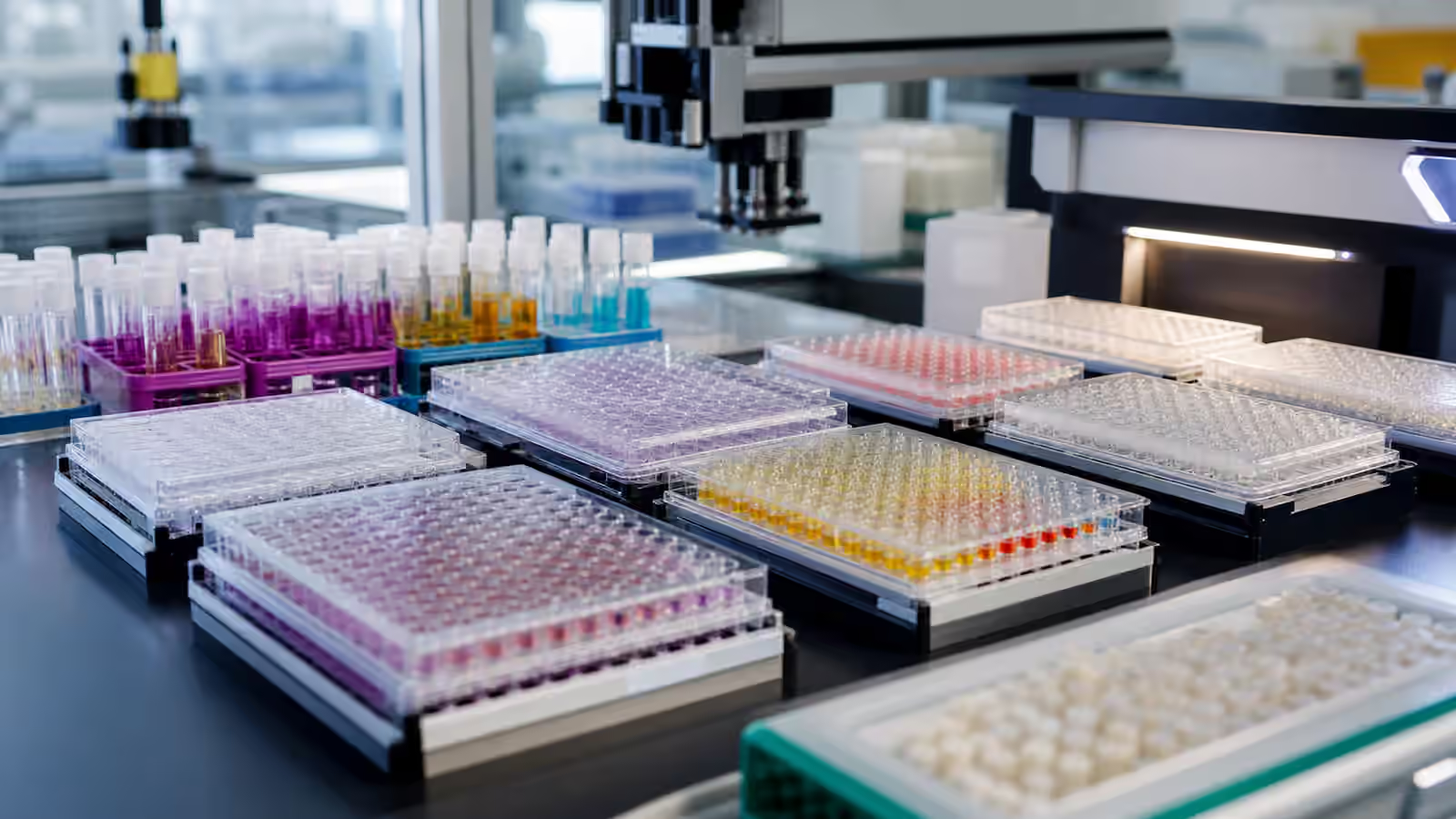
Phages are not small-molecule chemicals that can be synthesized and purified by ordinary routes. Producing them generally involves biological hosts, propagation, purification, characterization, storage, and quality control. The manufacturing process must separate the intended phage preparation from host-cell material, impurities, unwanted variants, and process contaminants.
That process challenge is often underplayed in public descriptions. A phage concept may look precise in a diagram, but a usable product or tool needs identity, potency, purity, stability, and consistency. It must also be packaged, stored, transported, and used under defined conditions.
Downstream Processing applies here even though the product is a biological particle rather than a simple protein or metabolite. Recovery and purification can decide whether the concept is practical. Biological Measurement and Controls also matters because phage preparations need assays that describe both quantity and function.
The lesson is familiar: biology doing something once is not the same as a controlled product.
Evolution is part of the system
Bacteria evolve, and phages evolve with them. A bacterial population can become less susceptible by changing receptors, restriction systems, defense pathways, or growth state. Phages can also change. In some settings, that coevolution is the phenomenon being studied. In engineered settings, it can become a source of uncertainty.
Genetic Stability in Synthetic Biology explains how engineered designs can drift because living systems are under selection. Phage systems add selection at the interaction boundary between virus and bacterium. A design may lose function, narrow or shift host range, select for resistant bacteria, or behave differently as the population changes.
This does not mean phage platforms are unusable. It means durability has to be tested, not assumed. A good design asks how resistance appears, how quickly the effect fades, what monitoring catches change, and whether the intended use requires persistence or only a short controlled window.
Evolution is not an exception in phage synthetic biology. It is the medium the design works inside.
Safety starts with containment and purpose
Phage work raises safety questions that depend on the phage, host bacteria, payload, setting, and use. A contained research assay is different from an industrial monitoring tool, different from an environmental proposal, different from a clinical product. The relevant questions include host range, gene transfer, persistence, off-target effects, resistance, manufacturing impurities, disposal, and access control.
Synthetic Biology Safety frames the broader habit: define the organism or component, the change, and the context. Phage systems need that habit. They also need clear separation between educational discussion, controlled research, manufacturing, environmental deployment, and medical use.
The safety conversation should avoid both panic and glamour. Phages are natural and abundant, but natural does not automatically mean safe for every designed use. Engineered systems can be useful, but useful does not erase containment, quality, and governance obligations.
Responsible phage synthetic biology is specific about purpose. What target is being addressed? What evidence supports specificity? Where will the system be used? How is it contained? How is it measured? What happens when bacteria resist or the phage changes? Who reviews the risk?
A precise tool with an ecological shadow
Phages attract synthetic biology because they combine recognition, delivery, replication, and bacterial specificity in one biological form. Those traits can support sensing, research, process monitoring, targeted interventions, and deeper understanding of microbial systems. They also make phage platforms less modular than a simple part in a catalog.
The useful way to think about phage synthetic biology is not as a shortcut around bacterial complexity. It is a way of working with that complexity under careful constraints. A phage design has to be judged by host range, delivery behavior, stability, measurement, manufacturing quality, containment, and the ecological context around the target bacteria.
When those pieces are treated seriously, phages can become thoughtful tools. When they are treated as viral magic, the story collapses into hype. The difference is evidence: what was targeted, what changed, what was measured, what remained uncertain, and how the system was kept within its intended boundaries.