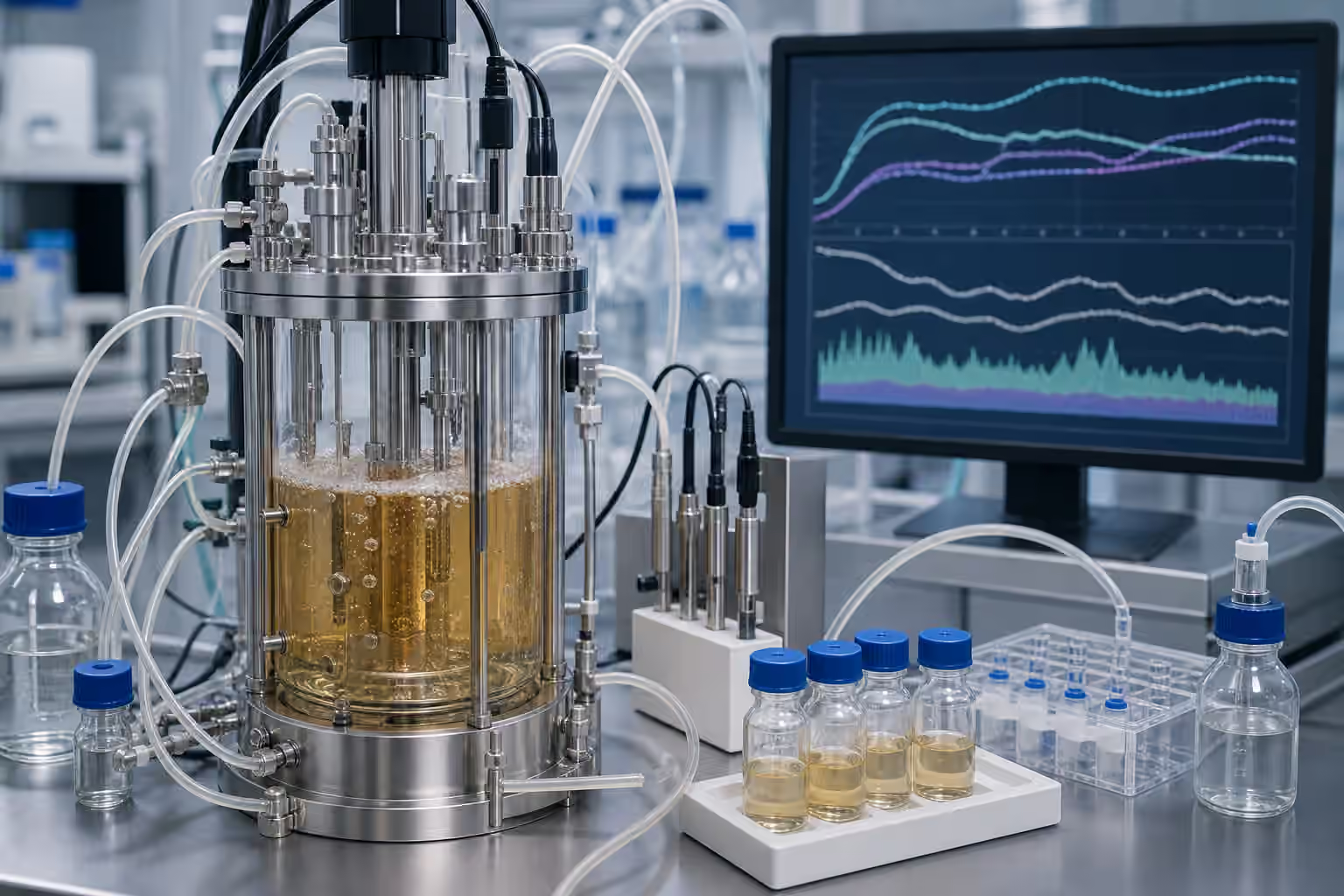
Synthetic biology often describes engineered cells by what they can make. A yeast strain makes a protein. A bacterium makes a pigment. A microbe produces a chemical precursor. A cell factory turns a pathway into a product. That language is useful, but it can make the cell sound as if it runs on intention. It does not. It runs on matter, energy, water, minerals, and the conditions that decide how those inputs move through metabolism. A related reference is Enhancement of Copper Uptake of Yeast Through Systematic Optimization of Medium and the Cultivation Process of Saccharomyces cerevisiae .
Fermentation media is the controlled environment that feeds the cell. It may look like background liquid, but it shapes nearly every part of a bioprocess: growth, expression, pathway balance, product formation, stress, contamination risk, purification, cost, and repeatability. A design that performs in one medium may struggle in another. A strain that looks excellent in a rich bench medium may become uneconomic or messy when the process needs a cheaper, cleaner, or more scalable input.
This guide stays high-level and educational. It is not a recipe, protocol, or instruction set. The useful lesson is strategic: engineered biology does not succeed because the DNA is clever by itself. It succeeds when the cell, medium, process, and measurement support the same job.
Media Is Part of the Design
It is tempting to treat media as a supply choice made after the strain has been engineered. In practice, media belongs inside the design conversation. Carbon source, nitrogen source, salts, trace metals, vitamins, buffering, oxygen behavior, and impurities can all change how the organism grows and what it prioritizes.
A medium that pushes rapid growth may not push product formation. A medium that supports high expression may also increase burden. A medium that works for a simple reporter may not support a multi-step pathway that needs cofactors or precursor balance. A medium that makes an organism happy may complicate downstream purification because it contains components that resemble the product, foul filters, or create unwanted background.
This is one reason Strain Engineering cannot be separated from process development. The production cell and the production environment shape each other. A strain is not finished when the pathway is installed. It has to be understood inside the conditions where it will actually be asked to work.
Feeding Growth Is Not the Same as Feeding Production
Cells often make decisions, in a biochemical sense, between growth, maintenance, stress response, and production. People may want the target molecule, but the cell may prefer to divide, repair damage, store resources, or dump excess carbon into byproducts. Media development is partly the art of steering those priorities without pretending the cell is a machine with one switch.
For some processes, the best medium supports strong early growth and then a production phase. For others, slower growth may reduce stress and preserve stability. Some products appear when nutrients are abundant. Others improve when a nutrient becomes limited or when expression is induced under more controlled conditions. A design that asks the cell to make a difficult protein may need a gentler growth regime than a design that makes a simple metabolite.
The guide to Cellular Burden and Resource Allocation explains why this balance matters. Every engineered function competes for resources. Media can reduce that competition or make it worse. It can supply missing cofactors, but it can also encourage growth that overwhelms oxygen transfer, heat removal, or folding capacity.
Carbon Has a Story
Carbon is the most visible feed because it supplies much of the material and energy for growth and product formation. Refined sugars are common because many production organisms use them well and because they make early process work simpler. Yet carbon choice is never only a lab convenience. It has cost, sustainability, logistics, contamination, and product-claim consequences.
Biomanufacturing Feedstocks looks at that wider supply-chain story: sugar, side streams, gases, water, minerals, and logistics. Media development brings the question into the vessel. A feedstock may be attractive because it is cheap or abundant, but the organism sees the actual chemical mixture, not the business case. If the input varies, contains inhibitors, requires pretreatment, or changes seasonally, the medium and process have to handle that variation.
The carbon source can also change the byproduct pattern. A cell given too much easy carbon may produce acids, alcohols, overflow metabolites, or other compounds that interfere with growth or purification. A carbon-limited process may reduce byproducts but slow production. The right answer depends on the product, host, vessel, and economics.
Nitrogen, Minerals, and Trace Nutrients Matter Quietly
Carbon gets attention, but cells need more than carbon. Nitrogen supports proteins, nucleic acids, and many cellular components. Phosphorus, sulfur, magnesium, potassium, iron, zinc, manganese, copper, calcium, and other minerals can matter in small but decisive amounts. Vitamins and cofactors can influence enzyme performance. Buffers can keep pH from drifting into a range that changes growth or product stability.
These components often work in the background until something fails. A pathway enzyme may need a cofactor that becomes limiting. A medium may support biomass but not product activity. A trace metal may improve one enzyme while stressing the host at higher levels. A rich ingredient may bring useful nutrients and also unwanted variability.
Media development therefore needs measurement, not folklore. A process may look better after an ingredient change, but the reason may be growth rate, oxygen demand, pH behavior, cofactor supply, impurity dilution, or altered expression. Assay Design for Engineered Cells matters here because the assay must distinguish better production from a measurement artifact or a simple increase in cell mass.
Scale Changes the Medium
A medium that behaves well in a shake flask can create problems in a bioreactor. Foam, viscosity, oxygen transfer, mixing, feeding, heat, pH control, and sterilization all become more important as volume grows. An ingredient that is harmless at bench scale may foul equipment, clog filters, vary between lots, or complicate cleaning when the process scales.
Bioprocess Scale-Up explains why the flask is not the factory. Media is one of the reasons. Large vessels cannot always treat nutrients the way small flasks do. Feeding strategy may matter more than starting composition. A carbon source may need to enter slowly to avoid overflow metabolism. A nitrogen source may need to support production without creating impurities downstream. A buffer choice may need to fit process control rather than only bench convenience.
Scale also increases the cost of uncertainty. A small failed flask is disappointing. A failed production run wastes feedstock, equipment time, labor, utilities, and downstream capacity. Media choices that seem minor in research can become major operating decisions in manufacturing.
The Medium Follows the Product Downstream
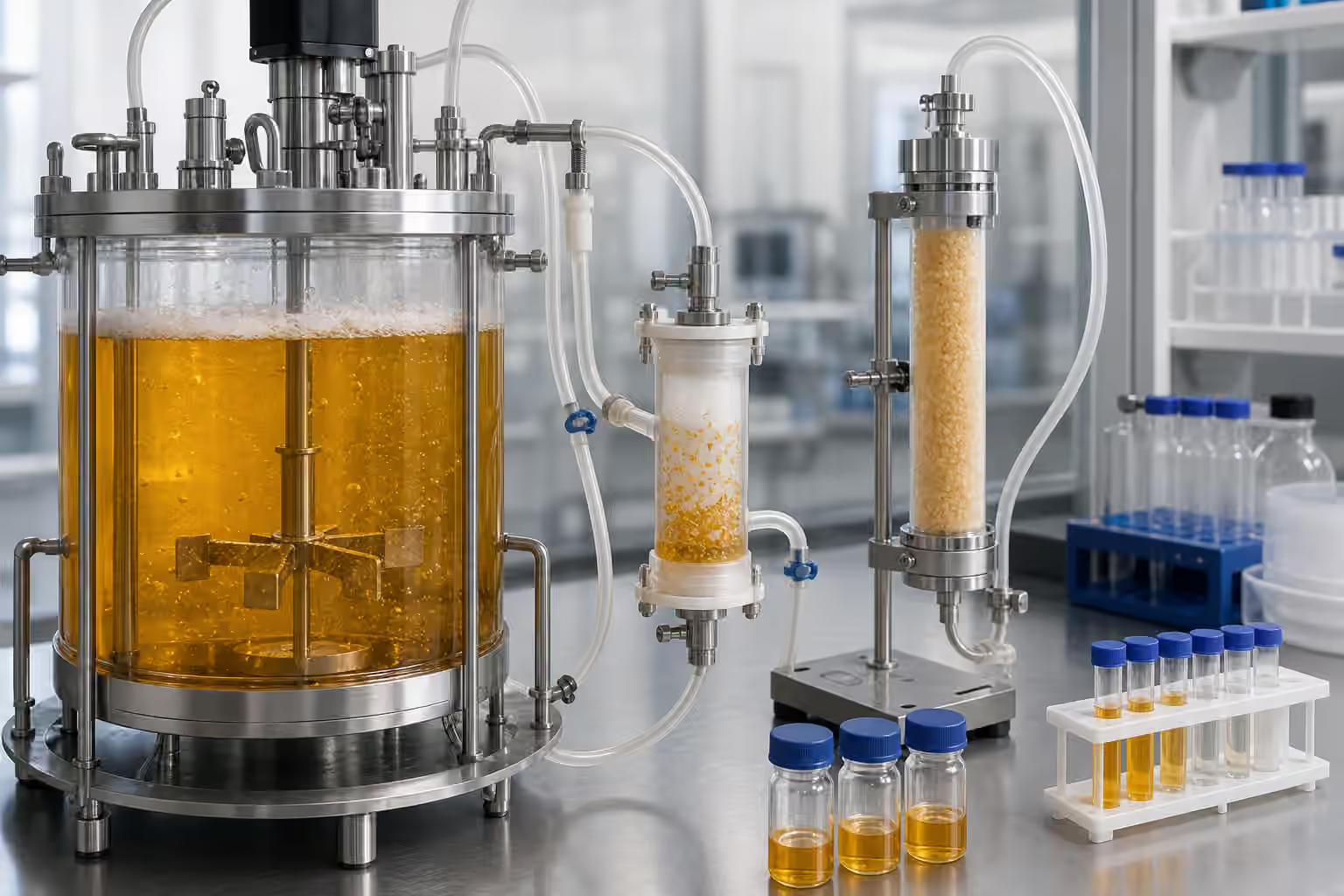
Making the product is only part of the work. The medium follows the product into downstream processing. Proteins, salts, color, debris, antifoams, residual sugars, host-cell materials, and byproducts can all affect filtration, chromatography, extraction, drying, formulation, and waste treatment.
This is where media development connects to Downstream Processing for Bioproducts . A medium that maximizes production in the vessel may still lose if it makes purification expensive or unreliable. A slightly lower titer with a cleaner broth may be better for the whole process. A media ingredient that helps growth may resemble the target molecule, bind to the same purification resin, or create disposal burdens.
Synthetic biology often celebrates the engineered cell, but the full process cares about the broth. The product has to be separated from everything else that helped make it.
Consistency Is a Form of Quality
Media development also supports quality control. If the medium changes from batch to batch, the cells may change with it. A raw material supplier may shift. A side stream may vary by season. A nutrient lot may contain a different impurity profile. Water quality may drift. Storage conditions may alter sensitive components. These changes can appear later as differences in growth, product formation, impurity patterns, or stability.
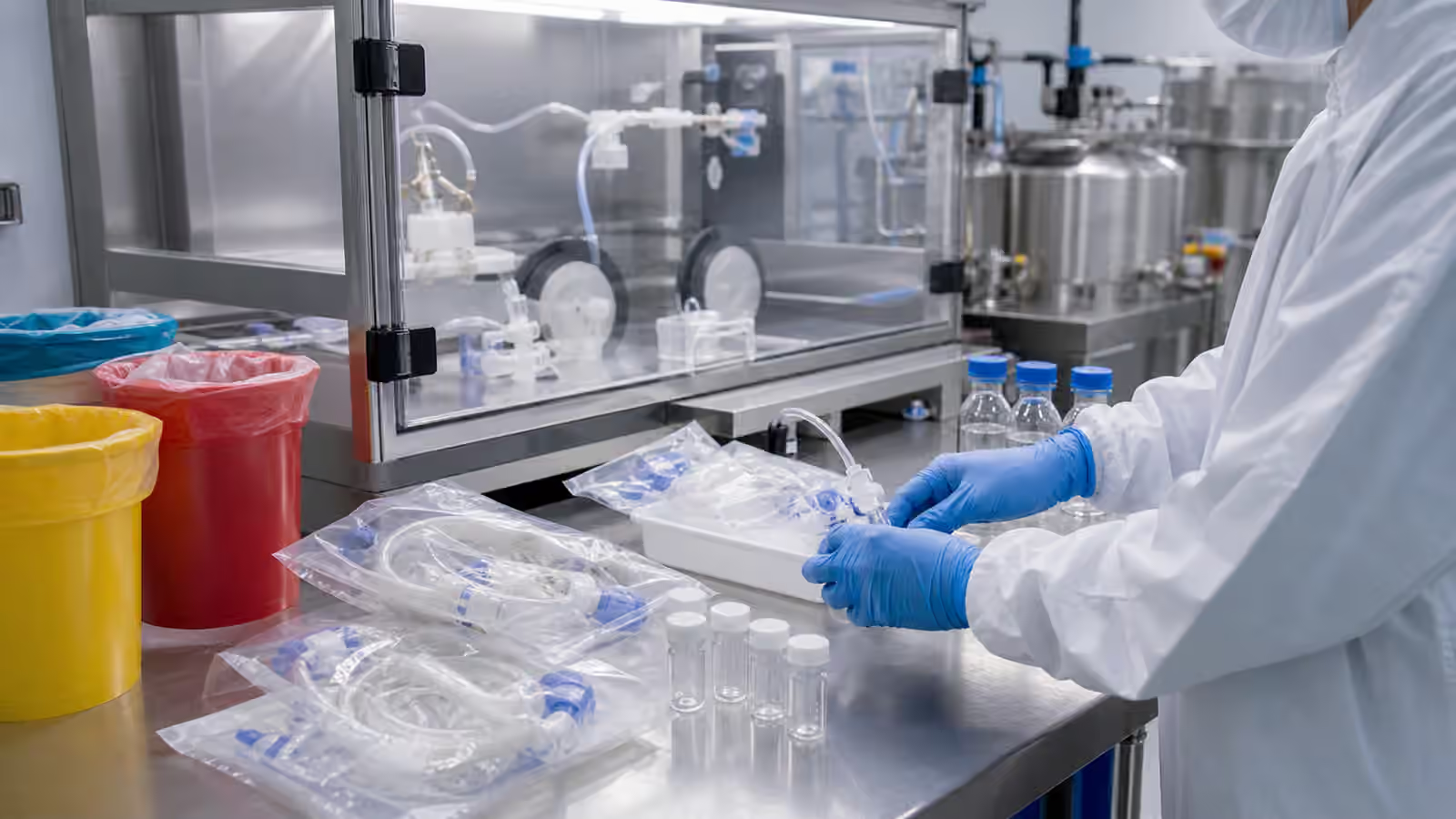
Bioprocess Quality Control treats living production as something that must be kept honest run by run. Media is part of that honesty. Documentation, raw material testing, lot tracking, and process monitoring do not make the biology exciting, but they make it interpretable. When a run changes, the team needs to know whether the strain changed, the process changed, the assay changed, or the food supply changed.
This discipline also supports public trust. A product made with engineered biology may be safe and useful, but trust depends on repeatable manufacturing. The medium is one of the hidden systems that makes repeatability possible.
Feeding the Cell Means Feeding the Evidence
Media development can make synthetic biology feel less like magic and more like engineering, which is where the field becomes strongest. The engineered DNA matters. The host matters. The vessel matters. The assay matters. The medium matters because it is the cell’s immediate world.
When a process works, the medium often disappears from the story. That is fine for a customer who only needs a reliable product. It is not fine for the team building the process. They need to know why the cell grows, when it produces, what it consumes, what it wastes, what stresses it, and how those choices change at scale.
Feeding engineered cells well is not the same as feeding them richly. It means feeding them in a way that supports the biological job, the manufacturing process, the purification path, and the evidence behind the claim. A good medium is not just what keeps cells alive. It is part of how the process tells the truth.