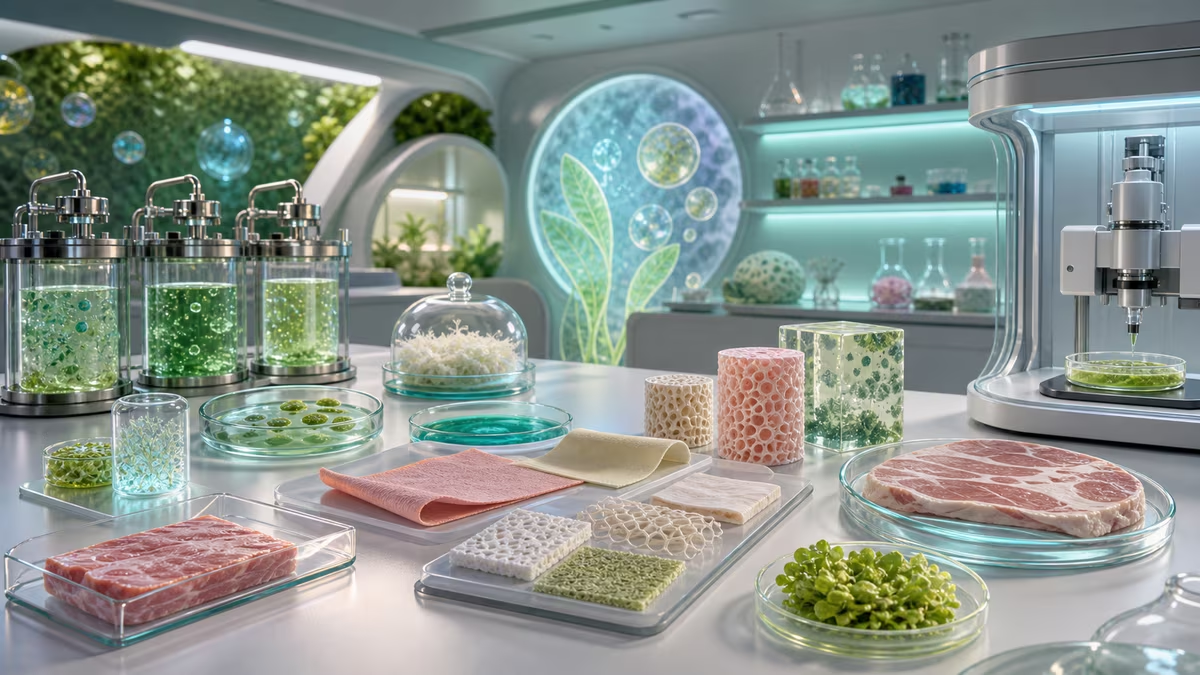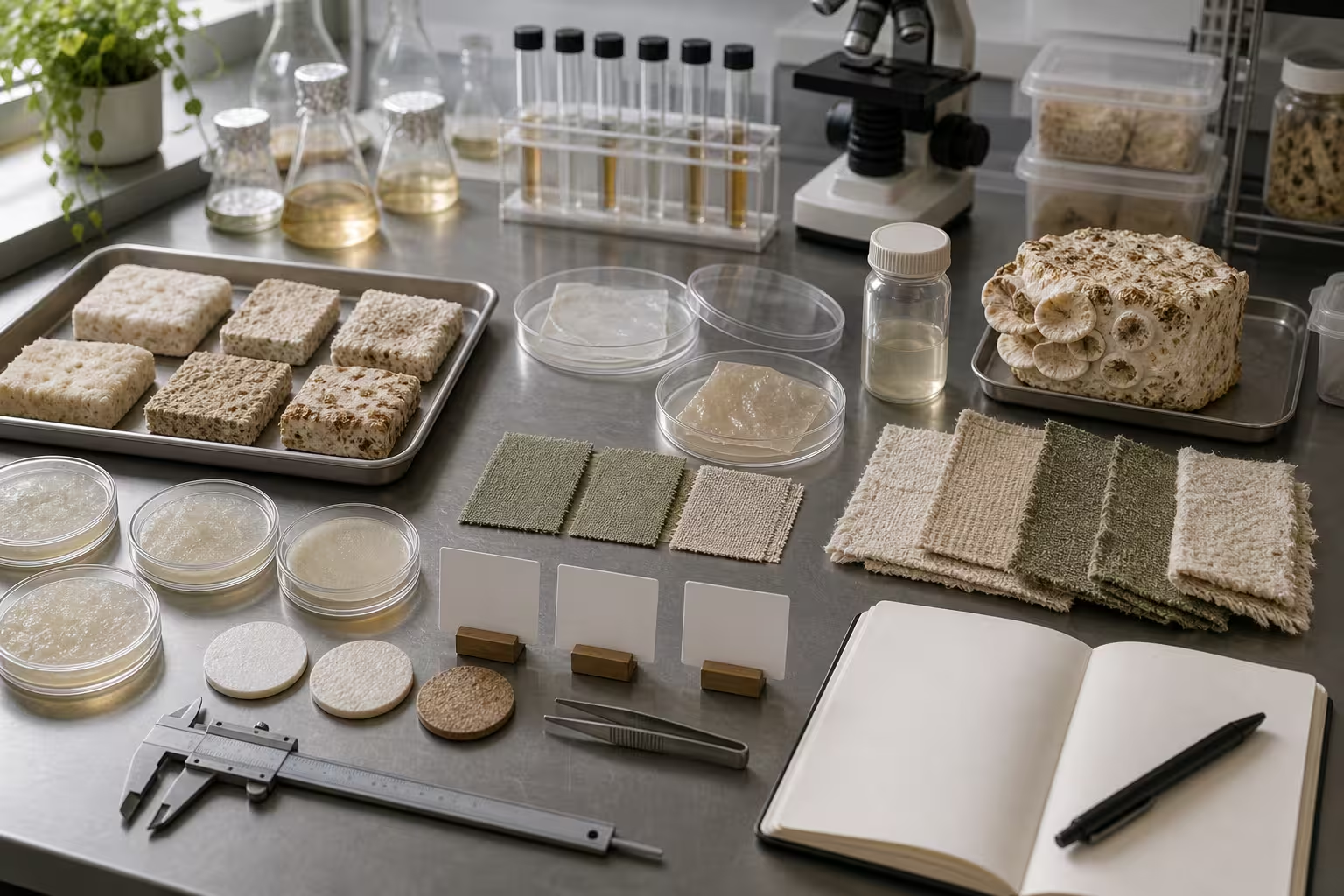
Living materials sound like science fiction until you put them on a table. A mycelium composite can look like pale cork. Bacterial cellulose can dry into a translucent sheet that feels somewhere between paper, leather, and film. Algae-based foams, protein fibers, and bio-derived coatings can resemble ordinary design samples more than lab curiosities. The surprise is not that biology can make materials. Biology has always made wood, bone, silk, cotton, wool, shell, and leather. The newer question is whether people can guide living systems into making useful materials with more control, less waste, and a clearer safety story.
The phrase “living materials” can mean several things, and it helps to separate them early. Some materials are grown by living organisms and then killed, dried, cured, or stabilized before use. Mycelium packaging usually fits here. Some materials are produced by microbes but processed into nonliving ingredients, such as polymers, pigments, or proteins. Some experimental materials remain alive or biologically active, changing in response to humidity, light, chemicals, or damage. The last category is the most dramatic, but the first two are much closer to everyday use.
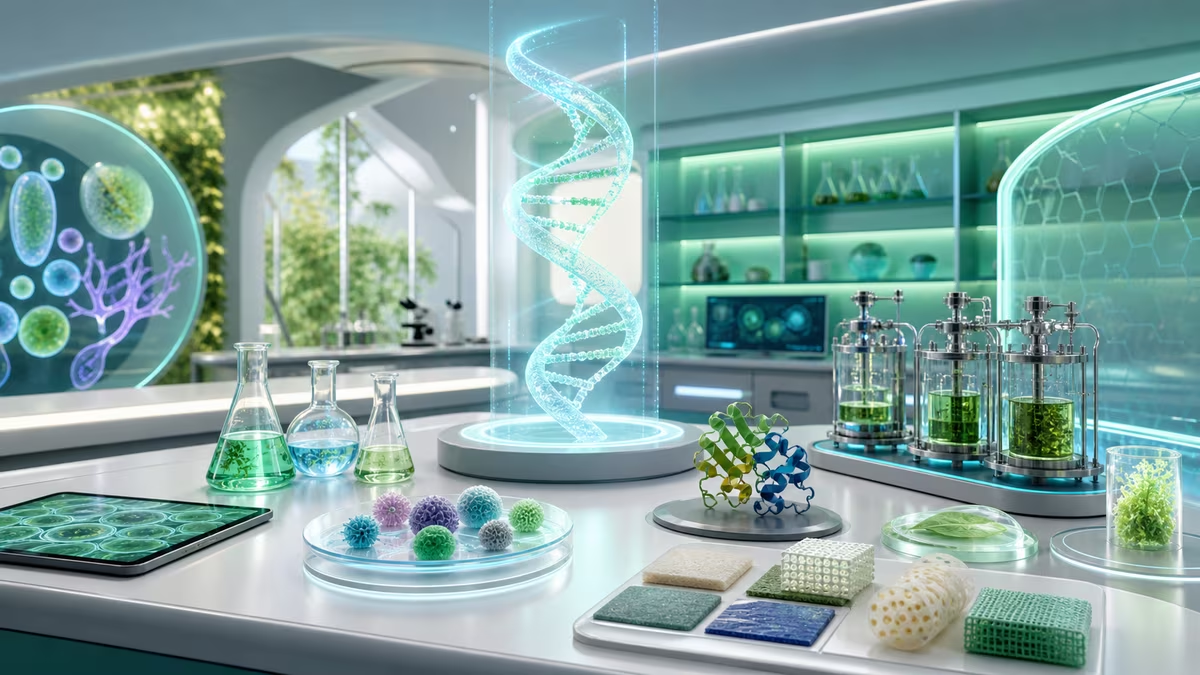
Biology is a manufacturing partner, not a magic wand
The appeal of living materials is that biology can build structure from the bottom up. A fungus can weave a network through agricultural waste. Bacteria can spin cellulose at room temperature. Cells can assemble proteins with molecular precision. These processes can happen in water, at modest temperatures, and with feedstocks that may be renewable or low-value. Compared with mining, petroleum chemistry, high-heat processing, or long supply chains, that sounds attractive.
But biology is not automatically clean, cheap, or scalable. A material still needs energy, water, nutrients, equipment, labor, drying, sterilization or stabilization, quality control, shipping, and end-of-life planning. If the final product needs heavy processing, toxic additives, refrigeration, or short shelf life, the green story gets weaker. A living-materials claim should always be tested against the whole system, not only the beautiful growth phase.
This is why the most credible projects often start with a specific use rather than a grand replacement promise. A mycelium block might be useful as protective packaging before it is useful as structural furniture. A bacterial cellulose sheet might serve a niche design or filtration role before it competes with commodity textiles. A bio-based coating may matter most when it replaces a problematic chemical in a narrow application. Biology tends to enter industry through edges, not through one heroic takeover.
Mycelium teaches the scale-up problem
Mycelium is the rootlike network of fungi. In materials work, it can bind plant fibers, husks, sawdust, or other organic feedstocks into lightweight composites. The basic idea is easy to understand: give the fungus a substrate, let it grow through a mold, then stop growth and dry the form. The result can be shaped, low-density, and potentially compostable under the right conditions.
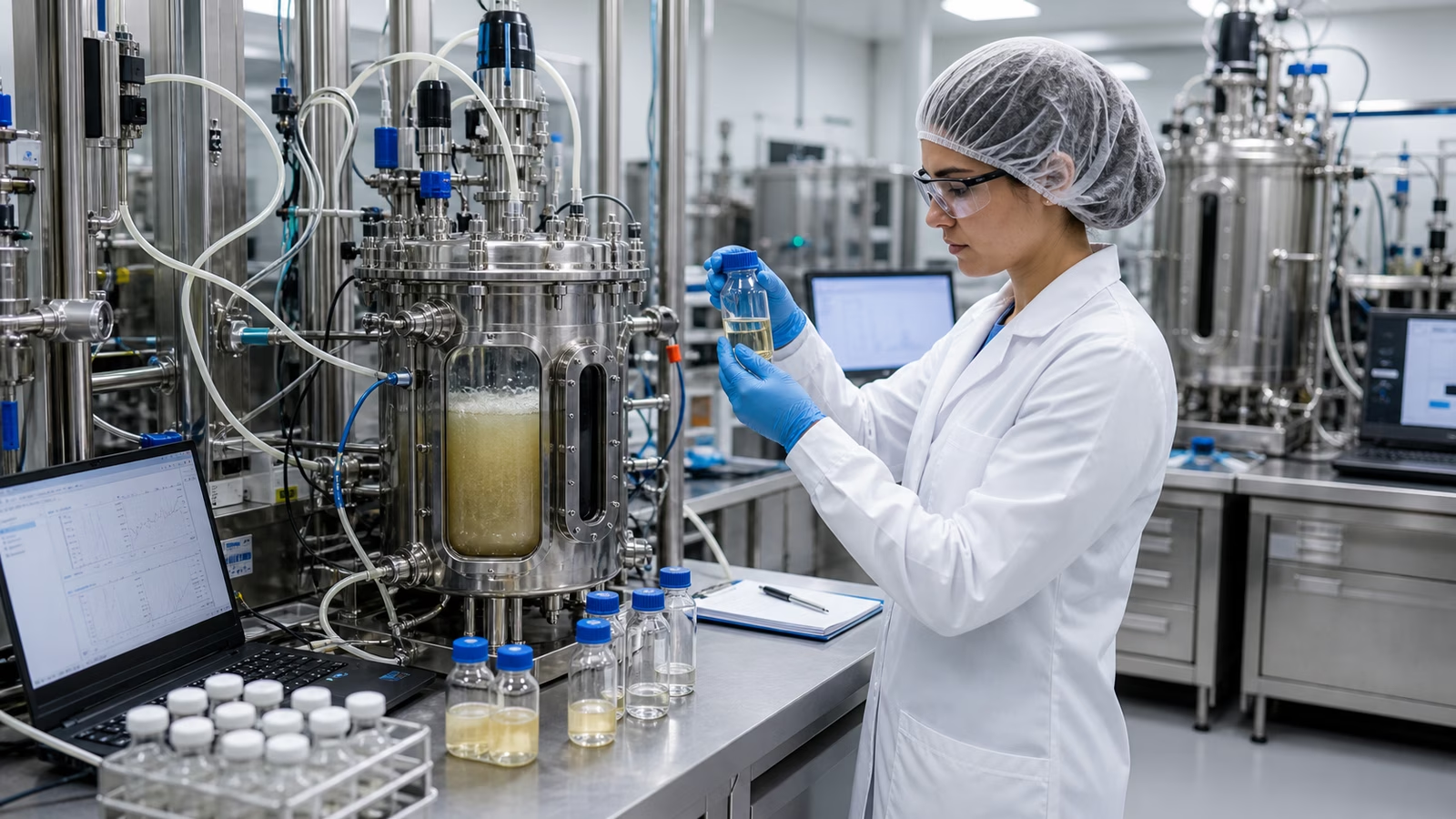
The hard part is consistency. A packaging customer does not want “mostly similar” corner protectors. They want predictable strength, weight, dimensions, moisture behavior, and shelf life. That means feedstock variation matters. Humidity matters. Growth time matters. Contamination matters. Drying matters. The organism is doing useful work, but the factory still has to be a factory.
Mycelium also shows why end-of-life language needs care. “Compostable” does not mean a product vanishes politely wherever it lands. It may need industrial composting, the right moisture, oxygen, microbes, temperature, and time. A material can be better than foam plastic in one disposal system and less impressive in another. Honest living-materials design includes the disposal path from the beginning.
Bacterial cellulose shows texture and water tradeoffs
Bacterial cellulose is made by certain microbes that produce pure cellulose as a film or mat. People often encounter the idea through kombucha scobys, though industrial or design-grade bacterial cellulose is handled more carefully than a kitchen experiment. It can be strong for its weight, highly hydrated, moldable, and visually distinctive. Designers have explored it for textiles, packaging, membranes, and leather-like sheets.
The challenge is water. Bacterial cellulose often begins as a wet material, and drying changes it. It can shrink, stiffen, curl, crack, or lose the texture that made it interesting. To become a product, it may need plasticizers, coatings, lamination, dyeing, tanning-like treatments, or blending with other materials. Each added step changes the environmental and performance story.
This does not make bacterial cellulose a dead end. It makes it a material, not a miracle. Paper, leather, cotton, and synthetic textiles all require processing too. The question is whether bacterial cellulose can do a job better enough to justify its process. For some applications, the answer may be yes. For others, it may remain a beautiful prototype that photographs better than it performs.
Testing decides whether the story survives
Living materials attract attention because the origin story is compelling. A grown lamp shade, a fungus-based shoe insert, or a microbe-made film feels fresh. But products live or die by testing. How does the material handle moisture, heat, abrasion, compression, UV exposure, oils, microbes, cleaning, storage, shipping, and repeated use? Does it smell? Does it shed particles? Does it support mold after purchase? Does it change over time? Can two batches match closely enough?
Testing is not the enemy of imagination. It is the path from gallery object to useful material. A prototype can be allowed to be strange. A product has to be trusted. If living materials are going to matter beyond small design runs, they need boring numbers: tensile strength, flame behavior, water uptake, compression set, shelf stability, biodegradation conditions, and lifecycle analysis.
The safety side is equally important. Most consumer products should not contain active, uncontrolled growth. If a material is meant to be dead or inert, the process must prove that. If a material is intentionally alive, the containment, disposal, allergen, exposure, and ecological questions become more serious. Biology does not stop being biology because the object looks like a tile.
The most useful future may be hybrid
The strongest living-materials future may not be pure biology replacing everything. It may be hybrid systems where biology contributes structure, chemistry, or low-energy assembly, and conventional engineering provides durability, finishing, and scale. A mycelium core might pair with a protective outer layer. A bio-derived polymer might blend with existing manufacturing. A microbe-made pigment might reduce dependence on a harsher chemistry without changing the whole product.
That may sound less romantic, but it is how materials usually change the world. They enter supply chains through compatibility. They solve one expensive, wasteful, or constrained part of the product. Then they improve. The first version does not need to replace plastic, leather, foam, concrete, and textiles at once. It needs to earn a job.
Living materials are worth watching because they change the design question. Instead of only asking what we can extract and refine, they ask what we can grow, guide, stabilize, and return. That is a powerful shift. It deserves enthusiasm, but also measurement. The future will belong to the materials that can be beautiful on a workbench, consistent in a factory, safe in a home, and honest at the end of their life.