Synthetic biology experiments do not fail only at the bench. They can fail later, when a team looks back at a promising result and cannot prove which sample produced it, which construct version was present, which plate map was used, which instrument file belongs to the run, or which small handling change separated one condition from another. The biology may have answered a useful question, but the lab record no longer knows exactly what the question was. A related reference is FDA — Data Integrity and Compliance With Drug CGMP: Questions and Answers .
That is the problem lab data provenance tries to solve. Provenance is the history of the evidence: where a sample came from, what happened to it, which design it represented, which measurements were attached to it, and how those pieces changed over time. In synthetic biology, provenance is not clerical decoration. It is part of the scientific claim because engineered biology moves through many states before it becomes a graph, a decision, or a product story.
The guide to Biological Measurement and Controls explains why controls, calibration, repeatability, and metadata matter once a result is measured. This guide follows the identity trail around those measurements. It asks how a lab keeps a physical sample, a digital design, an automation run, and a data file connected tightly enough that people can trust the interpretation later.
The Sample Is the Center of the Story
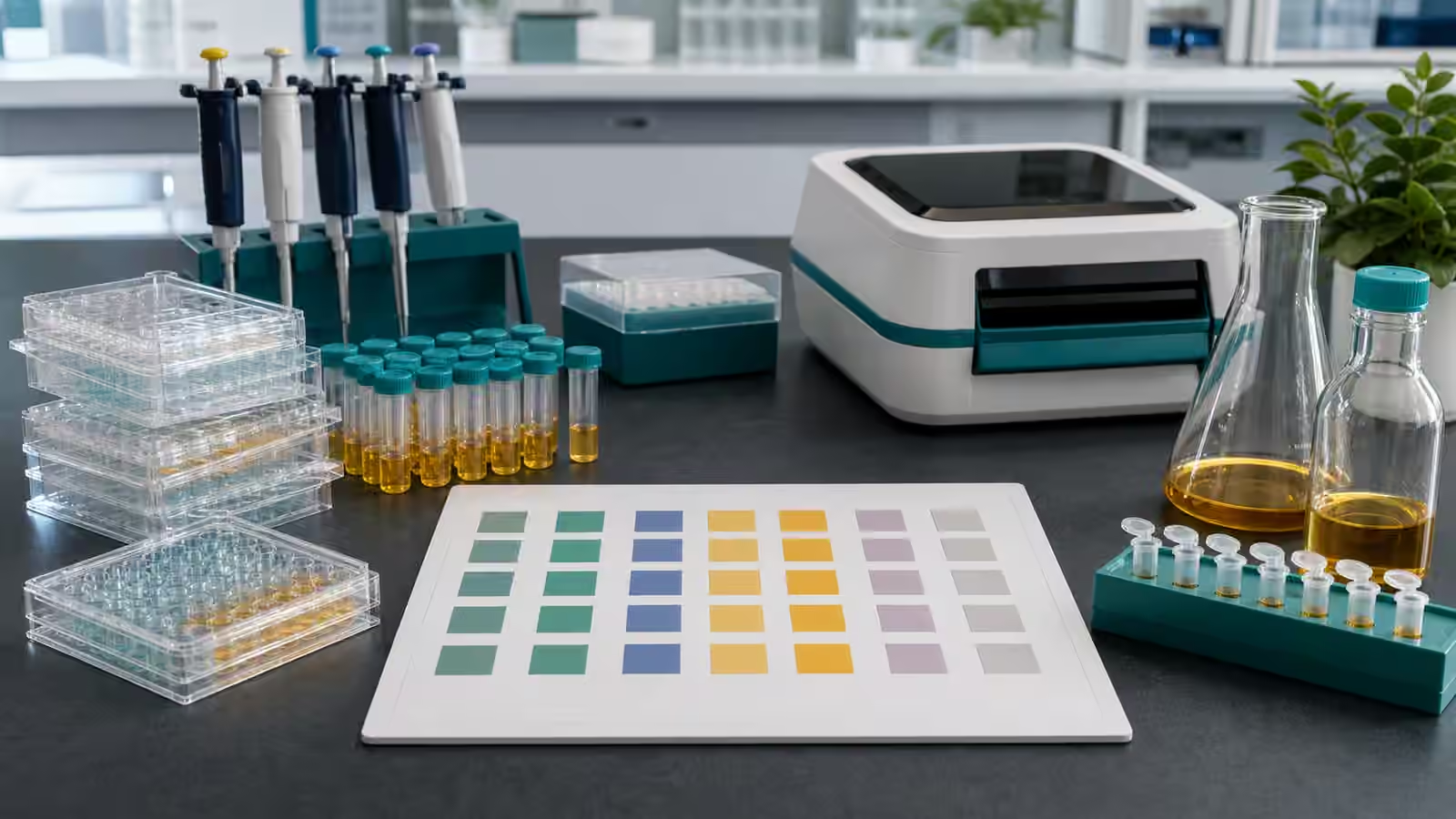
A synthetic biology project often begins with a designed sequence, a circuit diagram, a pathway model, or a strain plan. Those design objects matter, but the sample becomes the practical center of the story once work enters the lab. A tube, colony, plate well, flask, vial, pellet, lysate, extracted DNA sample, or fermentation fraction carries the project from intention into evidence.
Sample identity can look obvious when the experiment is small. A person labels a tube, writes a note, runs the assay, and remembers the context. The weakness appears when the same project expands. Promoter variants, enzyme variants, host strains, media conditions, induction times, temperatures, passage numbers, and replicate runs begin to multiply. A single intuitive label no longer carries enough meaning. The sample needs an identity that can survive transfers, handoffs, automation, storage, and later review.
Good sample tracking does not require every lab to use the same software or the same naming style. The important habit is that identity should be unambiguous and durable. A person should be able to ask what a sample is, where it came from, what happened to it, and why it was measured without relying on someone’s memory of a busy afternoon.
Physical Biology and Digital Records Drift Apart Easily
Synthetic biology has a special provenance problem because it constantly moves between digital and physical worlds. A sequence design may live in one file. Assembly notes may live somewhere else. A plate map may be generated by automation software. The instrument may export a separate data file. Analysis may happen in a notebook, spreadsheet, script, or shared folder. The final figure may appear in a slide deck with none of that history visible.
Each handoff is a chance for drift. A construct version may be renamed. A plate may be rotated. A well position may be copied incorrectly. A robot run may use a revised protocol while the analysis assumes an older one. An instrument file may be downloaded with a generic name. A graph may merge two runs that had different media lots or read times. None of these errors requires dramatic negligence. They are ordinary ways complex lab work becomes detached from its own evidence.
That detachment matters because synthetic biology is already noisy. A weak signal may be real biology, a measurement artifact, a construct error, or a tracking mistake. The more fragile the identity trail, the harder it becomes to separate those explanations. Provenance reduces the number of mysteries that have to be solved by intuition.
Plate Maps Are More Than Layouts
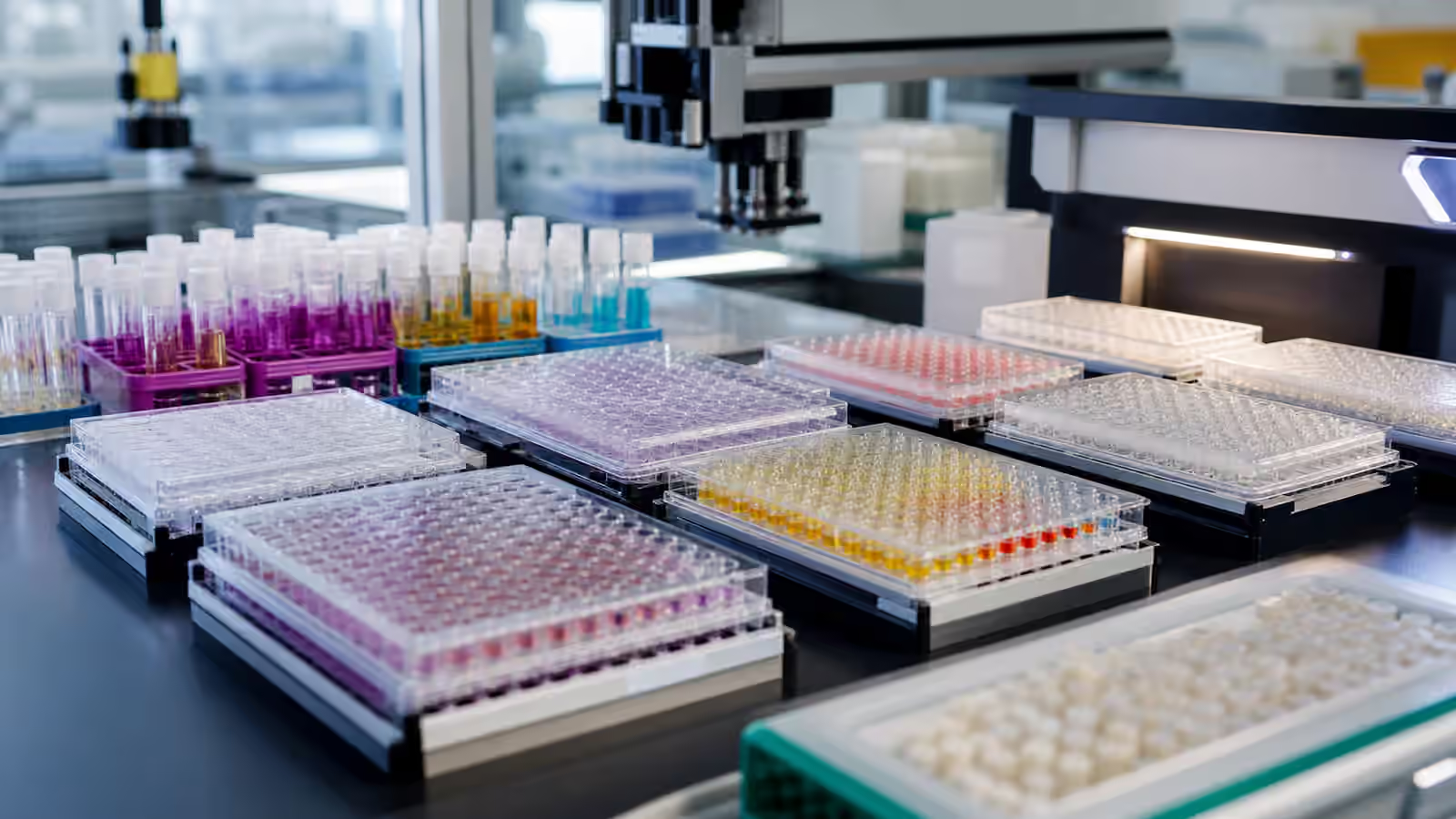
Microplates are useful because they let teams compare many conditions in a compact format, but they also make provenance more demanding. A plate map is not merely a convenience for remembering where samples were placed. It is a structured claim about which biological condition occupied which physical location at which moment.
That distinction becomes important when plate effects, evaporation, timing, contamination, or instrument behavior influence results. A high value in one well means little if the team cannot prove what the well contained. A low value near an edge may reflect biology, but it may also reflect position. A control that was placed in the wrong row may make a whole comparison look stronger or weaker than it really is.
The guide to Assay Design for Engineered Cells treats plate position, controls, and artifacts as part of assay quality. Provenance adds a second demand: the plate map must remain linked to the physical plate and to the data that comes out of the instrument. A careful design loses power if the identity mapping disappears before analysis.
Automation Raises the Stakes
Biofoundries and automated workcells can make synthetic biology faster and more repeatable, but they also move sample identity through more systems. A liquid handler may use a worklist. An incubator may have a run log. A reader may export instrument files. A scheduling system may assign plates to devices. A data pipeline may parse outputs and connect them to design records.
When that chain works, automation can strengthen provenance. It can reduce handwritten ambiguity, record steps consistently, and capture timing that a person might forget. When it works poorly, it can spread a tracking mistake across many samples with impressive efficiency. The robot does not know that the wrong source plate was selected. The parser does not know that a filename was reused. The dashboard does not know that a last-minute protocol change was never recorded.
Biofoundries Explained describes design-build-test-learn workflows as disciplined loops rather than magic machines. Provenance is one of the disciplines that keeps the loop honest. The learn step depends on knowing which design was built, which sample was tested, and which result belongs to it.
Version History Belongs in the Biology
Synthetic biology teams revise designs constantly. A promoter is swapped. A ribosome binding site changes. A codon-optimized gene is updated. A pathway order is adjusted. A host strain receives a new edit. A growth protocol is changed after a weak run. These revisions are the normal work of engineering biology, but they create confusion unless version history stays attached to samples.
A sample labeled with a project name may not be specific enough. Which construct version did it carry? Was it before or after the junction correction? Was the gene the original design or the revised sequence? Did the host include the background edit used in later runs? Was the sample from the same passage history as the one measured last week?
The guide to Construct Verification and Sequencing focuses on proving that physical DNA matches the intended design. Provenance keeps that proof usable. A verified construct is much less helpful if the verification record cannot be tied back to the sample that entered an assay, screen, or scale-up experiment.
Provenance Makes Negative Results Useful
Labs often pay more attention to provenance after an exciting success, but traceability may be just as valuable when a result disappoints. A failed design can teach a team something only if the team knows what actually failed. If the sample identity is uncertain, the failure may be assigned to the wrong promoter, enzyme, host, assay, or process condition.
This matters in pathway design and strain engineering. A low product signal might mean an enzyme bottleneck, pathway burden, poor expression, product toxicity, assay interference, construct instability, or a mistaken sample transfer. If the identity trail is strong, the team can narrow the explanation. If it is weak, the team may redesign biology when the real problem was a swapped well or a missing context note.
Good provenance does not guarantee interpretation, but it keeps interpretation from floating free. It turns a failed run into a usable event in the project history. The next design can learn from it because the previous design is still legible.
Data Should Be Reusable Without Becoming Detached
Synthetic biology increasingly depends on reusing lab data. Teams compare new variants with old controls, train models on previous screens, revisit a strain after a scale-up surprise, or examine whether an assay behaved differently across seasons and operators. Reuse is powerful only when the old data carries enough context to be understood.
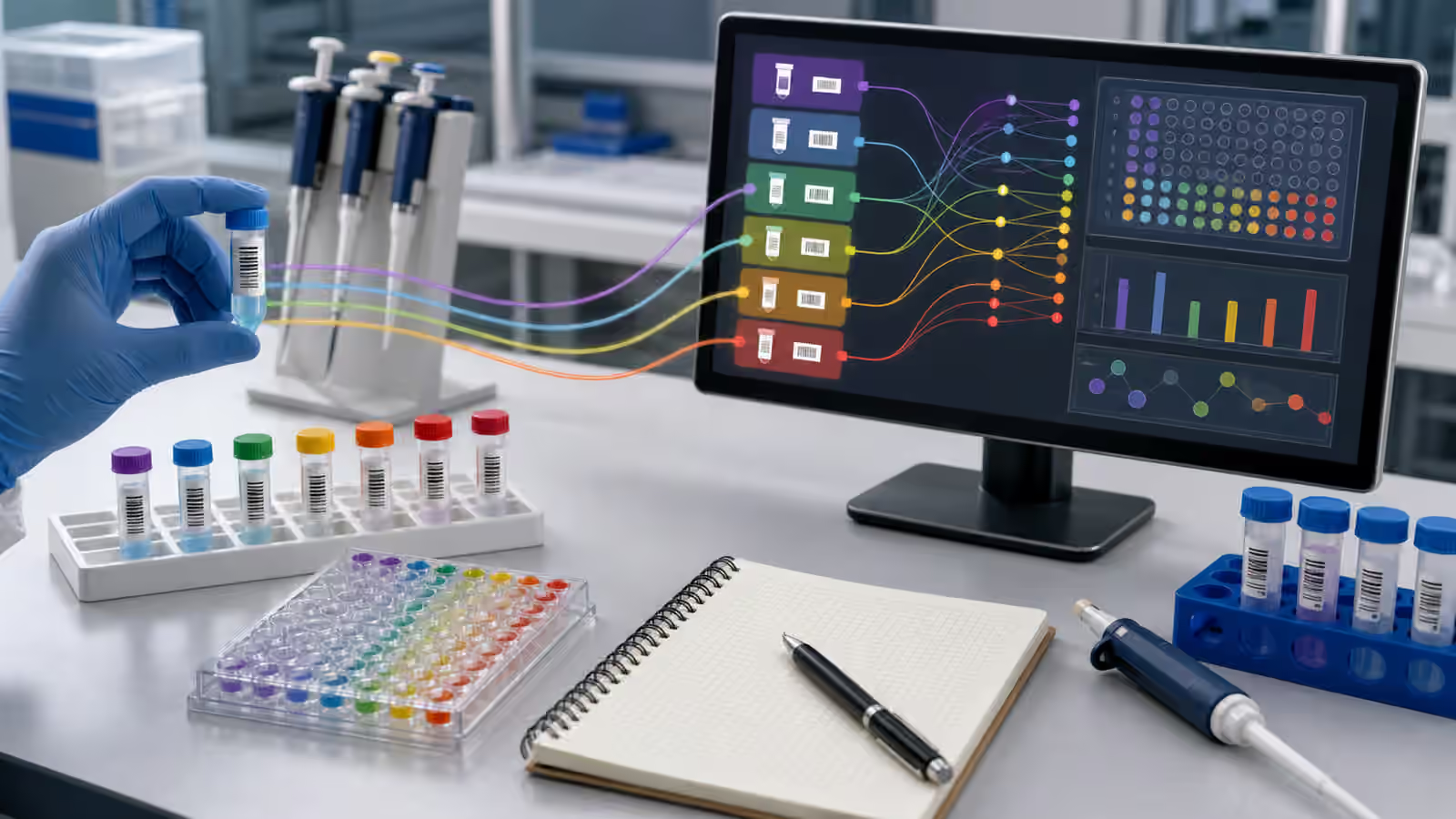
This is where provenance becomes more than archiving. Storing a file is not the same as preserving evidence. A directory full of instrument exports may be almost useless if filenames are generic and plate maps are missing. A spreadsheet may be dangerous if it contains copied values without links to raw files, sample IDs, or analysis steps. A clean plot may hide a messy path from sample to conclusion.
The stronger pattern is to treat raw data, processed data, sample identity, design version, protocol context, and analysis logic as connected layers. Different labs will implement that pattern differently, but the principle is stable. A future reader should be able to follow the chain without guessing which link belongs where.
Traceability Builds Trust Before the Claim
Synthetic biology product claims often emphasize output: a molecule was produced, a sensor responded, a protein folded, a strain improved, a process scaled. Those outcomes matter, but the trust story begins earlier. It begins with whether the evidence can be traced.
Synthetic Biology Product Claims and Public Trust argues that clear claims need clear evidence. Provenance gives that evidence a backbone. It lets a team explain not only what a result showed, but which sample showed it, under which conditions, connected to which design and which measurement. That detail may feel quiet compared with the biological idea, but it is what lets other people believe the idea without having been in the room.
The mature lab treats sample tracking as part of experimental design. It does not wait for confusion to prove that records matter. It assumes confusion is always possible and builds habits that make the path from sample to conclusion visible. Synthetic biology can write new instructions for living systems, but those instructions become useful only when the evidence stays attached to the material that carried them.