Enzymes are the part of synthetic biology that often feels least futuristic because they are already everywhere. They help wash clothes, make food, process textiles, clarify juice, soften dough, produce ingredients, support medicines, improve animal feed, treat leather, process paper, and replace harsher chemistry in some industrial steps. They do not usually arrive with the drama of a lab-grown organ or a glowing engineered cell. They arrive as quiet workhorses.
That quietness is exactly why they matter. An enzyme is a biological catalyst. It helps a chemical reaction happen faster or under gentler conditions without being consumed in the same way a raw material is. Living systems use enzymes constantly because life depends on controlled chemistry. Industry uses them because controlled chemistry is valuable when it saves energy, reduces waste, improves specificity, or makes a process possible at all.
Synthetic biology gives enzyme work a larger toolkit. Researchers can discover enzymes in nature, produce them with microbes, adjust their sequences, screen variants, improve stability, and design processes around what they do well. The field is not only about inventing new life forms. Sometimes it is about finding or tuning one protein so a factory step becomes cleaner, cheaper, or more precise.
Enzymes are specific in a useful way
Many industrial chemicals act broadly. They heat, dissolve, bleach, oxidize, reduce, or break things apart. Enzymes can be more selective. One enzyme may cut a certain kind of bond. Another may work best on starch, fat, protein, cellulose, or a specific molecule. That specificity can be useful when a manufacturer wants one change without damaging everything around it.
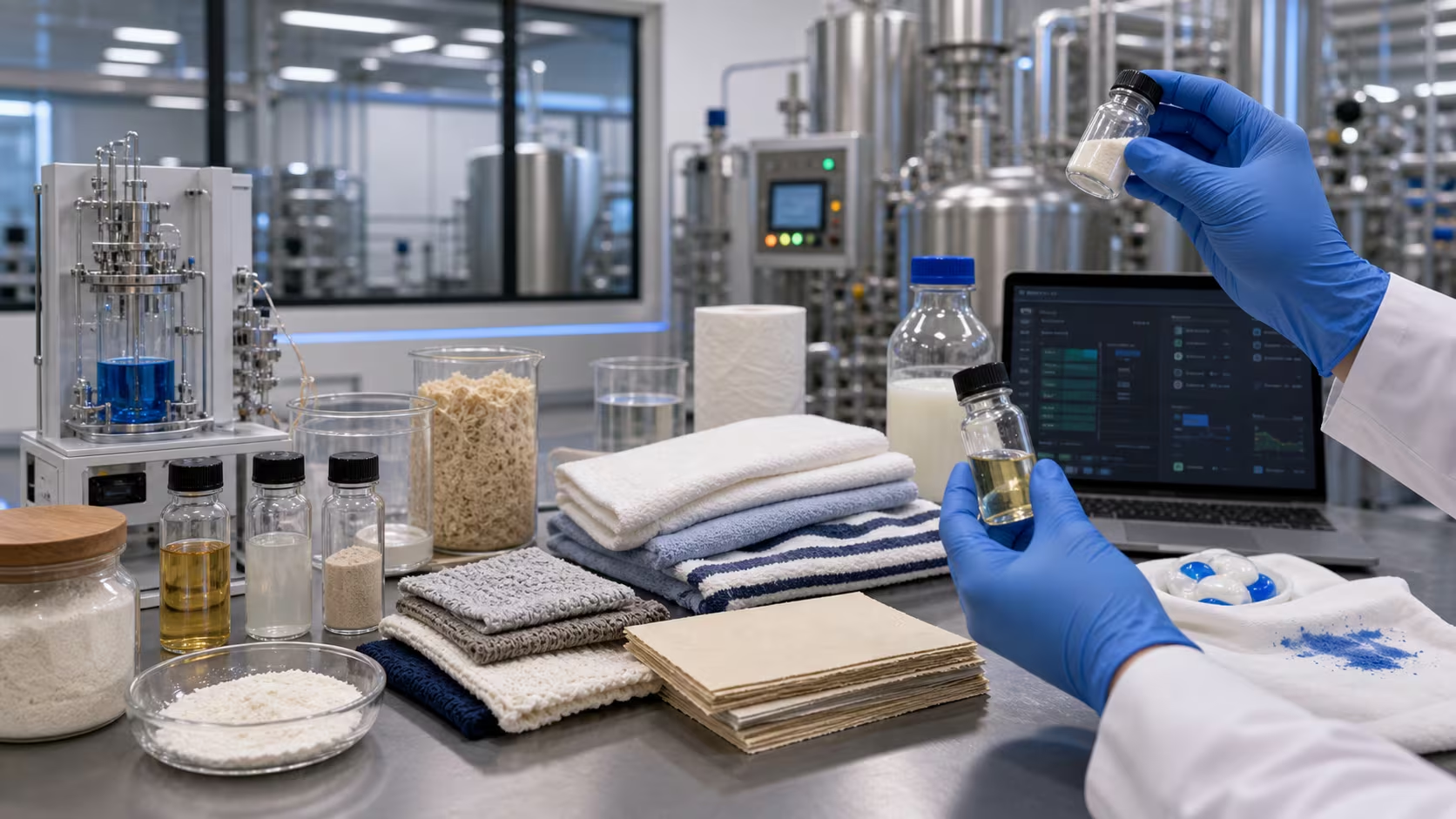
Laundry is a familiar example. Some detergents use enzymes that help break down protein stains, fats, or starches so clothes can be cleaned at lower temperatures. The consumer may only notice that a shirt comes out clean. Behind that ordinary result is a biological catalyst doing a narrow job in a messy environment of water, fabric, soil, surfactants, and motion.
Food production uses enzymes in many ways too. They can help convert starches to sugars, modify texture, clarify liquids, develop flavor, improve baking performance, or produce particular ingredients. Cheese, bread, beer, juice, lactose-free dairy, sweeteners, and flavor compounds can all involve enzyme steps somewhere in the story.
The magic is not that enzymes make industry natural and harmless by default. The value is that they can sometimes do a specific job with less heat, less harsh chemistry, or fewer unwanted side reactions than another process would require.
Biology still has to meet factory reality
An enzyme that works beautifully in a small test may not be ready for industry. Factories care about temperature, acidity, solvents, impurities, storage, mixing, supply chains, regulation, cleaning, consistency, and cost. An enzyme may be excellent at its reaction but fragile in the actual process. It may work slowly. It may be inhibited by something in the feedstock. It may be expensive to produce or purify. It may lose activity during storage.
This is where enzyme engineering becomes practical rather than decorative. A team may try to improve stability, activity, tolerance, expression level, or specificity. The goal is not to create the most impressive protein in a paper. The goal is to create one that works in the process people actually have or in a redesigned process that makes economic sense.
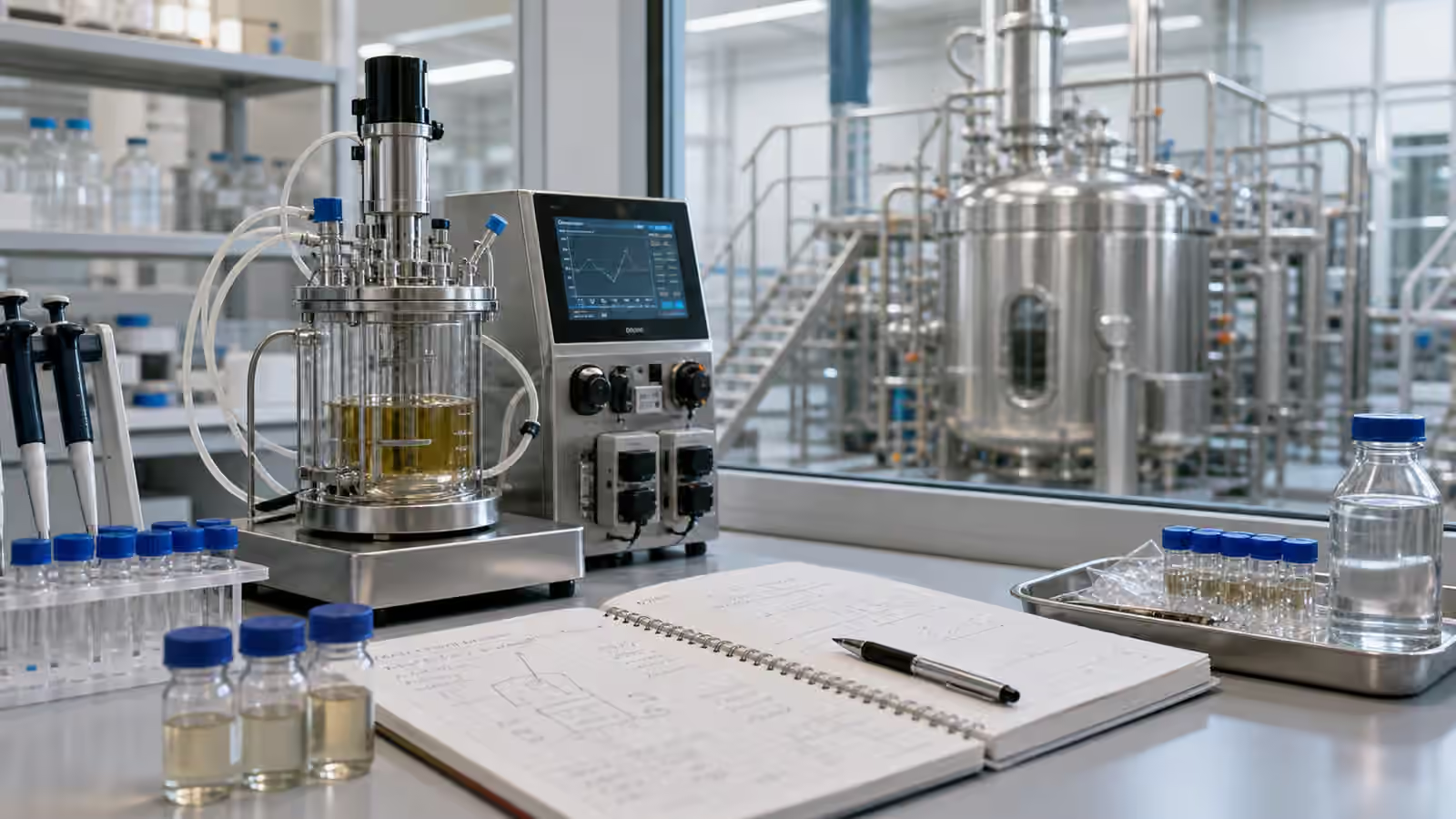
That process discipline connects directly to Bioprocess Scale-Up . Producing an enzyme is itself a manufacturing problem. The host organism must make enough of it. The process must be controlled. The product must be recovered, formulated, shipped, and used reliably. A better enzyme sequence is only part of the industrial story.
Discovery starts with nature, then keeps going
Nature is full of enzymes because organisms have been solving chemical problems for billions of years. Microbes in soil, hot springs, compost piles, oceans, animal guts, and extreme environments all carry enzymes adapted to their conditions. Scientists can search that diversity for useful activity. Modern sequencing and computational tools make it easier to find candidates, but discovery still needs measurement. A promising sequence is not the same as a working industrial enzyme.
Once a useful enzyme is found, synthetic biology can help produce it in a manageable host and improve it. Directed evolution, screening, rational design, machine learning, and structural biology can all play roles. The broad idea is simple: make variants, test what they do, learn from the results, and repeat. The details can be complex, but the rhythm is familiar across synthetic biology. Design, build, test, learn.
The important constraint is that improvement depends on the test. If the screening environment does not resemble the real process, the team may optimize for the wrong thing. An enzyme that looks best under neat laboratory conditions may not be best in a hot, impure, high-volume industrial stream. The measurement has to respect the eventual job.
Enzymes can make old industries less blunt
Some of the most important enzyme applications are not glamorous new products. They are improvements inside existing industries. A textile process may use enzymes to modify fibers, remove fuzz, or support finishing steps. A paper process may use enzymes to help with pulp treatment or bleaching support. A food ingredient process may use enzymes to produce a desired sweetness, texture, or flavor more precisely. A chemical process may use an enzyme for a step that would otherwise need harsher conditions.
These changes rarely look revolutionary from the outside. A shirt feels softer. A detergent works in cooler water. A food product has a consistent texture. A process uses less energy or creates less waste. The public may never know an enzyme was involved.
That invisibility is not a weakness. It is how many real technologies enter the world. They do not replace everything at once. They make one step better, then another. Over time, the factory changes.
Sustainability is a question, not a slogan
Enzymes are often described as greener because they can work under mild conditions and reduce harsh chemistry. That can be true. It is not automatic. A sustainability claim has to include the whole process: feedstocks, fermentation, purification, formulation, shipping, storage, use conditions, waste, and what the enzyme replaces.
If an enzyme lets a process run at lower temperature, that may save energy. If it improves yield, that may reduce waste. If producing the enzyme requires expensive inputs or creates its own burdens, the picture changes. The honest comparison is not enzyme versus no enzyme in the abstract. It is one real process versus another real process.
This is where synthetic biology needs mature accounting. The field can help industry become cleaner, but only when measured carefully. Good intentions do not substitute for life-cycle analysis, process data, and transparent tradeoffs.
The future is more designed, but still practical
Industrial enzyme work is moving toward more design, more data, and more automation. Better protein models may suggest useful variants. Biofoundries may test larger libraries. Improved hosts may produce enzymes more efficiently. Process engineers may design factories around biocatalysis from the beginning instead of trying to bolt enzymes onto old workflows.
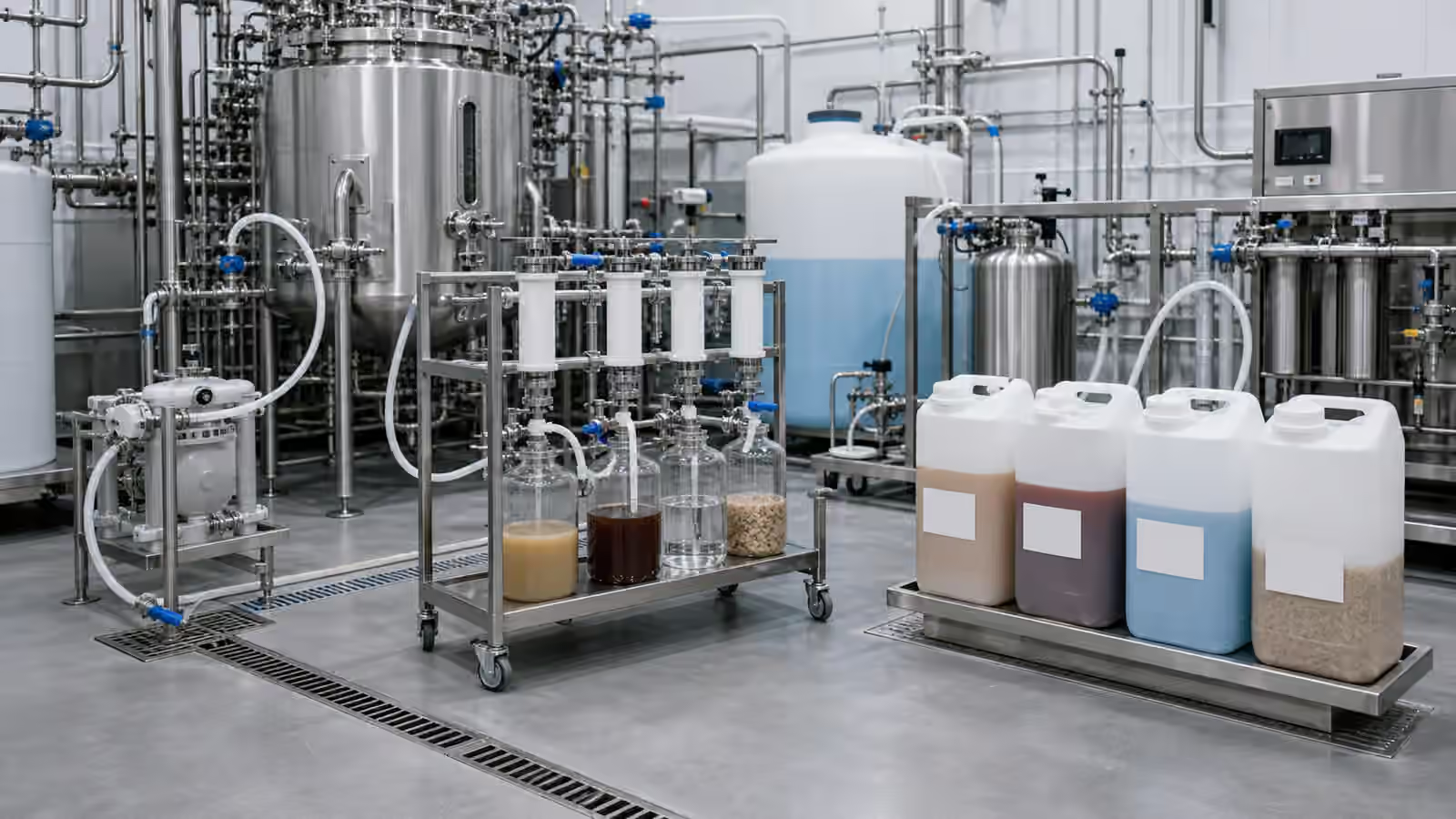
Even so, the future will remain practical. The enzyme has to survive the process. The process has to make money or meet a real public need. The product has to be safe and consistent. The supply chain has to work. The factory operator has to trust the material in a drum, not only the diagram in a presentation.
That is why industrial enzymes are such a good window into synthetic biology. They show the field at its least theatrical and most useful. Biology becomes a tool, but not a fantasy tool. It has limits, costs, tolerances, and maintenance. It has to earn its place beside chemistry, machinery, and human operations.
The quiet workhorse is still a workhorse. That is the point.