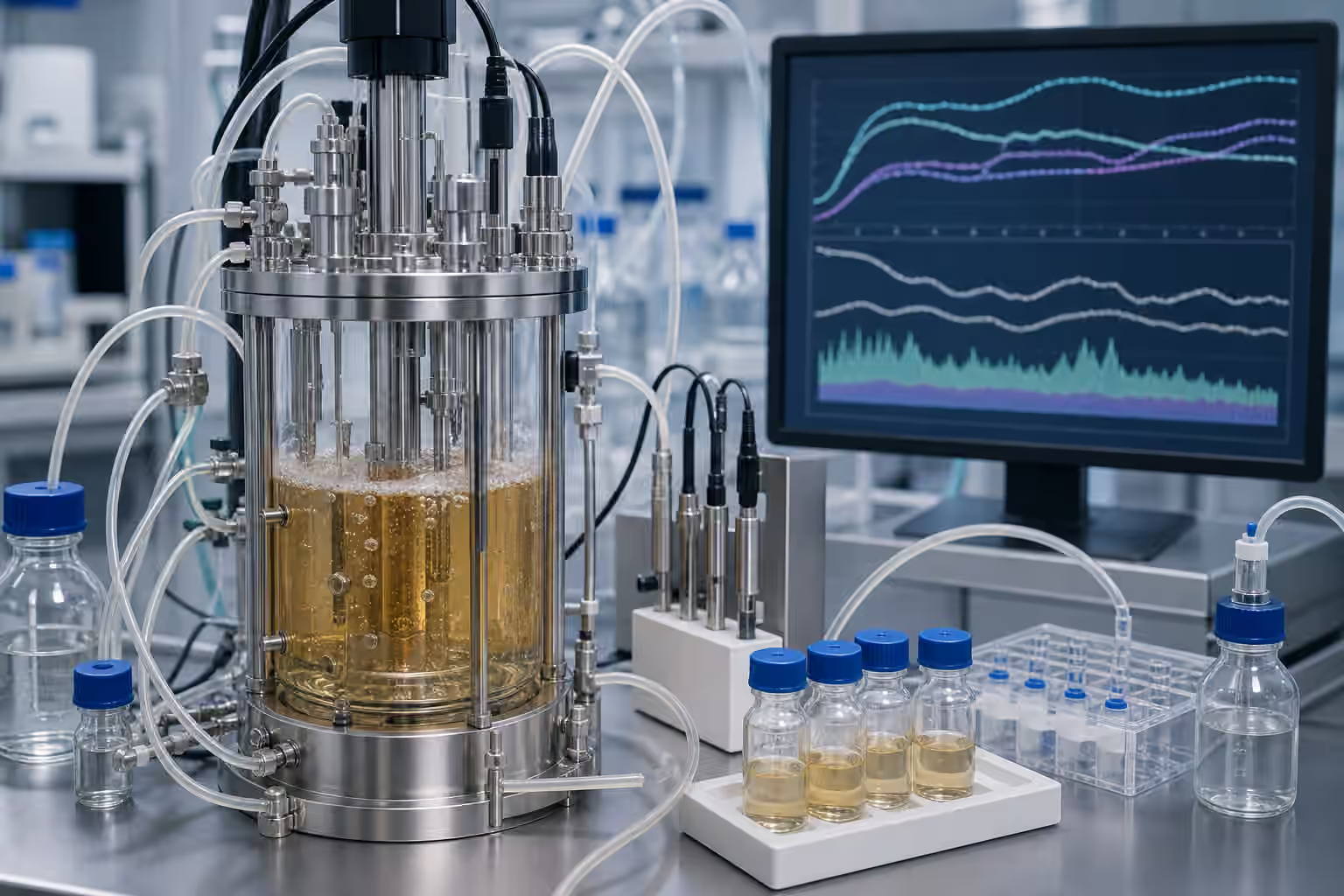
A fermentation process usually separates production from recovery in the imagination. First the cells make the product. Then the run ends. Then downstream processing begins. That order is simple to explain, and for many products it is the right practical sequence. But some products cause trouble while the cells are still working. They may inhibit growth, damage membranes, evaporate, degrade, bind to biomass, shift pH, or push the culture away from the conditions that made production possible. A related reference is In-situ product recovery in microfluidic bioreactors .
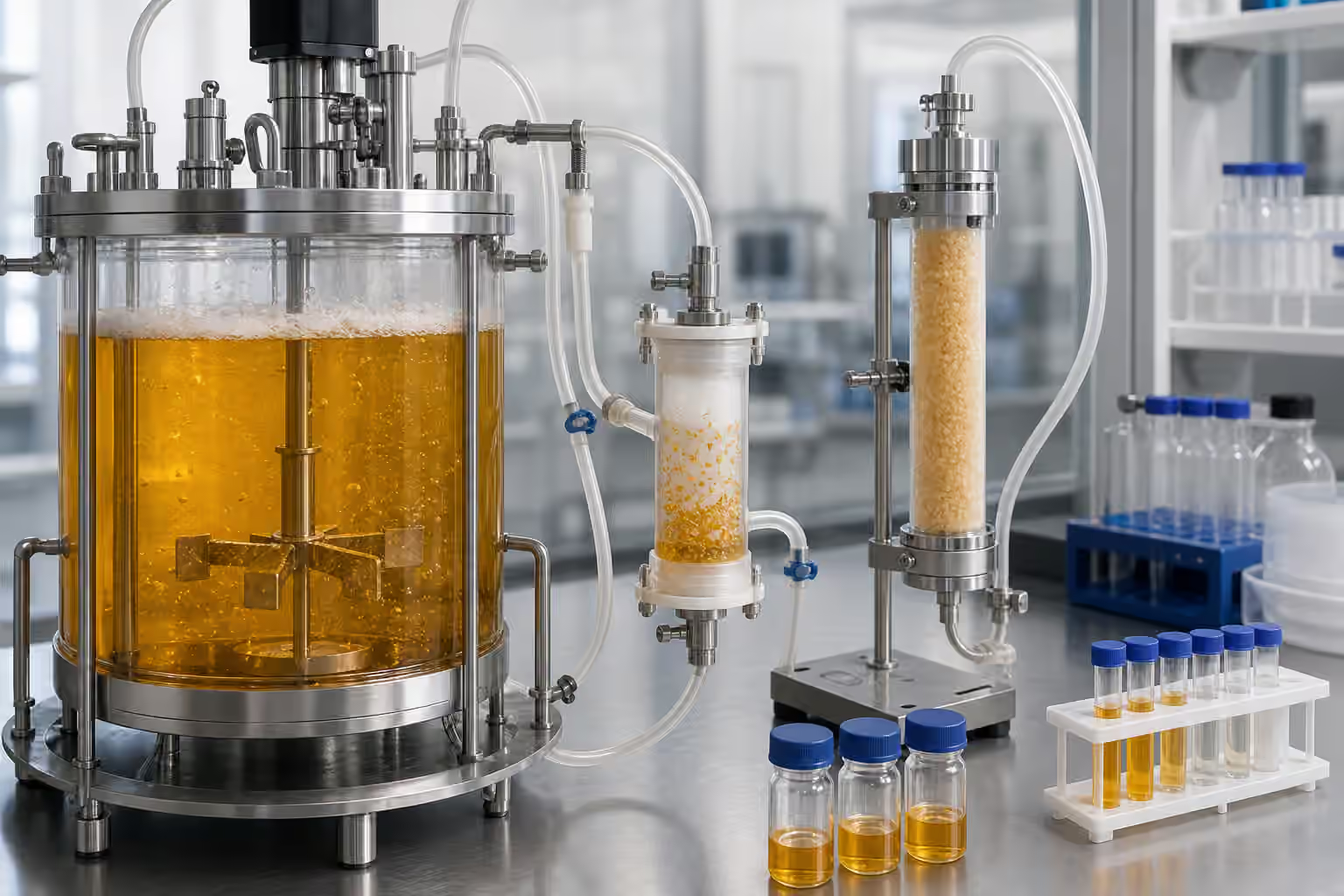
In situ product recovery asks whether some of the product can be removed during the run rather than waiting until the end. The phrase can sound like process jargon, but the idea is plain: let the cells keep making, while a side process captures, extracts, adsorbs, strips, filters, or otherwise reduces the product burden. If it works, recovery is not only a downstream step. It becomes part of the living process environment.
This guide connects Downstream Processing with Bioprocess Scale-Up and Transporters and Membrane Engineering . Product recovery is not only what happens after biology. Sometimes it changes what biology is able to do.
Product toxicity can set the ceiling
A pathway may be capable of making a target molecule, but the product may become toxic before the economics make sense. The molecule might disrupt membranes, inhibit enzymes, interfere with growth, denature proteins, or create stress responses that reduce production. The cell may respond by slowing the pathway, exporting less, mutating away from the burden, or routing metabolism elsewhere.
Adaptive Laboratory Evolution can sometimes improve tolerance, and Strain Engineering can tune the pathway. In situ recovery adds another option. Instead of asking the cell to tolerate ever-higher product concentrations, the process can try to keep the concentration lower while total recovered product continues to rise.
This distinction matters. A vessel can produce a large total amount over time even if the dissolved concentration remains moderate, as long as product is captured and the cells keep working. The process is then designed around flux, not only final titer. That can be useful, but it also complicates measurement. The product is split between broth, capture material, vapor, side stream, cells, and perhaps degradation products. The accounting has to follow all of it.
Capture methods have personalities
In situ recovery can use several kinds of separation logic. A resin may adsorb the product from the broth or a side stream. A membrane may separate cells from a circulating liquid. A solvent phase may extract a hydrophobic product if the organism can tolerate the contact or if contact is separated. A gas stream may strip a volatile product. A filter, foam fractionation step, or selective binding material may remove a product or impurity as the culture runs.
These methods are not interchangeable gadgets. Each has a personality. A resin can bind the target but also bind nutrients, signals, or impurities. A membrane can protect cells from a capture material but foul over time. A solvent can remove product but stress membranes or create safety and recovery concerns. A gas-stripping approach can help with volatile compounds but may alter oxygen transfer, foam, or evaporation. A side stream can reduce direct stress but adds pumps, tubing, sterility concerns, residence time, and cleaning.
The right method depends on the molecule, organism, medium, vessel, process duration, product specification, and downstream plan. A clever capture scheme that damages the cells is not a recovery strategy. It is a new source of failure.
The cells experience the recovery system
It is easy to place the recovery unit outside the biology in a diagram. In practice, the cells experience its effects. If a side loop changes temperature, oxygen, shear, pressure, pH, residence time, or nutrient balance, the culture may respond. If a resin removes a signaling molecule or precursor along with the product, the pathway may shift. If the product concentration drops too far, regulation tied to that product may behave differently. If capture removes an inhibitory byproduct, the culture may improve for reasons that are not obvious from product data alone.
Fermentation Monitoring is a close companion because in situ recovery makes the run more dynamic. Process signals should be interpreted with the recovery loop in mind. A change in oxygen demand after capture begins might mean lower toxicity, altered metabolism, a pump effect, or a measurement artifact. A pH shift might reflect product removal, feed change, or stress.
The recovery system should therefore be part of the experimental design, not an accessory added after the pathway looks promising. Controls may need a blank loop, an inactive resin, a no-capture comparison, or a timing comparison. Without those references, the team may not know whether the recovery system helped by removing product, changed the process in another way, or only appeared to help because measurement moved to a different compartment.
Sterility and cleaning become harder
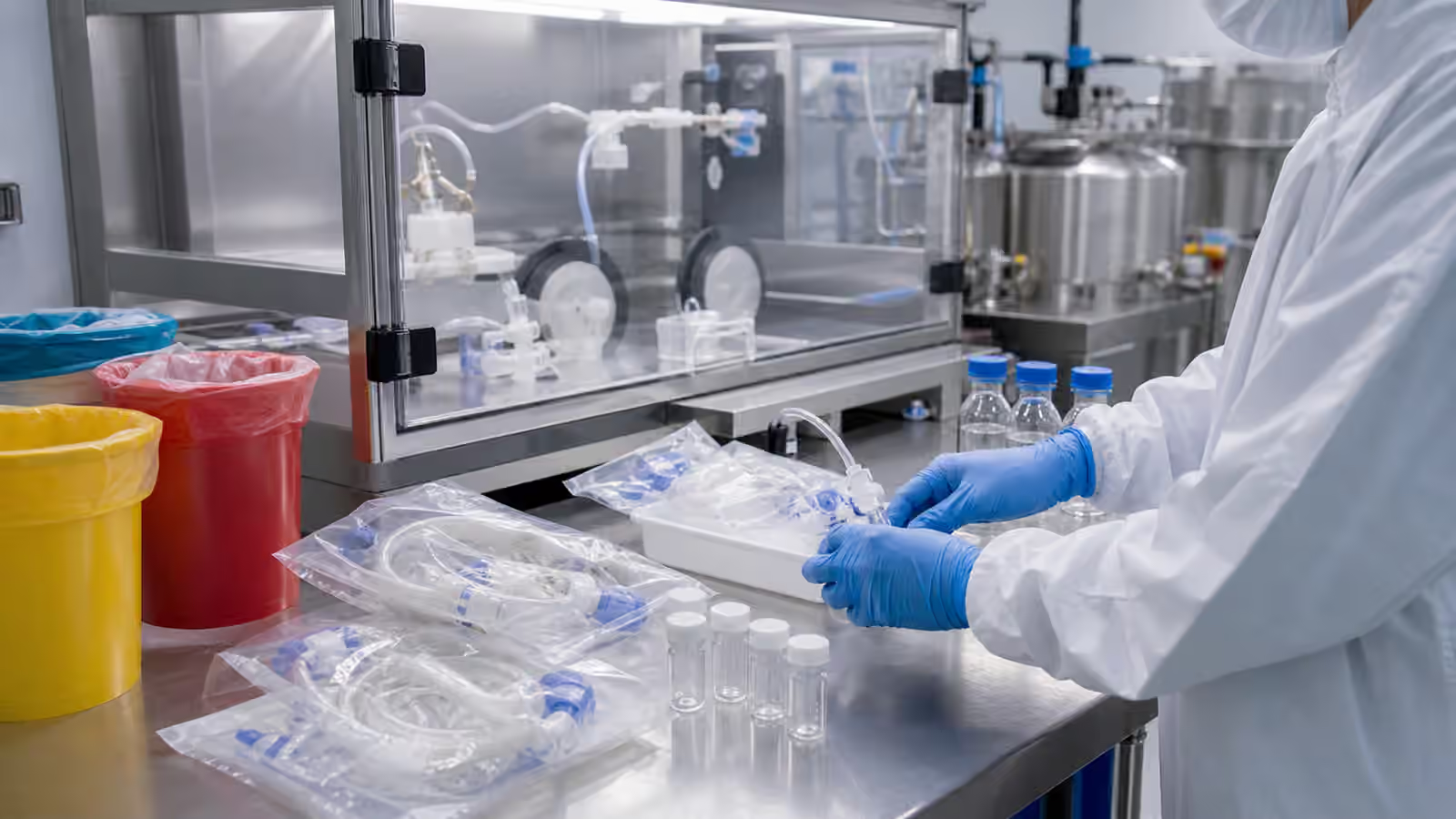
Every connection to a bioreactor can become a contamination risk. A side loop adds surfaces, seals, tubing, pumps, valves, filters, columns, sampling points, and cleaning needs. If the process is supposed to remain sterile or tightly controlled, the recovery hardware has to meet that standard. A beautiful separation idea can fail because it is hard to clean, hard to sterilize, prone to fouling, or too fragile for repeated use.
Bioprocess Quality Control explains why repeatability and documentation matter. In situ recovery increases the number of places where a batch can diverge from plan. Was the column conditioned the same way? Did the resin come from the same lot? Was the membrane integrity checked? Did the loop hold the same flow rate? Was the side stream exposed? Did cleaning leave residues? These are not glamorous questions, but they decide whether the process can be trusted.
Cleaning also affects product claims. A product captured during fermentation still has to meet identity, purity, safety, and performance specifications. Capture can reduce some impurities while introducing others. The separation material itself may leach, shed, bind unpredictably, or age. Downstream processing does not disappear. It begins earlier and becomes more entangled with upstream biology.
The economics can move in either direction
In situ recovery can improve a process by increasing productivity, reducing inhibition, simplifying later purification, stabilizing a product, or making continuous or extended operation more practical. It can also add capital cost, consumables, validation burden, energy use, cleaning complexity, product losses, and scale-up risk. The economic question is not whether recovery during the run sounds efficient. It is whether the whole process delivers more usable product per unit of cost, time, and evidence.
This is where Techno-Economic and Life-Cycle Analysis belongs. A capture resin may be expensive but justified for a high-value product. A simple stripping method may be attractive for a volatile product if emissions, safety, and condensation are controlled. A membrane loop may look elegant at bench scale but become expensive when fouling, replacement, and cleaning are counted. The correct answer depends on the product and the scale.
Environmental claims also need care. Removing product during a run may reduce waste or improve yield, but it may require extra materials, solvents, energy, or cleaning. A better process claim should compare the full system, not only the biology inside the tank.
Measurement has to close the mass balance
In a standard batch, product measurement is already more complicated than a single number. In in situ recovery, the product may be in several places at once. Some remains in the broth. Some is on the capture medium. Some is inside cells. Some may evaporate, degrade, bind to equipment, or convert into related compounds. If the measurement only follows one compartment, the process can look better or worse than it is.
Analytical Chemistry and Bioproduct Identity becomes essential. The team needs to know not only how much product was captured, but whether it is the right product and what impurities traveled with it. A resin that captures a family of related molecules may inflate a rough yield number. A volatile recovery system may collect product plus byproducts. A filtration system may remove material that later releases or degrades.
Closing the mass balance is not paperwork. It is how the process learns. If product disappears, the team needs to know whether it stayed in cells, degraded, stuck to plastic, remained on the resin, or escaped through a gas path. Each explanation leads to a different design change.
Recovery can become part of the design
The most mature use of in situ recovery treats it as part of the bioprocess from the beginning. The organism, pathway, transporter behavior, medium, vessel, capture method, monitoring plan, and final purification route are designed together. That does not mean every early experiment needs elaborate hardware. It means the team asks early whether product accumulation will set a ceiling and whether recovery during production could change that ceiling.
In situ product recovery is attractive because it breaks the simple timeline. The cells do not have to wait until the end of the run for the product burden to be addressed. The process can remove some of that burden while production continues. But the same move makes the system harder to reason about. The recovery unit becomes part of the organism’s environment, the measurement system, the contamination boundary, and the product claim.
That is the tradeoff. Done well, in situ recovery can turn a fragile production strain into a more practical process. Done casually, it can hide losses, stress cells, complicate cleaning, and make the final product harder to prove. Synthetic biology needs the tool, but it needs the discipline around the tool even more.