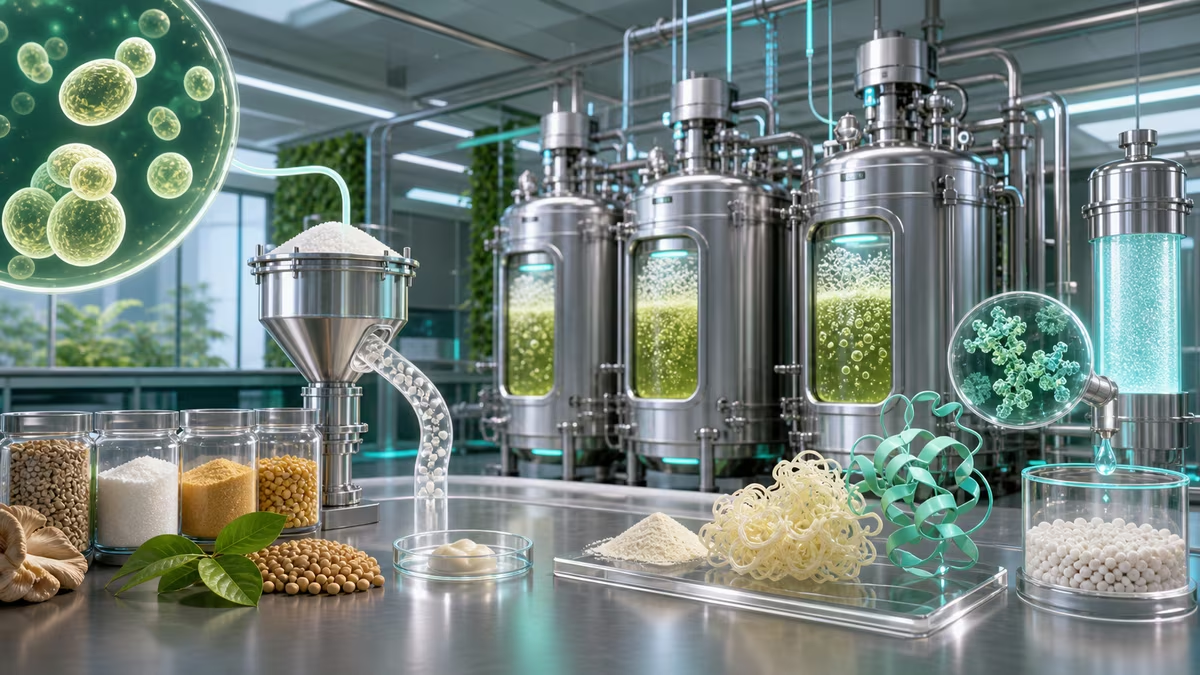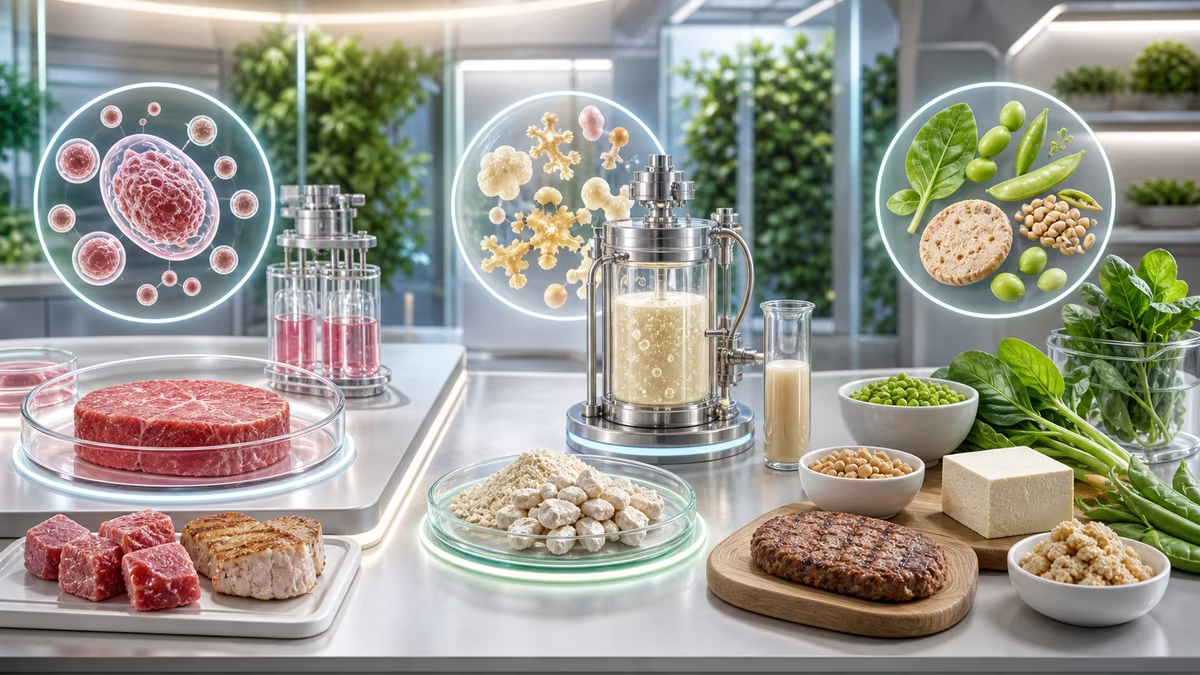
Future food conversations often become confusing because three very different technologies get thrown into the same bowl.
Plant-based food starts with plants or other non-animal ingredients and uses cooking, processing, extrusion, fats, flavors, and formulation to imitate or replace animal foods. Precision fermentation uses microbes to make specific molecules, such as proteins, fats, enzymes, flavors, or vitamins. Cultivated meat grows animal cells directly, with the goal of producing meat without raising and slaughtering a whole animal.
All three can appear in the same grocery aisle. All three can be described as alternatives to conventional animal agriculture. All three raise questions about taste, cost, nutrition, sustainability, regulation, and trust. But they are not the same thing.
Understanding the difference makes every claim easier to evaluate.
Plant-based food
Plant-based meat and dairy alternatives are the most familiar category. A plant-based burger may use pea protein, soy protein, wheat gluten, coconut oil, canola oil, methylcellulose, flavors, colors, and other ingredients to mimic some parts of beef. A plant-based milk may use oats, almonds, soy, peas, rice, or other bases, then add oils, minerals, stabilizers, and vitamins.
This is not synthetic biology by default. Many plant-based foods use conventional food science. They matter in this guide because they are often compared with synthetic biology foods and may be combined with fermentation-derived ingredients. For example, a plant-based cheese could include a precision-fermented dairy protein to improve melt and stretch.
The strength of plant-based food is that it can be made now, at scale, with known supply chains. The challenge is matching the full sensory and nutritional experience people want while keeping ingredient lists, cost, health profile, and environmental impact acceptable.
Precision fermentation
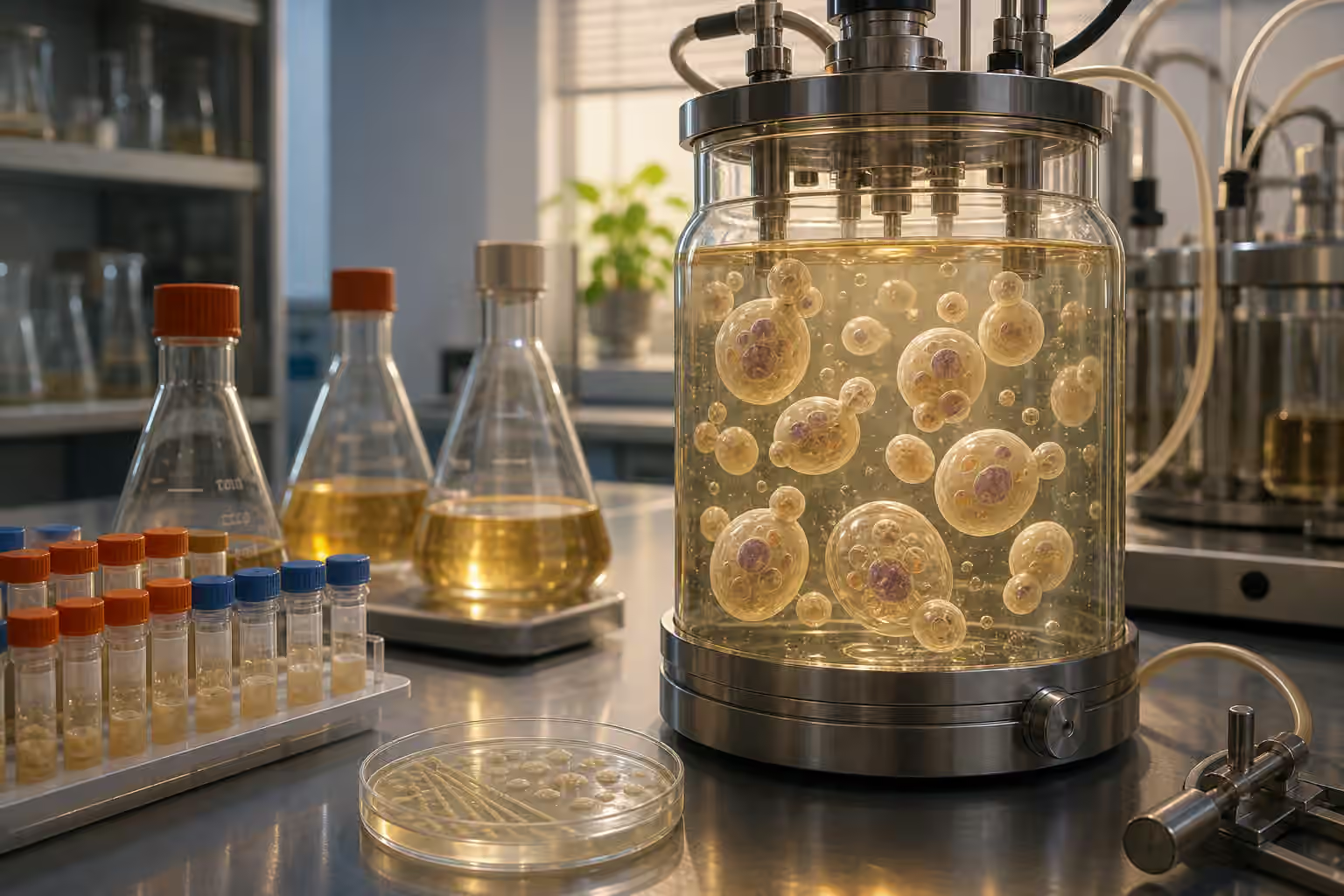
Precision fermentation is covered in detail in Precision Fermentation Explained . In food, it usually means microbes are programmed to make a specific ingredient. That ingredient might be a whey protein, casein protein, egg protein, fat, enzyme, flavor molecule, or vitamin.
The microbe is the production system, not necessarily the food. After fermentation, the target ingredient is separated and purified. It may then be used in ice cream, cheese, baked goods, protein drinks, sauces, or other foods.
Precision fermentation is powerful when a small amount of a specific molecule has a large effect. If a protein gives cheese its melt, a food company does not need to grow a whole cow. It needs a reliable source of that protein and a recipe that uses it well.
The challenge is scale and price. Fermentation tanks are not free. Purification is demanding. Feedstocks matter. Regulators need data. Consumers need labels they understand.
Cultivated meat
Cultivated meat, sometimes called lab-grown meat or cell-cultured meat, begins with animal cells. Those cells are grown in controlled environments with nutrients and signals that support growth. The aim is to produce edible animal cell biomass or tissue-like structures without raising the whole animal.
The concept is easy to describe and hard to execute. Meat is not just cells. It is muscle fibers, fat, connective tissue, blood vessels, texture, flavor chemistry, structure, and cooking behavior. A simple cultivated product may be easier if it is ground, blended, or structured with scaffolds. A whole steak-like cut is much harder because it needs thickness, texture, fat distribution, and vascular-like support during growth.
Cultivated meat is closest to animal agriculture in biological identity, but farthest from conventional food manufacturing in process complexity. It needs cell lines, growth media, bioreactors, scaffolds or structuring methods, quality controls, and regulatory review.
What people often misunderstand
The first misunderstanding is that lab-grown meat and precision fermentation are synonyms. Cultivated meat grows animal cells. Precision fermentation uses microbes to make ingredients. A fermentation-derived dairy protein is not meat. A cultivated chicken product is not a microbial protein powder.
The second misunderstanding is that plant-based foods are always low-tech and cultivated foods are always high-tech. Plant-based products can involve sophisticated extrusion and flavor science. Cultivated meat may use some familiar cell-culture principles but faces novel food-scale engineering.
The third misunderstanding is that one category must “win.” Future food systems may be blended. A plant-based base could use precision-fermented proteins. Cultivated meat could be combined with plant proteins to lower cost. Conventional agriculture may improve too. People eat for taste, culture, habit, price, nutrition, identity, and convenience, not only for technology category.
The fourth misunderstanding is that environmental claims are settled by the label. A product’s footprint depends on energy, feedstocks, land, water, waste, facility efficiency, transport, packaging, and what it replaces. Cultivated meat made with clean energy and efficient media could differ greatly from cultivated meat made under energy-intensive conditions. Plant-based products vary too.
Why it matters
Food is intimate. People may accept engineered enzymes in cheese for decades and still feel uncertain about an animal-free dairy protein in ice cream. They may care deeply about animal welfare but reject a product that tastes processed. They may want climate-friendly food but not expensive novelty.
These technologies matter because animal agriculture has real pressures: greenhouse gases, land use, water use, antibiotic use, zoonotic disease risks, animal welfare concerns, and supply volatility. They also matter because food traditions and rural livelihoods are not disposable. The future should not be framed as “farm bad, tank good.” It should be framed as a search for better options with transparent tradeoffs.
Synthetic biology can help by creating ingredients that reduce reliance on animals for specific functions. It can also make food systems more concentrated and opaque if only a few companies own the strains, data, and production capacity. Trust will depend on regulation, labeling, public communication, safety evidence, and whether products solve real problems for eaters.
Real-world examples
Plant-based burgers and milks are already common. They show how quickly a category can enter mainstream retail when taste, branding, distribution, and price align well enough.
Precision-fermented chymosin, an enzyme used in cheese-making, has been part of food production for decades. Newer fermentation-derived proteins aim at dairy and egg functionality, such as foaming, melting, texture, or nutrition.
Cultivated meat has reached limited regulatory approvals and tastings in some places, but broad availability remains constrained by cost, scale, and manufacturing complexity. In the United States, FDA and USDA share oversight for cell-cultured meat and poultry products, which means the category is being treated as food requiring safety review rather than a novelty outside the system.
Future possibilities
The near future may be hybrid. A better plant-based cheese may use fermentation-derived casein. A cultivated meat product may be blended with plant ingredients. A conventional food company may use precision fermentation for one high-impact component. Restaurants may offer small pilots long before supermarkets carry large quantities.
Longer term, the most interesting question is not whether the food was made in a field, tank, or cell-culture facility. It is whether the food is safe, delicious, fairly labeled, affordable, resilient, lower-impact, and culturally welcome.
Food technology fails when it treats eaters as obstacles. It succeeds when it respects appetite, trust, tradition, and the hidden labor behind every meal.
Try this: future-food sorting game
For each product idea, classify it as plant-based, precision fermentation, cultivated meat, or hybrid:
- A burger made from pea protein and coconut oil.
- Ice cream using a dairy-like whey protein made by yeast.
- Chicken cells grown in a bioreactor and blended with plant proteins.
- Cheese made with a fermentation-derived enzyme.
- A mushroom-based jerky seasoned like beef.
Then pick one and write the two questions a consumer should ask before trusting the label.
Further reading
- FDA information on human food made with cultured animal cells
- FDA and USDA formal agreement on animal cell-culture food oversight
- Food Standards Agency precision fermentation explainer
Next steps
Read Precision Fermentation Explained if the microbial ingredient route interests you. Read Tissue Printing and Organs if you want to understand why growing edible cells is still much easier than building transplantable organs.