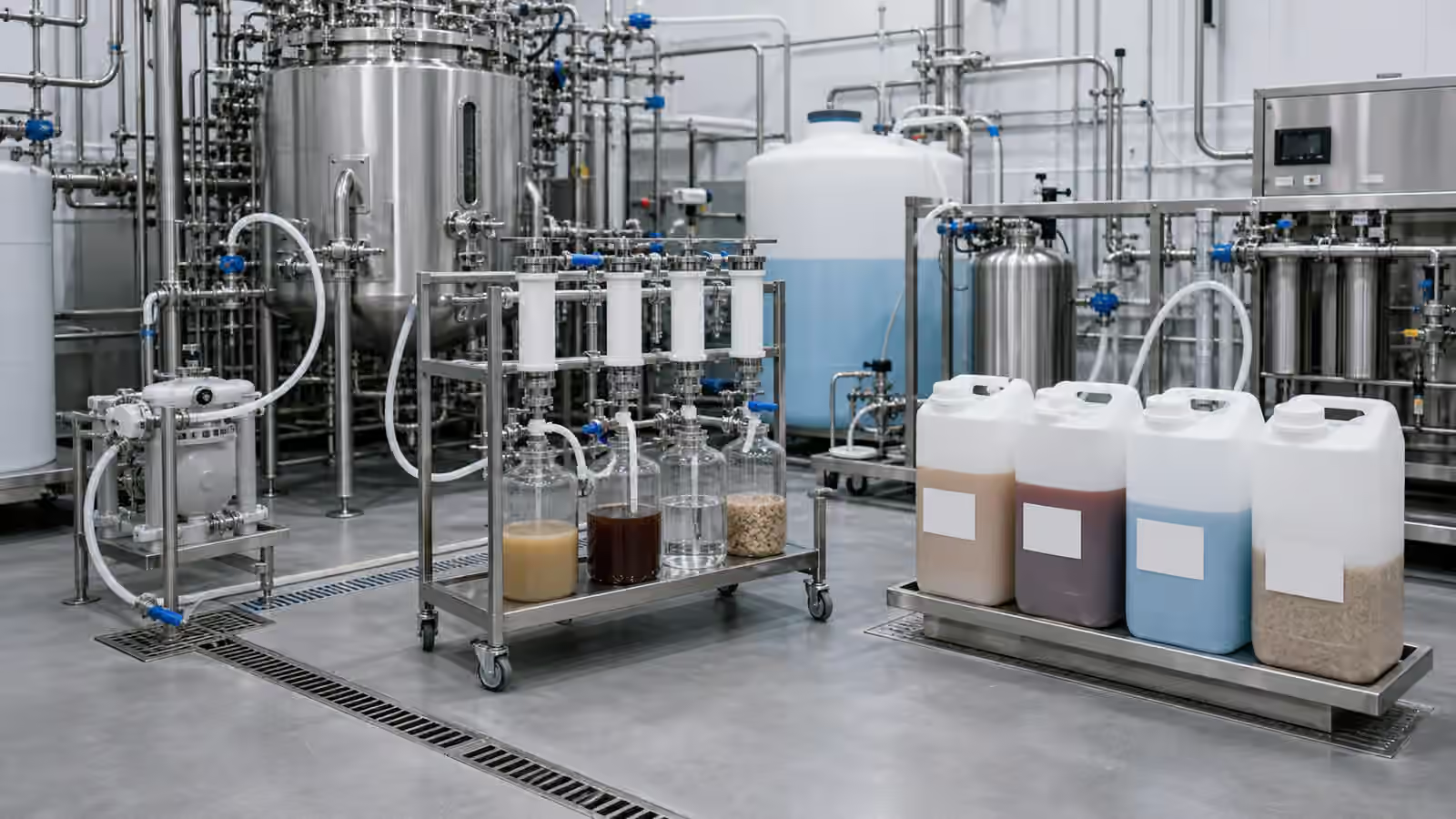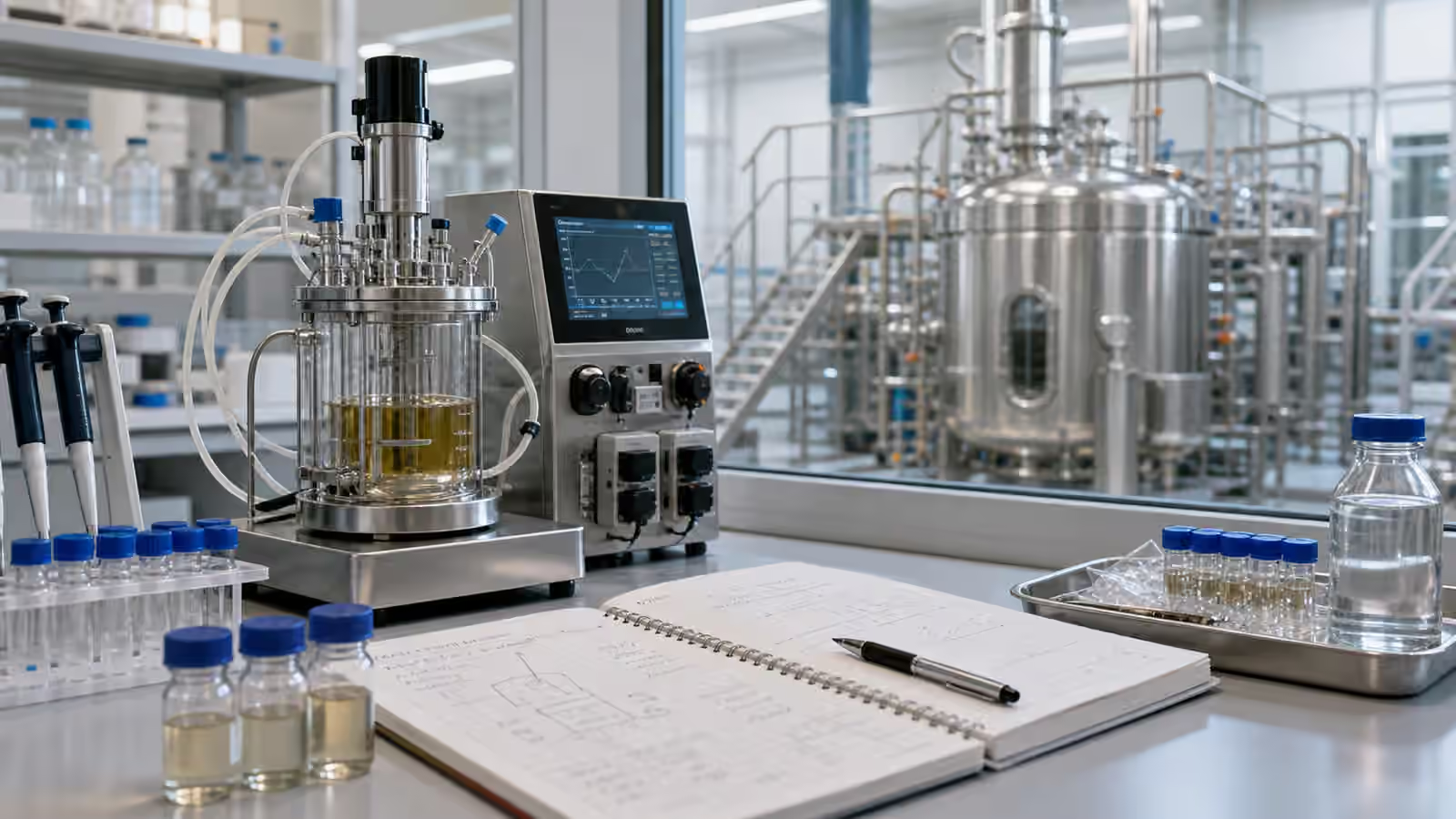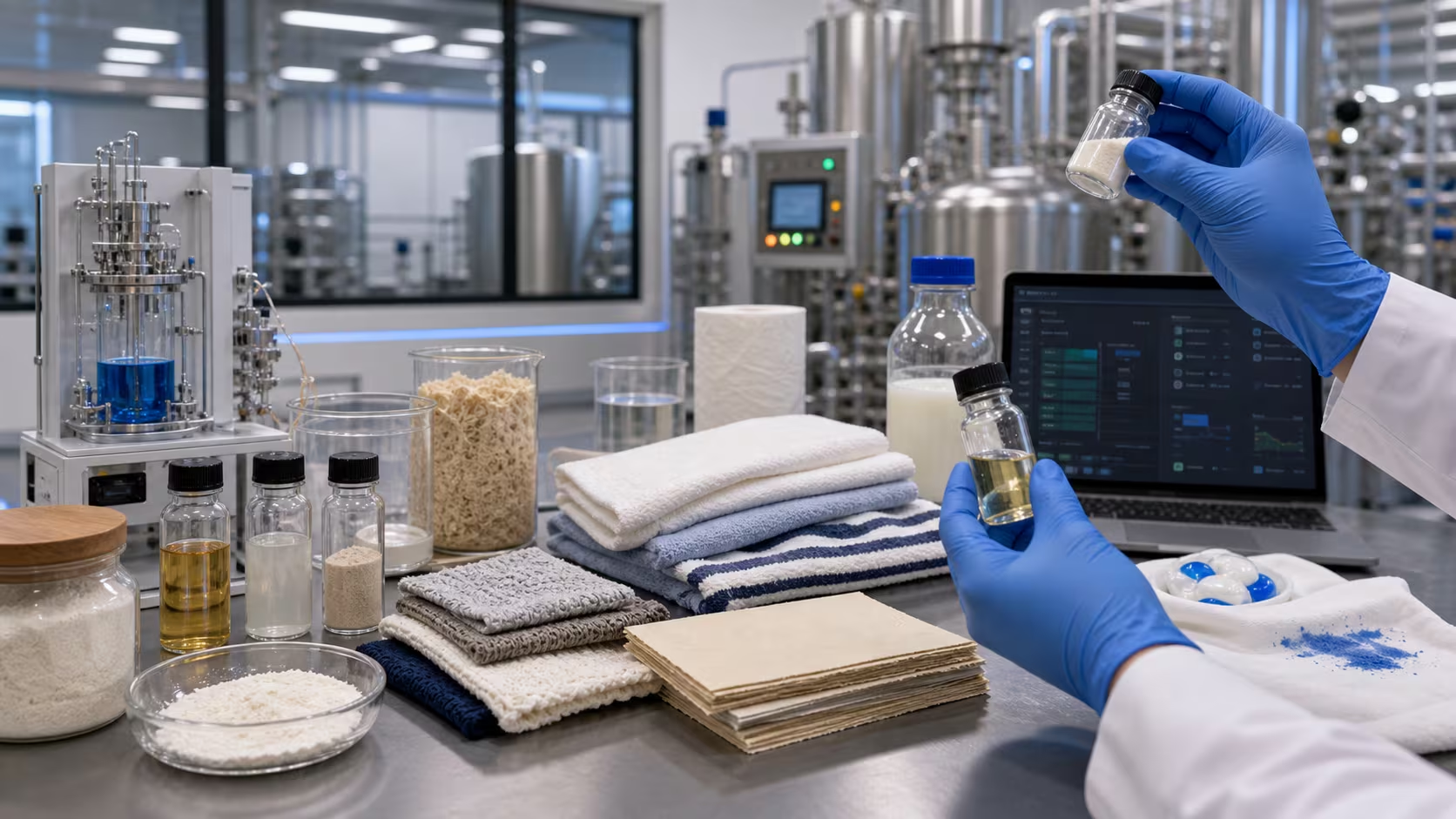
Purification can feel like the finish line because it gives the team something tangible.
The broth has been clarified. Cells and debris have been removed. The target molecule has been enriched, separated, polished, dried, concentrated, or collected in a clean fraction. The analytical method says the product is present. For a moment, the difficult living part seems to be over. A related reference is ICH Q5C — Stability Testing of Biotechnological/Biological Products .
Then the product has to survive.
Formulation is the work of turning a recovered bioproduct into a form that remains useful during storage, handling, transport, manufacturing, and final use. Stability is the evidence that the product still matches its intended identity and performance after time and stress. In synthetic biology, those questions matter because the product may be a protein, enzyme, metabolite, lipid, polymer, cell-derived material, vesicle, extract, food ingredient, cosmetic input, textile precursor, or research reagent. Each behaves differently once it leaves the producing cell.
This guide follows Downstream Processing . Downstream processing asks how the product is recovered. Formulation asks what happens after recovery, when the product must remain itself outside the process that made it.
A Product Can Change Without Looking Dramatic
Some instability is obvious. A liquid becomes cloudy. A color shifts. A powder cakes. A gel changes texture. A smell appears. A package swells. But many important changes are quieter. A protein may unfold, aggregate, oxidize, clip into fragments, bind to a container surface, lose activity, or form particles too small for casual inspection. A small molecule may degrade, isomerize, react with an impurity, volatilize, crystallize unexpectedly, or change solubility. A living or cell-derived material may lose viability, mechanical structure, moisture balance, or functional consistency.
That is why formulation cannot rely only on appearance. The same habits described in Analytical Chemistry for Bioproduct Identity apply here. The team needs measurements that match the claim. If the product is sold for enzymatic activity, activity matters. If a protein’s structure matters, structural and aggregation evidence may matter. If texture or fiber strength is the value, mechanical testing may matter. If purity is central, impurity patterns and degradation products matter.
Stability is not one property. It is a relationship between the product, its intended use, its container, its environment, and the measurements used to judge it.
Formulation Is Usually Constraint Management
The simple version of formulation is adding ingredients that help a product behave. The better version is balancing constraints. A buffer may help control pH but add salts that complicate drying or final use. A sugar may help stabilize a protein during freezing or drying but change viscosity or moisture uptake. A surfactant may reduce surface adsorption but introduce sensitivity to oxidation or impurities. A preservative may protect one class of product but be unsuitable for another. A solvent may dissolve a molecule well but create handling, compatibility, odor, safety, or regulatory concerns.
No ingredient is magic. Each changes the product environment. The goal is to create conditions where the product remains useful for the relevant time and route, not to make it immortal. A product used immediately in a factory step needs a different stability argument from one shipped through a long supply chain. A dry powder needs a different argument from a refrigerated liquid. A food ingredient needs a different argument from an industrial enzyme concentrate or a research reagent.
Techno-Economic and Life-Cycle Thinking connects here because formulation choices can alter cost, energy use, packaging, transport, waste, and customer fit. A brilliant fermentation process can lose credibility if the final product needs costly conditions that customers cannot realistically maintain.
The Container Is Part of the Product Environment
Packaging can look like a logistics detail, but it often participates in stability. Glass, plastic, metal, liners, stoppers, films, seals, and closures can interact with the product. A molecule may adsorb to a surface. Oxygen or moisture may enter slowly. Extractables or leachables may appear from materials. Light may drive degradation. Headspace may matter. A closure may work in a small vial but not in a larger container or repeated-use format.
This is especially important for proteins and enzymes. Protein Expression and Folding explains how sensitive a working protein can be to its environment inside the cell. After purification, the protein no longer has the cell’s quality-control machinery around it. It is exposed to surfaces, interfaces, shaking, temperature shifts, concentration, and chemical conditions that may encourage unfolding or aggregation.
For other products, the container may influence texture, odor, moisture, or impurity uptake. A material grown through biofabrication may need packaging that preserves humidity or shape. A small volatile molecule may need a barrier that prevents loss. A biopolymer may need protection from heat, light, or hydrolysis. Formulation and packaging are therefore designed together rather than handed off as separate chores.
Stress Testing Should Resemble Real Stress
Stability studies often expose a product to temperature, time, light, freeze-thaw cycles, agitation, oxygen, humidity, pH, concentration, or contact with packaging. Those tests are useful only when they are interpreted carefully. Harsh stress can reveal failure modes, but it may not predict ordinary use directly. Mild storage can look reassuring while missing the moment that actually damages the product, such as repeated thawing, shipping vibration, exposure to air after opening, or a hold step during manufacturing.
The strongest stability work begins by asking how the product will really be handled. Will it be pumped, shaken, frozen, dried, mixed into another material, stored in a warehouse, opened repeatedly, diluted before use, exposed to light, or held at a process temperature? Will the customer measure activity before use, or will they assume the product still works? Each answer changes the test design.
Biological Measurement and Controls is relevant because stability data can be misleading when controls are weak. A product may appear to lose activity because the assay drifted. It may appear stable because the chosen assay cannot see an important degradation product. It may seem inconsistent because sample preparation is harsh. Stability is only as strong as the measurement system behind it.
Formulation Can Feed Back Into Upstream Design
Formulation is often treated as late-stage work, but it can expose decisions that should have been made earlier. A protein that aggregates after purification may need a different host, secretion pathway, folding support, sequence variant, or purification route. A product that degrades in the required storage condition may need a more stable analog or a different process that avoids damaging impurities. A material that cannot be dried without losing function may need a new product format.
This feedback can be frustrating because it sends the team back toward strain engineering or process development after apparent success. It is still better to learn early. Secretion and Export Pathways shows how product location affects recovery. Formulation adds another layer: product location and recovery conditions also affect what the product has already endured before it reaches the stability study.
A rough purification method may expose a protein to shear, interfaces, pH extremes, salts, solvents, or long hold times that make later formulation harder. A cleaner upstream process may simplify stability by reducing host-cell impurities, pigments, nucleases, proteases, salts, antifoams, or byproducts. Stability is not only the final bottle. It is the memory of the whole process.
Claims Need a Stability Boundary
Every product claim has a time boundary, even if marketing language would rather not mention it. The product is stable under certain conditions, for a certain period, in a certain container, with certain handling assumptions, judged by certain tests. A careful team states that boundary plainly. It does not imply that a product remains unchanged under all conditions.
This is part of public trust. Synthetic Biology Product Claims and Public Trust argues that engineered biology becomes more credible when claims are specific. Stability is one of those specifics. A claim about a protein ingredient, enzyme blend, material precursor, or living material should not stop at how it was made. It should explain how the product remains useful after it leaves the bioreactor.
The most practical formulation work has a humble tone. It accepts that useful molecules are physical things, not slogans. They sit in water, powder, oil, film, fiber, gel, vial, carton, cartridge, or bag. They meet heat, oxygen, light, surfaces, time, and careless handling. Synthetic biology may create the product, but formulation helps the product arrive as itself.