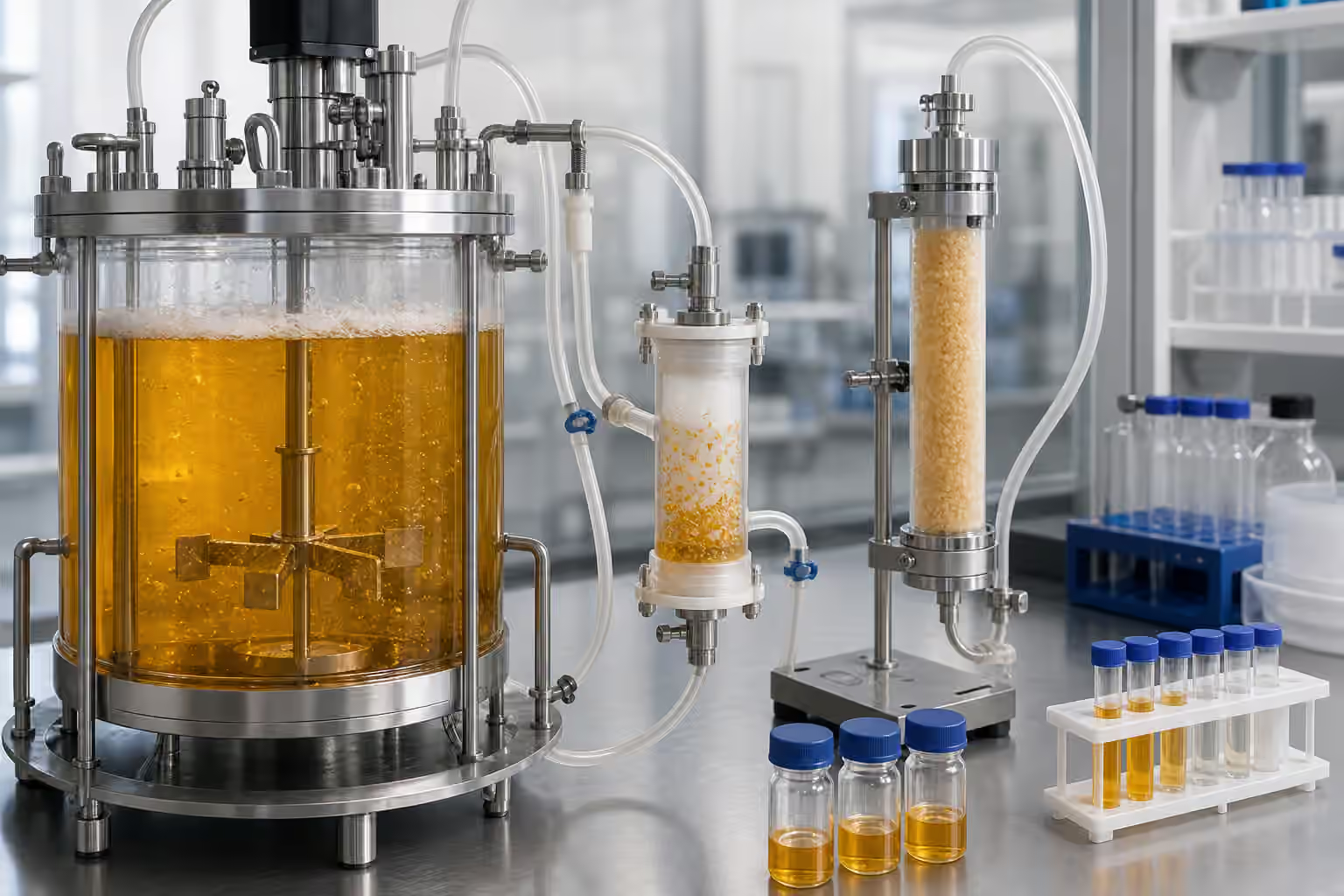
A fermentation run is a conversation with a living process. The organism does not speak in sentences. It speaks through oxygen demand, pH drift, heat, foam, growth rate, feed response, byproducts, product formation, color, turbidity, pressure, sensor traces, and samples that arrive at the bench with their own timing and handling history. The operator’s job is to listen without pretending that every signal means exactly one thing. A related reference is Development of a chemometric platform for mid-infrared fermentation monitoring .
Synthetic biology often introduces fermentation as the practical bridge between an engineered cell and a useful product. That bridge is real, but it is not passive. A production strain behaves differently as it grows, adapts, consumes nutrients, encounters stress, makes product, and competes with its own mutants or contaminants. Monitoring is how a team notices that behavior before the final assay reveals success or failure too late to learn much.
This guide belongs between Precision Fermentation , Bioprocess Scale-Up , and Bioprocess Quality Control . Precision fermentation explains the idea of asking microbes to make a defined product. Scale-up explains why vessels change the biology. Quality control explains how finished evidence is checked. Fermentation monitoring follows the run while it is still alive.
A trace is not an interpretation
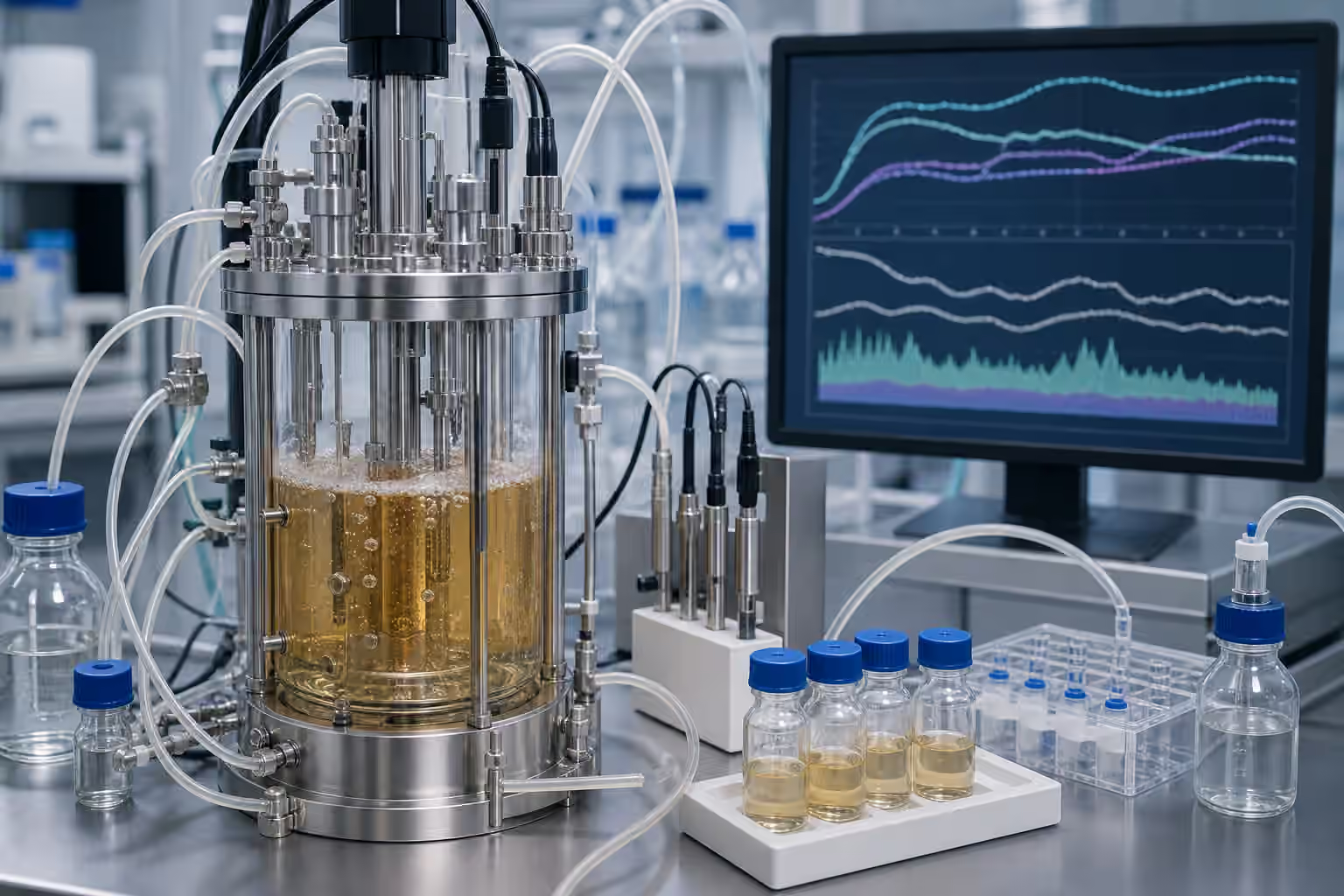
Modern fermentation can produce many traces. Dissolved oxygen falls or rises. pH changes. Base addition increases. Agitation or airflow shifts to meet demand. Carbon dioxide output may climb. A feed pump turns on. Temperature remains steady or struggles. Foam appears. Optical density changes. Online or at-line instruments may estimate cell density, metabolites, product, or impurities.
Those signals are valuable, but none is self-explanatory. A drop in dissolved oxygen can mean growth, higher metabolic activity, poor mixing, sensor trouble, a feed effect, or a change in respiration. A pH shift can reflect product formation, byproduct accumulation, nutrient use, contamination, carbon dioxide behavior, or buffer limits. A steady trace can be comforting, but it can also hide a sensor that has drifted, fouled, or lost contact with the real state of the culture.
The discipline is to treat each signal as evidence, not verdict. A good process team asks what biological story could produce the trace, what nonbiological artifact could mimic it, and what additional measurement would separate those possibilities. That habit is close to the one in Biological Measurement and Controls . Controls do not disappear when the vessel has sensors. The controls move into calibration, sampling, maintenance, run history, and interpretation.
Growth and production are different questions
A culture that grows well is not automatically a culture that produces well. The cell’s first priority is not the product people want. It is survival and reproduction. A strain may consume feedstock quickly while routing material to biomass or byproducts. Another may grow slowly because it is carrying a heavy production burden. A third may produce well only after growth slows and the process enters a different phase.
Monitoring has to distinguish growth from production. Turbidity, oxygen demand, and carbon dioxide may reveal that cells are active, but they do not prove that the intended pathway is delivering product. A product assay may reveal yield, but it may arrive too late or too sparsely to explain the run. The useful picture comes from aligning process signals with samples, product measurements, biomass, byproducts, and strain health.
Cellular Burden and Resource Allocation helps explain why this distinction matters. An engineered pathway spends the cell’s resources. A run that looks healthy by growth alone may still be wasting the production design. A run that looks stressed may be productively stressed, destructively stressed, or drifting toward loss of the engineered function. Monitoring gives the team clues, but only biology can explain them.
Sampling is part of the process
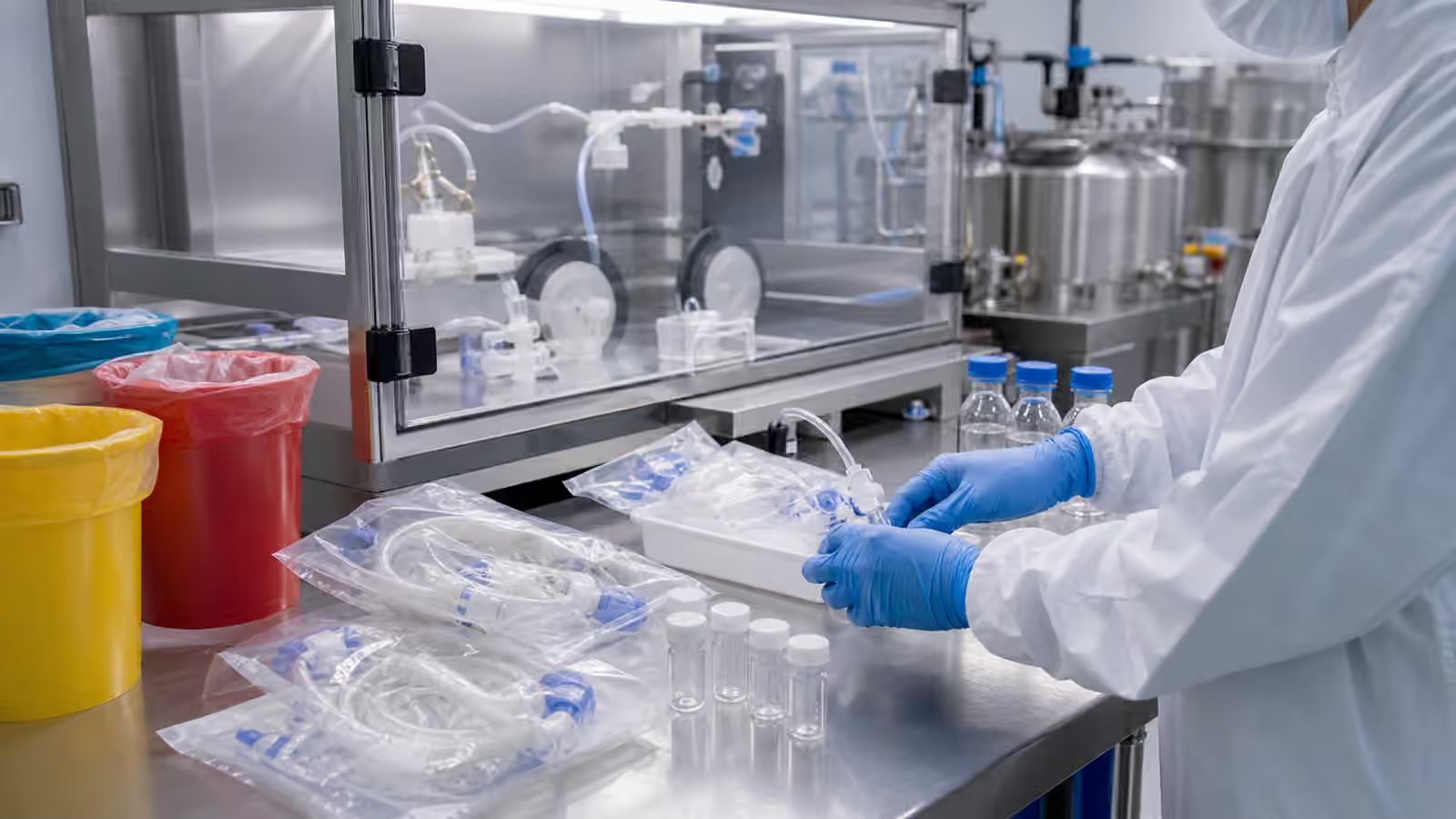
Sampling sounds simple until the sample is asked to carry evidence. Where was it taken? When was it taken? Was the vessel well mixed? Did the sample line retain old material? Was the sample cooled, filtered, diluted, quenched, or stored before analysis? Did the assay measure the molecule as it existed in the vessel or after it changed on the bench?
These details matter because fermentation is dynamic. Metabolites can change quickly. Cells can keep working after removal. Proteins can degrade. Volatile compounds can escape. Particles can settle. A sample taken during a feed pulse may not represent the run. A sample taken from a poorly mixed vessel may represent a local zone rather than the whole culture.
Lab Data Provenance and Sample Tracking is the natural companion here. A fermentation sample is not just a tube with a label. It is a small history of vessel state, time, handling, and analysis. Without that history, a surprising data point becomes hard to trust and harder to learn from.
Good sampling does not require turning every run into bureaucracy. It requires enough discipline that future readers can connect a number to the living process that produced it. If a product spike appears after a feed change, the team should know whether the sample was taken before or after mixing stabilized. If a byproduct appears late, the team should know whether the cells were oxygen-limited, carbon-limited, stressed, or contaminated. The sample should not arrive divorced from its context.
Sensors need suspicion and care
Sensors are powerful because they keep watch when people cannot. They can reveal patterns across minutes, hours, and days. They can help automate control loops. They can warn that a process is leaving its normal range. They can make scale-up less blind. But sensors live inside harsh conditions. They can foul, drift, lag, saturate, lose calibration, or respond to something adjacent to the variable people care about.
The goal is not to distrust instruments reflexively. It is to respect them enough to maintain and challenge them. A sensor reading should have a calibration story. It should have a known range. It should be checked against independent measurements when the claim matters. If an online signal and an offline assay disagree, the disagreement is not an annoyance to average away. It is a clue.
Synthetic biology adds another layer because the organism may change the measurement environment. An engineered strain may produce pigments, proteins, acids, solvents, polymers, gases, particles, or surface-active molecules that affect probes and assays. A sensor validated in one broth may behave differently in another. As product development advances, measurement development advances with it.
Process control can hide biological drift
Control systems can keep pH, temperature, oxygen, feed rate, or pressure within a target range. That is useful, but it can create false comfort. A controller may work harder and harder to maintain the same setpoint while the biology changes underneath. More base addition may hide increasing acid production. More agitation may hide rising oxygen demand. A stable temperature may hide heat generation that would matter at larger scale.
The trace of control action can be as informative as the controlled variable. If the pH line looks flat because the system added much more base than usual, the flat line is not the whole story. If dissolved oxygen remains stable only because agitation climbed dramatically, the culture is asking for more transfer. If foam control is needed earlier than usual, the broth may have changed.
This is why Scale-Down Models matter. A small model of a larger process should reproduce the stresses that the organism will actually experience, not only the average setpoints. Monitoring helps reveal whether the model is telling the right story. It shows not only where the process is, but how hard the system is working to keep it there.
Monitoring supports decisions, not drama
The most useful fermentation monitoring is often quiet. It helps a team decide when to feed, when to induce, when to sample, when to harvest, when to stop a failing run, and when to investigate a deviation. It turns a run from a black box into a sequence of interpretable states. It also builds memory across batches. A normal run develops a signature. A drifting run starts to show where it departed.
That memory is valuable for Genetic Stability and Drift . If a production strain gradually loses performance, process signals may reveal earlier changes in growth, oxygen demand, product timing, or byproduct formation. A final product assay may say the batch failed. Monitoring can suggest when and how the failure began.
The field sometimes talks as if better sensors will make biology transparent. They will not. Sensors make biology more observable, and that is already a major achievement. Interpretation still requires knowledge of the host, pathway, medium, vessel, product, assay, and history of the run.
A living process deserves that level of attention. Fermentation monitoring is not a decorative dashboard. It is the practice of reading signals while there is still time to learn from them, and sometimes while there is still time to guide the culture back toward the product it was engineered to make.