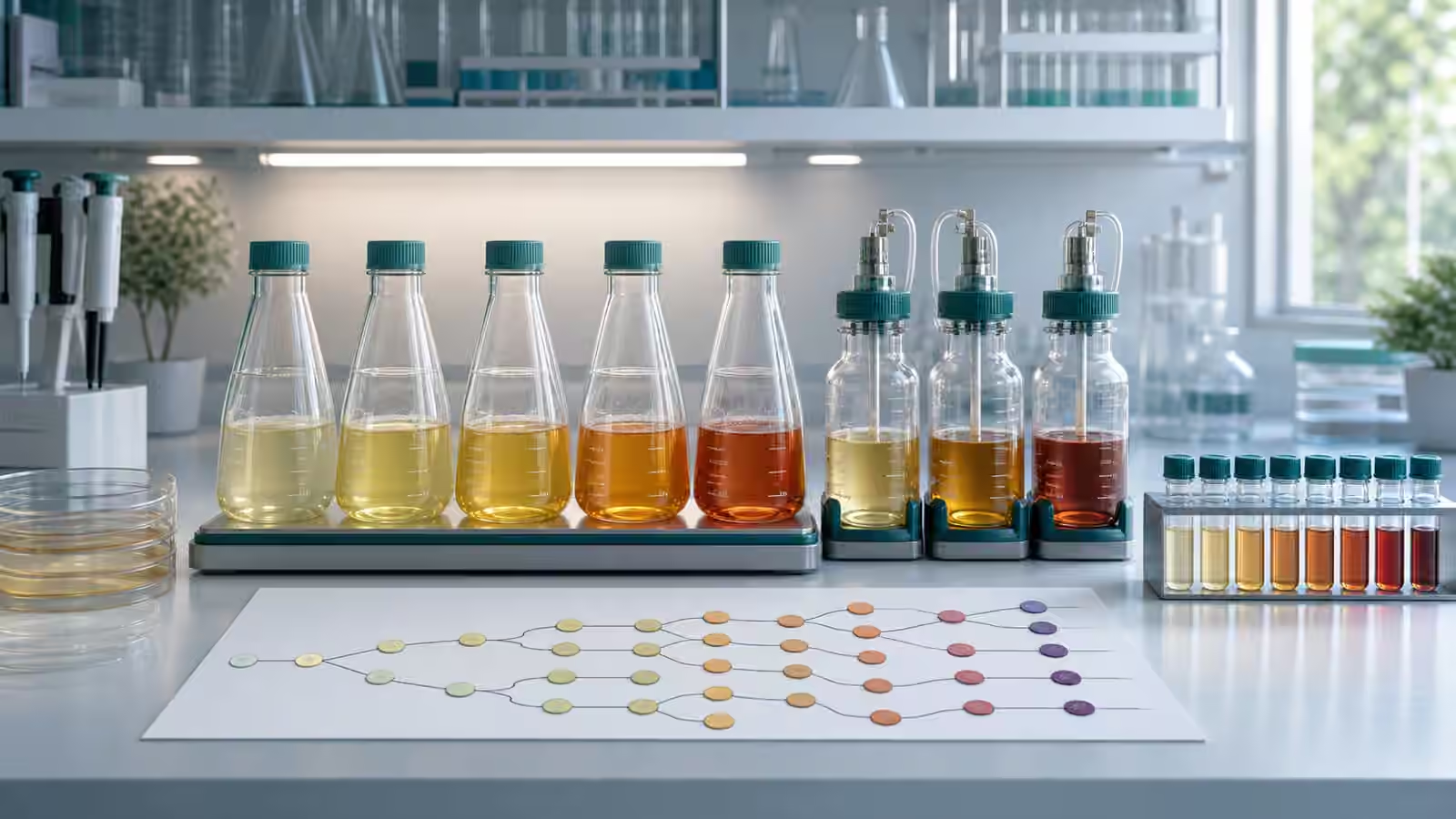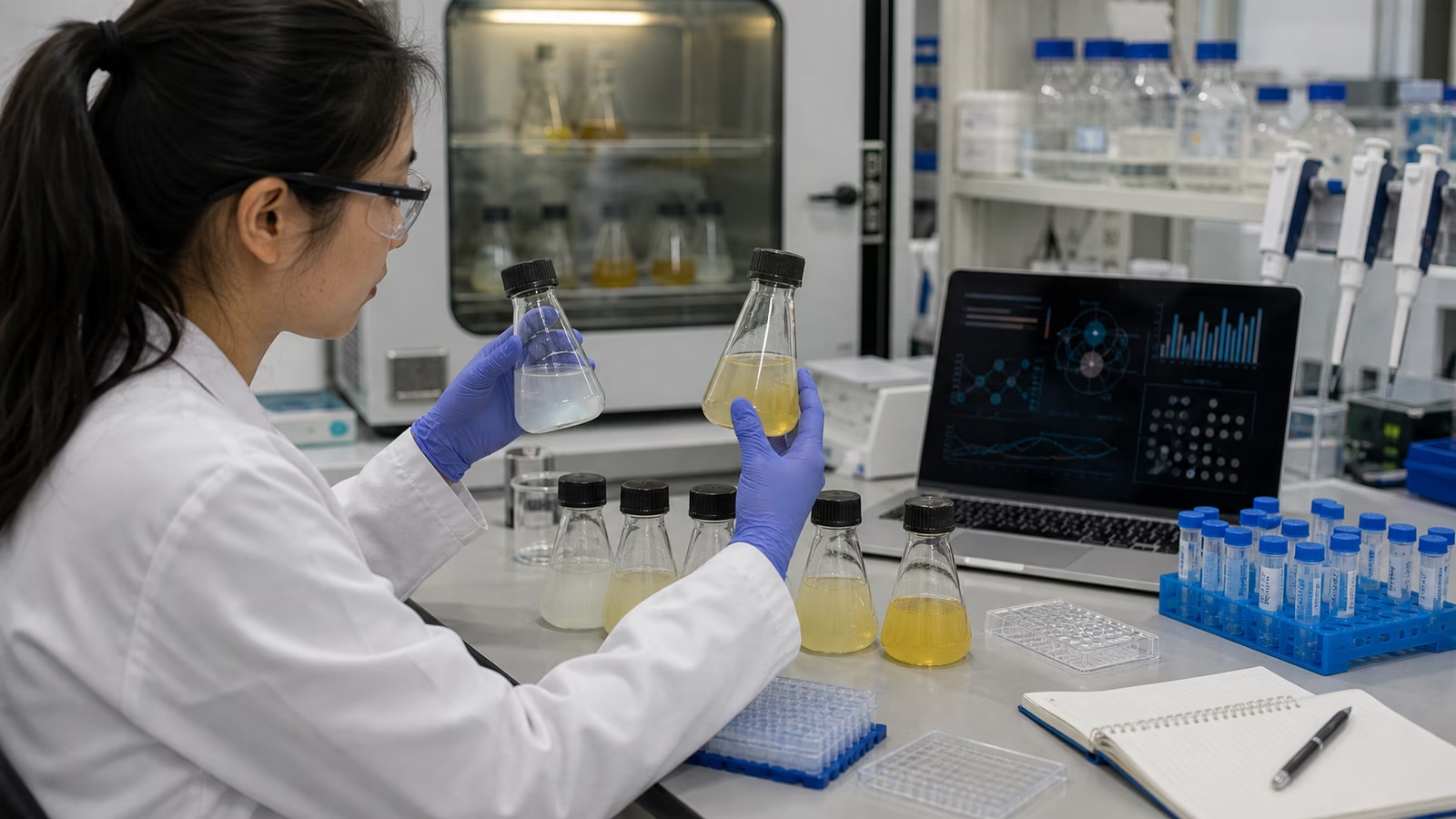
The word bacteria often arrives with a bad reputation. It makes people think of spoiled food, infections, or something to scrub from a countertop. That picture is too small. Microbes are also the planet’s chemists. They help cycle carbon and nitrogen, digest food, ferment bread and beer, make antibiotics, shape soil, live in our bodies, and survive in places that would ruin larger organisms.
Synthetic biology looks at that microbial talent and asks a practical question: can we redirect some of it?
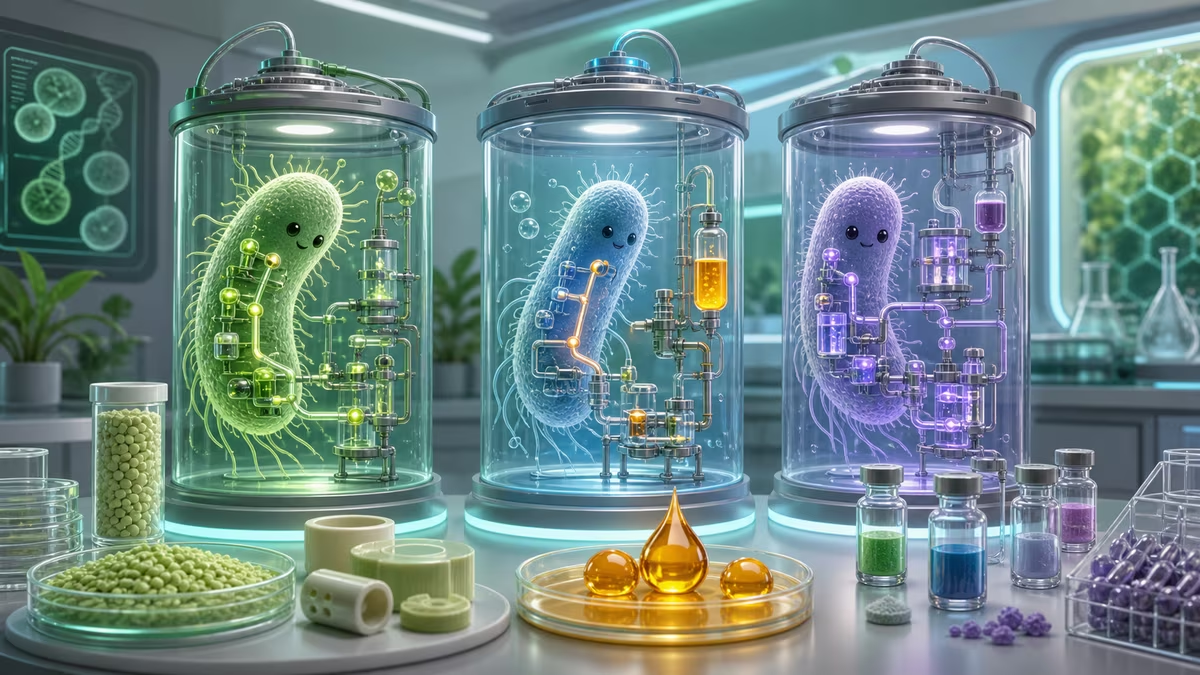
The answer is sometimes yes. Bacteria, yeast, algae, fungi, and other microorganisms can be engineered or selected to make useful molecules. They can act as miniature factories for medicines, enzymes, food ingredients, fuels, fragrances, pigments, plastic precursors, and environmental sensors. They do not make anything magically. They need feedstocks, controlled conditions, good genetic design, measurement, purification, and safety systems. But when the fit is right, a microbe can perform chemistry that would be expensive, dirty, or difficult by other routes.
A microbe as a factory
Calling a microbe a factory is an analogy, not a literal description. A factory has machines arranged on a floor. A cell has enzymes arranged in pathways. A factory receives raw materials, uses energy, moves intermediates through steps, and ships products. A cell takes in nutrients, uses metabolism, transforms molecules, and may secrete or store compounds.
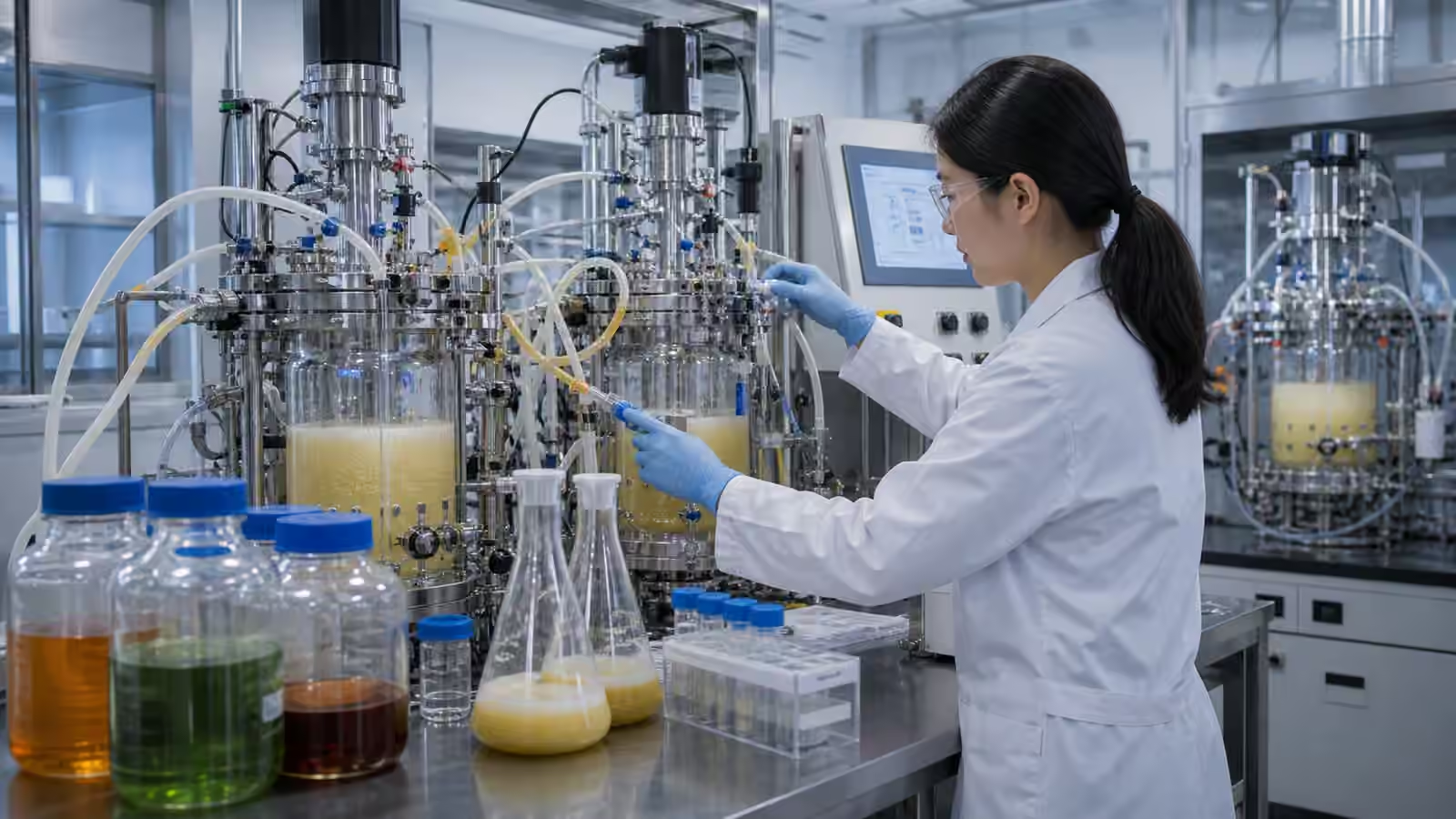
Synthetic biology changes the pathway map. Researchers may add a gene that encodes an enzyme, remove a competing route, tune how strongly a gene is expressed, or help the cell tolerate a molecule that would otherwise stress it. The goal is to route more carbon, energy, and cellular attention toward the desired product.
This is why microbial engineering is both powerful and humbling. The cell has its own survival agenda. It may grow slowly if a new pathway is burdensome. It may mutate away from a costly design. It may produce unwanted byproducts. It may behave differently in a large vessel than in a small test. Engineers are not commanding a passive machine. They are bargaining with a living metabolism.
Medicine was an early proof
One of the clearest examples is recombinant insulin. Instead of relying on insulin extracted from animal pancreases, engineered microbes or cells can produce human insulin. This changed supply, purity, and scalability for a life-saving medicine. The story is important because it shows that engineered biology is not only a futuristic food headline. It is already part of modern medicine.
Microbial systems also help produce antibiotics, vaccines, enzymes, hormones, and research tools. Some products rely on naturally occurring microbes; others use engineered strains. In each case, the production organism is part of a carefully controlled manufacturing chain, not something casually released into the world.
For a broader entry point, see Synthetic Biology Quickstart . For proteins designed with computational help, see AI-Designed Proteins .
Plastic, but be precise
Can bacteria make plastic? Some can make or help make polymers and polymer precursors. One famous family is PHA, a type of polyester that certain microbes naturally store as an energy reserve. Researchers and companies have explored PHAs for biodegradable plastics. Microbes can also make building-block chemicals that are turned into plastics through conventional chemistry.
The tricky part is language. A bioplastic can mean several things. It might be bio-based, meaning its carbon came from biological sources. It might be biodegradable under certain conditions. It might be both. It might be neither in the way a consumer assumes. A bio-based plastic can still persist if it is not designed and managed for degradation. A compostable plastic may need industrial composting conditions, not a backyard bin or the ocean.
So the honest question is not “Can bacteria make plastic?” It is “Which polymer, from which feedstock, with what performance, at what cost, and with what end-of-life path?”
That question protects the field from green-sounding shortcuts.
Fuel is possible, but scale is brutal
Microbes can make fuel-like molecules: ethanol is the familiar example, and other organisms or engineered pathways can produce butanol, hydrocarbons, lipids, or fuel intermediates. The appeal is obvious. If microbes can turn renewable biomass, waste carbon, or captured carbon into fuels and chemicals, some fossil dependence could shrink.
The difficulty is also obvious once you think like an engineer. Fuel is a low-margin, high-volume product. A medicine can be valuable in grams. A fuel must be made in enormous quantities and compete with a century of petroleum infrastructure. Feedstock cost, energy input, yield, contamination, separation, and logistics dominate the story.
This does not mean microbial fuels are hopeless. It means they must be judged against hard numbers. Some microbial processes may fit better as specialty chemicals, aviation fuel components, or regional systems using particular waste streams than as a universal replacement for gasoline.
Microbes as sensors and cleaners
Engineered microbes can also be imagined as sensors. A cell can be designed to respond to a chemical signal by changing color, producing a readable molecule, or triggering a measurement. Biosensors could help detect contamination, disease markers, soil conditions, or industrial process changes.
Environmental cleanup is more complicated. Some microbes naturally metabolize pollutants, and engineered versions might expand that capacity. But releasing engineered organisms into open environments raises ecological and governance questions. Will they survive? Will they transfer genetic material? Will they do the intended job in a messy ecosystem? How will they be monitored or retrieved?
For many applications, contained use is easier to justify than open release. A microbe inside a controlled tank, filter, cartridge, or closed industrial system is a different risk problem from a microbe spread through soil or water.
What people often misunderstand
The first misunderstanding is that microbes are either good or bad. The same organism can be useful in one context and dangerous in another. Safety depends on species, strain, genetic changes, environment, exposure, and controls.
The second misunderstanding is that engineering a microbe makes it superpowered. Often the opposite is true. Production strains may be fragile, slow, dependent on special nutrients, or poorly suited to survive outside a controlled system. That can be useful for containment, but it can also make manufacturing harder.
The third misunderstanding is that microbial production is always cheaper. Biology can do elegant chemistry, but industrial plants still need capital, operators, quality systems, and purification. If the product is dilute in a broth, recovering it may be costly. If the product harms the cell, yields may suffer.
The fourth misunderstanding is that a successful strain is the product. The product is the whole process: organism, feedstock, tank, sensors, purification, waste handling, regulatory path, customer need, and economics.
Why it matters
Engineered microbes matter because they offer a different way to make molecules. Many industries depend on high heat, harsh solvents, mined inputs, fossil carbon, long supply chains, or animal-derived materials. Microbial manufacturing can sometimes work in water, at moderate temperatures, with renewable feedstocks, and with precise enzymes doing the difficult chemistry.
It also matters because microbes scale differently from animals and crops. A fermentation tank can run indoors, independent of weather, with a defined strain and process. That can improve consistency and supply resilience. But it also shifts production toward companies that control strains, equipment, data, and intellectual property. The future bioeconomy will need public oversight, not only clever organisms.
Future possibilities
Expect engineered microbes to keep moving through products people rarely notice: enzymes, processing aids, vitamins, specialty chemicals, fragrances, pigments, food proteins, agricultural inputs, and materials precursors. More ambitious possibilities include microbes that use waste gases, produce lower-impact plastics, support circular chemical systems, or help build living materials.
AI may help design enzymes and pathways. Biofoundries may test designs quickly. Better measurements may make cell behavior less mysterious. But the central challenge will remain practical: make the right molecule, reliably, safely, affordably, and with a real advantage over existing routes.
The future will not be “bacteria make everything.” It will be a growing menu of cases where microbes are the best manufacturing partner.
Try this: cell factory audit
Pick one target product: insulin, vanilla flavor, plastic packaging, aviation fuel, blue pigment, fertilizer input, or laundry enzyme. Then ask:
- Is the target high-value and low-volume, or low-value and high-volume?
- Would the microbe need to secrete the product, store it, or transform a feedstock?
- What would be harder: engineering the pathway, scaling the tank, purifying the product, or proving the environmental benefit?
- Should the organism stay contained, or is there a reason anyone would propose release?
This exercise reveals why some microbial products are already routine while others remain research projects.
Further reading
- DOE biotechnology and biomanufacturing fact sheet
- EPA questions on plastic recycling and composting
- NIST engineering biology program
Next steps
Read Precision Fermentation Explained for microbial food ingredients, or Synthetic Biology Safety for containment, escapes, screening, and guardrails.