A successful fermentation run can feel like the end of the story. The organism grew. The pathway worked. The product signal appeared. A tank that once held nutrients, cells, and careful hopes now holds evidence that biology did something useful. A related reference is Downstream processing of bioproducts .
But the customer, patient, manufacturer, or next process step rarely wants the whole tank. They want the enzyme, protein, ingredient, chemical, pigment, polymer precursor, oil, or material fraction that the biology made. They want it at a usable purity, in a stable form, at a repeatable cost, with enough documentation to trust. Between the living production system and that usable product sits downstream processing.
Downstream processing is the work of recovering, separating, purifying, concentrating, polishing, formulating, and packaging a bioproduct after the biological step has done its part. It is sometimes treated as less exciting than strain design or fermentation, but that is a mistake. A brilliant engineered microbe can still fail commercially if the product is hard to recover. A modest strain can become valuable if it makes something that separates cleanly and behaves well through purification.
The basic lesson is simple: making a molecule is not the same as manufacturing a product.
The Broth Is a Crowded Place
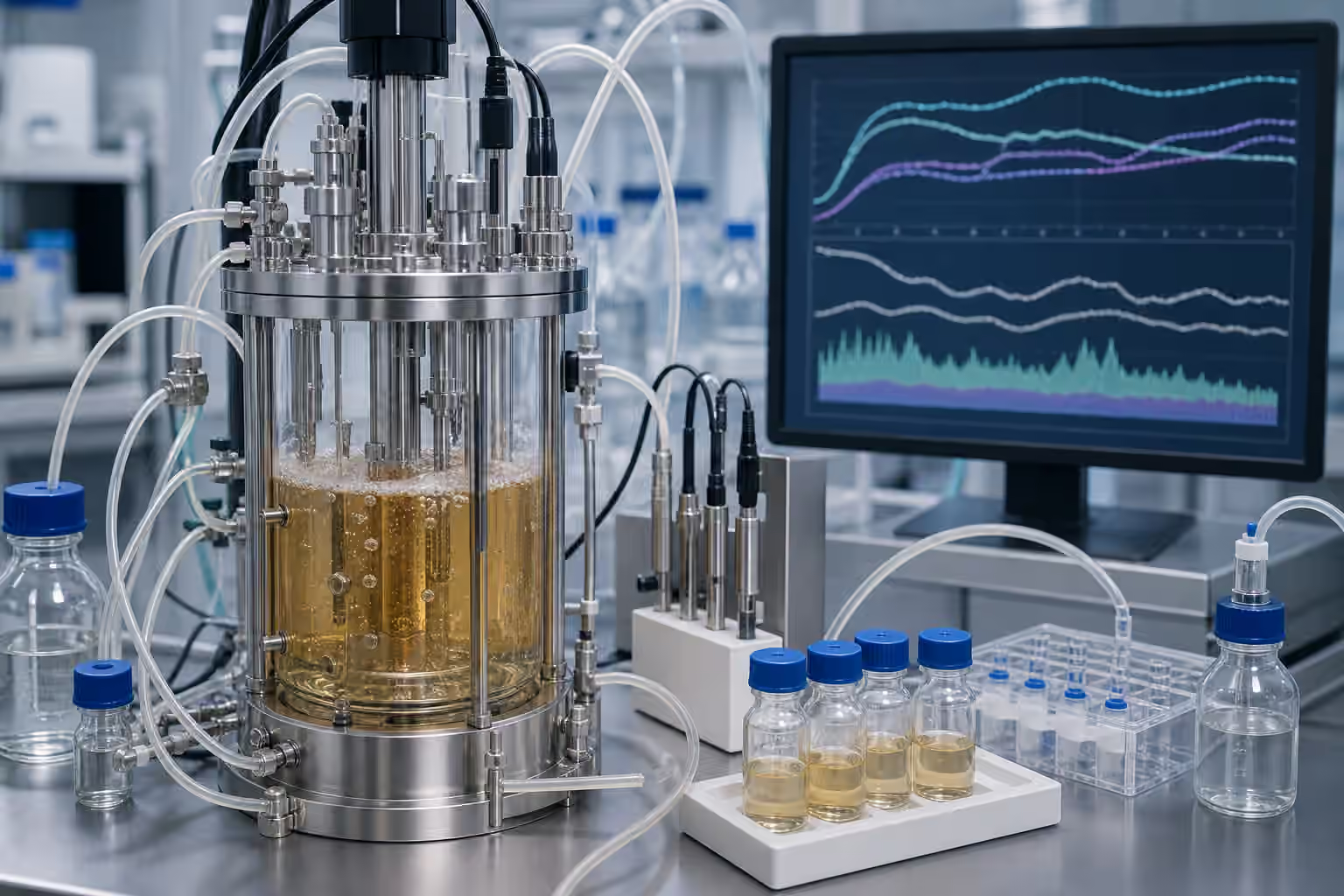
A fermentation broth is not a clean bottle of product. It can contain living or inactive cells, cell fragments, proteins, salts, sugars, organic acids, pigments, foam-control agents, media components, byproducts, nucleic acids, trace metals, and the target molecule itself. The exact mixture depends on the host organism, feedstock, process conditions, product, and how the run ended.
That crowding matters because every unwanted component can complicate recovery. Some impurities are harmless but costly to remove. Some interfere with the product’s performance. Some foul filters or columns. Some change viscosity. Some damage the product if they remain too long. Some matter only because the intended use demands strict limits.
The first downstream question is therefore not only “How much product did the biology make?” It is also “Where is the product, what is it mixed with, and how fragile is it?” A secreted enzyme in the liquid broth presents a different challenge from a product trapped inside cells. A small molecule that tolerates heat and solvents behaves differently from a delicate protein that unfolds easily. A material grown as a physical mat or fiber asks different questions from a dissolved ingredient.
This is why downstream thinking belongs beside Strain Engineering . The strain’s job is not merely to produce. It should ideally produce in a way that downstream processing can handle. A pathway that pushes more product into the broth may be easier to recover than one that leaves the target inside cells. A strain that makes fewer troublesome byproducts may be more valuable than one with a slightly higher headline titer.
Clarification Comes Before Purity
Downstream processing often begins with clarification: separating larger solids from the liquid or otherwise making the mixture easier to process. In ordinary language, this is the moment when the tank contents stop looking like a biological culture and start becoming a process stream.
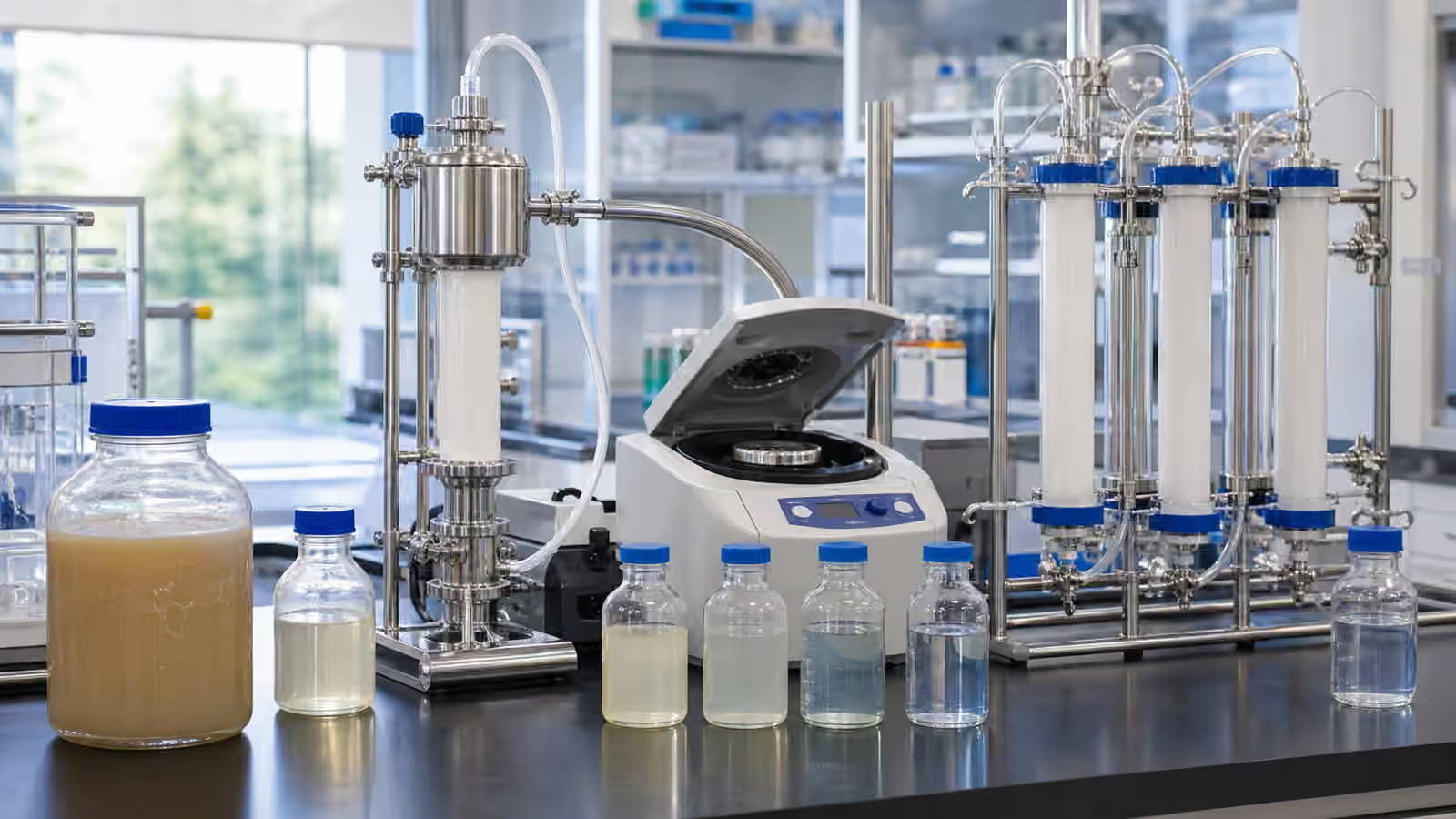
Clarification may use centrifugation, filtration, settling, flocculation, depth filters, membranes, or combinations of methods. The choice depends on scale, product location, cell type, viscosity, equipment, cost, and quality requirements. The point is not to make the final product in one heroic step. The point is to remove enough bulk material that the next step can work.
This early stage can decide the mood of the whole process. If cells break open when the team wants them intact, extra impurities may flood the stream. If a filter clogs too quickly, the run slows and costs rise. If product sticks to solids, yield is lost before purification really begins. If clarification takes too long, a fragile product may degrade.
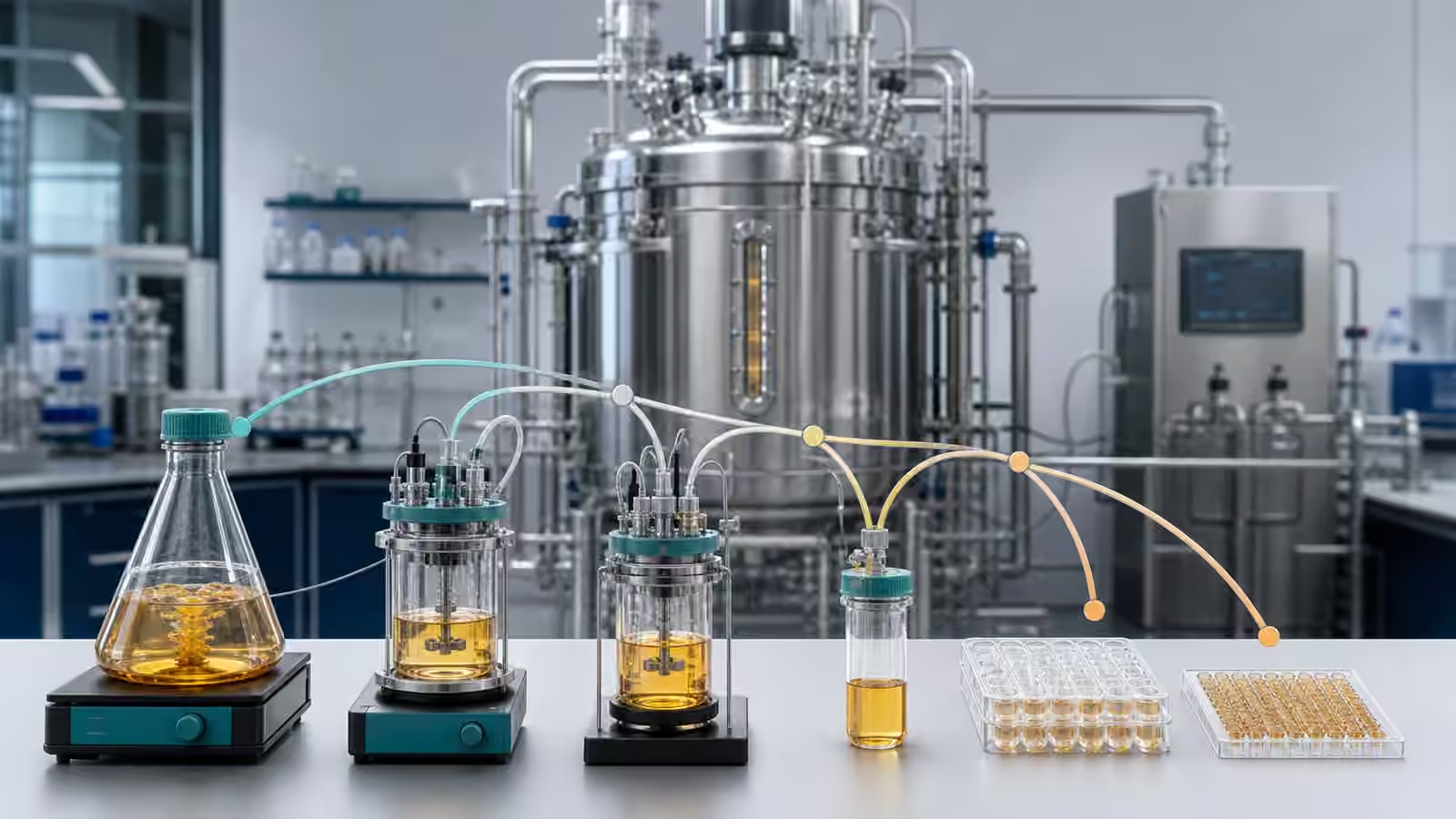
Small-scale experiments can hide these problems. A researcher may spin a tube in a benchtop centrifuge and get a clean-looking sample. A factory cannot treat a large production run as a collection of tiny tubes. The physics, timing, equipment, and cleaning burden all change. That is one reason Bioprocess Scale-Up treats the flask-to-factory transition as a manufacturing problem rather than a simple multiplication exercise.
Purification Is a Series of Tradeoffs
Purification is rarely a single magic step. It is usually a sequence designed to exploit differences between the target product and everything else in the stream. Size, charge, solubility, hydrophobicity, binding affinity, volatility, density, crystallization behavior, and stability can all become handles for separation.
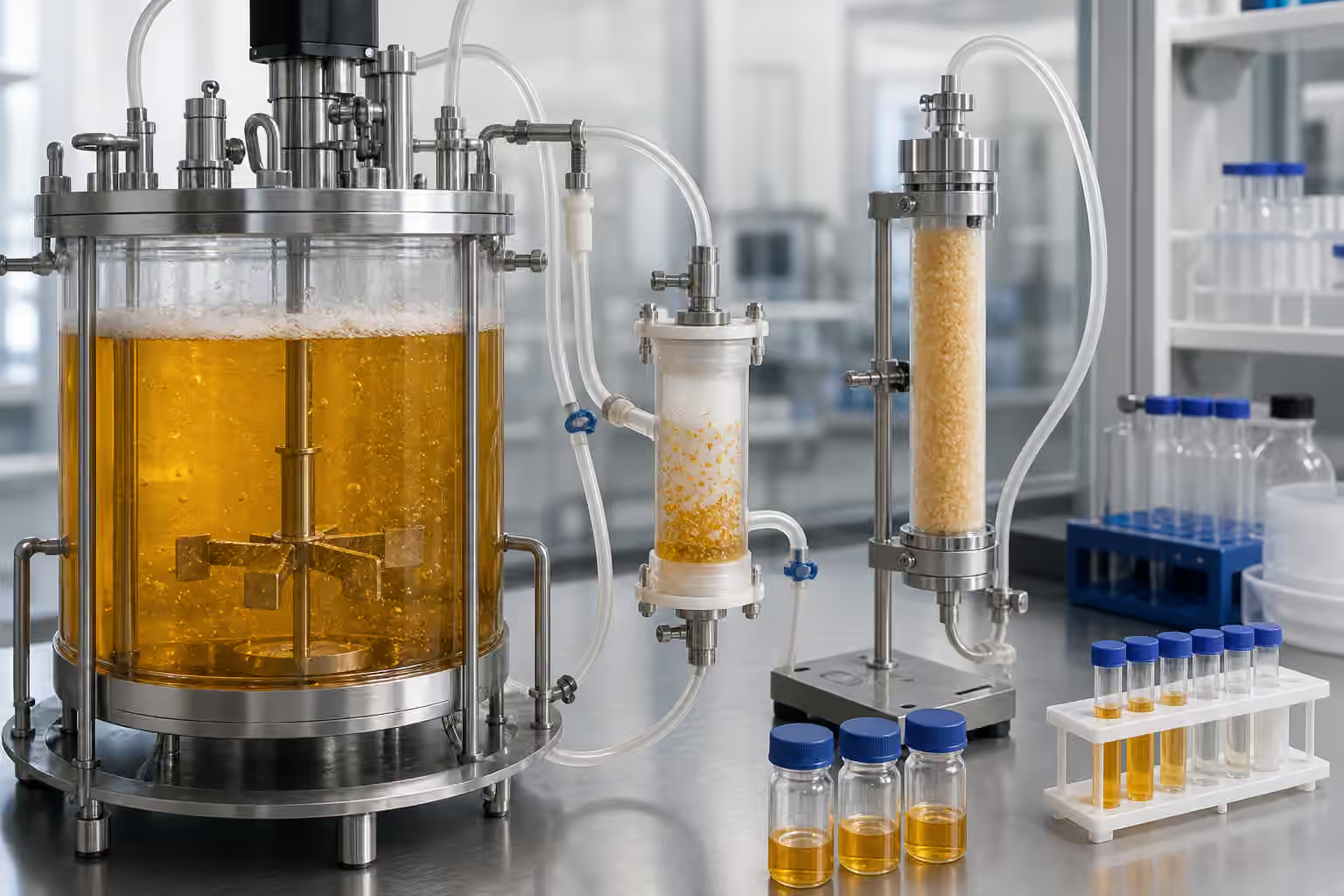
For proteins, downstream teams may use filtration, precipitation, chromatography, ultrafiltration, diafiltration, and formulation steps. For small molecules, they may use extraction, distillation, crystallization, adsorption, membranes, or chemical conversion. For materials, separation may involve washing, pressing, drying, curing, or physical shaping. The vocabulary changes by product class, but the underlying question remains the same: what property lets the product move one way while impurities move another?
Every step has a cost. A column can improve purity but add resin cost, buffer use, time, validation, and cleaning. A harsh solvent can separate a molecule efficiently but raise safety, environmental, compatibility, or regulatory questions. A high-temperature step can simplify processing for a stable product and destroy a fragile one. A membrane can concentrate a stream and also become a bottleneck if it fouls.
This is where downstream processing becomes an engineering conversation rather than a decorative finishing step. The best sequence is not always the one that delivers the highest purity in a laboratory demonstration. It is the one that delivers the required purity and quality with acceptable yield, throughput, cost, safety, waste, and repeatability.
Yield Can Be Lost After the Biology Succeeds
Synthetic biology discussions often focus on titer, rate, and yield inside the biological process. Those numbers matter, but they do not tell the whole manufacturing story. A tank may contain a large amount of product, yet the final recovered amount may be much lower after clarification, purification, concentration, and formulation.
Loss can happen quietly. Product can remain with the cell mass. It can bind to surfaces. It can degrade during a long hold. It can be discarded with an impurity-rich fraction. It can denature during concentration. It can be lost when the process is made cleaner, safer, or more consistent. Sometimes a downstream change that improves purity reduces recovered yield enough to damage the economics.
This is why teams care about recovery as much as production. If a strain improvement increases product formation but makes the broth harder to process, the gain may not survive downstream. If a feedstock lowers fermentation cost but introduces impurities that complicate purification, the full process may become more expensive. Biomanufacturing Feedstocks is relevant here because the material that feeds the organism can echo all the way into the purification train.
A mature process looks at the whole chain. It asks how much target enters downstream, how much survives each step, what quality improves along the way, and where the strongest losses occur. The answer can reshape upstream biology. Better secretion, cleaner metabolism, different media, altered harvest timing, or a more stable product form may do more for manufacturing than a dramatic but messy increase in production.
Formulation Turns a Molecule Into Something Usable
After purification, the product still may not be finished. It may need concentration, buffer exchange, drying, blending, stabilization, sterile handling, controlled storage, or conversion into a form that customers can actually use. This stage is formulation, and it is where product identity meets practical life.
An enzyme may need to remain active during shipping and storage. A food protein may need to disperse, taste neutral, avoid unwanted color, and perform in a recipe. A small molecule may need a defined purity profile and stable packaging. A material precursor may need consistent moisture, particle size, viscosity, or reactivity. A research reagent may need predictable behavior after freezing and thawing.
Formulation can reveal that the target molecule is less cooperative than it seemed. A protein that looked active in fresh lab samples may lose function after drying. A purified ingredient may clump. A material may change texture when stored. A product may be chemically correct but impractical for distribution.
This is another reason downstream processing belongs early in development. If the final form is ignored until the end, the team may discover too late that the product is difficult to stabilize or handle. Manufacturing is not only about making the right molecule. It is about making the right molecule usable beyond the moment it leaves the instrument.
Waste Is Part of the Process
Downstream processing creates side streams. Cell mass, spent media, wash fluids, buffers, solvents, filter materials, chromatography waste, cleaning solutions, and rejected fractions all need management. Some may be relatively benign. Some may require treatment because of biology, chemistry, product residues, or facility rules.
This matters for cost and credibility. A synthetic biology product may be marketed as cleaner or more sustainable than an incumbent, but downstream processing can carry a meaningful footprint. Water use, energy use, consumables, cleaning, waste treatment, and disposal all belong in the real accounting. A product made biologically is not automatically gentle just because cells helped make it.
The goal is not to shame downstream processing for being physical. Every manufacturing system has material flows. The responsible move is to make those flows visible enough to improve them. A process that uses fewer harsh inputs, recovers more product, cleans more efficiently, or produces manageable waste may be stronger even if the biology itself looks less dramatic.
Quality Follows Every Fraction
Downstream processing is also a quality system. Each fraction, hold step, instrument, filter, column, and container can affect identity, purity, activity, stability, and traceability. The team needs to know what was collected, what was discarded, why a step passed or failed, and whether the final product meets its intended standard.
This connects directly to Bioprocess Quality Control . Quality is not something sprinkled on the finished bottle. It is built through sampling, validated methods, specifications, records, deviation handling, and repeatable operations. A purification process that works only when one expert is watching closely is not yet robust.
Different products demand different standards. An industrial processing aid, a food ingredient, a diagnostic component, and a therapeutic material do not carry the same requirements. The downstream process must be appropriate for the use. It should not be judged by a vague sense of cleanliness, but by whether it reliably produces material that meets the specification that matters.
Downstream Decides What the Biology Was Worth
Downstream processing can sound like the chapter after the interesting chapter. In reality, it decides whether the interesting biology becomes a product. It is where a cloudy broth becomes a defined material, where yield becomes recovered yield, where purity becomes evidence, and where a promising run becomes repeatable manufacturing.
For readers evaluating synthetic biology claims, downstream questions are especially useful. Has the product been recovered, or only detected? Is it secreted, intracellular, dissolved, attached to biomass, or physically grown? Does purification dominate cost? Are recovery losses discussed? Is the final form stable? Are side streams and waste visible? Has the process been repeated at a scale that resembles the intended use?
Those questions do not drain the field of imagination. They protect it from wishful thinking. Synthetic biology can teach cells to make useful things, but people still have to separate those things from the world the cells needed to grow. The product is not truly made until it can leave the broth with its identity, quality, and usefulness intact.