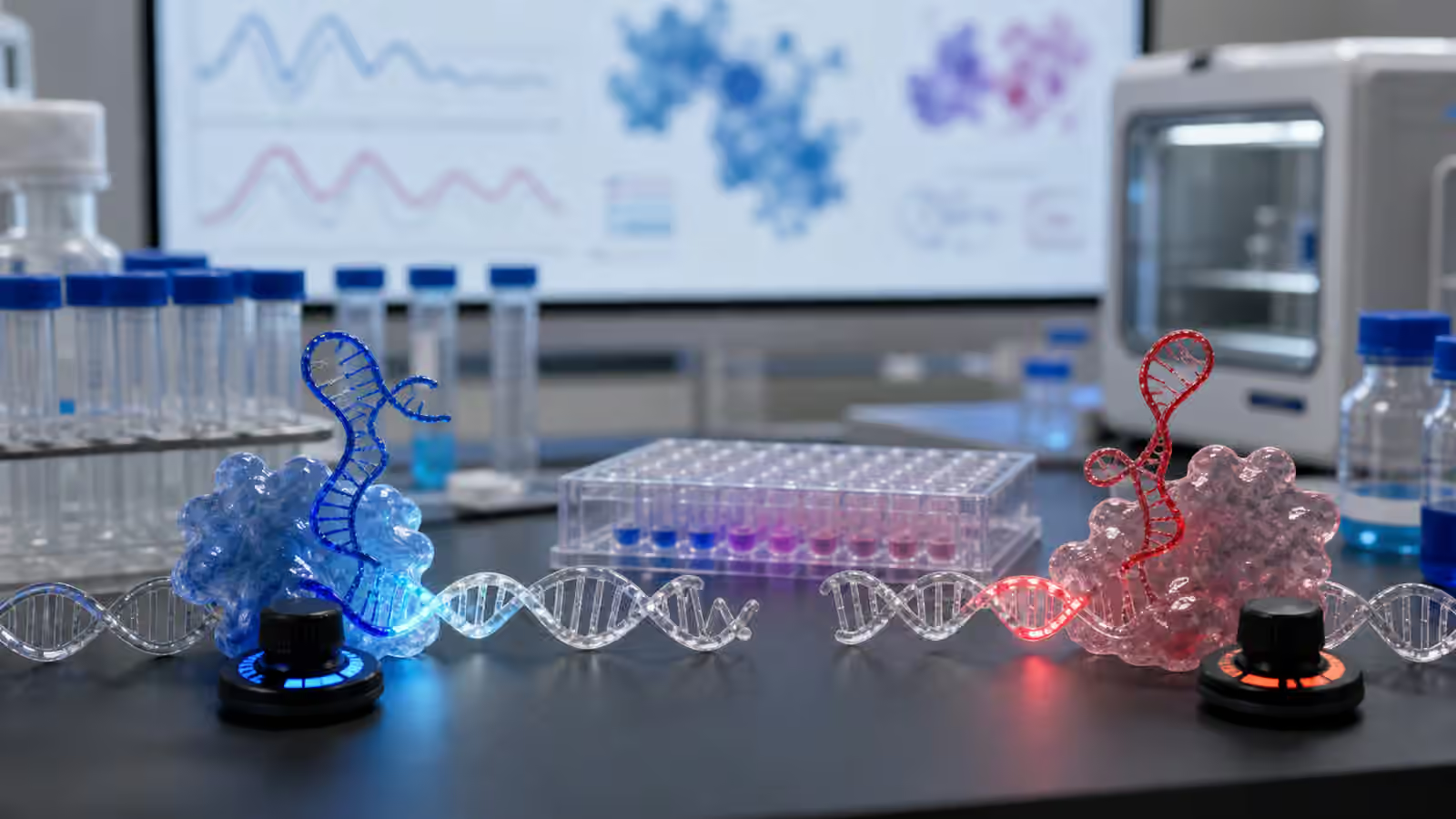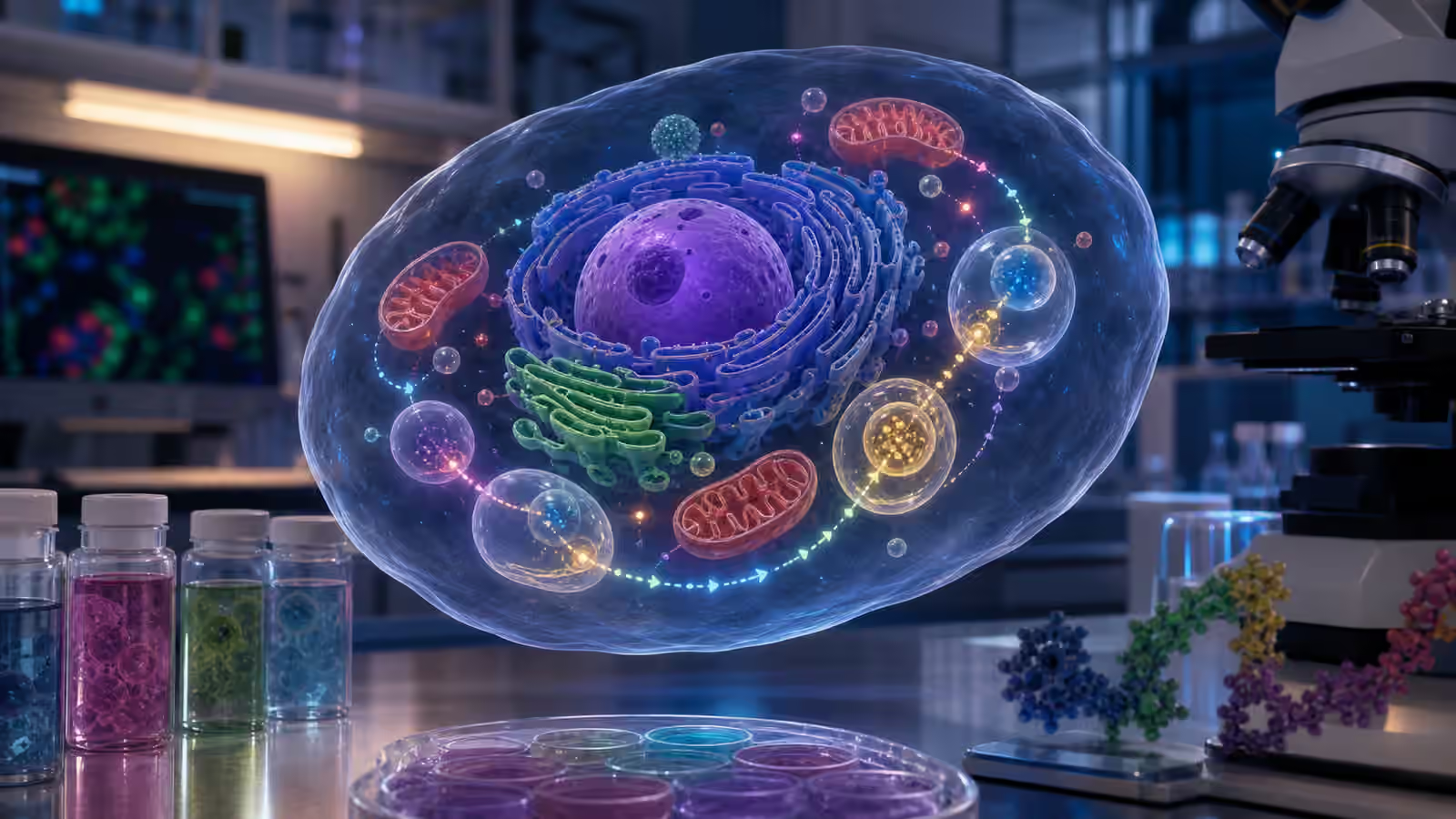
A cell is not a bag of enzymes.
Introductory synthetic biology often speaks as if a designed pathway enters a cell and meets one shared interior. That simplification helps at first. It lets a reader focus on DNA, expression, enzymes, products, and measurement. But many cells are spatially organized in ways that matter deeply. Molecules are separated by membranes, concentrated into local regions, routed through compartments, held near scaffolds, or excluded from places where they would cause harm. A related reference is Engineering Organelle-Gated Reporters for Imaging Subcellular Enzyme Activity in Living Cells .
Compartmentalization is the use of location as part of biological design. Organelle engineering is the more specific work of using, modifying, or building cellular compartments so that reactions happen in a better environment. The goal may be to improve yield, reduce toxicity, protect intermediates, supply cofactors, support folding, localize sensing, or keep incompatible chemistry apart.
This guide extends Metabolic Pathway Design and Transporters and Membrane Engineering . Pathway design asks which reactions should happen. Transport and membrane engineering asks how molecules cross boundaries. Compartmentalization asks where the pathway should live.
Location Changes Chemistry
Different cellular compartments offer different conditions. They may differ in pH, redox state, ion concentration, cofactor availability, membrane composition, protein-folding machinery, degradation systems, precursor supply, and contact with native metabolism. A reaction that struggles in one compartment may work better in another because the local environment fits the enzyme’s needs.
Yeast, plants, algae, and mammalian cells make this especially visible. The endoplasmic reticulum supports folding and secretion for many proteins. Mitochondria and chloroplasts hold specialized energy and carbon metabolism. Peroxisomes handle reactions that can involve reactive chemistry. Vacuoles, Golgi compartments, lipid droplets, and cell walls create additional places where products may be made, modified, stored, or damaged.
Even bacteria, which are often introduced as simpler cells, are not spatially blank. They have membranes, periplasmic spaces in many species, local protein complexes, polar organization, microcompartment-like structures in some organisms, and crowded interiors where proximity can matter. Synthetic biology becomes more realistic when it treats location as a design variable rather than an afterthought.
Targeting Signals Are Addresses, Not Guarantees
A designer can often add a targeting sequence, localization tag, signal peptide, membrane anchor, or fusion partner to move a protein toward a compartment. That sounds straightforward, but the cell does not read these addresses like a postal service with perfect delivery. Targeting can be incomplete, overloaded, context-sensitive, or disruptive.
A protein sent to a compartment may fold differently, get clipped, aggregate, or burden local machinery. A signal peptide may work in one host and poorly in another. A fusion tag may interfere with enzyme activity. A membrane anchor may place the enzyme near a substrate but also reduce mobility or stability. A pathway split across compartments may solve toxicity while creating a new transport bottleneck.
Secretion and Export Pathways explains this problem for products leaving the cell. Compartment engineering faces the same principle inside the cell. Routing is part of function. Moving a protein is not finished until the team proves that the protein arrives, remains active, and improves the design under relevant conditions.
Compartmentalization Can Protect the Cell
Some engineered pathways create intermediates that are toxic, reactive, hydrophobic, or disruptive to native metabolism. Localizing those reactions can protect the host by keeping the chemistry away from sensitive systems or by concentrating pathway enzymes so intermediates pass quickly from one step to the next.
That protection is never absolute. A harmful molecule may leak, diffuse, cross membranes, or damage the compartment itself. A compartment may become stressed if the engineered pathway overloads its capacity. A product stored in a local region may still interfere with growth, division, secretion, or quality control. Compartmentalization can reduce a problem without making it disappear.
Cellular Burden and Resource Allocation remains relevant because localizing a pathway can shift burden rather than remove it. The host still has to express proteins, import substrates, move products, maintain membranes, supply cofactors, and repair damage. A compartment can be a helpful room, but it still belongs to the house.
Proximity Can Improve Pathway Flow
One reason to localize pathway enzymes is to bring them close together. When intermediate molecules are unstable, toxic, scarce, or likely to be consumed by competing pathways, proximity may improve productive flow. The intermediate produced by one enzyme has a better chance of meeting the next enzyme before it wanders away.
Cells already use versions of this idea. Multi-enzyme complexes, metabolons, scaffolds, organelles, and membrane-associated pathways can organize chemistry in space. Synthetic biology can borrow from that logic by attaching enzymes to scaffolds, targeting them to compartments, using phase-separated condensates, or designing synthetic microcompartments.
The risk is that proximity can be overdesigned. Packing enzymes together may reduce flexibility, create steric interference, change expression burden, or make measurement harder. A tidy diagram with enzymes lined up in order may not match the physical crowding inside a cell. Synthetic DNA Circuits teaches that designed arrangements behave inside a living context. Spatial arrangements obey the same rule.
Measurement Has to Find the Right Place
Compartmentalization makes measurement more demanding. A whole-cell extract may show that a product exists, but it may not show where the product formed, where it accumulated, or which compartment experienced stress. A fluorescence signal may look strong but blur across compartments. A fractionation method may contaminate one compartment with another. A localization tag may alter the thing being measured.
That does not make compartment engineering unknowable. It means the evidence must match the claim. Microscopy, fractionation, targeted reporters, activity assays, metabolite localization, proteomics, and time-course experiments can all help. Each has artifacts. A careful study uses more than one line of evidence when location is central.
Omics for Engineered Cells is a useful companion because spatial changes often show up as broader cellular responses. If targeting a pathway to an organelle creates stress, changes precursor use, or alters protein processing, omics may reveal that the cell has paid a price.
Synthetic Compartments Are Tempting and Hard
Some designs aim beyond using existing organelles. They imagine engineered protein shells, synthetic microcompartments, vesicles, membraneless condensates, or artificial organelles that create new reaction spaces. The appeal is clear. A custom compartment could concentrate enzymes, exclude competitors, protect the host, or create a local chemistry the rest of the cell does not share.
The difficulty is equally clear. A compartment needs assembly, stability, permeability, inheritance or maintenance, compatibility with growth, and measurement. If substrates cannot enter or products cannot leave, the compartment becomes a beautiful dead end. If assembly varies between cells, the population may become inconsistent. If the compartment is costly, cells may select against it. If it leaks, the promised separation may not hold.
Single-Cell Variation matters here. A compartment design that looks good in an average measurement may be uneven across the population. Some cells may assemble it well, some poorly, and some not at all. For a production process, that variation can become a quality and yield problem.
The Right Room Is Part of the Design
Compartmentalization gives synthetic biology another kind of control. It does not only ask which gene, which enzyme, which promoter, or which host. It asks where the work should happen. That question can change the answer to many others. The best host may be the one with the right organelle. The best pathway variant may be the one that tolerates local pH. The best measurement may be the one that sees location rather than averages it away.
The mature view is not that every pathway needs a custom compartment. Many designs work well enough without complex spatial engineering, and extra localization can create new failure modes. The mature view is that location should be considered when chemistry, toxicity, folding, transport, or measurement keeps resisting simpler fixes.
Biology already uses rooms, walls, corridors, and local neighborhoods. Synthetic biology becomes more capable when it stops pretending that all of the cell is one room and starts asking which room the design actually needs.