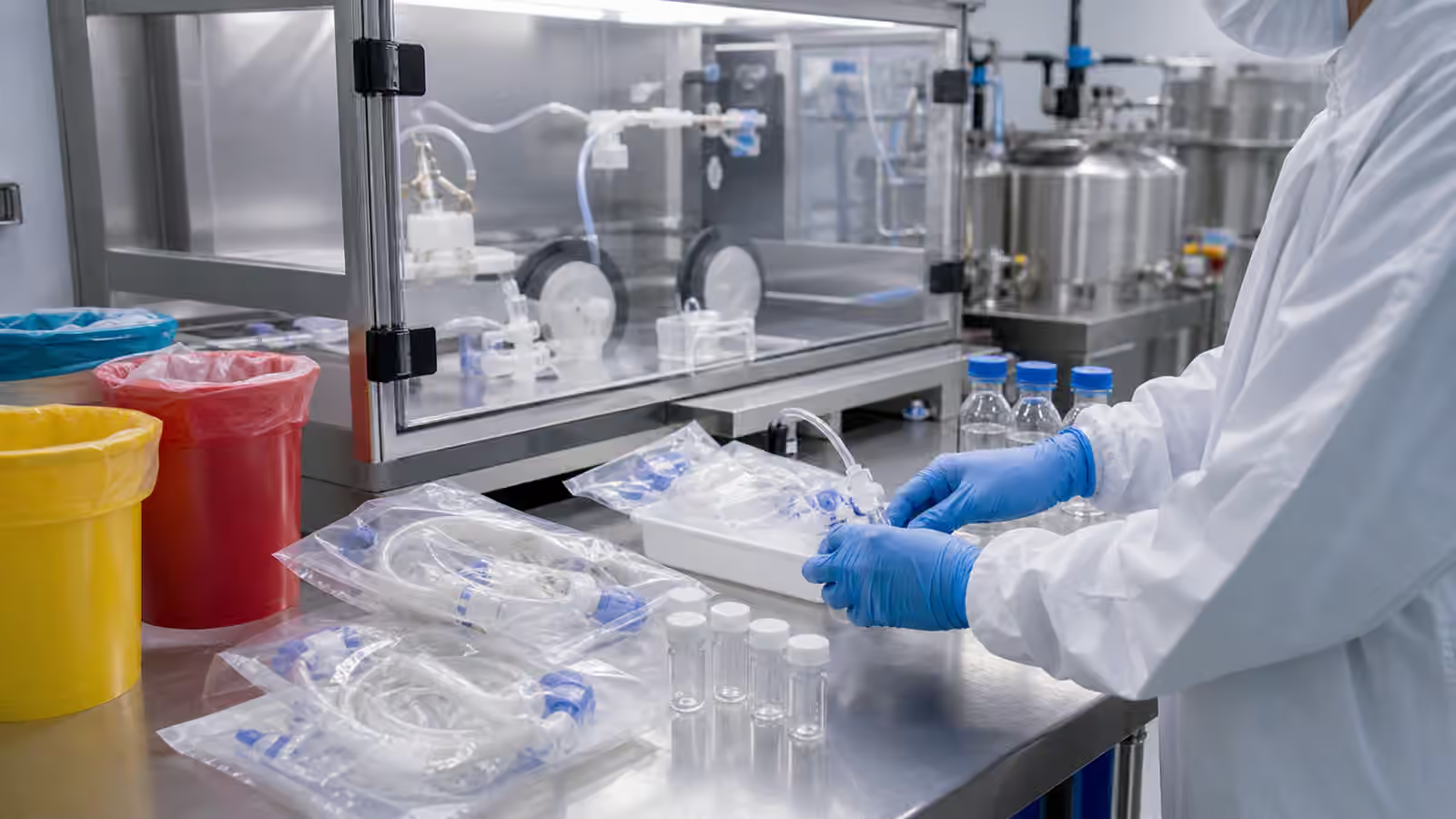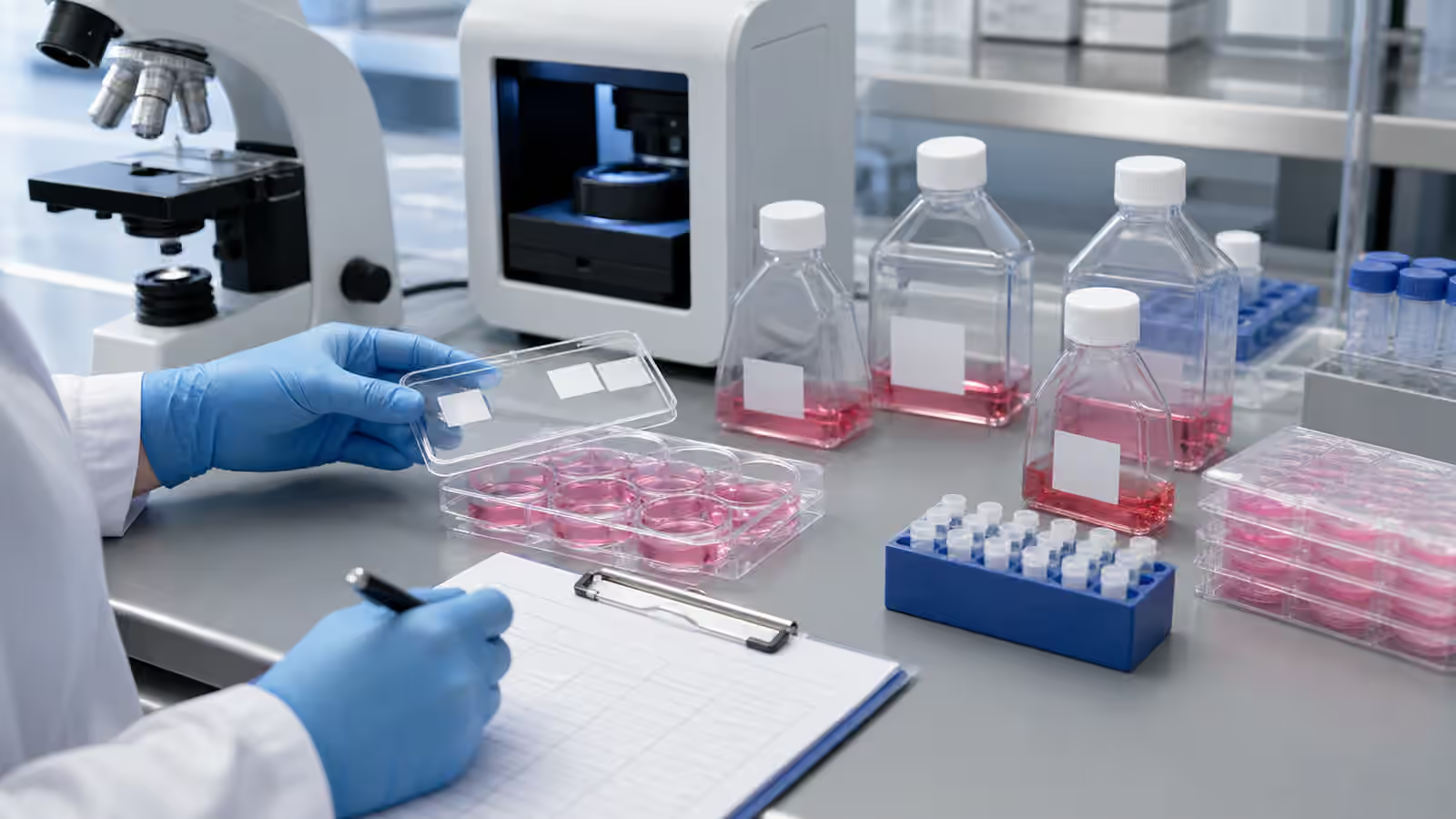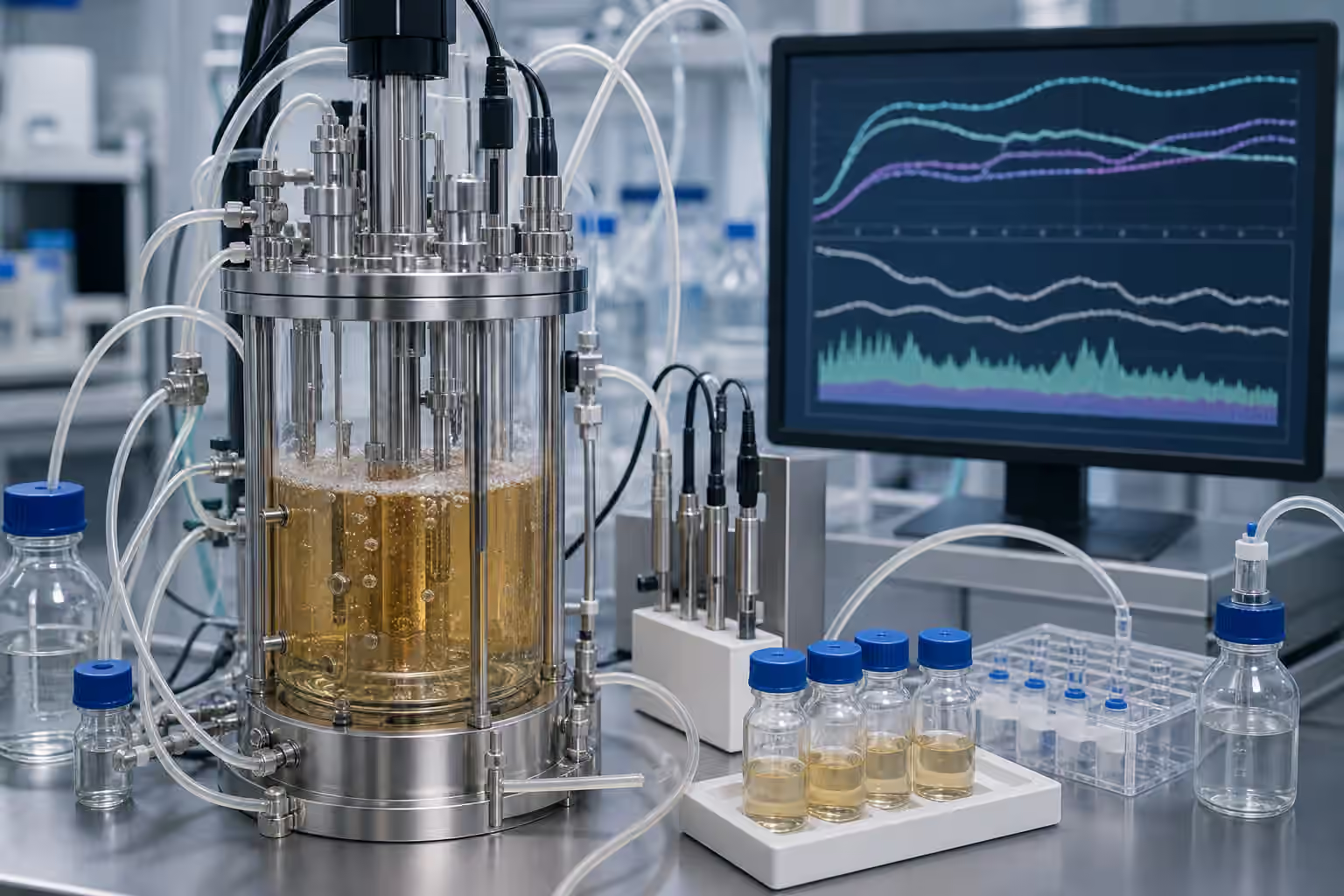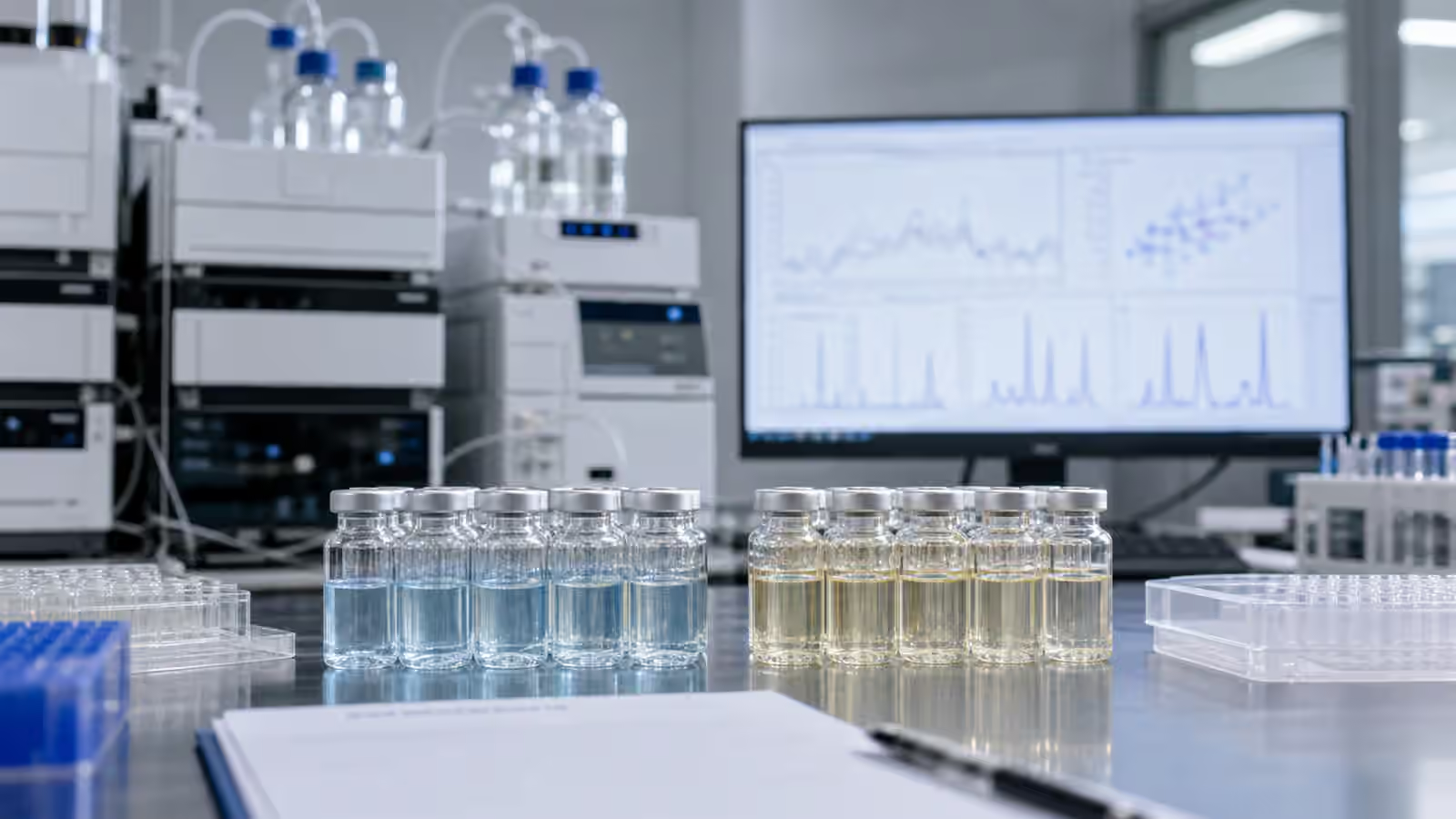
Biomanufacturing processes change because real work changes. A strain is improved. A clone is replaced. A medium component changes supplier. A vessel becomes larger. A purification step is tuned. A filter is swapped. A process moves from one site to another. A raw material becomes inconsistent. A stability problem forces a formulation adjustment. A team learns something important and updates the process because staying frozen would be worse. A related reference is ICH Q5E — Comparability of Biotechnological/Biological Products .
Every change raises a comparability question. Does the changed process still make the product the story says it makes? The answer cannot be assumed because biological production is sensitive to context. A molecule made by living systems carries the history of expression, folding, modification, harvest, purification, formulation, storage, and measurement. Two processes can share a product name while producing material that differs in ways that matter, or in ways that look different but do not affect the intended use. Comparability is the disciplined work of telling those possibilities apart.
This guide is not regulatory advice. Specific requirements depend on product type, jurisdiction, use, and oversight context. The evergreen engineering principle is simpler: when a process changes, evidence has to connect the old product story to the new one. Analytical Chemistry for Bioproduct Identity , Bioprocess Quality Control , and Tech Transfer in Biomanufacturing are the closest neighbors on this shelf.
The Product Is More Than the Target Molecule
Synthetic biology often describes a product by naming the target molecule. A strain makes an enzyme. A cell line makes a protein. A pathway makes a flavor compound. A fermentation makes an ingredient. That name is useful, but it is not the whole product identity. The useful material includes purity, activity, variants, modifications, impurities, byproducts, residual host material, formulation, stability, and performance in the intended context.
This is especially visible for proteins and complex bioproducts. A protein can have the right amino acid sequence while differing in folding, aggregation, clipping, oxidation, glycosylation, charge variants, or activity. A small molecule process can produce the correct main compound while shifting impurity patterns. A living material can maintain the same general composition while changing texture, strength, moisture behavior, or durability. A cell-free product can be influenced by reaction components that remain after production.
Downstream Processing matters because recovery shapes the final material. The organism may make the target, but purification, concentration, filtration, drying, formulation, and storage decide what reaches the user. A process change upstream can alter downstream behavior, and a downstream change can alter product quality even when the upstream biology is unchanged.
A Change Can Be Small on Paper and Large in Biology
Some process changes sound minor. A feed timing shifts. A temperature range tightens. A resin changes. A vessel geometry changes. A culture is harvested a little later. A seed train is shortened. A medium component comes from a new source. In ordinary manufacturing, such changes may still matter. In biological manufacturing, they can matter in indirect ways because cells respond to their environment.
A small feeding change can alter growth phase, stress, byproducts, product timing, or modification. A larger vessel can change oxygen transfer, mixing, foam, or temperature control. A new raw material lot can change trace nutrients or impurities. A new purification step can remove one impurity while exposing a stability issue. A formulation change can protect the product during storage while changing how an assay reads it.
Bioprocess Scale-Up explains why the flask is not the factory. Comparability applies the same caution to change. The question is not whether the change sounds modest. The question is whether the evidence shows that the product and process remain within the intended story.
Analytics Build the Bridge
Comparability depends on measurement. The team needs analytical methods that can see the product attributes likely to change. Those methods may examine identity, purity, potency, activity, size, charge, structure, impurities, residual materials, byproducts, stability, or physical behavior. The exact methods depend on the product, but the principle is stable: the methods must be fit for the question.
Analytical Chemistry for Bioproduct Identity explains why a single attractive measurement is rarely enough. Comparability usually needs a pattern of evidence. If several independent measurements point to the same conclusion, confidence grows. If one method shows a difference and another does not, the disagreement becomes information rather than an inconvenience.
The methods themselves have to be understood. A changed process can also change the sample matrix, impurity profile, or formulation in a way that affects an assay. A difference in the measurement may reflect a difference in the product, a difference in sample preparation, or a weakness in the analytical method. Comparability is therefore partly a measurement-development problem. It asks whether the bridge between old and new material is strong enough to carry the claim.
Records Give the Comparison a Spine
Comparability is weakened when the old process is poorly documented. If a team cannot reconstruct how earlier material was made, stored, tested, and interpreted, it becomes difficult to compare new material honestly. The old product story may depend on memory, slides, partial records, or analytical methods that have changed without clear mapping.
Lab Data Provenance and Sample Tracking is therefore part of change management. A comparison needs traceable samples from old and new processes, clear batch histories, method versions, raw data, analysis decisions, storage conditions, and deviations. The same product name across two vials is not enough. The evidence has to show where the material came from and what happened to it.
Records also help explain differences. If the new material has slightly different impurity behavior, the team can ask whether the change aligns with a known process adjustment. If an activity assay shifts, the team can look at product modification, concentration, formulation, storage, and handling. Without the record spine, every difference becomes harder to interpret.
Not Every Difference Has the Same Meaning
Comparability does not require pretending that two processes are identical. Living production is variable, and analytical methods can be sensitive enough to reveal differences that may or may not matter. The mature question is which differences affect product quality, performance, stability, safety context, or the claim being made.
A tiny analytical shift may be well within normal variation. A visually small shift in a critical attribute may matter. A new impurity at low level may be unimportant for one industrial use and important for another. A product-quality change that looks acceptable in the lab may create trouble during storage or downstream use. Context decides meaning.
Formulation and Stability belongs here because comparability often extends beyond the moment of release. A changed process might produce material that looks comparable at first but degrades differently. Storage, shipping, dilution, drying, mixing, or use conditions can reveal differences that a fresh sample hides.
Process Understanding Makes Comparability Faster
The more a team understands its process, the easier it is to design a useful comparability study. If the team knows which variables control product quality, it can focus evidence on the attributes most likely to shift. If the team knows the normal range of variation, it can interpret new results more clearly. If the team knows which impurities track with stress, media, purification, or storage, it can investigate differences faster.
This is where Fermentation Monitoring and Biological Measurement and Controls become useful. A process with rich monitoring history and disciplined controls creates a stronger baseline. A process with weak measurement may still make product, but it leaves less evidence for later comparison.
Process understanding also prevents overreaction. Not every change demands the same depth of study. A mature, well-characterized process may support a focused comparison for a small controlled change. A poorly understood process, a product near a critical quality limit, or a change that affects many steps may require much broader evidence. The right level of work depends on risk, not on paperwork instinct.
Comparability Protects Public Trust
Synthetic biology often asks people to trust products made through unfamiliar routes. That trust can be weakened if product stories change without explanation. A company, lab, or manufacturer may know that a process update was reasonable, but users and reviewers need evidence that the product remains what it claims to be.
Synthetic Biology Product Claims and Public Trust makes this point at the communication layer. Comparability is one of the technical foundations beneath responsible communication. It lets a team say that a changed process was evaluated, that relevant attributes were compared, that differences were understood, and that claims were adjusted if the evidence required it.
The most honest comparability work is neither defensive nor theatrical. It does not insist that nothing changed simply because the team wants continuity. It does not dramatize every detectable difference as a crisis. It asks what changed, what the product needs to be, what the measurements show, and what uncertainty remains.
Biomanufacturing improves through change. Synthetic biology strains, cell lines, media, analytics, purification methods, and formulations all evolve as teams learn. Comparability is how learning stays connected to trust. It keeps the product story from becoming detached from the process that now makes it. A changed process can be better, cheaper, cleaner, or more robust, but it still has to prove that the material at the end matches the promise carried by its name.