Synthetic biology is usually described through living cells. A microbe is engineered to make a molecule. Yeast produce a protein. Bacteria become sensors. A cell grows, responds, divides, and carries the system inside a membrane. That image is useful, but it is not the whole field. Sometimes the most practical way to use biology is to take the useful machinery out of living cells and run it in a controlled format.
That is the basic idea behind cell-free synthetic biology. Instead of asking a living organism to survive, grow, and produce something, a cell-free system uses biological components outside an intact cell. The system may contain the molecular machinery needed to read genetic instructions and make proteins, or it may use enzymes and other parts arranged for a specific reaction. The result is biology without a living, reproducing organism at the center.
This can sound like a technical detail, but it changes the character of the work. A living cell has needs and opinions. It protects itself, consumes resources, responds to stress, mutates, and may dislike the product you want it to make. A cell-free system is less alive and often more direct. It can be easier to control, easier to store in some formats, and useful for education, diagnostics, prototyping, and certain manufacturing ideas.
The cell is powerful, but it is busy
A living cell is an extraordinary production system, but it is not built primarily to serve an engineer. It wants to maintain itself. If an engineered pathway burdens the cell, the cell may grow slowly, change behavior, or select against the very function the engineer wants. If a product is toxic, the cell may suffer. If conditions shift, the cell may redirect resources.
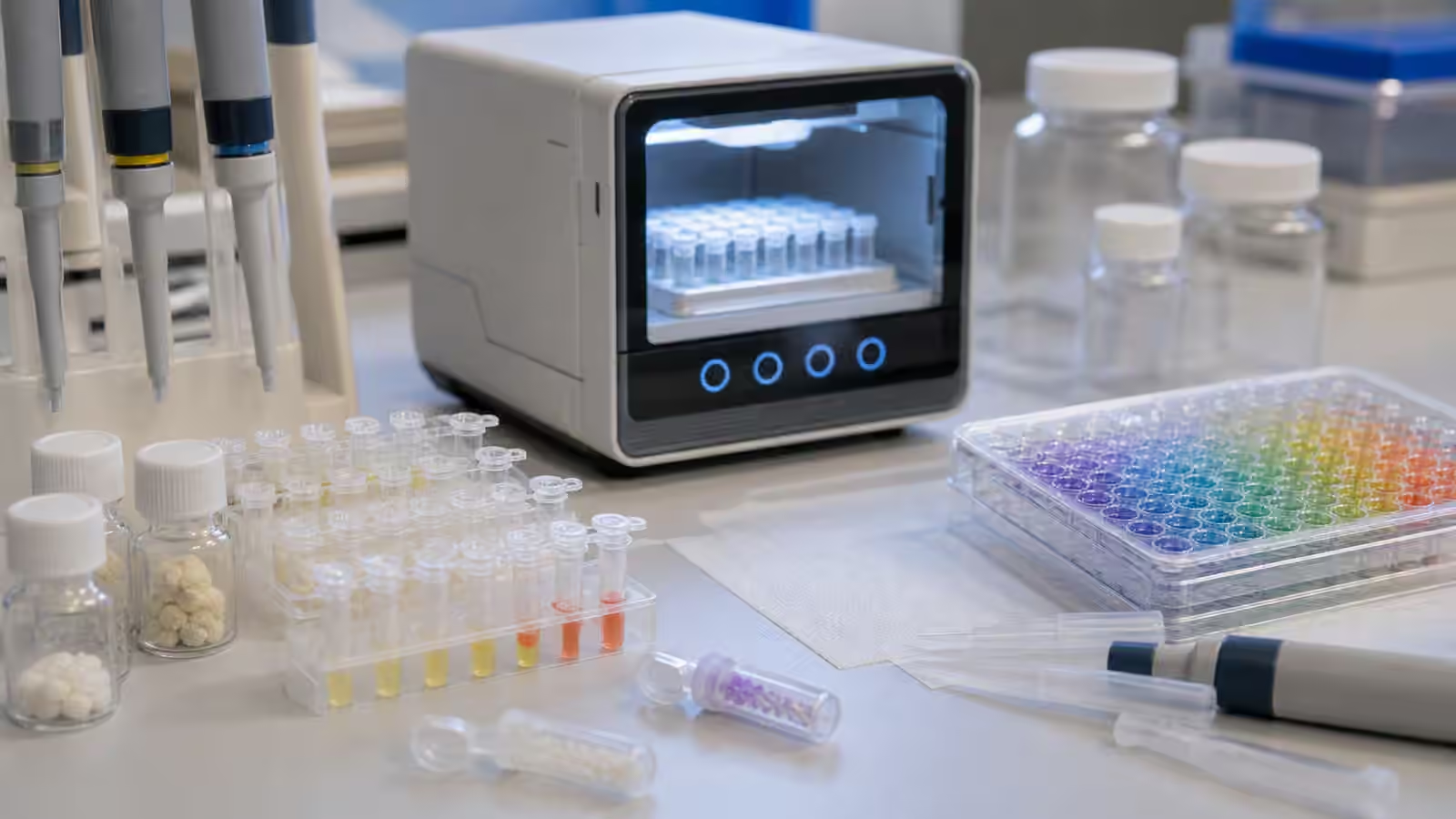
Cell-free systems remove some of that complexity. The useful machinery can be supplied in a mixture where the goal is narrower. The system does not need to divide. It does not need to protect a full living identity. It can focus on a reaction or expression task for a limited time.
That focus is valuable for rapid testing. If a researcher wants to learn whether a genetic design can produce a signal or make a protein, a cell-free setup may provide feedback faster than building and growing a living strain. It becomes a kind of biological workbench: not a factory yet, not a living deployment, but a place to test ideas quickly.
Paper can become a biology surface
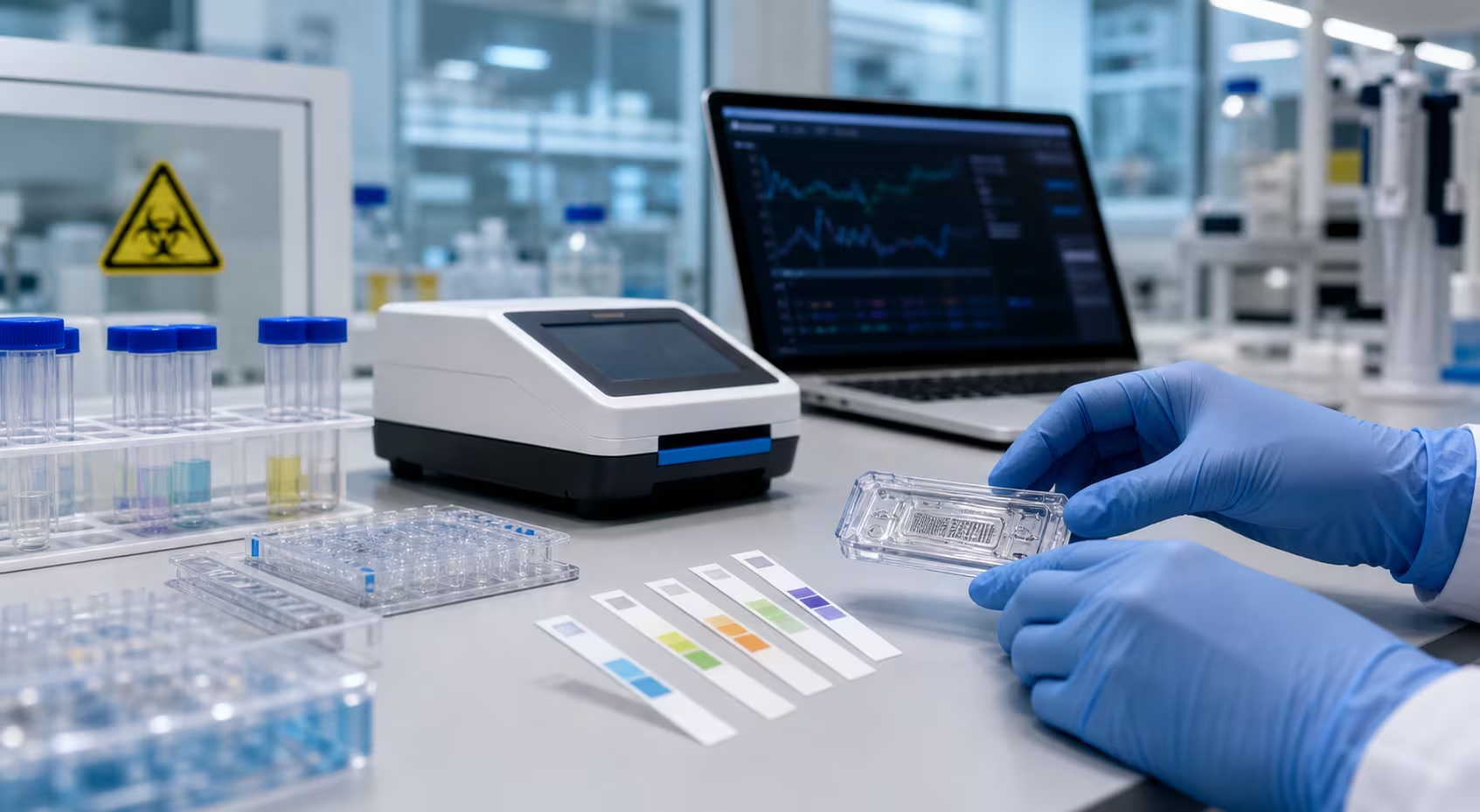
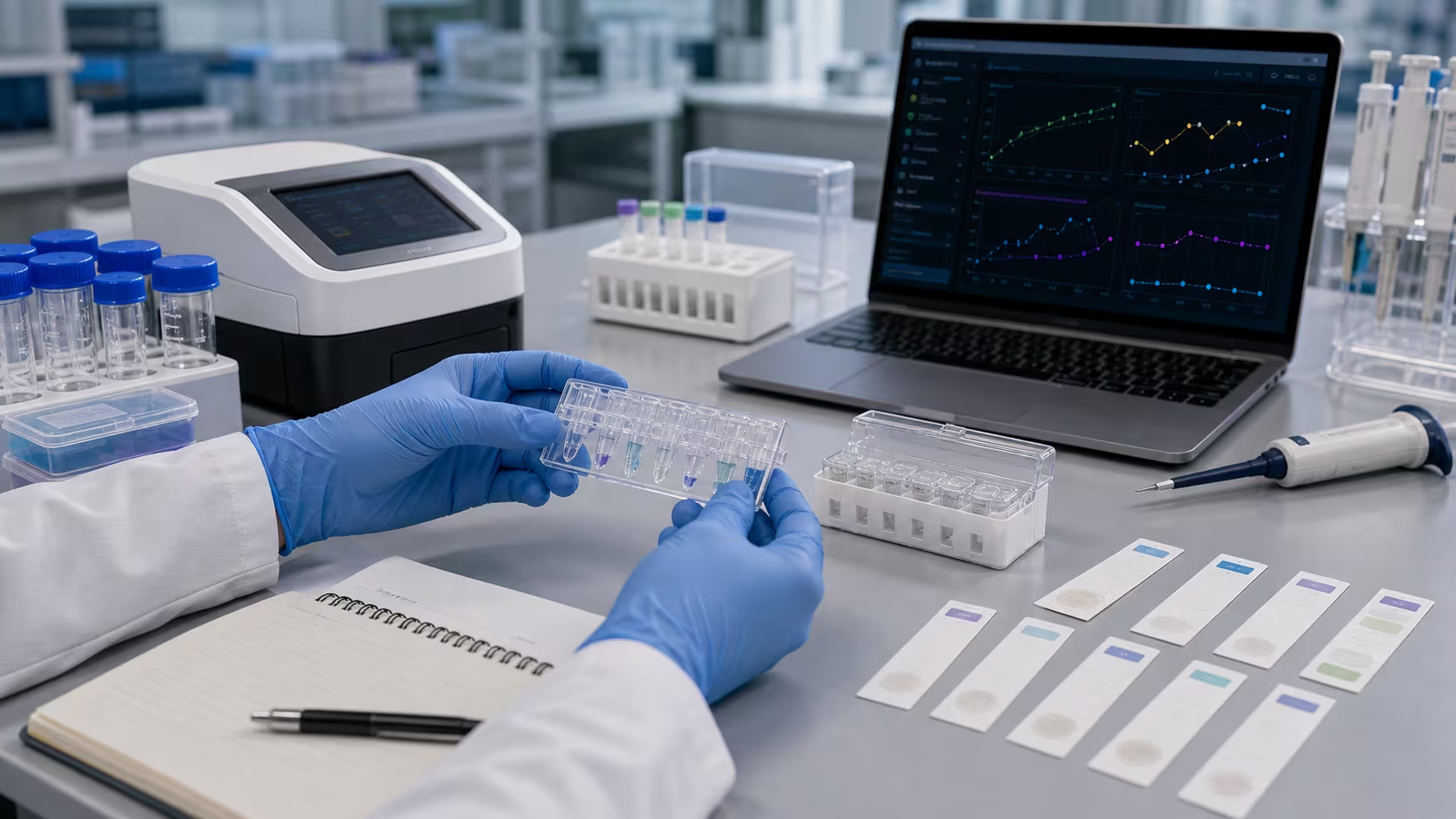
One of the most approachable examples is paper-based sensing. In some cell-free concepts, biological reaction components can be dried onto paper or another portable material. Later, when the right sample or trigger is added in a controlled use setting, the system produces a visible or measurable signal. The user may see a color change or read the result with a small device.
This does not mean paper magically becomes alive. It means biological machinery can be stabilized and used in a simple format. That is powerful because it can make some tests easier to transport, store, or use outside a full laboratory. It also connects directly to Biosensors and Living Diagnostics , where the central question is how biology becomes a trustworthy signal.
The same caution applies. A signal is only useful if it is validated. The test has to work with real samples, real storage conditions, real users, and clear interpretation. Cell-free does not remove the need for evidence. It changes the engineering path.
Safety changes, but does not disappear
Cell-free systems can reduce some safety concerns because they do not rely on living organisms that reproduce or persist. That can be important for diagnostics, education, field use, or early prototyping. A sealed cell-free reaction may be easier to contain than a living culture.
But “cell-free” does not mean “risk-free.” The inputs, outputs, intended use, disposal, data interpretation, and manufacturing quality still matter. A diagnostic system can give false confidence if it is poorly validated. A manufacturing system can still produce impurities. A teaching kit can still be mishandled. A sensitive assay can still raise privacy questions if the result concerns health or identity.
The right attitude is proportionate care. Cell-free systems may make some applications safer and simpler. They still deserve clear boundaries, good documentation, and responsible oversight.
Prototyping can move faster
Synthetic biology often works through design-build-test-learn cycles. Cell-free systems can speed parts of that loop because they may avoid some of the time required for cell growth and strain construction. A design can be tested more directly, measured, adjusted, and tested again.
This is especially useful in biofoundry thinking. Automation, measurement, and data discipline matter when many designs are being compared. Cell-free testing can act as an early filter. It may reveal which genetic parts, regulatory designs, or protein variants are worth moving into living systems or larger processes.
The filter is not perfect. A design that works cell-free may behave differently inside a cell. A protein that expresses well in a cell-free system may be hard for a living host. A signal that looks clean in a simple reaction may become messy in a real sample. Cell-free results are evidence, not prophecy.
That distinction is important. Faster testing is useful only when people remember what the test does and does not prove.
Manufacturing is possible, but context decides
Cell-free manufacturing is an appealing idea because it could avoid some limits of living production. If the product harms cells, perhaps making it outside cells helps. If rapid, distributed production is needed, perhaps stabilized cell-free systems have a role. If small batches of specialized proteins are needed quickly, cell-free expression may be attractive.
The challenge is cost, scale, stability, input supply, purification, and consistency. Living cells are difficult, but they are also good at making more of themselves and running complex chemistry from inexpensive feedstocks. A cell-free system may need prepared extracts, purified components, energy sources, and careful formulation. Those inputs can be expensive.
This is why cell-free systems will not simply replace fermentation. They will find niches where their advantages matter enough: speed, control, portability, toxicity tolerance, education, prototyping, or specialized production. The future is likely mixed, with living cells, cell-free systems, enzymes, and conventional chemistry each used where they make sense.
Education benefits from visibility
Cell-free biology can be a strong teaching tool because it makes biological design more visible. Students can see a reaction produce a signal without managing a living culture. The system can demonstrate how instructions become molecules, how sensors produce outputs, and how biological parts can be arranged for a purpose.
That visibility matters. Synthetic biology can feel abstract when hidden inside cells. A cell-free reaction brings part of the machinery onto the bench in a way that can be discussed more directly. It also allows educators to talk about safety, containment, validation, and limits without pretending biology is either magic or menace.
The best teaching uses cell-free systems to build respect, not carelessness. Students should come away understanding both the power and the boundaries of the tool.
Cell-free synthetic biology is compelling because it changes the unit of imagination. The field is not only about engineering organisms. It is also about using biological machinery where living organisms are not the best container. Sometimes the cell is the right factory. Sometimes the useful parts of the cell belong in a cartridge, a paper test, a prototype loop, or a controlled production step.
That flexibility is the deeper lesson. Biology is not one tool. It is a library of tools, and cell-free systems make a different shelf easier to reach.