A production run does not really begin when the main bioreactor is filled. It begins earlier, in the preserved living material chosen to start the process and in the chain of growth steps that turns that material into enough healthy inoculum for production. In synthetic biology, that quiet preparation can decide whether a clever engineered strain behaves like a reliable production system or a fragile lab curiosity. A related reference is ICH Q5D — Derivation and Characterisation of Cell Substrates .
Cell banks and seed trains sit in that preparation layer. A cell bank is a preserved source of a strain, culture, or cell line that a team can return to instead of improvising from whatever culture happens to be alive. A seed train is the staged growth path from preserved material to a larger culture ready to inoculate a production vessel. The names sound industrial, but the underlying idea is simple: living production needs a controlled beginning.
The guide to Strain Engineering explains how a chassis cell becomes a production cell through pathway design, burden management, screening, and measurement. This guide follows what happens after a promising strain is chosen. How does a team preserve it, restart it, expand it, and keep the start of production from becoming a hidden source of variation?
A Preserved Strain Is More Than a Backup
At first glance, a cell bank may look like ordinary storage. A useful strain is frozen, archived, or otherwise preserved so the team can use it again. That is true, but it understates the role of the bank. A preserved strain is a reference point. It gives the project a known starting material, a way to return to an earlier state, and a basis for comparing future runs.
Without that reference point, a lab can drift into informal culture keeping. A strain is passaged because it is convenient. A flask is restarted from last week’s flask. A plate is kept alive longer than planned. A production attempt begins from a culture whose history is partly remembered and partly assumed. That may be tolerable for a casual demonstration, but it becomes weak foundation for a claim about yield, stability, quality, or scale-up readiness.
Engineered cells change over time. The guide to Genetic Stability in Synthetic Biology explains why plasmid loss, mutation, burden, and population drift can weaken a design. A cell bank does not make evolution disappear, but it helps limit unnecessary drift by letting teams restart from a controlled source rather than from an endlessly passaged culture.
Identity Has to Survive Preservation
Preserving cells is useful only if the identity of the preserved material is clear. The bank should be tied to the strain name, design version, construct evidence, host background, passage history, storage conditions, and relevant characterization. A vial without trustworthy identity is not a secure starting point. It is only a cold mystery with a label.
This is where cell banking connects to Construct Verification and Sequencing . A team may have confirmed that a construct matched the intended design, but that proof has to remain attached to the material that enters later work. If a production strain contains a chromosomal edit, a plasmid, a pathway, or a regulated expression system, the preserved bank should support the claim that the strain being revived is the strain the team thinks it is.
Identity also includes context. A strain may have performed well under one medium, temperature, induction condition, or process schedule. A preserved vial does not carry those instructions on its own. Documentation connects the biological material to the workflow that made it useful.
The Seed Train Is a Controlled Ramp, Not a Waiting Room
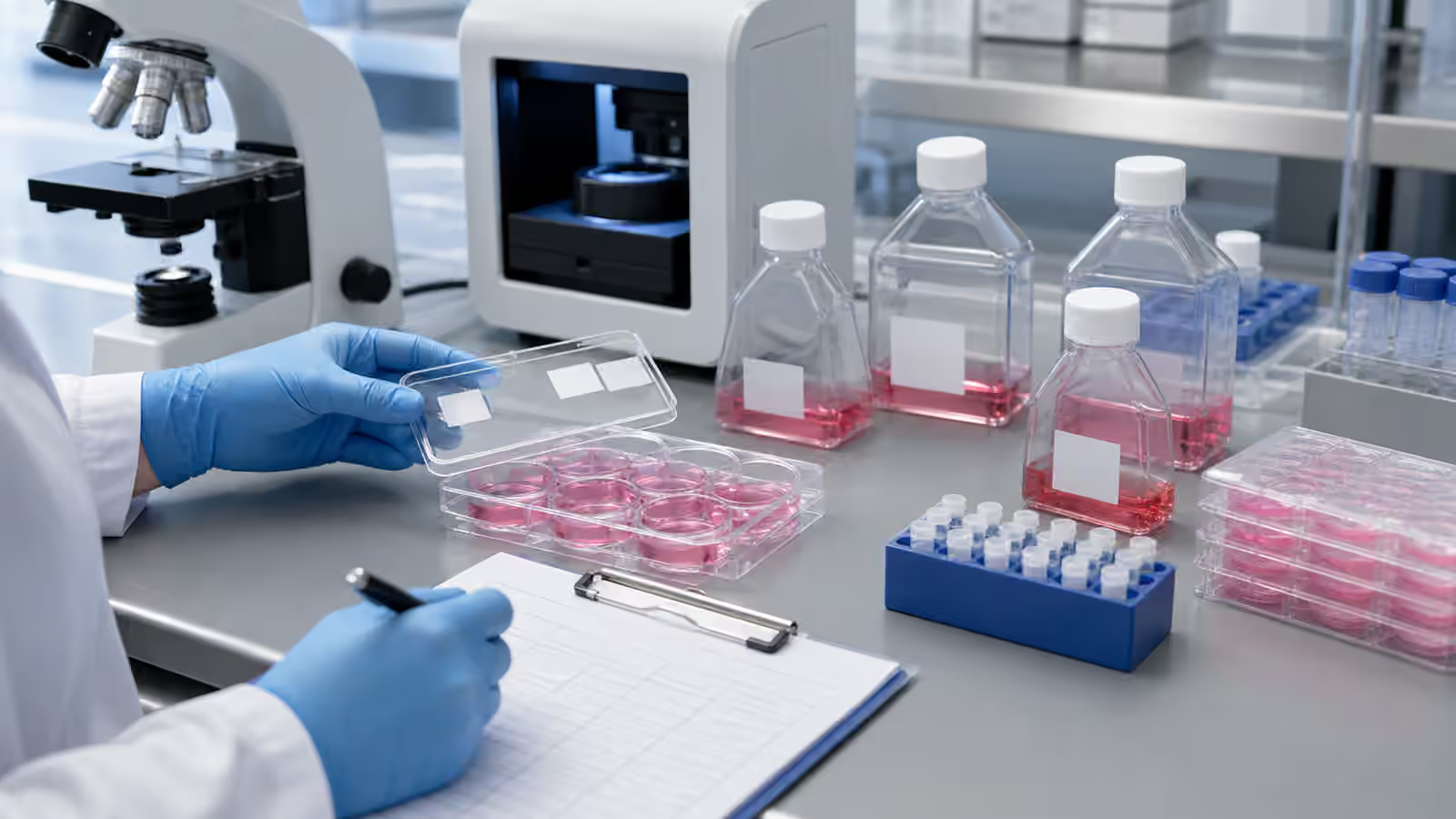
A seed train grows the preserved material through stages. A tiny recovered culture becomes a small starter, then a larger culture, and eventually enough inoculum for the production vessel. Each stage gives the cells time to recover, divide, and reach the physiological state needed for the next stage.
It can be tempting to treat seed growth as background work, as if the real science begins only in production. That is a mistake. The state of the inoculum shapes the main run. Cells that are stressed, old, oxygen limited, contaminated, underfed, overgrown, or at the wrong growth phase can make a production vessel look worse than the strain actually is. A good strain introduced poorly may underperform, drift, produce more byproduct, or take longer to reach the intended process state.
The guide to Bioprocess Scale-Up describes how volume changes mixing, oxygen, heat, nutrients, and stress. Seed trains prepare cells for that transition. They do not remove scale-up risk, but they make the starting condition less arbitrary.
Small Differences Become Large Differences
Seed trains magnify small decisions because every stage influences the next. The age of the revived culture, the amount transferred, the medium composition, the temperature, the vessel geometry, the oxygen environment, and the timing of transfer can all shape cell physiology. Two cultures may contain the same engineered strain and still enter production in different states.
That difference matters for synthetic biology because engineered functions often interact with growth state. A pathway may behave differently before and after induction. A protein may fold better under one condition than another. A burdened circuit may select against itself if cells spend too long in a stressful stage. A production strain may need time to build biomass before its engineered task is pushed hard.
Media Development in Fermentation explains that feeding engineered cells is a design problem rather than a recipe copied blindly from a textbook. Seed trains make that point visible. The medium that grows cells quickly may not be the medium that best prepares them for production. The best seed condition is the one that produces a reliable transition into the next step, not simply the one that looks most active in isolation.
Contamination Starts Small Too
Contamination is often imagined as a production-vessel disaster, but it can begin earlier. A tiny contaminant in a revived culture, starter flask, transfer line, or seed vessel may have time to grow before production begins. By the time the main process looks wrong, the original event may be hard to reconstruct.
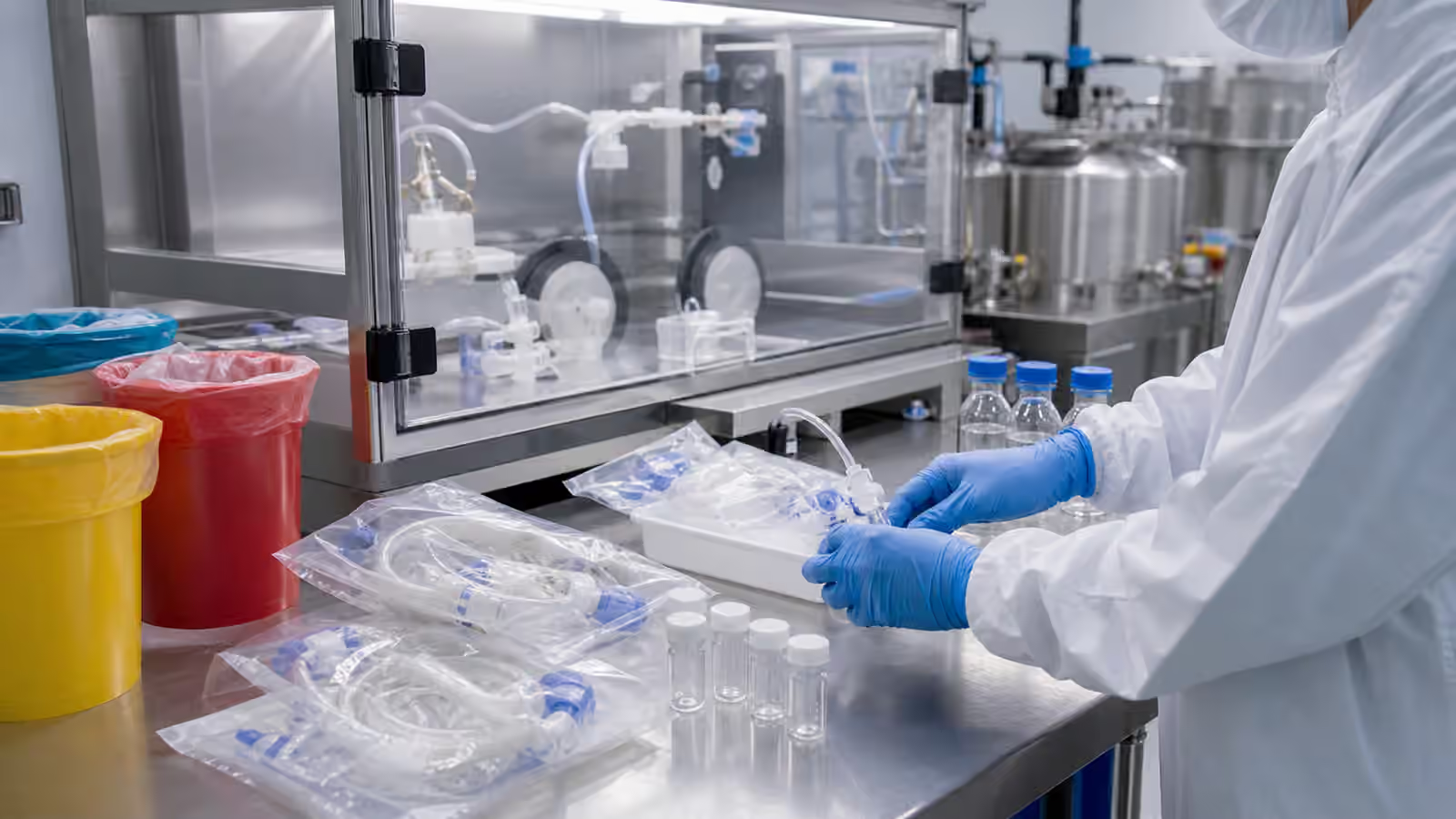
This is one reason seed trains need observation and checkpoints. The exact practices vary by organism and process, but the principle is stable: the production run should not depend on blind faith that every upstream culture was healthy and pure. Teams need ways to notice unexpected growth, strange morphology, unusual timing, off-pattern measurements, or identity concerns before the main run inherits the problem.
Bioprocess Quality Control treats quality as a habit built run by run. Seed quality is part of that habit. The product is not the only thing that needs attention. The living material that starts the product path needs attention too.
Banking Supports Comparisons Across Time
One of the quiet strengths of cell banks is that they make comparisons more meaningful. If a team tests a process change, it wants to know whether the difference came from the process or from a changed starting strain. If one run performs better than another, it wants to know whether both began from comparable material. If a strain is improved, it wants to compare the new version against a reliable older reference.
Returning to a banked source cannot make every run identical. Biology still varies, and process conditions still matter. But banking reduces one avoidable source of ambiguity. It lets teams separate questions more cleanly: what changed because the strain changed, what changed because the seed train changed, and what changed because the production process changed?
That separation matters when data accumulates over months or years. A useful strain may be tested in different vessels, media, schedules, analytical methods, and process goals. Without a disciplined starting point, old data becomes hard to compare with new data. The project slowly loses its own memory.
The Bank Is Part of the Design
Synthetic biology often focuses on the engineered construct, pathway, or circuit, but production biology includes operational design. The bank and seed train are part of that design because they determine how the engineered system enters the world repeatedly.
A fragile design may perform in a freshly transformed lab culture but fail after preservation and recovery. A strain may tolerate a short experiment but suffer during seed expansion. A pathway may burden the cell in a way that becomes visible only across staged growth. A plasmid-based system may need different evidence than a genome-integrated system. These are not merely process annoyances. They are feedback about whether the biological design fits the intended use.
This connects back to Chassis Organisms . A host is not chosen only for what it can do in one assay. It is chosen for how it grows, stores, recovers, scales, handles engineering burden, and stays interpretable through the workflow. Cell banking and seed trains expose those traits in practical form.
Trust Begins With a Repeatable Start
A synthetic biology production story is strongest when the beginning is repeatable enough for the rest of the evidence to matter. A team can measure product, purity, yield, byproducts, cost, safety, and environmental impact, but each measurement rests on the living system that started the run. If the starting material is poorly controlled, every later claim becomes harder to interpret.
Cell banks and seed trains do not make biology mechanical. They do something more modest and more important. They reduce avoidable uncertainty at the point where a preserved engineered system becomes an active production culture. They help a team know which strain it revived, how it grew, when it moved, and whether it was fit to begin the main process.
For readers trying to judge a synthetic biology claim, this layer is easy to miss because it rarely appears in headlines. Yet it is one of the places where lab promise becomes manufacturing discipline. The main bioreactor may be the visible symbol of scale, but the quality of the run often begins in the small vial that was chosen, documented, revived, and expanded before anyone called the process production.