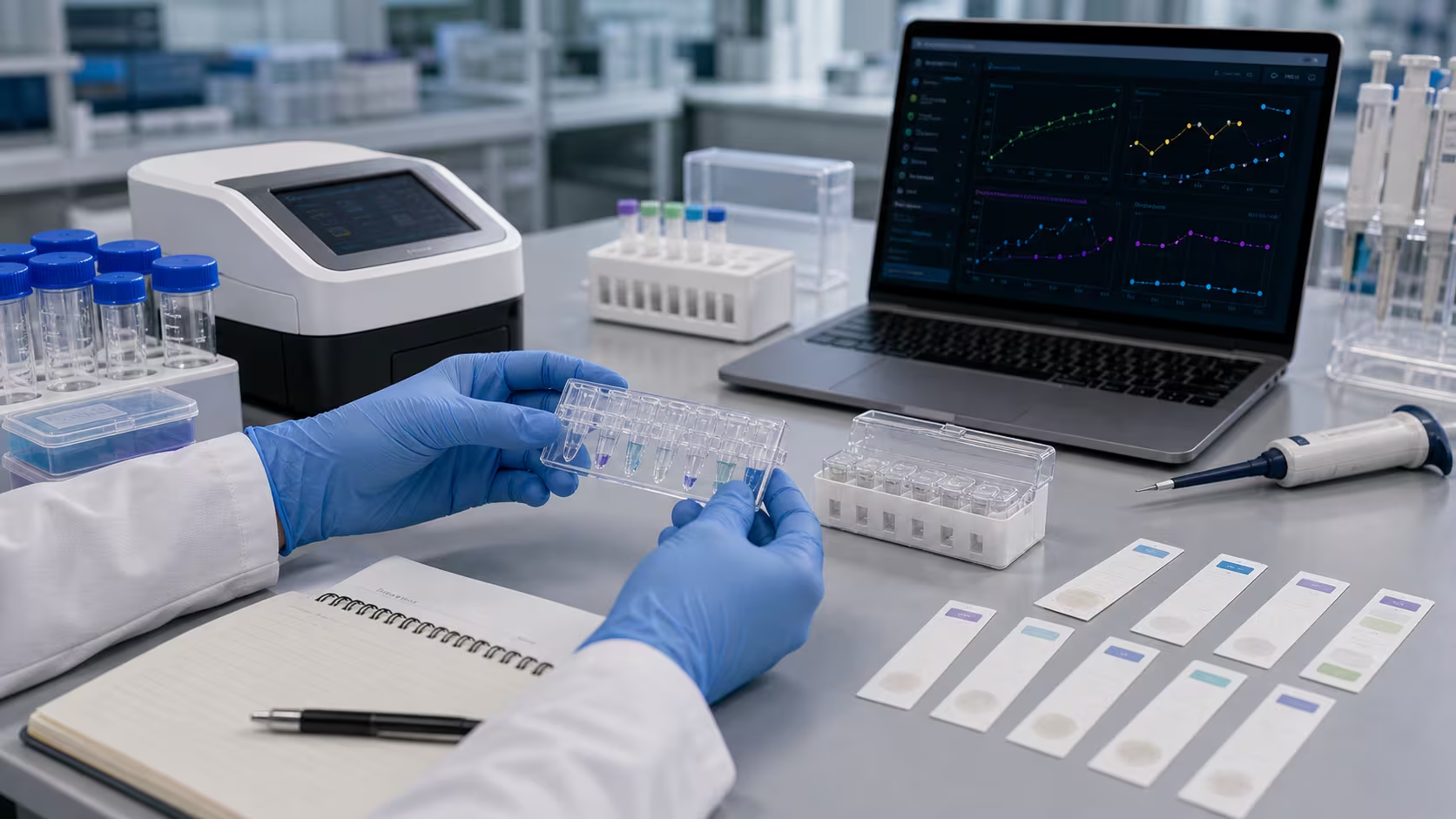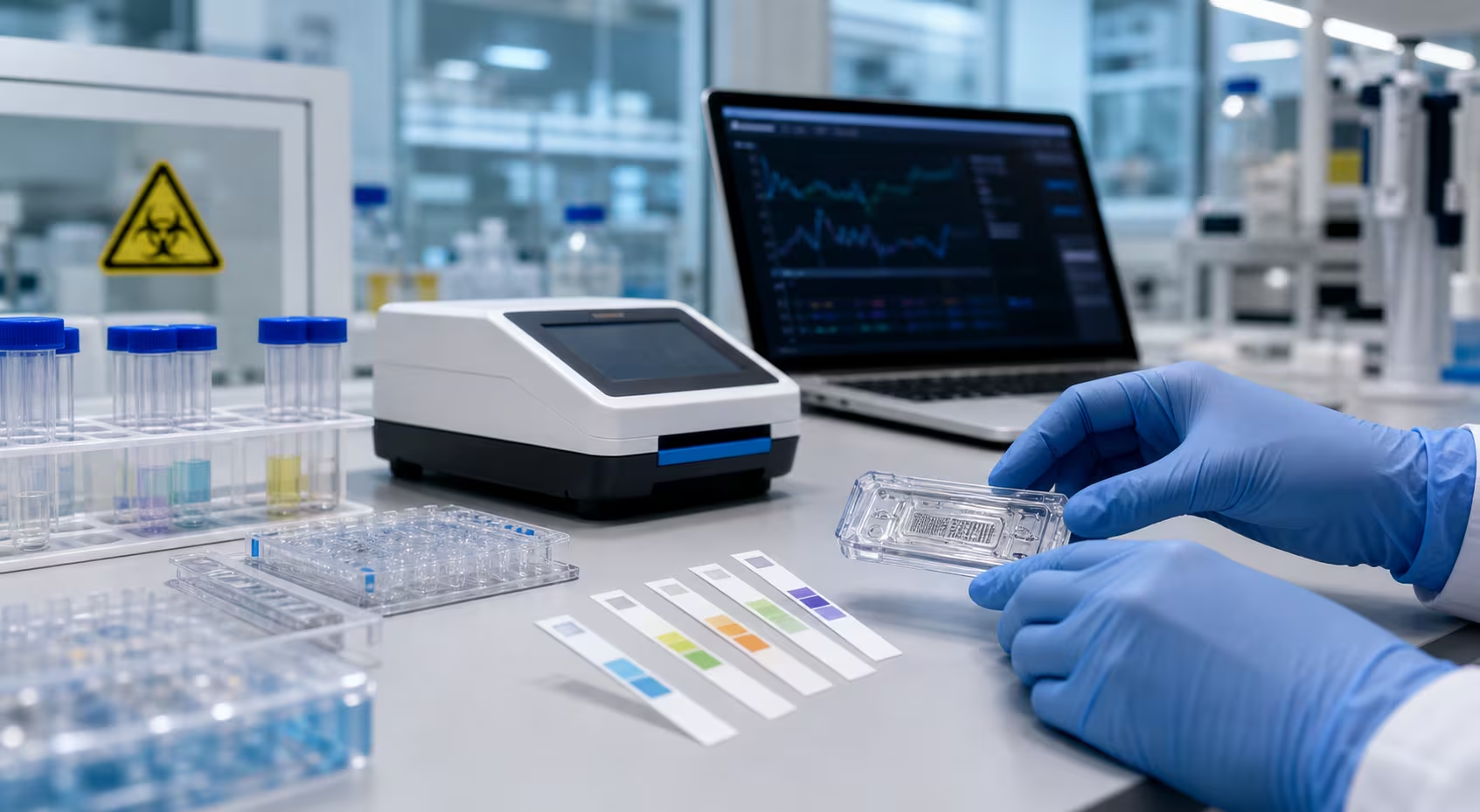
Synthetic biology is often described as a way to make things: proteins, materials, fuels, medicines, foods, and chemicals that once came from harder or dirtier processes. But biology is also good at noticing things. A cell is already a tiny decision-making system. It senses nutrients, stress, light, toxins, neighbors, temperature, acidity, and chemical traces in its surroundings. It changes behavior when the world changes.
A biosensor borrows that talent and turns it toward a human question. Is this water contaminated? Is this food spoiled? Is this infection marker present? Is this industrial process drifting? Is this crop under stress? Is this molecule in the sample at a level worth attention? The output may be a color change, a fluorescent signal, an electrical readout, a pattern on a strip, or data from an instrument. The deeper idea is the same: a biological component recognizes something, and the system turns recognition into a signal people can use.
That sounds simple until you ask what it means to trust the signal. A useful biosensor is not merely clever. It has to be specific enough, stable enough, readable enough, safe enough, and cheap enough for the setting where someone wants to use it. The science is fascinating, but the real test is whether the signal helps a decision.
Biology is a sensitive listener
Living systems can detect small differences because survival depends on it. Microbes respond to nutrients and toxins. Immune molecules recognize shapes. Enzymes bind particular chemicals. Genetic circuits can be arranged so that one event changes another. Synthetic biology gives researchers a way to connect these natural recognition systems to engineered outputs.
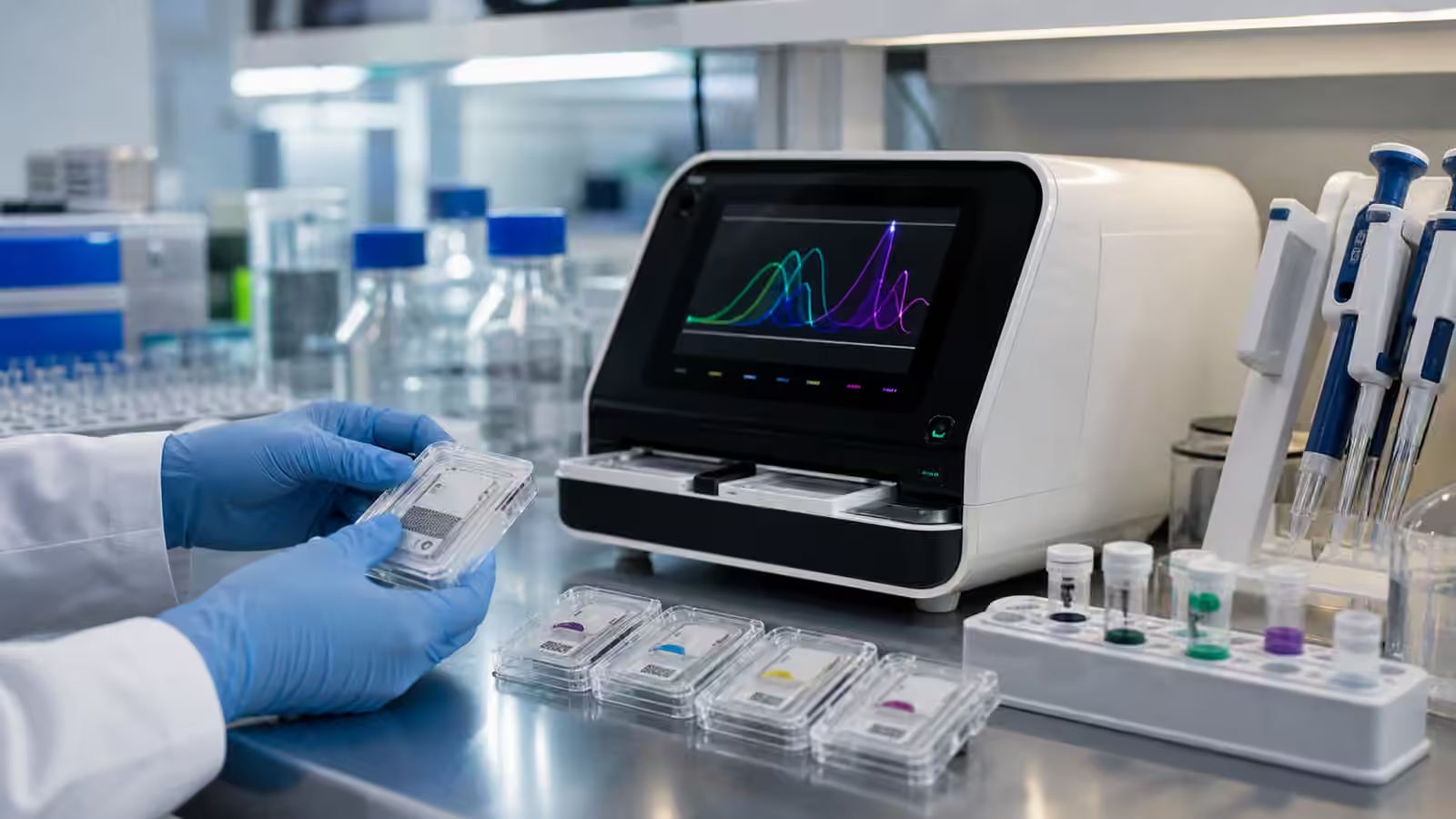
In a living-cell biosensor, the sensing system may be inside an engineered microbe that produces a visible or measurable response when it encounters a target. In a cell-free biosensor, the useful biological machinery is removed from living cells and placed in a controlled format, such as a paper-based or liquid test. Cell-free systems are attractive because they can reduce some concerns that come with deploying living organisms, though they still need careful design, storage, validation, and disposal.
The important thing for beginners is not the molecular wiring. It is the division of labor. One part recognizes. One part converts recognition into a signal. One part lets a person or machine read that signal. If any part is weak, the sensor is weak.
A signal is only useful in context
A biosensor that changes color in a lab demonstration can be impressive and still not be useful in the field. Real samples are messy. Water may contain dirt, salt, organic matter, cleaning chemicals, or harmless organisms. Food may contain fats, acids, spices, and packaging residues. Clinical samples come with privacy, safety, and regulatory demands. Industrial samples may be hot, foamy, viscous, or chemically harsh.
The sensor has to work in that world, not in an idealized slide. It must be able to tell the target apart from background noise. It must avoid reacting to the wrong thing. It must avoid missing the right thing. It must produce a signal that can be interpreted by the intended user, whether that user is a trained technician, a farmer, a plant operator, a clinician, or a person at home.
This is why biosensor development is as much about validation as invention. The glamorous moment is making biology respond. The harder work is proving what the response means across many samples, conditions, and edge cases.
False positives and false negatives matter differently
Every diagnostic system has error. A false positive says something is present when it is not. A false negative misses something that is present. Which error is worse depends on the use.
For a screening test, a false positive may be acceptable if it sends a sample to a more accurate follow-up test. For a safety alarm, too many false positives can make people ignore the system. For a medical test, a false negative can delay care. For an environmental sensor, a missed contamination event may matter more than a cautious warning. For an industrial process, either error can waste money if it sends operators in the wrong direction.
Synthetic biology does not remove this judgment. It adds new tools to an old measurement problem. The question is never just “Can the sensor detect the target?” It is “How often does it detect the target correctly, under what conditions, at what level, with what consequences if it is wrong?”
That question may sound dry, but it is where responsible technology lives.
Living sensors raise containment questions
Using living organisms as sensors can be powerful because living systems can amplify signals, respond over time, and operate in environments where electronics may be awkward. It also raises containment and governance questions. What organism is being used? Can it survive outside the intended setting? Can it exchange genetic material? How will it be recovered or neutralized? Who approves deployment? Who monitors the site afterward?
Many responsible biosensor concepts avoid open release. They keep organisms inside cartridges, sealed devices, contained laboratory workflows, or controlled industrial equipment. Others use cell-free systems so the sensing chemistry works without a living, reproducing organism. These choices are not merely technical. They shape public trust.
People are more likely to accept biological sensing when the system is legible. They need to know what is being sensed, where the biological material is, how it is contained, what happens after use, and who is accountable. A clever sensor that ignores those questions may fail socially even if it works scientifically.
Environmental sensing is a natural fit
Environmental biosensors are appealing because the world has many monitoring gaps. Water quality, soil conditions, pollutants, algal blooms, pathogen indicators, heavy metals, and industrial leaks can all be difficult to track continuously. Traditional laboratory testing is powerful, but samples may need collection, transport, equipment, and trained staff. A lower-cost biosensor could help flag problems earlier or cover more locations.
The promise is not that every stream gets a magic living test. The promise is layered monitoring. A biosensor might provide a local warning that triggers confirmatory testing. It might help communities identify patterns. It might give farmers or water managers faster feedback. It might sit inside a controlled device rather than being released into the environment.
Field use is hard. Temperature changes. Samples vary. Devices get wet, dirty, mishandled, or stored too long. A sensor that works in a climate-controlled lab may fail in a truck, shed, clinic, greenhouse, or riverbank. Good deployment design respects that messiness from the beginning.
Medical diagnostics need trust
Medical diagnostics are another obvious area, but they carry a higher burden. A test that influences care needs evidence, quality control, privacy, regulation, manufacturing consistency, and clear interpretation. It must fit into a clinical workflow. A result that nobody knows how to act on is not very useful.
Biosensors can help when they make testing faster, cheaper, more portable, or more sensitive. They may be useful for infection markers, inflammation signals, metabolic indicators, or treatment monitoring. But a medical biosensor is not just a neat biological trick. It is part of a care system. It has to support clinicians and patients rather than flood them with ambiguous signals.
The best diagnostics are often humble. They answer a specific question well. They make the next decision clearer. They do not pretend to replace every other test.
The future is hybrid
The most useful biosensing systems will probably combine biology with electronics, software, and ordinary design discipline. Biology may do the recognition. A device may handle fluid movement, timing, temperature, imaging, or signal reading. Software may interpret patterns and flag uncertainty. Human operators may confirm results and decide what action makes sense.
This hybrid future connects biosensors to Biofoundries Explained because sensor design improves when experiments, measurements, and data are organized carefully. It also connects to Synthetic Biology Safety because the question is not only what biology can sense, but where it should be allowed to sense and under what controls.
Biosensors are exciting because they make biology communicative. They turn invisible chemistry into a signal. The mature version of the field will be judged less by dramatic demonstrations and more by quiet reliability: a test that works when it says it works, stays contained, explains its uncertainty, and helps someone make a better decision sooner.
That is a practical kind of wonder. Biology notices. Engineering teaches it how to answer.