The first beautiful result often happens in a container small enough to hold in one hand.
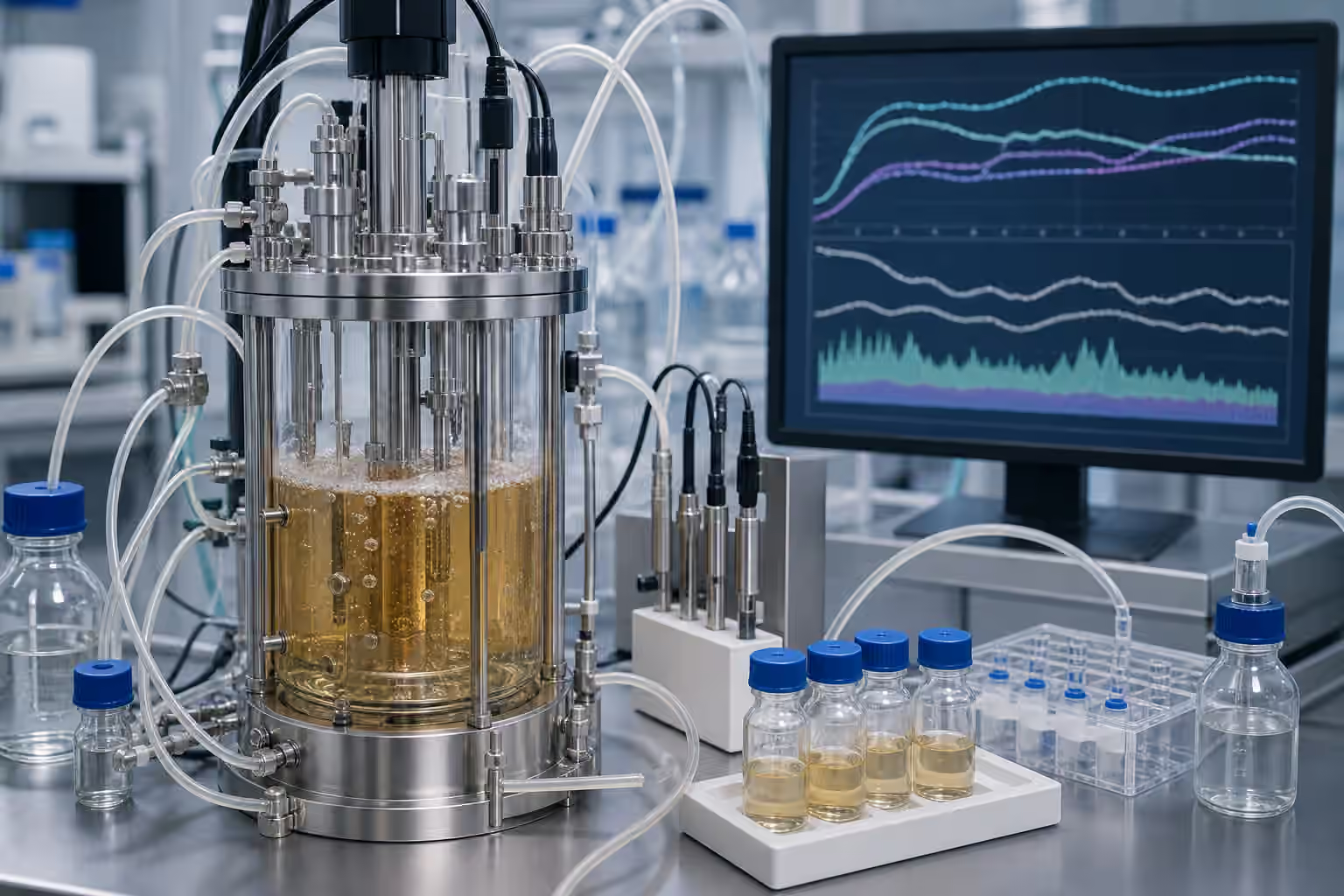
A flask sits in an incubator, rocking gently. Inside it, engineered yeast or bacteria are doing something useful. They may be making a protein, a flavor molecule, a pigment, an enzyme, a precursor chemical, or a material building block. The data looks promising. The target molecule is present. The cells grew. The pathway worked. The team can finally say the idea is real.
Then the hard question arrives: can this become a process?
Synthetic biology is full of ideas that work at small scale. That is not an insult. Small-scale success is where every serious process begins. But a flask is not a factory, and biology does not always forgive the transition from one to the other. The same organism that behaves elegantly in a small vessel can become stressed, inefficient, contaminated, expensive, or unpredictable when the volume grows and the economics become real.
Bioprocess scale-up is the journey from proof to production. It is where a biological idea has to survive physics, operations, quality control, regulation, purification, supply chains, and cost.
The Cell Feels the Vessel
A beginner might imagine scale-up as simple multiplication. If one liter makes a gram, perhaps one thousand liters make a kilogram. In practice, the cell does not experience a large tank as a bigger flask. It experiences different mixing, oxygen availability, pressure, heat transfer, nutrient gradients, waste accumulation, shear forces, foam, and timing.
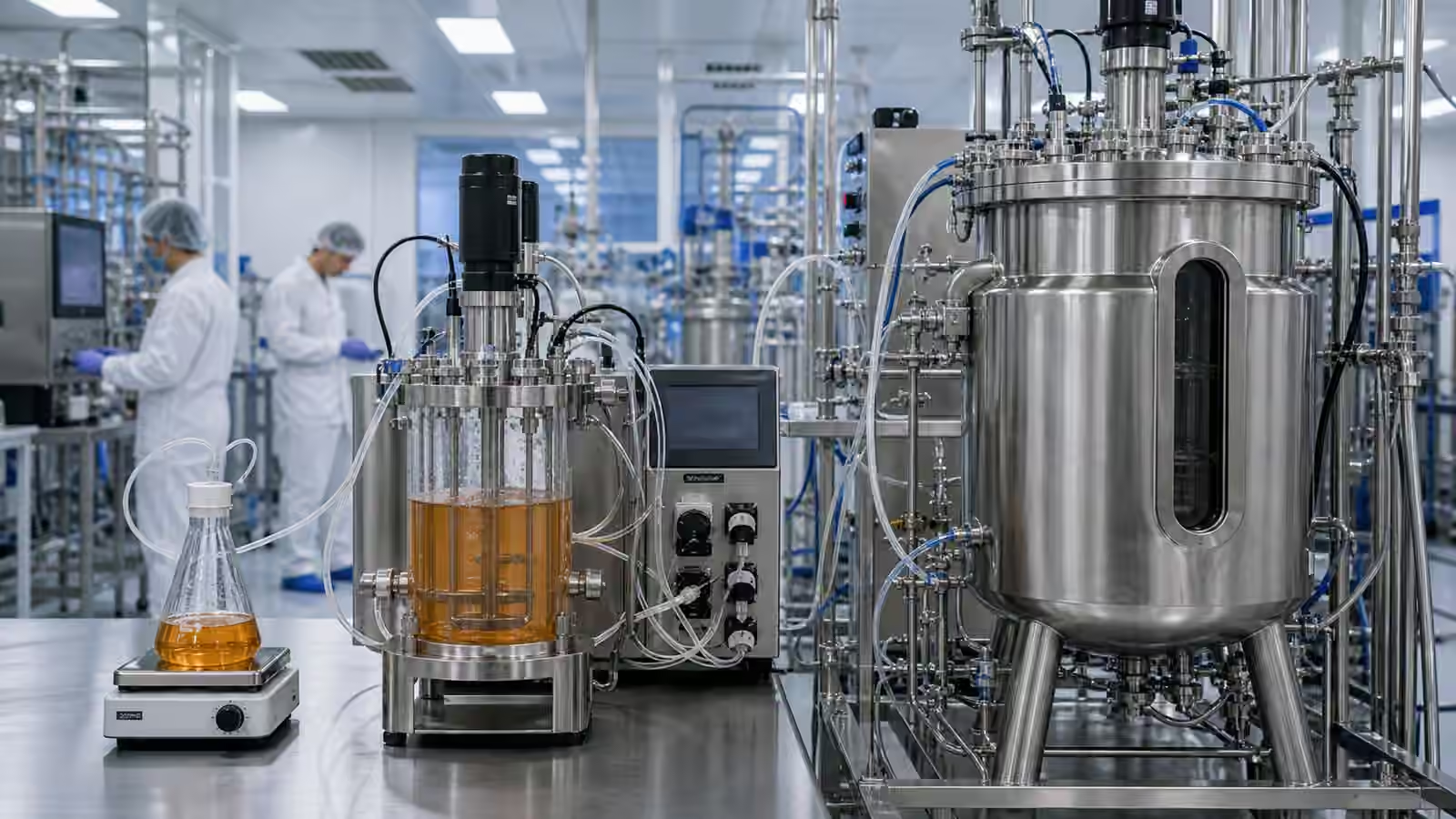
In a small flask, oxygen may move into the liquid easily enough. Temperature may remain even. Nutrients may be distributed quickly. In a large bioreactor, the story changes. Cells near an air inlet, an impeller, or a feed stream may experience different conditions from cells elsewhere in the tank. Some may see high sugar, some low oxygen, some more stress, and some more waste products. The culture is no longer one uniform soup. It is a living population moving through microenvironments.
That matters because engineered cells are already carrying a burden. Asking a microbe to make a target molecule can divert energy away from growth. It can create toxic intermediates. It can stress protein-folding machinery. It can change metabolism. A condition that was tolerable in a flask may become a failure mode in a larger vessel.
Scale-up is therefore not only about bigger equipment. It is about keeping the organism inside a useful state while the environment becomes harder to control.
Oxygen Is Often the First Argument
Many industrial microbes need oxygen. Getting enough oxygen into a growing culture sounds straightforward until the culture becomes dense and the tank becomes large. Oxygen does not dissolve in water the way sugar does. It has to move from bubbles into liquid and then to cells. Agitation can help, but too much agitation can damage cells, increase energy use, create foam, or complicate equipment design.
This turns oxygen transfer into a central scale-up question. The team may adjust impeller design, airflow, pressure, vessel geometry, feeding strategy, cell density, or strain behavior. Each change has tradeoffs. More air may improve oxygen but increase foaming. More stirring may improve mixing but raise heat and shear. Slower growth may reduce oxygen demand but hurt productivity. A different host organism may behave better but require new development work.
Oxygen is only one variable, but it teaches the broader lesson. A bioprocess is not a recipe copied into a larger pot. It is a balanced system. Push one lever and another moves.
Feeding the Culture Without Spoiling It
Cells need nutrients, but feeding them too generously can be as harmful as starving them. A large bioprocess often uses controlled feeding rather than dumping all nutrients in at the beginning. The goal is to keep cells productive without overwhelming metabolism, creating unwanted byproducts, or encouraging contamination.
Feed strategy can decide whether a process is elegant or chaotic. Too much carbon source may cause overflow metabolism, where cells produce byproducts instead of directing resources toward the target. Too little may slow production. A nutrient added at the wrong time may trigger growth when the team wants product formation, or product formation when the culture is not ready.
In a lab, researchers can babysit a small culture. In manufacturing, the process needs repeatable control. Sensors, pumps, models, sampling routines, and operator judgment all become part of the biology. The organism is the production system, but the process is the environment that persuades it to do the same useful thing again and again.
Contamination Is a Business Problem
Biology grows. That is its strength and its threat.
A contaminating organism can consume nutrients, outcompete the production strain, spoil a batch, create unwanted molecules, or force shutdown and cleaning. In food, medicine, and industrial biotechnology, contamination control is not a housekeeping detail. It is core economics. A lost batch can mean wasted feedstock, lost time, missed contracts, quality investigations, and expensive downtime.
Sterility or controlled bioburden depends on facility design, cleaning protocols, sterilization, filtration, raw material quality, operator training, closed transfers, and disciplined documentation. The larger the process, the more painful a mistake becomes. A flask contamination is disappointing. A contaminated production tank can be financially brutal.
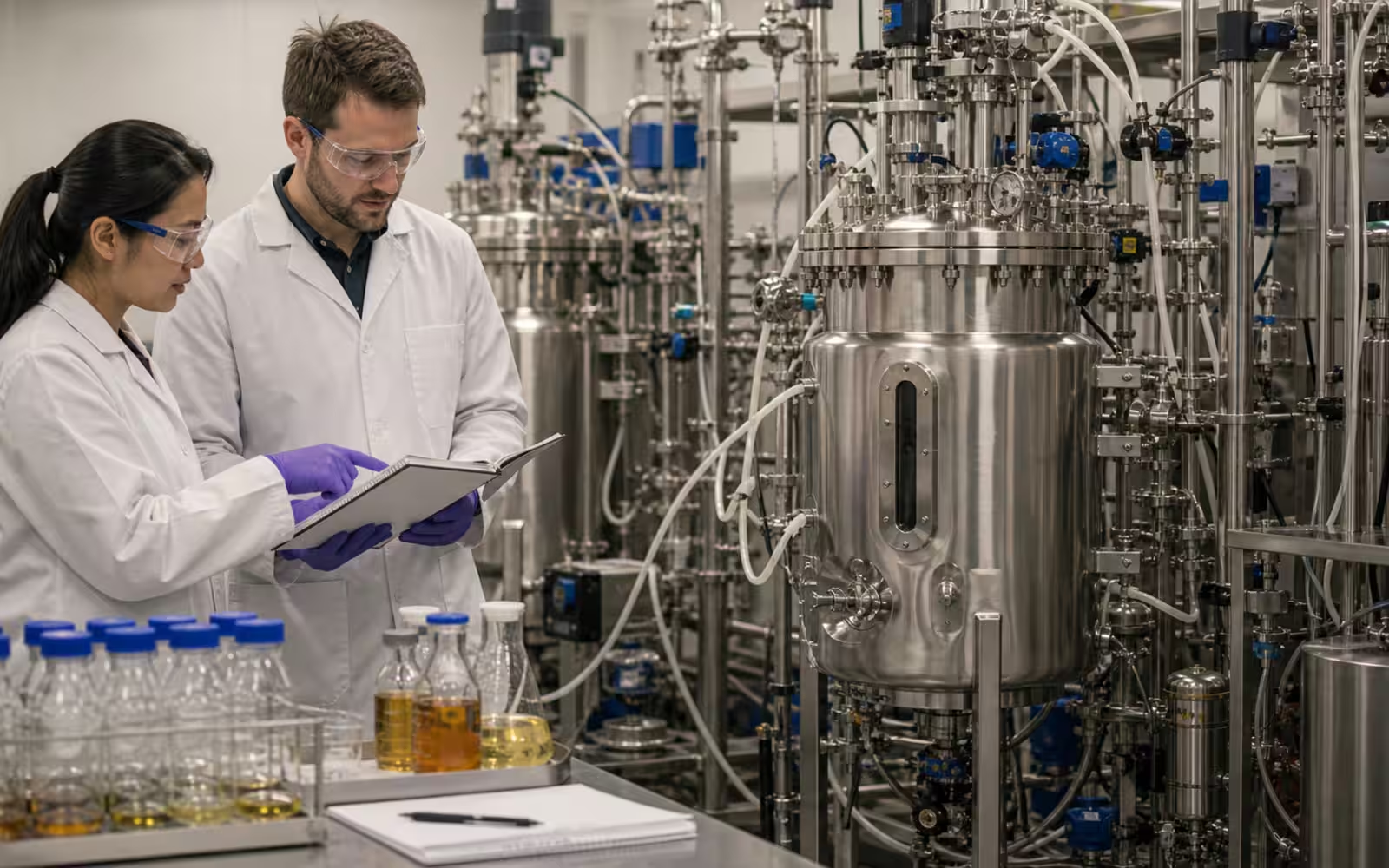
This is one reason scale-up moves through stages. A team may go from flask to bench bioreactor, then to pilot scale, then demonstration scale, then commercial scale. Each step tests not only biology but operations. Can the process be run cleanly? Can samples be taken safely? Can equipment be cleaned between batches? Can deviations be detected early enough to matter?
Making the Product Is Only Half the Work
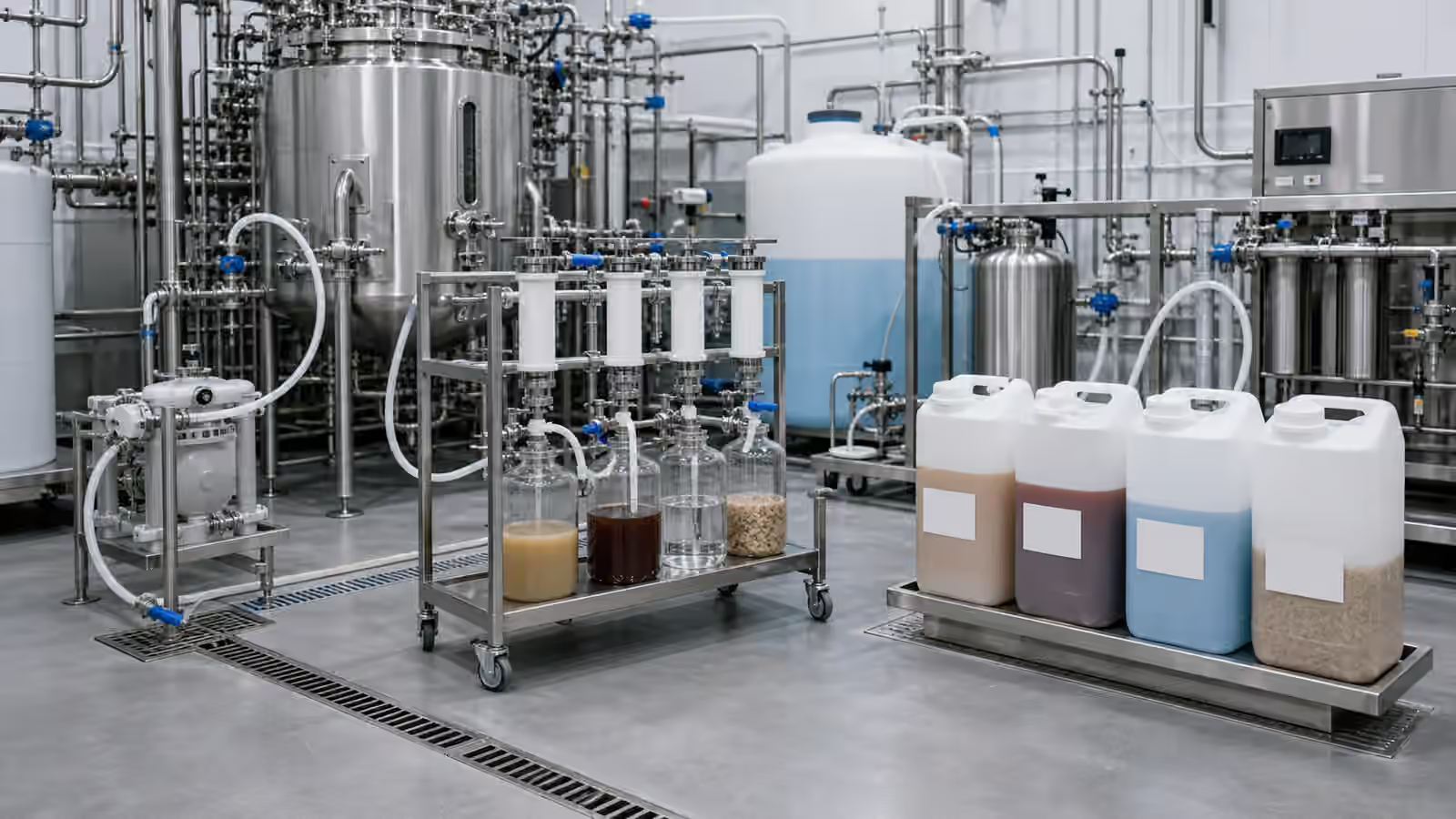
The product has to be recovered.
If cells make a molecule and secrete it into the broth, purification may be easier than if the product stays inside the cells. If the target is a protein, it may need separation, concentration, filtration, chromatography, drying, formulation, or careful storage. If it is a small molecule, the process may involve extraction, distillation, crystallization, or chemical conversion. If the product is a material, texture and consistency may matter as much as molecular identity.
Downstream processing can dominate cost. A strain that makes impressive amounts of product may still fail commercially if purification is expensive, wasteful, slow, or inconsistent. Conversely, a slightly lower-yield process that produces a cleaner broth may win because recovery is simpler.
This is where synthetic biology hype often gets ahead of manufacturing reality. Producing a molecule in a cell is a milestone. Producing it at the right purity, cost, volume, and consistency is a different achievement.
Quality Has to Repeat
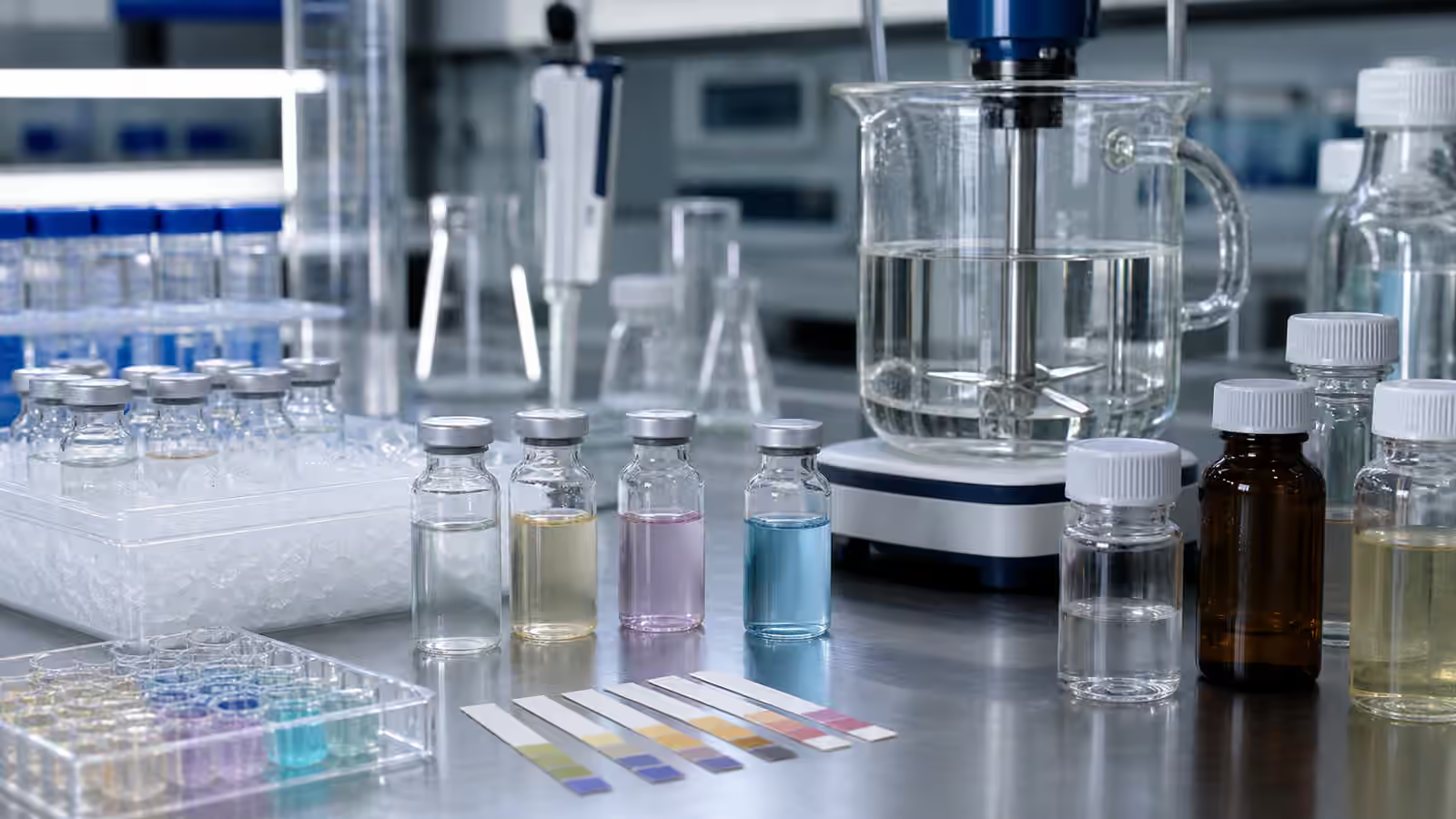
A process is not mature because it worked once. It has to work repeatedly, with documented controls and acceptable variation. Customers and regulators care about identity, purity, potency, safety, stability, and traceability. A food ingredient, medicine, cosmetic material, textile input, or industrial enzyme each has its own quality expectations.
Biological systems vary. Raw materials vary. Equipment ages. Operators change shifts. Sensors drift. A robust process can absorb ordinary variation without losing control. That robustness is often built through unglamorous work: process characterization, acceptable ranges, cleaning validation, analytical methods, batch records, deviation handling, and root-cause analysis.
The deeper point is that scale-up turns science into operations. The question changes from “Can we make it?” to “Can we make it every time, at a cost and quality that justify the facility?”
Economics Decide the Ending
Some bioprocesses fail not because the science is false, but because the numbers do not work. Feedstock may be expensive. Energy use may be high. Yields may be too low. Fermentation time may tie up tanks. Purification may cost too much. The product may compete against a cheap incumbent made by petrochemistry, agriculture, mining, or animal-derived supply chains. Customers may like the story but not the price.
This does not mean synthetic biology must always be cheaper immediately. Some products justify higher costs because they offer performance, resilience, ethical sourcing, lower land use, cleaner supply chains, or new functionality. But the value has to be real. A process cannot live forever on novelty.
Good teams think about economics early. They ask what yield is needed, what inputs cost, what facility scale makes sense, what purity is required, and what customers will actually pay. They do not wait until the organism is perfect to discover that the product has no viable path.
Why Scale-Up Is the Real Story
Bioprocess scale-up deserves more attention because it is where synthetic biology becomes either industry or anecdote. The field’s most important future products will not be judged by whether they made a beautiful graph in a paper. They will be judged by whether they can be manufactured safely, consistently, affordably, and responsibly.
For beginners, the useful habit is to ask where a claim sits. Is the result from a flask, a bench-scale bioreactor, a pilot plant, a demonstration facility, or a commercial line? Has the product been purified? Has the process run repeatedly? Are the economics described? Are safety, waste, feedstock, and quality part of the story?
Those questions do not make the field less exciting. They make it more concrete. A successful scale-up is a quiet triumph because it means a living system, a facility, a team, and a market have all agreed to cooperate.
The flask proves that biology can do something. The factory proves that people can make that something useful.