Synthetic biology often begins with a clever design. A cell is given a pathway, a protein is redesigned, a sensor is built, a fermentation process is imagined, or a living material is asked to grow into something useful. The story sounds like invention. But if the work is going to leave the lab, the harder story is quality control.
Living production systems are not ordinary machines. They change as they grow. They respond to temperature, nutrients, stress, oxygen, mixing, waste products, contamination, mutations, timing, and scale. A process that behaves beautifully in a small flask may become moody in a pilot vessel. A strain that makes the right molecule in one run may make less of it later. A material that looks promising in a dish may vary too much to become a product.
Quality control is the discipline that keeps the story honest. It asks whether the system is producing what people think it is producing, whether the result is consistent, whether the process is drifting, whether the measurements can be trusted, and whether the product meets the standard required for its intended use.
Biology Needs Witnesses
A biological process cannot be trusted simply because the design made sense on paper. Cells do not care about a slide deck. They live in the conditions they are given. If those conditions change, the cells may change too. Measurement is the witness that keeps design connected to reality.
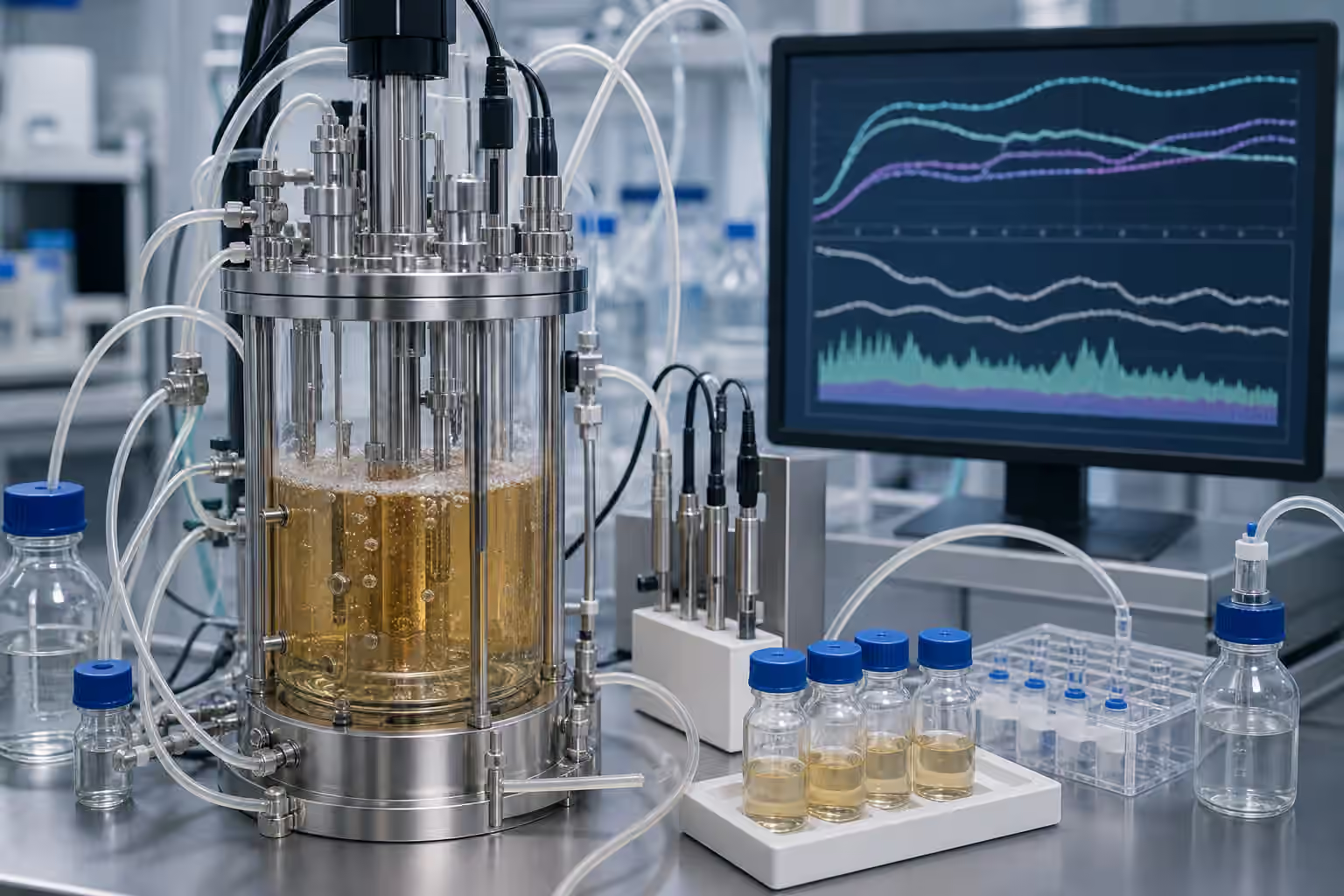
In a fermentation process, for example, the important story is not only whether a tank is bubbling and the culture is alive. The useful questions are more specific. Is the organism growing as expected? Is it making the target product? Is it making unwanted byproducts? Are the conditions stable enough? Is the process moving at the right pace? Is the sample representative of the whole system? Are the instruments telling the truth?
These questions sound basic, but they are where many promising ideas become difficult. A small error in measurement can make a weak process look strong. A beautiful result from one run can hide poor repeatability. A product can meet a headline target while failing a purity, safety, texture, activity, or stability requirement that matters more in practice.
Quality control is not the enemy of creativity. It is what lets creativity survive contact with reality.
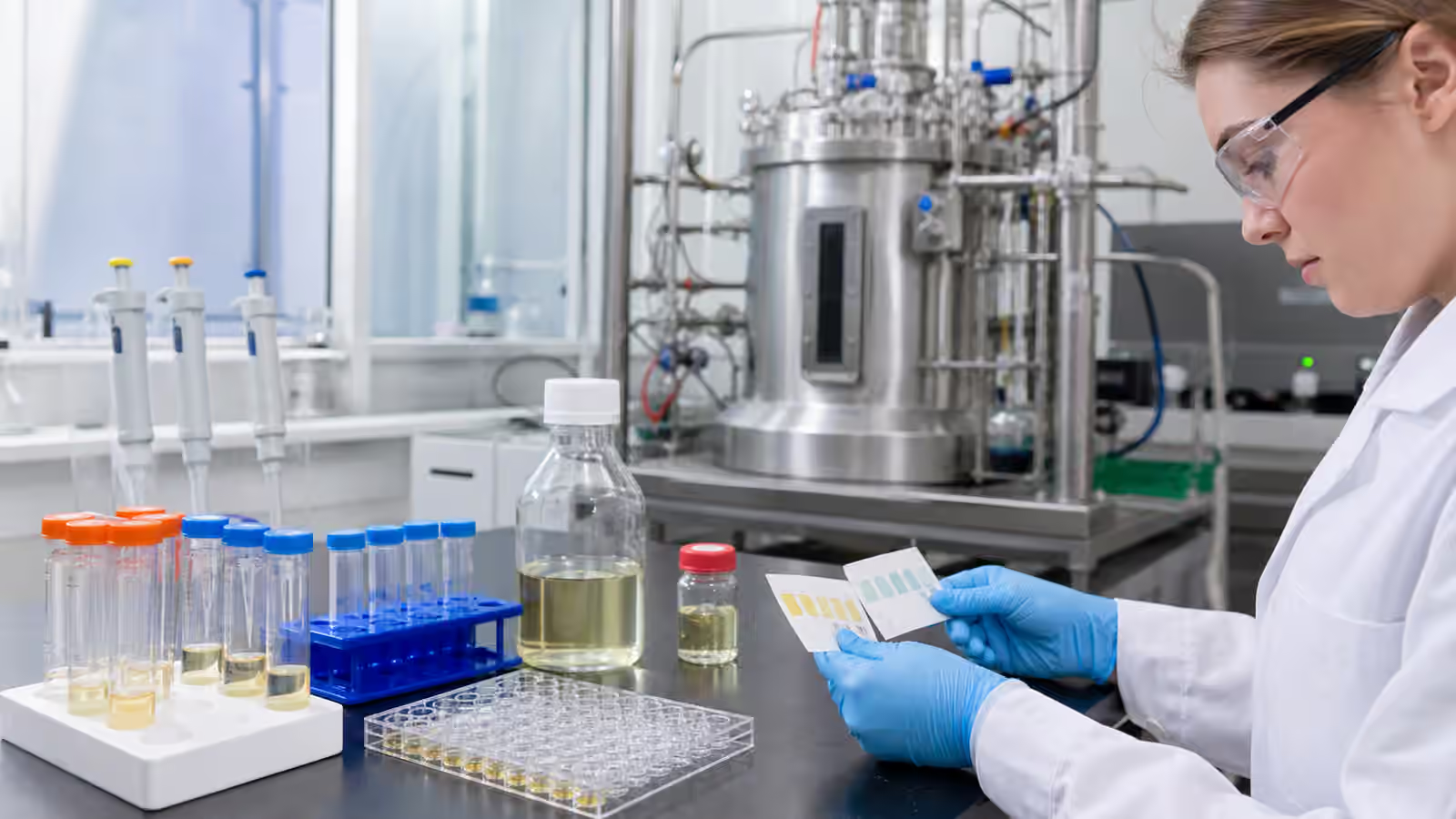
Scale Changes the Personality of a Process
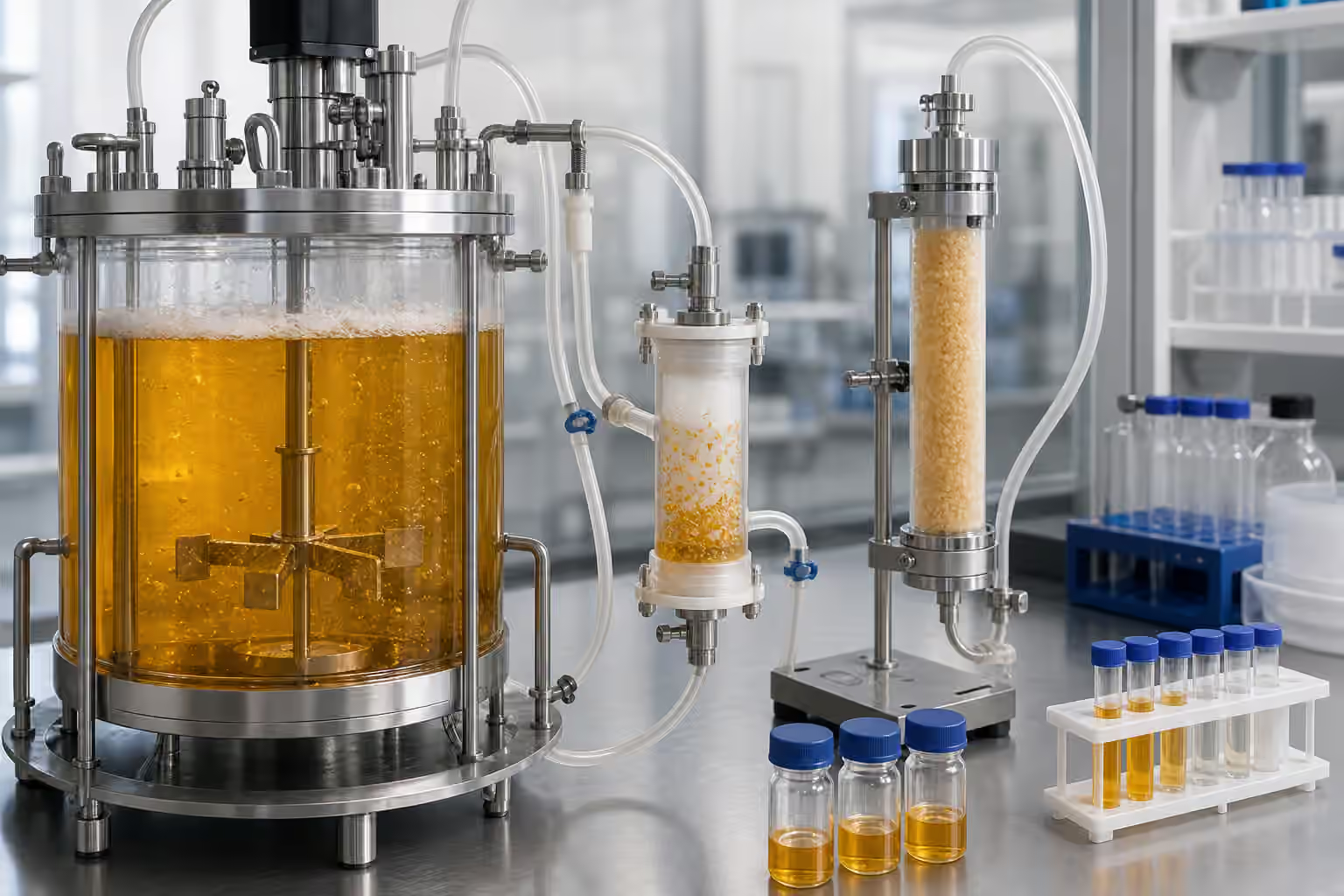
Scale-up is one of the classic humbling moments in synthetic biology. A small vessel is easy to mix, heat, cool, feed, sample, and observe. A larger vessel has gradients. Oxygen may not reach every region equally. Heat removal becomes harder. Mixing takes time. Foaming, shear, sensor placement, and cleaning matter more. The cells experience a world that is no longer as uniform as the small experiment suggested.
This is why a production process cannot be judged only by its best lab result. The question is whether the process can be controlled at the scale where it needs to operate. A molecule made in a tiny amount for a demonstration is not the same as a molecule made repeatedly, economically, and within specification.
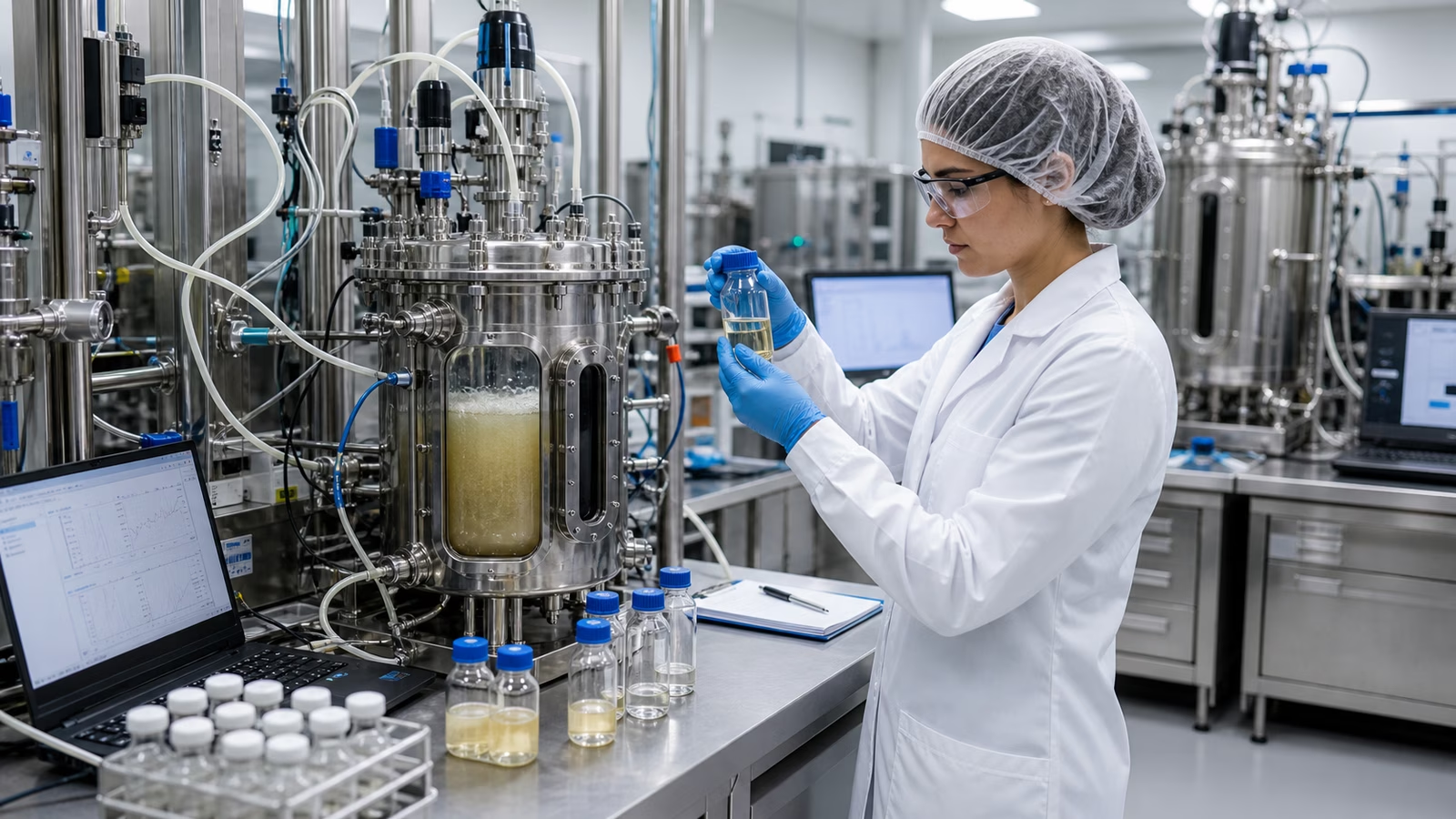
Quality control follows the process as it grows. It watches whether the same indicators still predict success. It checks whether samples taken from one place represent the whole vessel. It notices whether the production strain becomes burdened, stressed, or unstable. It asks whether a process can be stopped, cleaned, restarted, and repeated without depending on luck.
The romance of synthetic biology is that cells can become factories. The reality is that factories need boring discipline.
Drift Is Often More Important Than Failure
Not every problem announces itself dramatically. A process may not collapse. It may drift. Yields slowly fall. A contaminant appears at low levels. A product’s profile shifts. A sensor begins to read slightly off. A raw material lot behaves differently. A strain grows well but produces less. The early signs are easy to explain away because the run still mostly works.
Quality control is designed for that uncomfortable middle zone. It treats small changes as information before they become failures. It compares current runs to earlier runs. It asks whether variation is normal, explainable, or dangerous. It separates noise from signal. That work can feel tedious, but it is the difference between a robust process and a process that depends on optimism.
Drift matters because biological systems have memory. A subtle change in seed culture, storage, media, equipment, cleaning, or timing can echo through a run. By the time the final product looks wrong, the cause may be far upstream. Good documentation and measurement make it possible to reconstruct the path.
The goal is not to eliminate all variation. Biology will always vary. The goal is to know which variation matters.
Contamination Is a Process Question
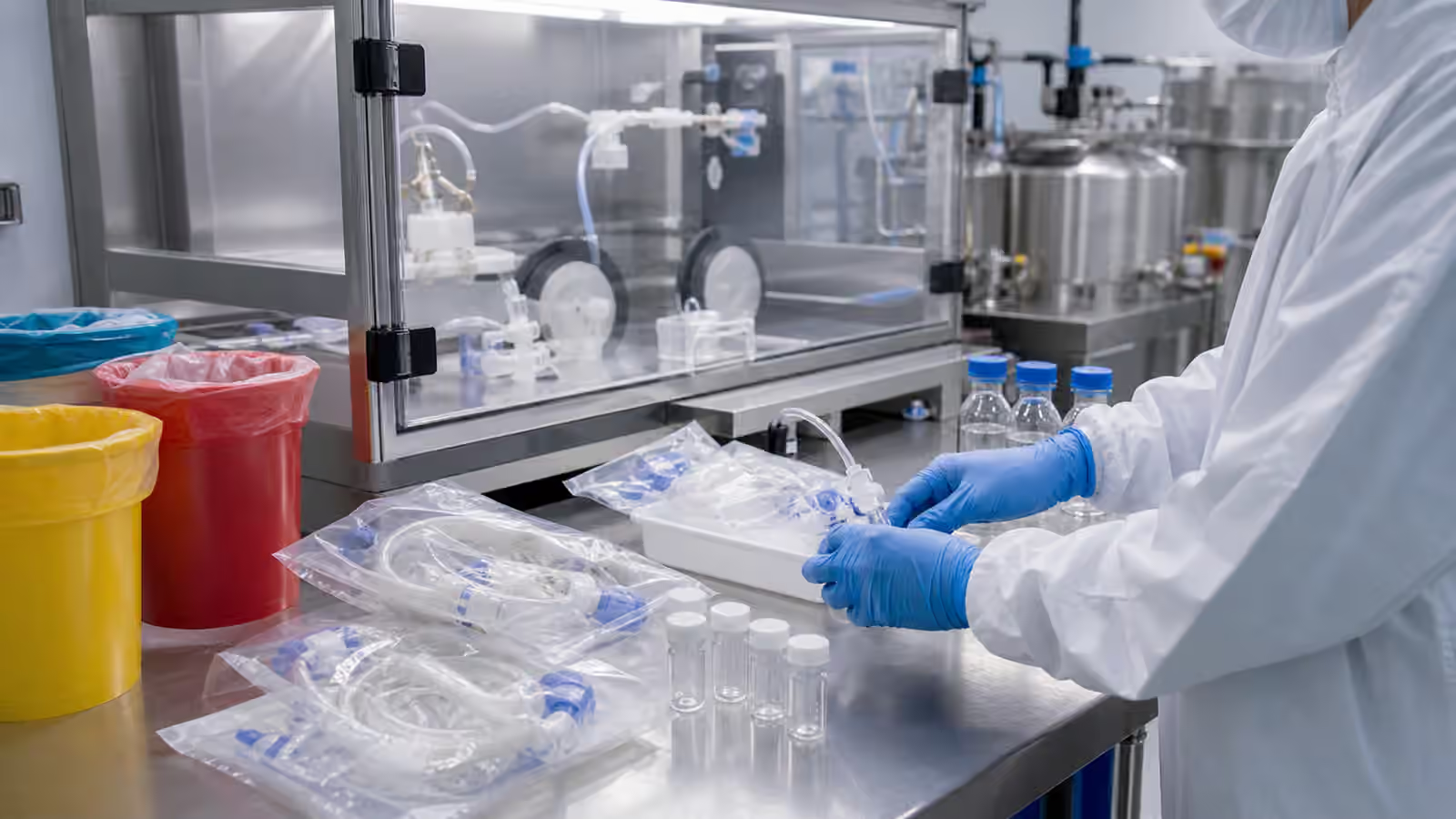
When people hear contamination, they often picture a dramatic accident. In bioprocessing, contamination can be quieter. An unwanted microbe may enter a system. A material may contain an impurity. A cleaning step may leave residue. A sample may be mishandled. A line may be mislabeled. A measurement may mix signals. The issue is not only whether something foreign appears. It is whether the process is designed to prevent, detect, and respond to problems without guessing.
This is where quality control becomes cultural as much as technical. People must be willing to report anomalies. Records must be clear enough that someone else can understand what happened. Samples must be traceable. Equipment status must be known. A team that hides problems to protect a timeline is not doing quality control; it is accumulating risk.
Synthetic biology carries public trust questions because the field works with living systems and biologically produced materials. That does not mean every process is frightening. It means the work must be legible. Containment, monitoring, documentation, and review are how teams show that they understand the difference between an exciting idea and a responsible product.
The Product Defines the Standard
Quality control is not the same for every synthetic biology product. A food ingredient, industrial enzyme, research reagent, textile fiber, diagnostic component, cultivated material, and medicine all have different expectations. The acceptable level of purity, consistency, activity, stability, trace material, and documentation depends on use.
This sounds obvious, but it is easy to blur in public discussion. A strain that is useful for producing an industrial chemical does not automatically meet the expectations for something eaten. A protein that works in a lab assay may not be stable enough for distribution. A living material that looks beautiful in a prototype may fail because texture, strength, moisture behavior, or shelf life vary too much.
The intended use should shape the measurements from the beginning. If a product needs to be safe, stable, repeatable, and acceptable to regulators, customers, and manufacturing partners, then the process must generate evidence for those qualities. A final photograph or single performance metric is not enough.
Quality control turns “it worked” into “it worked this way, under these conditions, within these limits, and we can show it.”
Automation Does Not Remove Judgment
Biofoundries, robotics, sensors, and data systems can make quality control stronger. Automated sampling, structured data capture, controlled workflows, and high-throughput measurement can reduce some human error and reveal patterns that manual work would miss. But automation does not remove judgment. It changes where judgment lives.
Someone still chooses what to measure. Someone decides which deviations matter. Someone validates instruments. Someone interprets outliers. Someone notices when a model is confident for the wrong reason. Someone decides whether a process is ready to scale, repeat, pause, or return to development.
The danger is treating automated data as automatically trustworthy. A beautiful dashboard can still be fed by weak assumptions. A sensor can drift. A model can learn the wrong proxy. A robotic workflow can reproduce a flawed setup perfectly. Quality control requires skepticism even when the tools look advanced.
The best systems make that skepticism easier. They preserve context, connect samples to conditions, show uncertainty, and make it possible to ask why a result changed.
Trust Is Built Run by Run
Bioprocess quality control is not glamorous compared with inventing a new strain or announcing a new material. It lives in records, samples, controls, repeated runs, acceptance criteria, deviation reviews, and conversations about whether the evidence is strong enough. But this is where synthetic biology becomes less like a promise and more like an industry.
A field built on living systems needs trust. Customers need to know the product is what it claims to be. Regulators need to know risks are understood. Communities need confidence that facilities are managed responsibly. Teams need to know whether their own success is real.
That trust cannot be generated at the end by marketing. It is built during the work, run by run, by measuring honestly and responding to what the biology actually does.
Synthetic biology may design new possibilities, but quality control decides whether those possibilities can stand in daylight. The cells may be the production system. The measurements are how people learn whether the system deserves belief.