Every biomanufacturing process has an exit story.
The product may be the reason the process exists, but much more leaves the facility than the product. Spent broth, cells, cell debris, unused nutrients, salts, antifoams, filters, resins, solvents, cleaning solutions, wash water, packaging, failed batches, analytical samples, and contaminated disposables can all become part of the real footprint. A synthetic biology project that ignores those streams is only looking at the most flattering part of the system. A related reference is Microbial and synthetic biology solutions for waste management and biomanufacturing off Earth .
Waste handling is not a gloomy topic added after the exciting science. It is part of process design. The way a team grows cells, feeds them, recovers product, cleans equipment, controls contamination, and proves safety shapes what must be treated, reused, destroyed, documented, or disposed of.
This guide connects Biomanufacturing Feedstocks with Techno-Economic and Life-Cycle Thinking . Feedstocks ask what enters the process. Life-cycle thinking asks how the whole system compares. Waste streams ask what leaves, in what condition, and with what burden attached.
Spent Broth Is Not Just Dirty Water
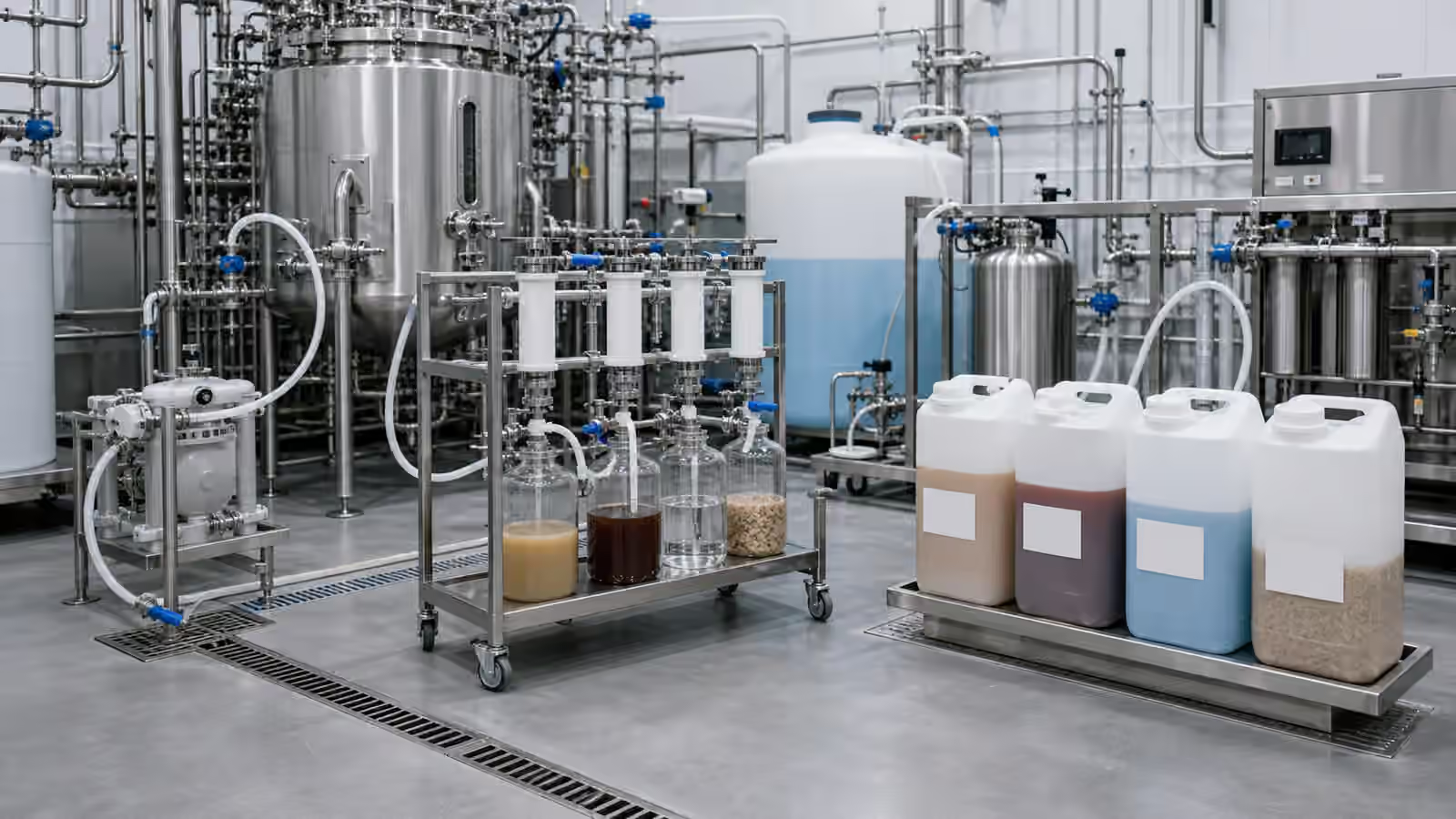
At the end of a fermentation or cell culture run, the liquid phase can contain far more than leftover medium. It may include living or inactivated cells, secreted proteins, metabolites, byproducts, salts, sugars, nitrogen sources, pigments, host-cell materials, nucleic acids, antifoams, pH control chemicals, product residues, and process additives. If the product was extracted with a solvent or captured on a resin, those materials add another layer.
The composition matters because treatment depends on what is actually present. A dilute sugar stream, a salty protein-rich broth, a solvent-containing extract, and a cell culture harvest do not create the same waste problem. Some streams may be safe to treat through ordinary facility systems after appropriate controls. Others may require inactivation, segregation, neutralization, specialized disposal, or recovery of valuable components.
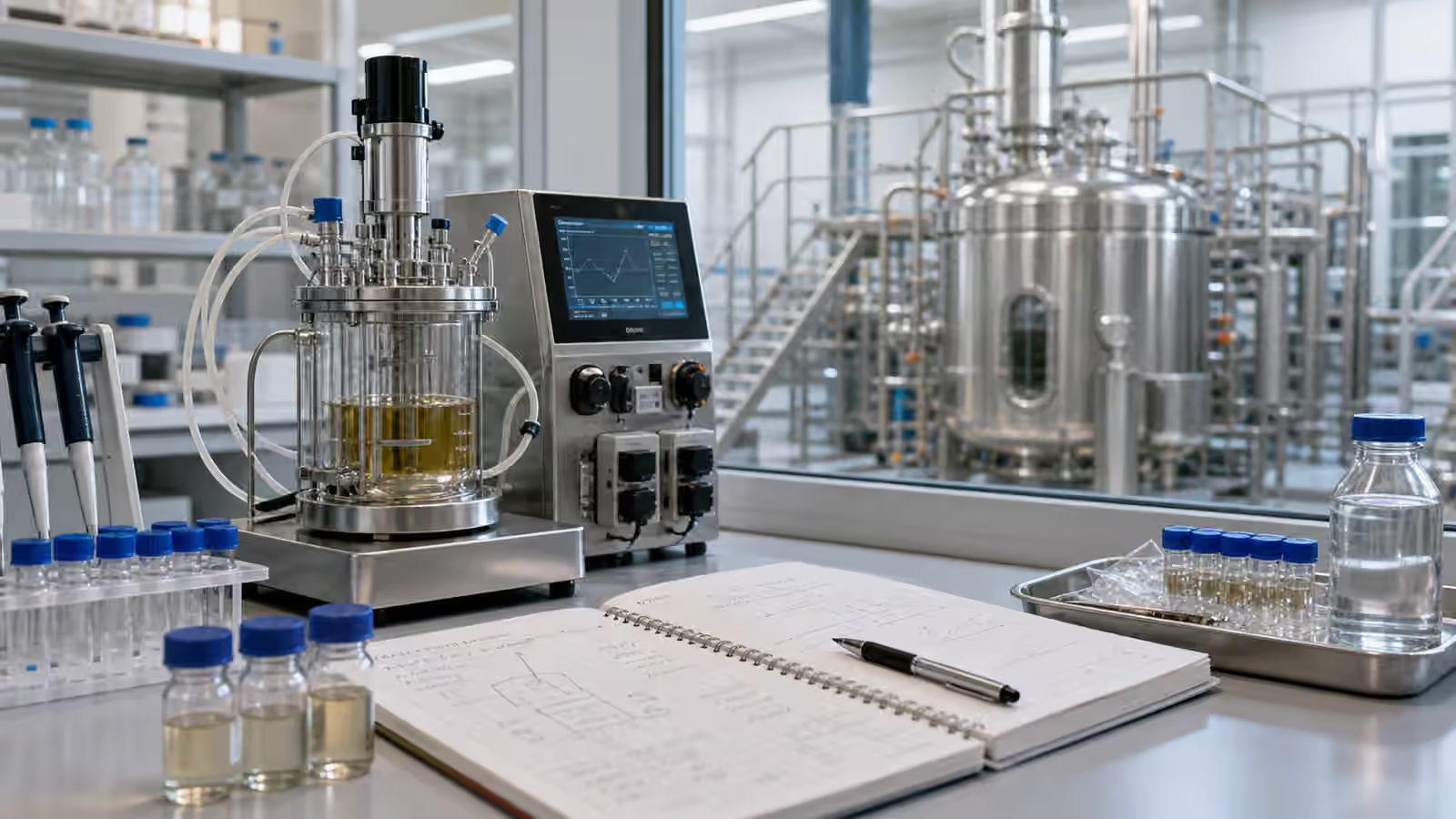
Downstream Processing shows that recovery choices shape the stream. A process that breaks cells open can release host-cell materials that complicate purification and treatment. A process that secretes product may reduce some debris but still leave media components and impurities. An extraction step may simplify product recovery while creating solvent handling duties. Waste is often the downstream shadow of upstream and recovery decisions.
Biomass Carries Identity and Containment Questions
Cells are not ordinary solids. Even when they are harmless production strains, they carry biological identity, genetic material, and process history. A facility needs to know whether the biomass is living, inactivated, genetically modified, contaminated, product-bearing, solvent-exposed, or mixed with other materials.
Synthetic Biology Safety explains why containment is layered. Waste streams are one of those layers. A process may use closed equipment, restricted access, filtration, heat treatment, chemical inactivation, validated cleaning, or controlled disposal pathways depending on the organism and use case. The details vary by setting, but the principle is stable: the safety argument has to follow the material after the run ends.
Biomass can also represent lost value. In some processes, cell mass might be repurposed, digested, composted, burned for energy, or processed into lower-value materials if appropriate and permitted. In others, it must be treated as controlled waste. The possibility of reuse does not remove the need for evidence. A stream that contains engineered biomass, impurities, or active product cannot be waved into a circular story by wishful language.
Water Use Shows Up Twice
Water enters a bioprocess through medium, cleaning, rinsing, sterilization, cooling, utilities, and downstream processing. It leaves through spent broth, wash streams, condensate, cleaning solutions, and facility wastewater. A process can look efficient when judged only by product titer and still be demanding when water and cleaning are counted.
Cleaning is especially important. Biomanufacturing equipment must be prepared for the next run without carrying over contamination, residues, or product. That may require water, detergents, caustic or acidic solutions, sanitizers, steam, or single-use components. A process that is difficult to clean can create large waste streams and downtime even if the biology performs well.
Bioprocess Quality Control connects because cleaning is part of quality, not only sustainability. Residue from a previous batch can affect the next run. Inadequate cleaning can hide contamination. Excessive cleaning can damage equipment or create unnecessary waste. The process needs a defined and measured cleaning story.
Solvents and Resins Can Move the Footprint Downstream
Synthetic biology is often presented as an alternative to harsher industrial chemistry, but downstream processing may still use solvents, adsorbents, chromatography media, filters, membranes, acids, bases, salts, and drying steps. Those choices can be justified, but they should be counted.
For small molecules, extraction may create solvent streams that need recovery, reuse, or disposal. For proteins, chromatography resins and membranes can be expensive, resource-intensive, and sensitive to fouling. For materials, washing and finishing steps may dominate the waste profile. For cell-derived products, removal of host materials can create concentrated residual streams.
In Situ Product Recovery shows one way teams try to reduce stress on cells and simplify recovery by removing product during the run. That can help in some cases, but it can also introduce sorbents, membranes, solvents, or phase materials that become part of the waste and cleaning story. A separation tool should be judged by the whole process, not only by the product curve.
Measurement Prevents Convenient Blindness
Waste streams need measurement because assumptions are easy. A team may assume a product is gone after recovery, cells are inactive after treatment, a cleaning step removes residues, or a byproduct is too dilute to matter. Those assumptions may be true, but process design should know why.
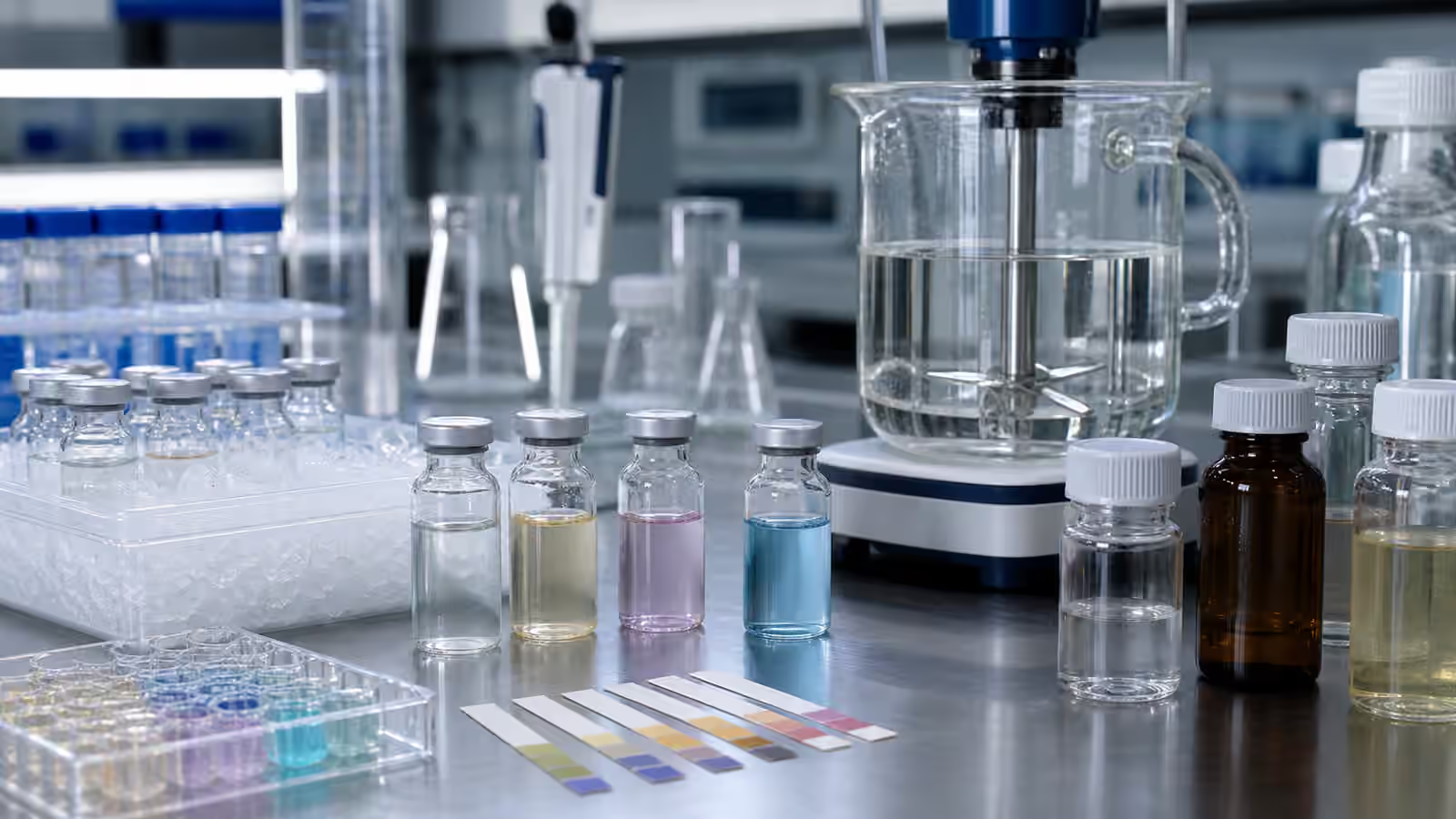
Useful measurement might include biomass, chemical oxygen demand, conductivity, pH, target product residue, host-cell material, solvent content, biological activity, viable counts where relevant, or specific impurities. The exact tests depend on the process and disposal route. The point is not to measure everything forever. The point is to connect the waste claim to evidence.
Analytical Chemistry for Bioproduct Identity is relevant because the same analytical discipline that proves what the product is can help prove what the waste is not. If a stream is claimed to be inactivated, product-free, reusable, recyclable, or safe for a treatment path, the claim needs an appropriate method behind it.
Sustainability Claims Need the Unattractive Parts
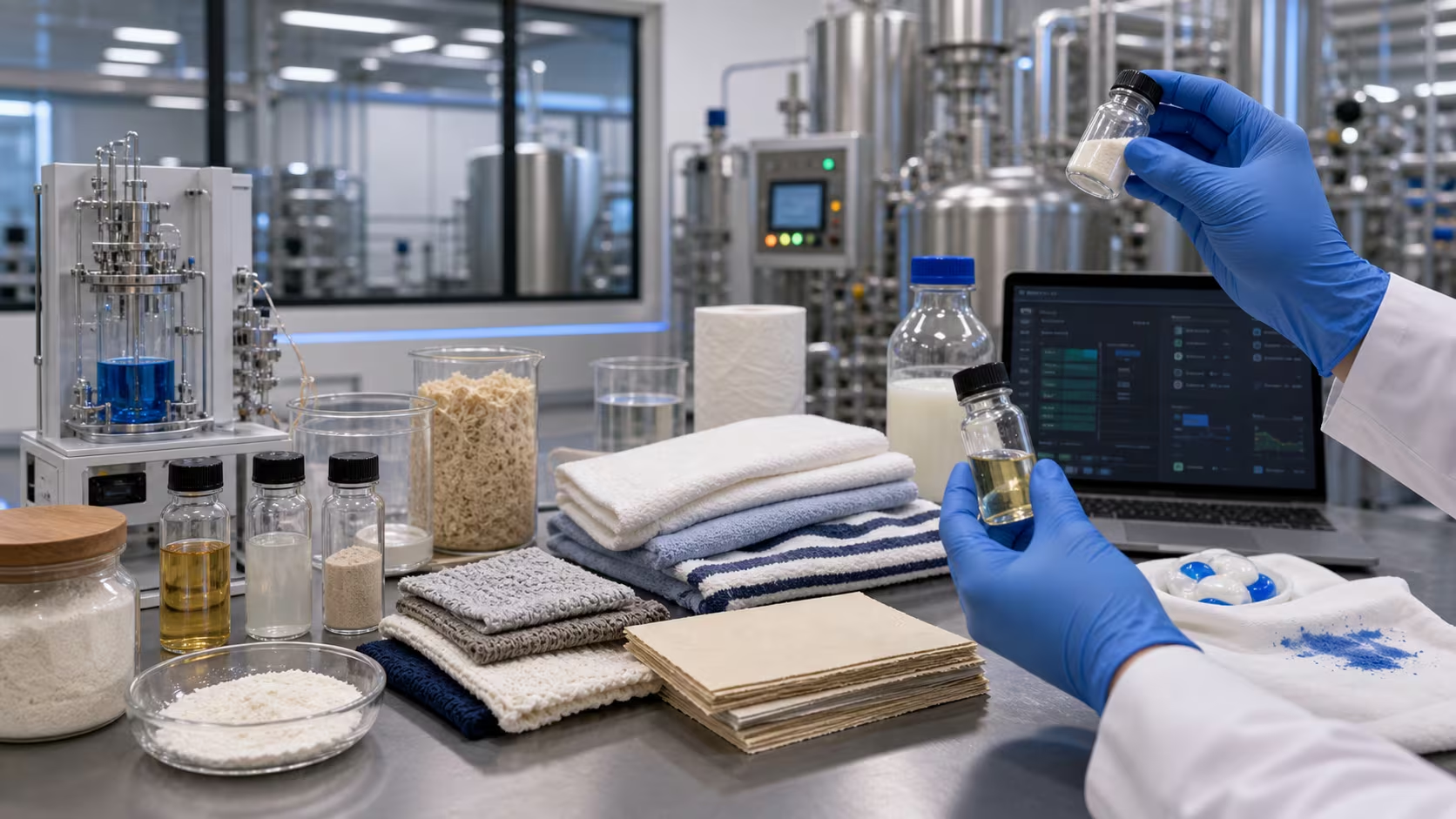
Many synthetic biology products are promoted with sustainability language. Some may genuinely reduce land use, animal inputs, fossil feedstocks, hazardous chemistry, supply-chain risk, or other burdens. But a credible sustainability claim has to include waste streams, not only the renewable or biological origin of the product.
Synthetic Biology Product Claims and Public Trust makes the broader point that claims should be specific. For waste, specificity means asking what streams are created, what treatment they require, what can be reused, what cannot, what assumptions are used, and how the process compares with the incumbent system. A small high-value product and a bulk commodity do not carry the same burden. A pilot run and a full-scale facility do not reveal the same constraints.
This does not mean every waste stream makes a process bad. Manufacturing always has leftovers. The goal is to design with them in view. Sometimes a slightly lower-yield process that creates a cleaner stream is better than a high-yield process that makes treatment difficult. Sometimes changing the medium, host, extraction method, or product format can reduce downstream burden more than another round of strain optimization.
What Leaves Shapes What the Process Is
Synthetic biology likes to talk about what cells can make. A mature process also talks about what the process leaves behind. The exit story includes water, biomass, salts, solvents, product residues, filters, cleaning streams, packaging, and evidence. It includes safety and economics. It includes the ordinary facility work that determines whether a promising biological idea can become responsible manufacturing.
The practical habit is simple: follow the material. Follow the feedstock into the cell, the product out of the broth, the cells into treatment, the water through cleaning, the resin through reuse, and the discarded stream to its final path. A process becomes more trustworthy when its leftovers are not hidden outside the diagram.